Prepare a nutrient-dense dinner in under 30 minutes using this simple skillet method. This dish combines lean protein with fresh vegetables in a sweet and tangy glaze.
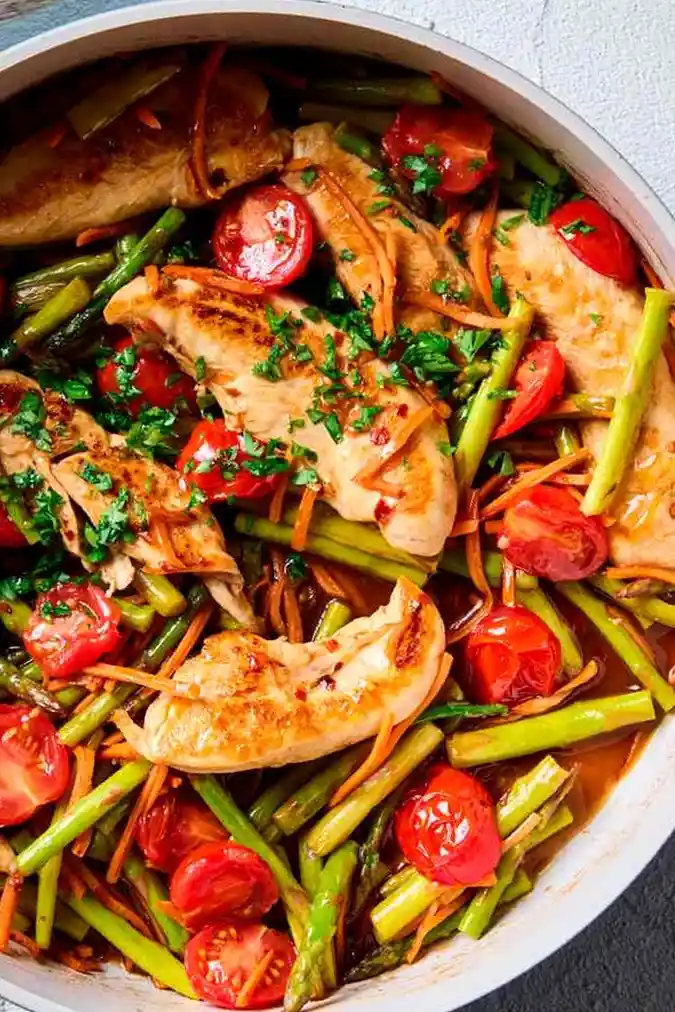
List of ingredients
- 1/4 cup bottled Italian salad dressing – provides a base of herbs and oil.
- 2 tablespoons balsamic vinegar – adds tanginess and deep color.
- 1 tablespoon honey – balances the acidity with sweetness.
- 1/8 to 1/4 teaspoon crushed red pepper – introduces a mild heat.
- 2 tablespoons olive oil – used for searing the chicken.
- 1 pound chicken breast tenderloins – the primary lean protein source.
- 10 ounces fresh asparagus, trimmed and cut into 2-inch pieces, or one 10-ounce package frozen cut asparagus, thawed and well drained – adds a crisp texture.
- 1 cup purchased shredded carrot – adds color and sweetness.
- 1 small tomato, seeded and chopped – used as a fresh garnish.
step-by-step instructions
- Prepare the glaze: In a small bowl, stir together the salad dressing, balsamic vinegar, honey, and crushed red pepper. Set this mixture aside.
- Sear the chicken: Heat olive oil in a large skillet over medium-high heat. Add chicken tenderloins and cook for 5 to 6 minutes, turning once, until tender and no longer pink.
- Glaze the meat: Pour half of the prepared dressing mixture into the skillet and turn the chicken to coat evenly. Move the chicken to a serving platter, covering it to keep warm.
- Sauté the vegetables: Place the asparagus and shredded carrots into the same skillet. Stir and cook for 3 to 4 minutes until the asparagus reaches a crisp-tender state, then transfer to the platter.
- Reduce the sauce: Stir the remaining dressing mixture and pour it into the skillet. Cook for 1 minute while scraping the browned bits from the bottom of the pan.
- Finish and serve: Drizzle the reduced sauce over the chicken and vegetables. Sprinkle the chopped tomato on top before serving.
Suggested Side Pairings
Quinoa or Brown Rice
Pairing this dish with a whole grain like quinoa or brown rice provides a complex carbohydrate source to balance the meal. These grains effectively soak up the excess balsamic glaze, ensuring no flavor is wasted on the plate. Cook the grains in vegetable broth instead of water for additional depth.
Caprese-Style Salad
A side salad featuring fresh mozzarella pearls, sliced cherry tomatoes, and fresh basil leaves complements the Italian notes of the dressing. Drizzle a small amount of extra balsamic glaze over the cheese for consistency. This adds a creamy element that contrasts the lean chicken.
Fresh Cucumber Salad
For a refreshing contrast, serve a chilled cucumber salad with a light lemon-vinegar dressing. The cool, crunchy texture of the cucumbers cuts through the richness of the honey-balsamic glaze. Add thinly sliced red onions for a sharper flavor profile.
Roasted Garlic Potatoes
If you require a heartier meal, roasted baby potatoes with garlic and rosemary are an excellent choice. The earthiness of the potatoes pairs well with the sweetness of the carrots. Roast them at 400°F until the skins are crisp before serving alongside the skillet chicken.
Ingredient Substitutions
Using Full Chicken Breasts
If tenderloins are unavailable, use standard boneless, skinless chicken breasts. Slice them into strips of similar thickness to ensure even cooking. Be mindful that full breasts may require an additional 2 to 3 minutes of searing time depending on the thickness.
Alternative Green Vegetables
Substitute asparagus with broccoli florets or fresh green beans for a different nutritional profile. Broccoli may require an extra minute of cooking time to soften the stems. Green beans should be trimmed and cut to 2-inch lengths to match the cooking speed of the carrots.
Sugar-Free Sweetener Alternatives
Replace honey with pure maple syrup or agave nectar for a similar viscous sweetness. If you are avoiding all sugars, a small amount of date syrup can provide the necessary thickness and color. These alternatives maintain the syrupy consistency required for the glaze to cling to the meat.
Low-Sodium Dressing Options
To reduce salt intake, whisk together olive oil, lemon juice, dried oregano, and garlic powder instead of using bottled dressing. Ensure the ratio remains similar to the original dressing to keep the acidity balanced. This allows for total control over the sodium content.
Advanced Cooking Techniques
Achieving the Perfect Chicken Sear
Pat the chicken tenderloins dry with paper towels before adding them to the oil. Excess moisture creates steam, which prevents the Maillard reaction and results in grey meat rather than a golden-brown crust. Avoid overcrowding the skillet to maintain a high surface temperature.
Preventing Overcooked Asparagus
Add the asparagus to the pan only after the chicken has been removed. Cook them quickly over medium-high heat to maintain a vibrant green color. The vegetables should be crisp-tender; if they turn olive-drab, they have been cooked too long.
Deglazing the Pan for Flavor
When adding the final portion of the dressing, use a wooden spatula to scrape the brown bits, known as fond, from the bottom of the skillet. This process is called deglazing and it incorporates concentrated proteins and sugars back into the sauce. This step is critical for the depth of the final glaze.
Storage and Meal Planning
Refrigeration Guidelines
Store leftovers in an airtight glass or plastic container in the refrigerator for up to three to four days. Keep the chicken and vegetables together so the flavors continue to meld. Ensure the food is cooled slightly before sealing the lid to prevent excessive condensation.
Cold Salad Conversion
This recipe works exceptionally well as a cold meal for lunch the next day. Chop the cooked chicken and vegetables into bite-sized pieces and toss them with fresh baby spinach or arugula. The balsamic glaze acts as a built-in dressing for the greens.
Bulk Cooking Strategy
To save time during the week, double the recipe and cook two pounds of chicken. Divide the portions into individual containers immediately after cooling. This prevents the need for daily cooking while maintaining the nutritional integrity of the vegetables.
Freezing Considerations
While the chicken freezes well, the asparagus and carrots may lose their texture and become mushy upon thawing. If you intend to freeze the meal, undercook the vegetables slightly. Thaw in the refrigerator overnight before reheating.
Reheating Best Practices
Stovetop Reheating
The best way to maintain texture is to reheat the dish in a skillet over medium-low heat. Add a splash of water or vegetable broth to the pan to loosen the thickened balsamic glaze. Cover with a lid for 2 to 3 minutes to steam the chicken through.
Microwave Instructions
Place the food in a microwave-safe dish and cover it with a damp paper towel. Heat in short 45-second intervals, stirring in between to ensure even heating. This prevents the chicken from becoming rubbery or the vegetables from overcooking.
Oven Reheating
For larger portions, place the chicken and vegetables in a baking dish and cover tightly with aluminum foil. Heat at 325°F for about 10 to 15 minutes. The foil traps moisture, keeping the lean breast meat tender.
Troubleshooting Guide
Sauce is Too Thin
If the glaze does not cling to the chicken, increase the heat to medium-high during the final reduction step. Simmer the sauce for an additional 60 seconds until it thickens and bubbles. This concentrates the honey and balsamic vinegar into a syrup.
Chicken is Dry
Dry chicken is usually the result of overcooking. Use a meat thermometer to ensure the internal temperature reaches exactly 165°F. Once the chicken is removed from the pan, let it rest for a few minutes under foil to redistribute the juices.
Vegetables are Mushy
Mushy vegetables occur when they are cooked too long or added to the pan while it is too cool. Ensure the skillet is hot before adding the asparagus. Remove them from the heat the moment they lose their raw crunch but still retain some resistance.
Nutrient-Dense Additions
Adding Bell Peppers
Diced red or yellow bell peppers add vitamin C and a bright pop of color. Add them at the same time as the carrots to ensure they soften properly. They pair naturally with the sweetness of the balsamic glaze.
Incorporating Zucchini
Quartered zucchini slices add volume and a mild flavor to the dish. Since zucchini releases a lot of water, sauté them for 2 minutes before adding the other vegetables. This prevents the sauce from becoming watered down.
Toasted Almond Slivers
Sprinkle toasted almond slivers over the finished platter for added healthy fats and crunch. The nuttiness of the almonds complements the honey and balsamic flavors. Toast them in a dry pan for 2 minutes until golden.
Common Questions
Can I use a different vinegar?
Apple cider vinegar can be used for a fruitier profile, while red wine vinegar provides a sharper tang. However, balsamic is recommended for its natural sweetness and thickness, which is essential for the glaze consistency.
How do I store the leftover sauce?
If you have extra glaze, store it in a small glass jar in the refrigerator for up to one week. It can be used as a marinade for other meats or as a dressing for a roasted vegetable salad.
Is this recipe suitable for meal prep?
Yes, this dish is ideal for meal prep because the ingredients are durable. The balsamic glaze helps preserve the moisture of the chicken during reheating, and the vegetables hold their structure better than leafy greens.
Can I add more vegetables?
You can add any hardy vegetable such as cauliflower or Brussels sprouts. Just be sure to adjust the cooking time; denser vegetables may need to be sautéed for 5 to 7 minutes instead of 3 to 4.
Print
Balsamic Chicken and Vegetable Skillet
- Total Time: 30 minutes
- Yield: 4 servings 1x
- Diet: General
Description
Enjoy this fresh and flavorful weeknight meal—packed with protein and vegetables. It’s perfect for spring and summer.
Ingredients
- 0.25 cup bottled Italian salad dressing
- 2 tablespoon balsamic vinegar
- 1 tablespoon honey
- 0.125 – 0.25 teaspoon crushed red pepper
- 2 tablespoon olive oil
- 1 pound chicken breast tenderloins
- 10 ounce fresh asparagus, trimmed and cut into 2-inch pieces
- 1 cup purchased shredded carrot
- 1 small tomato, seeded and chopped
Instructions
- Step 1: In a small bowl, stir together salad dressing, balsamic vinegar, honey, and crushed red pepper. Set aside.
- Step 2: In a large skillet, heat oil over medium-high heat. Add chicken; cook for 5 to 6 minutes or until chicken is tender and no longer pink, turning once. Add half of the dressing mixture to skillet; turn chicken to coat. Transfer chicken to a serving platter; cover and keep warm.
- Step 3: Add asparagus and carrot to skillet. Cook and stir for 3 to 4 minutes or until asparagus is crisp-tender; transfer to serving platter.
- Step 4: Stir remaining dressing mixture; add to skillet. Cook and stir for 1 minute, scraping up browned bits from bottom of skillet. Drizzle the dressing mixture over chicken and vegetables. Sprinkle with tomato.
Notes
Pair this easy balsamic chicken recipe with a side of quinoa or rice to satisfy heartier appetites. This is also an excellent meal-prep dish for the first few days of the week.
- Prep Time: 10 minutes
- Cook Time: 20 minutes
- Category: Dinner
- Method: Skillet
- Cuisine: Italian American
Nutrition
- Serving Size: 1 serving
- Calories: 269 kcal
- Sugar: 6 g
- Sodium: 323 mg
- Fat: 12 g
- Saturated Fat: 2 g
- Unsaturated Fat: 10 g
- Trans Fat: 0 g
- Carbohydrates: 12 g
- Fiber: 3 g
- Protein: 27 g
- Cholesterol: 66 mg