This method uses a foil packet to lock in moisture while utilizing high heat for a crisp finish. It is a streamlined approach to preparing a nutrient-dense salmon fillet with fresh herbs and garlic.
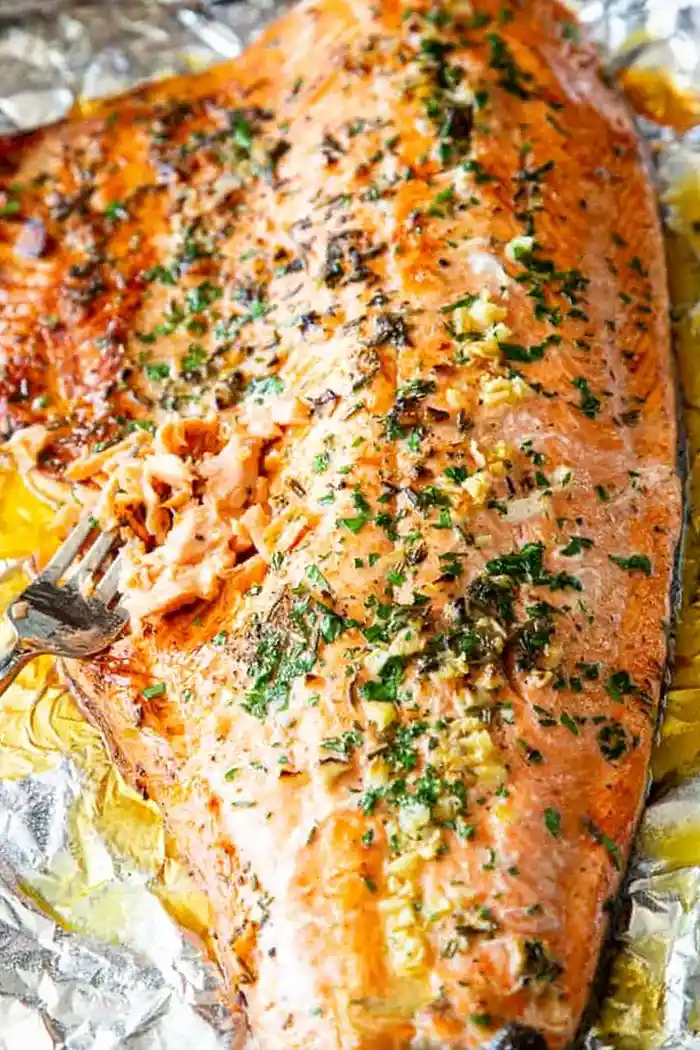
List of ingredients
- 3 lb Salmon Fillet – ensure it is fresh and high quality.
- Sea salt and black pepper – for basic seasoning.
- 6 Tbsp ghee (melted) – used for coating and fat.
- 4 cloves Garlic (minced) – provides a pungent aromatic base.
- 2 tsp fresh rosemary (minced) – adds an earthy, pine-like flavor.
- 2 tsp fresh thyme leaves – contributes subtle lemony notes.
- 1 Tbsp Lemon juice – adds acidity to balance the fats.
- 1 Tbsp parsley (minced) – used specifically for the final garnish.
step-by-step instructions
- Prepare the Oven: Preheat your oven to 400° F. Line a large baking sheet with foil, making sure the piece is extra long so you can wrap the salmon later. Spray the foil with avocado oil cooking spray to prevent sticking.
- Create the Herb Butter: In a mixing bowl, whisk together the melted ghee, minced garlic, minced rosemary, and thyme leaves.
- Season the Fish: Pat the salmon fillet completely dry using paper towels. Sprinkle sea salt and black pepper evenly over all sides of the fish.
- Coat the Salmon: Pour the ghee and herb mixture over the salmon, ensuring an even coat. Rub some of the mixture onto the skin side to help it crisp up during the baking process. Drizzle the lemon juice over the top of the fillet.
- Bake in Foil: Wrap the salmon securely with the foil, covering the top completely. Place the baking sheet near the bottom of the preheated oven and bake for 18-20 minutes, or until the fish is just cooked through.
- Broil for Texture: Carefully unwrap the foil so the top of the salmon is exposed. Switch the oven setting to broil and place the salmon under the broiler for 3-4 minutes. Monitor closely to prevent burning until the top is browned to your preference.
- Finish and Serve: Remove the salmon from the oven and sprinkle with minced parsley. Serve immediately.
Guide to Selecting the Best Salmon
Coho Salmon Characteristics
Coho salmon is a great choice for this recipe if you prefer a milder flavor. It is leaner than King or Atlantic salmon, which means it can overcook more quickly. Monitor the internal temperature closely when using Coho fillets.
Sockeye Salmon Profile
Sockeye salmon has a deeper red color and a more intense, robust flavor. Because it is also a leaner variety, it is best served medium-rare to medium. This variety pairs exceptionally well with the strong scents of rosemary and thyme.
Atlantic Salmon Qualities
Atlantic salmon is widely available and known for its higher fat content. This fat provides a buttery texture and makes the fish more forgiving during the baking process. It is less likely to dry out during the broiling stage.
King Salmon Features
King salmon, also known as Chinook, is the richest of all salmon types. It has a high omega-3 content and a very tender flake. Because of the high fat content, the skin crisps up beautifully under the broiler.
Alternative Fats and Substitutions
Using Unsalted Butter
If ghee is unavailable, unsalted butter is a direct substitute. Butter provides a similar flavor profile but has a lower smoke point than ghee. Ensure the oven temperature does not exceed 400° F to avoid burning the milk solids.
Avocado Oil for High Heat
Avocado oil is an excellent option for those avoiding dairy or seeking a higher smoke point. While it lacks the richness of ghee, it is neutral and allows the garlic and herbs to stand out. Use it in the same quantity as the melted ghee.
Olive Oil for Mediterranean Flavor
Extra virgin olive oil adds a fruity note to the salmon. However, be cautious when broiling, as olive oil can smoke at high temperatures. Use a refined olive oil for better stability under the broiler.
Optimizing Herb and Garlic Usage
Converting Fresh Herbs to Dried
If fresh herbs are not available, you can use dried rosemary and thyme. Use one-third of the amount specified for fresh herbs, as dried herbs are more concentrated. Dried herbs should be rubbed between your palms to release their oils before adding them to the ghee.
Preparing Garlic for Maximum Flavor
Mincing garlic finely ensures that the flavor is distributed evenly across the fillet. For a milder taste, you can slice the garlic into thin slivers. For a more pungent result, press the garlic through a garlic press directly into the melted ghee.
The Role of Lemon Juice
Lemon juice acts as a chemical balance to the richness of the salmon and ghee. The acidity cuts through the fat and brightens the overall flavor. Adding it just before baking prevents the acid from curing the fish too early.
Precision Cooking and Temperature Control
Using a Meat Thermometer
The most reliable way to determine if salmon is done is by using an instant-read thermometer. Aim for an internal temperature of 145° F (63° C) at the thickest part of the fillet. Remove the fish from the oven a few degrees early, as carry-over cooking will raise the temperature.
Adjusting for Fillet Thickness
Thickness significantly impacts the cooking time. A thin fillet may be done in 12-15 minutes, while a very thick cut may require 22-25 minutes. Always check the center of the fillet with a fork; it should flake easily.
The Science of Patting Dry
Removing surface moisture is critical for achieving a sear or a crisp skin. When the fish is wet, the oven heat spends energy evaporating that water first, which leads to steaming instead of browning. Using paper towels to dry the skin ensures the ghee adheres and crisps efficiently.
Foil Packet Techniques
Creating a Tight Seal
A tight foil seal traps steam inside the packet, which poaches the fish in the herb butter. This prevents the edges from drying out during the initial bake. Ensure there are no large gaps where steam can escape too quickly.
Placement in the Oven
Baking near the bottom of the oven provides more consistent heat for the bottom of the fillet. This helps the skin render its fat and crisp up before the top is exposed for broiling. Avoid placing the tray on the very top rack during the baking phase.
Preventing Foil Sticking
Using a high-smoke point oil spray, such as avocado oil, on the foil is essential. Salmon skin can sometimes bond to the aluminum if the surface is dry. A light coating of oil creates a barrier that allows the fish to slide off easily after cooking.
Side Dish and Serving Suggestions
Low-Carb Vegetable Pairings
Cauliflower rice or roasted zucchini noodles are excellent low-carb options. These vegetables absorb the excess garlic butter from the salmon pan. Steam them lightly or roast them at the same temperature as the salmon.
Root Vegetable Accompaniments
Roasted carrots and parsnips provide a sweetness that complements the earthy rosemary. Toss them in olive oil and salt, and roast them on a separate tray. They generally take longer than the salmon, so start them 20 minutes earlier.
Fresh Green Salads
A simple arugula or spinach salad with a lemon vinaigrette cleanses the palate. Use a mix of baby greens, sliced cucumbers, and a sprinkle of feta cheese. The acidity of the salad mimics the lemon juice used on the fish.
Storage and Preservation
Refrigerator Storage
Store leftover salmon in an airtight glass container to maintain freshness. Cool the fish quickly before sealing to prevent excess moisture from building up inside the container. Cooked salmon stays safe to eat for 3 to 4 days in the refrigerator.
Avoiding Freezer Burn
While cooked salmon can be frozen, it often loses its texture. If you must freeze it, wrap the portions tightly in plastic wrap and then place them in a heavy-duty freezer bag. Use the salmon within two months for the best quality.
Signs of Spoilage
Discard salmon if it develops a strong, fishy odor or a slimy texture. Any discoloration, such as graying of the flesh, indicates that the fish is no longer fresh. Always smell and inspect the fish before reheating.
Effective Reheating Methods
The Low-Temperature Oven Method
To prevent the salmon from drying out, reheat it in the oven at 275° F (135° C). Place the fillet on a baking sheet and cover it loosely with foil to trap moisture. Heat for about 10-15 minutes until warmed through.
Stovetop Pan Searing
If you want to restore the crispiness of the skin, use a non-stick skillet over medium heat. Add a small amount of butter or oil and sear the skin side for 2-3 minutes. Gently flip and warm the top for 1 minute.
Microwave Precautions
Microwaving salmon often leads to a rubbery texture due to rapid moisture loss. If using a microwave, use a medium power setting and heat in 30-second intervals. Cover the fish with a damp paper towel to keep it moist.
Troubleshooting Common Issues
Why is my salmon dry?
Dry salmon is usually the result of overcooking or using a fillet that was too thin for the specified time. Always use a thermometer to avoid exceeding 145° F. If the fish is dry, consider reducing the bake time by 2-3 minutes next time.
Why didn’t the skin crisp?
Lack of crispiness often happens if the salmon was not patted dry or if the broiler was not hot enough. Ensure the broiler is fully preheated before sliding the tray in. Also, make sure the skin side was well-coated with ghee.
Why is the garlic burnt?
Garlic can burn quickly under the broiler if the minced pieces are too small or if the fish is left too long. If you notice the garlic darkening too quickly, move the tray to a lower rack. You can also use sliced garlic, which resists burning longer than minced.
Frequently Asked Questions
Can I use dried herbs instead of fresh?
Yes, you can use dried herbs, but you must reduce the quantity. Use 1 teaspoon of dried herbs for every 3 teaspoons of fresh herbs. Rub the dried herbs into the ghee to help them rehydrate during the cooking process.
How do I know when the salmon is perfectly done?
The salmon is done when it reaches an internal temperature of 145° F. Visually, the meat should change from translucent pink to an opaque light pink. It should flake easily when pressed with a fork.
Can I make this with individual fillets?
Yes, this recipe works with individual fillets as well as a whole side. If using individual fillets, adjust the baking time based on the thickness of each piece. You can wrap each fillet in its own small foil packet for easier serving.
What is the best way to prevent the fish from sticking to the foil?
The best method is to use a high-smoke point oil spray, like avocado oil, directly on the foil. Additionally, ensuring the salmon skin is well-coated in ghee creates a natural non-stick layer between the fish and the metal.
Print
Baked Salmon in Foil with Garlic, Rosemary and Thyme
- Total Time: 30 minutes
- Yield: 8 servings 1x
- Diet: Keto, Paleo, Whole30
Description
This Baked Salmon in Foil with Garlic, Rosemary and Thyme is easy and out of this world delicious! An simple mix of melted ghee, garlic and fresh herbs (plus a little lemon) give this salmon fillet tons of flavor and a high oven temp even gets the skin a little crispy! It’s perfect with all your favorite holiday side dishes and salads, plus quick to throw together.
Ingredients
- 3 lb Salmon Fillet
- Sea salt and black pepper
- 6 Tbsp ghee (melted)
- 4 cloves Garlic (minced)
- 2 tsp fresh rosemary (minced)
- 2 tsp fresh thyme leaves
- 1 Tbsp Lemon juice
- 1 Tbsp parsley (minced, for garnish)
Instructions
- Preheat: Preheat your oven to 400° F and line a large baking sheet with foil, extra long to wrap the salmon later on. Spray the foil with avocado oil cooking spray.
- Prepare Sauce: In a bowl, whisk together the ghee, garlic, rosemary, and thyme. Pat the salmon dry and sprinkle all over on both sides with sea salt and black pepper.
- Coat: Pour the ghee mixture over the salmon to evenly coat, rubbing the ghee on the skin underneath too to coat (it will crisp up a little this way). Sprinkle the lemon juice over the top of the salmon.
- Bake: Wrap the salmon with the foil, using extra to cover the top. Bake near the bottom of the preheated oven for about 18-20 minutes or until just cooked through (exact cook time with depend on thickness*)
- Broil: Unwrap the salmon so the top is completely exposed and switch the oven to “broil”. Place the unwrapped salmon under the broiler for about 3-4 minutes, watching it to prevent burning, until the top is browned to preference.
- Finish: Remove from the oven, sprinkle with minced parsley and serve immediately.
Notes
Fish is cooked through when it reaches 145° F and flakes easily with a fork. You can also make this recipe with 4-6 smaller salmon fillets.
- Prep Time: 12 minutes
- Cook Time: 18 minutes
- Category: Dinner, Lunch
- Method: Baking
- Cuisine: Keto, Paleo, Whole30
Nutrition
- Serving Size: 1 serving
- Calories: 343 kcal
- Sugar: 1 g
- Sodium: 76 mg
- Fat: 22 g
- Saturated Fat: 9 g
- Unsaturated Fat: 13 g
- Trans Fat: 0 g
- Carbohydrates: 1 g
- Fiber: 1 g
- Protein: 34 g
- Cholesterol: 122 mg