This oven-baked salmon is a fast and efficient way to prepare a healthy main course for any night of the week. The use of a single sheet pan ensures minimal cleanup while delivering a high-quality presentation.
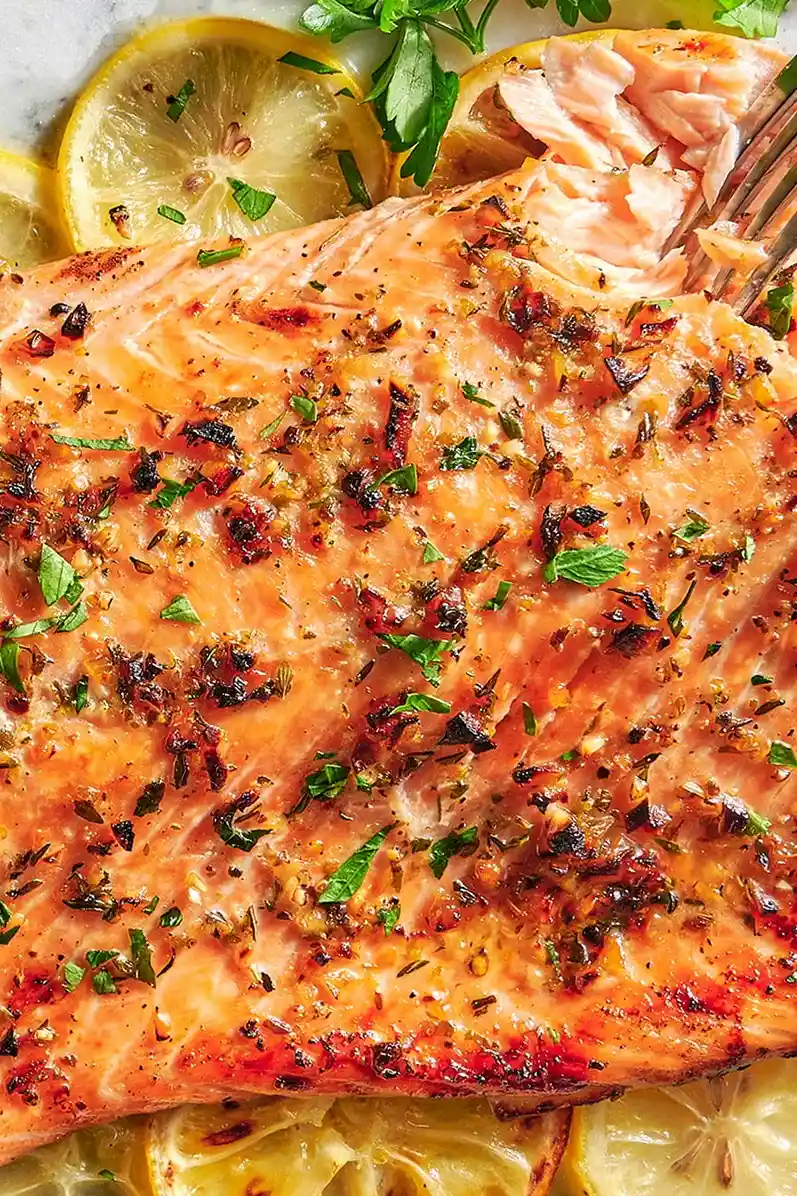
List of ingredients
- 2 lemons, thinly sliced – used as a flavor base for the fish.
- 1 large skin-on salmon fillet (about 3 lb.) – the primary protein for the dish.
- Kosher salt – used for essential seasoning.
- Freshly ground black pepper – adds a subtle spicy kick.
- 2 cloves garlic, finely chopped – provides a pungent aromatic base.
- 6 tbsp. unsalted butter, melted – creates a rich and savory glaze.
- 2 tbsp. honey – adds a touch of sweetness and thickens the sauce.
- 1 tsp. dried oregano – offers an earthy, herbal depth.
- 1 tsp. finely chopped fresh thyme – contributes a fresh, citrusy herbal note.
- Finely chopped fresh parsley, for serving – used as a bright, fresh garnish.
step-by-step instructions
- Prepare the pan: Arrange a rack in center of oven; preheat to 350°. Line a large rimmed baking sheet with foil, then line foil with parchment to prevent any interaction of lemon slices with foil. In center of parchment, arrange lemon slices in an even layer. (Tip: Try to keep lemon slices uniform for even cooking).
- Season the fish: Season salmon with salt and pepper and arrange on top of lemon slices. (Tip: Pat the salmon skin dry before seasoning for better results).
- Apply the glaze: In a small bowl, whisk garlic, butter, honey, oregano, and thyme. Pour over salmon, then fold up parchment and foil around salmon. (Tip: Ensure the glaze is spread evenly across the entire top surface).
- Bake the fillet: Bake salmon until opaque, cooked through, and flesh easily flakes with a fork, about 25 minutes. (Tip: Use a meat thermometer to ensure the center reaches 145°F).
- Brown the top: Turn on broiler. Broil salmon, watching closely, until browned in spots, 4 to 6 minutes. (Tip: Stay nearby as the honey in the glaze can burn quickly under high heat).
- Finish and serve: Transfer lemons and salmon to a platter. Top with parsley. (Tip: Let the salmon rest for 5 minutes to keep the juices locked in).
Expert Guide to Selecting Salmon
Choosing Between Fresh and Frozen Fillets
High-quality fresh salmon is ideal, but flash-frozen fillets are often just as nutritious. If using frozen salmon, ensure it is thawed completely in the refrigerator overnight to maintain a firm texture during baking.
Understanding Skin-on versus Skinless Cuts
Keeping the skin on during the baking process acts as a protective barrier. This prevents the delicate flesh from overcooking and helps the fillet maintain its shape while in the oven.
Evaluating Salmon Quality by Sight and Smell
Fresh salmon should have a vibrant color and a clean, mild scent of the ocean. Avoid any fillets that have a strong fishy odor or a dull, grayish hue, as these are signs of age.
Identifying Sustainable Salmon Sources
When shopping, look for certifications that guarantee sustainable fishing practices. This ensures that the salmon is sourced in a way that protects marine ecosystems and prevents overfishing.
Ingredient Alternatives and Swaps
Using Olive Oil Instead of Butter
For a lighter or dairy-free version, substitute the melted butter with extra-virgin olive oil. This provides a healthy fat source while still carrying the garlic and herb flavors effectively.
Replacing Honey with Brown Sugar
If you do not have honey, light brown sugar is an excellent substitute. It provides the necessary sweetness and helps the salmon caramelize beautifully during the broiling stage.
Substituting Fresh Herbs for Dried Options
You can replace dried oregano with fresh oregano, though you should use a slightly smaller amount. Fresh oregano has a more potent, peppery flavor compared to the milder dried version.
Using Garlic Powder as a Shortcut
In a pinch, garlic powder can replace fresh chopped garlic. Use approximately one-quarter teaspoon of powder for every clove of fresh garlic to maintain the same flavor profile.
Complementary Side Dish Ideas
Pairing with Roasted Potatoes
Roasted potatoes are a classic accompaniment that can soak up the leftover garlic butter sauce. Toss halved baby potatoes in olive oil and salt, then roast them alongside the salmon.
Adding Sautéed Baby Bok Choy
Searing baby bok choy in a pan provides a crisp, fresh contrast to the rich butter sauce. Steam them slightly after searing to ensure the stems are tender but the leaves remain vibrant.
Serving with Air Fried Green Beans
Air frying green beans for about ten minutes yields a snap-tender texture. This side dish adds a bright green color and a healthy dose of fiber to the meal.
Complementing with Roasted Broccolini
Broccolini offers a slightly more sophisticated flavor than standard broccoli. Roast it with a drizzle of olive oil and a pinch of salt to match the oven-baked theme of the salmon.
Cooking Techniques and Preparation Tips
The Importance of Parchment Paper
Lining the foil with parchment paper is crucial when using lemon slices. This prevent the acidic juice of the lemons from reacting with the aluminum foil, which can sometimes leave a metallic taste.
Precise Temperature Monitoring
The safest way to determine doneness is using a digital meat thermometer. Aim for an internal temperature of 145°F at the thickest part of the fillet to ensure it is cooked through but still moist.
Managing Fillet Size and Timing
Baking times vary based on the thickness of the salmon. If you are using individual fillets instead of a whole 3-pound side, reduce the baking time to approximately 12 to 15 minutes.
Safe Broiling Practices
The broiler is an intense heat source that can go from browned to burnt in seconds. Keep the oven door slightly ajar or watch through the glass to monitor the caramelization of the honey glaze.
Storage and Preservation Methods
Refrigerating Leftover Salmon
Allow the salmon to cool completely before storing it to prevent condensation. Place the fish in a shallow, airtight container to keep it fresh and prevent odors from spreading in the fridge.
Proper Containers for Fish Storage
Glass containers with locking lids are preferable for storing cooked fish. They provide a better seal than plastic and do not absorb the strong aromas of garlic and lemon.
Maximum Refrigeration Duration
Cooked salmon should be consumed within three days for the best quality and safety. Beyond this point, the texture may become rubbery and the flavor may diminish.
Freezing Cooked Salmon
While possible, freezing cooked salmon is not recommended as it can degrade the texture. If necessary, wrap it tightly in freezer-grade foil and use it within one month.
Reheating Guidelines for Best Texture
Using the Oven to Reheat
The oven is the best method for reheating to maintain the original texture. Place the salmon on a baking sheet at 275°F for about 10 to 15 minutes until warmed through.
Microwave Reheating Precautions
If using a microwave, use a low power setting and heat in short 30-second bursts. Overheating salmon in a microwave can make the protein tough and dry very quickly.
Adding Moisture During Reheating
To prevent the fish from drying out, add a small pat of butter or a teaspoon of water to the pan. This creates a small amount of steam that keeps the fillet moist.
Avoiding Overcooking During Reheating
Stop reheating the salmon as soon as it is warm to the touch. Reheating it to the original cooking temperature will result in an overcooked, dry piece of fish.
Common Cooking Troubleshooting
How to Fix Dry Salmon
If the salmon comes out too dry, you can serve it with a side of extra melted butter or a squeeze of fresh lemon. In the future, reduce the baking time by a few minutes.
Preventing the Butter Sauce from Burning
If the honey-butter glaze burns too quickly, cover the salmon loosely with a piece of foil during the final minutes of baking. This protects the surface while the interior finishes cooking.
Ensuring Even Cooking for Large Fillets
Large fillets often have a tapered shape where one end is thinner than the other. You can slightly fold the thinner tail end under itself to create a more uniform thickness across the fillet.
Preventing Salmon from Sticking
Using a combination of foil and parchment paper almost entirely eliminates sticking. Ensure the lemon slices are laid out completely to create a natural barrier between the fish and the paper.
Frequently Asked Questions
What is the ideal internal temperature for salmon?
The USDA recommends an internal temperature of 145°F. However, many chefs prefer 130°F to 135°F for a more tender, moist texture.
Can I use individual fillets instead of a whole side?
Yes, you can use individual portions. Just remember to adjust the cooking time downward, usually to about 12-15 minutes, depending on the thickness.
How do I prevent the salmon from sticking to the pan?
Always use parchment paper on top of your foil. This prevents the proteins in the fish and the sugars in the honey from bonding to the metal surface.
Can I make this recipe in an air fryer?
Yes, but you must use air-fryer-safe parchment liners. Reduce the temperature to 350°F and cook for about 8 to 12 minutes, checking frequently.
Do the lemon slices need to be peeled?
No, the lemon slices are used with the peel on. The peel provides aromatic oils that enhance the flavor of the salmon during the roasting process.
Print
Baked Garlic Butter Salmon with Lemon
- Total Time: 41 minutes
- Yield: 4 servings 1x
- Diet: Gluten-free
Description
This simple oven-baked salmon recipe is a must-have, whether you’re searching for an easy weeknight dinner or a way to feed a crowd.
Ingredients
- 2 lemons, thinly sliced
- 1 large skin-on salmon fillet (about 3 lb.)
- Kosher salt
- Freshly ground black pepper
- 2 cloves garlic, finely chopped
- 6 tbsp. unsalted butter, melted
- 2 tbsp. honey
- 1 tsp. dried oregano
- 1 tsp. finely chopped fresh thyme
- Finely chopped fresh parsley, for serving
Instructions
- Step 1: Arrange a rack in center of oven; preheat to 350°. Line a large rimmed baking sheet with foil, then line foil with parchment to prevent any interaction of lemon slices with foil. In center of parchment, arrange lemon slices in an even layer.
- Step 2: Season salmon with salt and pepper and arrange on top of lemon slices.
- Step 3: In a small bowl, whisk garlic, butter, honey, oregano, and thyme. Pour over salmon, then fold up parchment and foil around salmon.
- Step 4: Bake salmon until opaque, cooked through, and flesh easily flakes with a fork, about 25 minutes.
- Step 5: Turn on broiler. Broil salmon, watching closely, until browned in spots, 4 to 6 minutes.
- Step 6: Transfer lemons and salmon to a platter. Top with parsley.
Notes
For the best result, ensure lemon slices are thin and uniform. Use a thermometer to ensure the salmon reaches an internal temperature of 145°F.
- Prep Time: 10 minutes
- Cook Time: 31 minutes
- Category: Dinner
- Method: Baking
- Cuisine: American
Nutrition
- Serving Size: 1 serving
- Calories: 911 kcal
- Sugar: 12 g
- Sodium: 620 mg
- Fat: 66 g
- Saturated Fat: 21 g
- Unsaturated Fat: 45 g
- Trans Fat: 0 g
- Carbohydrates: 15 g
- Fiber: 1 g
- Protein: 48 g
- Cholesterol: 155 mg