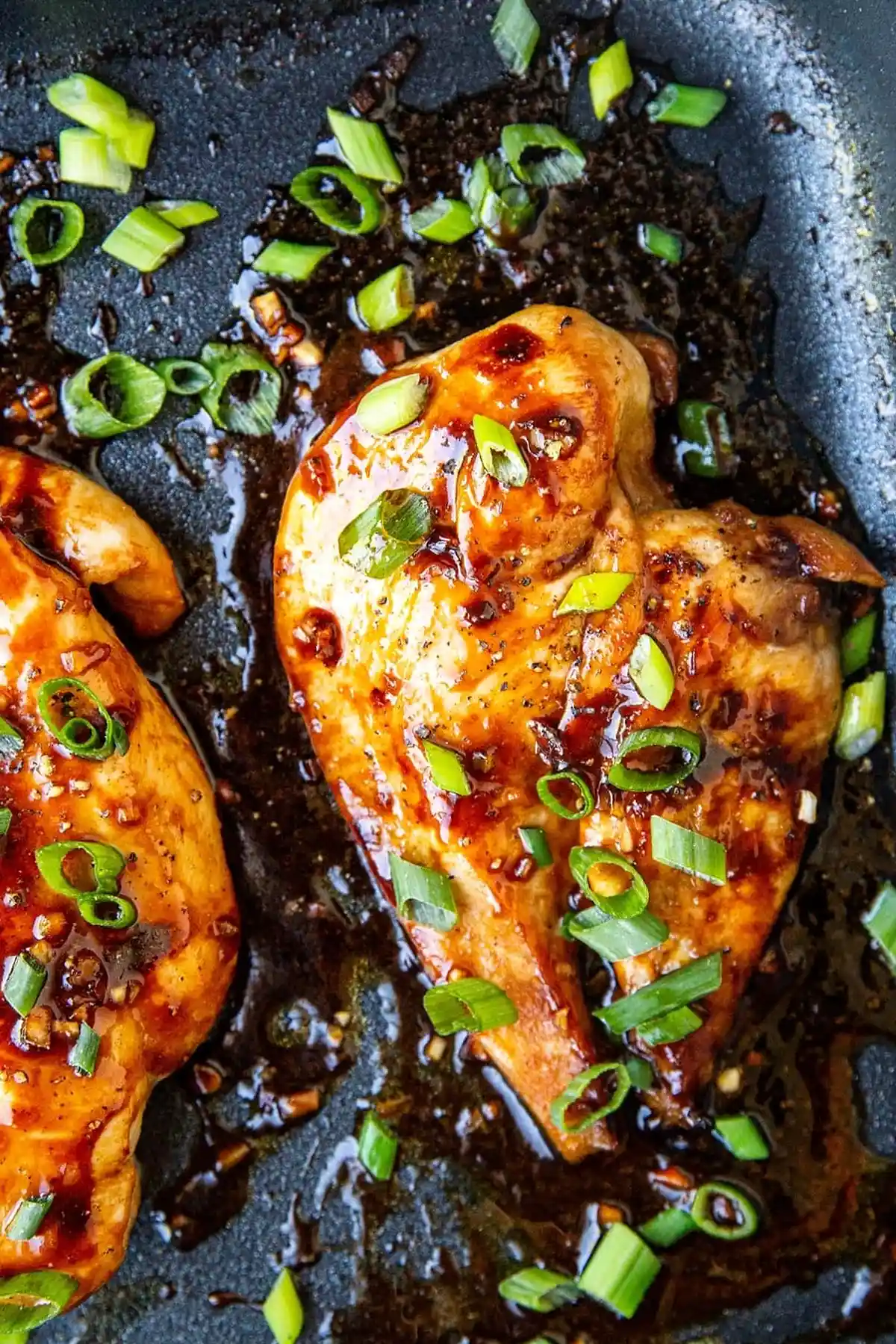
These Asian Baked Chicken Breasts feature a perfect blend of sweet, savory, and umami flavors. This easy-to-prepare dish creates a caramelized, sticky glaze that makes lean white meat tender and juicy.
List of ingredients
- 1 to 1.5 lbs boneless skinless chicken breasts – use filets or slice large breasts in half for even cooking.
- 2 Tbsp avocado oil – a high-smoke point oil for baking.
- 2 tsp sesame oil – adds a distinct nutty aroma and flavor.
- 1 Tbsp fish sauce – provides depth and salty umami richness.
- 5 cloves garlic, minced – fresh cloves provide the best aromatic punch.
- 2 Tbsp pure maple syrup – creates the signature sweetness and sticky glaze.
- 1/4 cup coconut aminos – a soy-free alternative to soy sauce.
- 2 tsp sriracha, optional – adds a mild spicy kick.
- 3 Tbsp rice vinegar – provides a tangy acidity to balance the sweetness.
- 1/4 tsp sea salt, to taste – adjust based on the saltiness of your aminos.
step-by-step instructions
- Prepare the marinade: Combine avocado oil, sesame oil, fish sauce, minced garlic, maple syrup, coconut aminos, sriracha, rice vinegar, and sea salt in a small bowl. Whisk until all ingredients are well-combined.
- Marinate the chicken: Place the chicken breasts in a zip lock bag or a small airtight container. Pour the marinade over the meat, seal the container, and coat the chicken thoroughly. Refrigerate for at least 20 minutes, though several hours or up to 24 hours is recommended for maximum tenderness.
- Bake the chicken: Preheat your oven to 350 degrees F. Move the chicken and all the marinade into a large casserole dish, rimmed baking sheet, or baking dish. Bake for 15 minutes.
- Baste the meat: Remove the dish from the oven. Use a spoon to thoroughly baste the chicken breasts by pouring the pan juices over the top.
- Broil for caramelization: Change the oven setting to High Broil. Broil the chicken for 5 to 8 minutes until the surface is golden brown and the juices have caramelized. Baste the chicken one last time with the pan juices before serving.
- Check for doneness: Use an instant-read meat thermometer in the thickest part of the breast. Ensure the internal temperature has reached 165 degrees Fahrenheit.
- Serve: Plate the chicken with your preferred side dishes and enjoy immediately.
Meat Preparation and Cutting Techniques
Slice Breasts for Even Cooking
Thick chicken breasts often cook unevenly, leaving the outside dry while the center remains raw. Slice whole breasts in half lengthwise to create thinner cutlets that bake quickly and uniformly.
Use Chicken Tenders for Faster Baking
Chicken tenders are naturally thinner and cook faster than full breasts. If using tenders, monitor the internal temperature more frequently to avoid overcooking the lean meat.
Tenderizing Through Marination
The acids in the rice vinegar and the salt in the fish sauce help break down the muscle fibers. Marinating for several hours ensures the chicken remains juicy after the high-heat broiling process.
Marinade Component Guide
The Role of Coconut Aminos
Coconut aminos serve as a soy-free replacement for soy sauce with a slightly sweeter profile. It provides the necessary salt and color to the glaze without using soy products.
Adding Umami with Fish Sauce
Fish sauce adds a complex, savory depth that is a staple of Asian cuisine. It enhances the overall richness of the dish and complements the sweetness of the maple syrup.
Balancing Acidity with Rice Vinegar
Rice vinegar provides a mild tang that cuts through the fat of the oils and the sugar of the syrup. This acidity prevents the dish from tasting overly sweet.
Achieving Stickiness with Maple Syrup
Pure maple syrup contains natural sugars that caramelize under high heat. This process creates the thick, sticky coating that clings to the chicken during the broiling stage.
Adding Heat with Sriracha
Sriracha is optional but adds a subtle spicy layer to the flavor profile. You can increase the quantity if you prefer a spicier meal or omit it entirely for a mild version.
Cooking and Temperature Control
Importance of Meat Thermometers
Using a digital thermometer is the only way to guarantee the chicken is safe and juicy. Pull the meat when it hits 165 degrees Fahrenheit to prevent the proteins from toughening.
Managing the Broiler Setting
The broiler applies intense heat from the top, which can burn sugars quickly. Stay by the oven and watch the chicken closely during the final 5 to 8 minutes of cooking.
The Basting Technique
Basting involves spooning the cooked juices back over the meat. This concentrates the flavors and adds an extra layer of glaze for a professional finish.
Oven Temperature Consistency
Ensure your oven is fully preheated to 350 degrees F before adding the meat. A consistent starting temperature ensures the 15-minute baking window is accurate.
Ingredient Substitutions
Replacing Avocado Oil
If avocado oil is unavailable, olive oil or canola oil are suitable alternatives. Avocado oil is preferred for its higher smoke point, but olive oil works well at 350 degrees F.
Swapping Maple Syrup for Brown Sugar
Brown sugar can be used as a substitute for maple syrup to achieve a similar sweetness. It may result in a slightly different caramelization profile but maintains the sticky texture.
Substituting Coconut Aminos with Soy Sauce
Liquid aminos or traditional soy sauce can replace coconut aminos for those who consume soy. If you make this switch, reduce the added sea salt as soy sauce is higher in sodium.
Acid Alternatives to Rice Vinegar
Apple cider vinegar or fresh lime juice can be used if rice vinegar is not on hand. Lime juice adds a brighter, more citrusy note to the final dish.
Garlic Powder as a Substitute
If fresh garlic is unavailable, use one tablespoon of garlic granules or garlic powder. While less aromatic than fresh cloves, it provides the necessary savory base.
Serving Suggestions and Pairings
Classic Rice Pairings
Steamed jasmine or basmati rice is an ideal accompaniment to soak up the extra marinade. Brown rice offers a nuttier flavor and additional fiber for a healthier option.
Vegetable Side Options
Roasted broccoli or sautéed snap peas complement the Asian flavors perfectly. These vegetables add color and crunch to the plate, balancing the richness of the glaze.
Starch Alternatives
Mashed potatoes provide a creamy contrast to the savory and tangy chicken. Roasted carrots or a simple cucumber salad also pair well with this protein.
Storage and Meal Prep
Refrigeration Guidelines
Store leftover chicken in an airtight glass container in the refrigerator. The meat will remain fresh and flavorful for up to 5 days.
Freezing Marinated Chicken
You can place raw chicken and marinade in a freezer bag for long-term storage. Thaw the meat in the refrigerator overnight before baking to maintain the texture.
Batch Cooking for the Week
This recipe is excellent for meal prepping. Divide the cooked chicken into individual portions with rice and vegetables for a quick heat-and-eat lunch.
Reheating Instructions
Oven Reheating Method
To keep the chicken moist, reheat portions in the oven at 325 degrees F. Cover the dish with foil to prevent the meat from drying out during the process.
Microwave Reheating Tips
When using a microwave, heat the chicken in short bursts. Cover the meat with a damp paper towel to create steam, which helps preserve the juiciness.
Troubleshooting Common Issues
Preventing Dry Chicken
Dryness usually occurs from overcooking. Stick to the internal temperature of 165 degrees Fahrenheit and avoid baking the chicken longer than necessary.
Adjusting Excess Saltiness
If the final dish tastes too salty, add a squeeze of fresh lime juice or a small drizzle of honey. The additional acid or sugar will neutralize the salt.
Improving the Caramelization
If the chicken is not golden enough, increase the broiling time by 1 to 2 minutes. Ensure the meat is thoroughly basted with juices before the final broil.
Frequently Asked Questions
Can I marinate the chicken overnight?
Yes, you can marinate the chicken for up to 24 hours. This allows the flavors to penetrate deeper into the meat and further tenderizes the breast.
Is the sriracha necessary for the recipe?
No, the sriracha is entirely optional. It adds a mild heat, but the recipe remains delicious and balanced without it.
Can I use chicken thighs instead of breasts?
Yes, you can use boneless skinless thighs. Because thighs have more fat, they may require an additional 5 to 10 minutes of baking time.
How do I store the leftovers safely?
Keep leftovers in an airtight container in the refrigerator for no more than 5 days. Ensure the container is sealed tightly to prevent the meat from absorbing other fridge odors.
Print
Asian Baked Chicken Breasts
- Total Time: 30 minutes
- Yield: 4 servings 1x
- Diet: Dairy-Free
Description
Sweet and sour savory and umami, this Asian Baked Chicken Breasts has all the flavor and is so easy to make!
Ingredients
- 1 to 1.5 lbs boneless skinless chicken breasts
- 2 Tbsp avocado oil
- 2 tsp sesame oil
- 1 Tbsp fish sauce
- 5 cloves garlic (minced)
- 2 Tbsp pure maple syrup
- ¼ cup coconut aminos
- 2 tsp sriracha (optional)
- 3 Tbsp rice vinegar
- ¼ tsp sea salt (to taste)
Instructions
- Step 1: Add all of the ingredients for the marinade (everything but the chicken) to a small bowl and whisk until well-combined.
- Step 2: Transfer the boneless chicken breasts to a zip lock bag or a small container along with the marinade. Seal it and move everything around until the chicken is coated in marinade. Refrigerate for at least 20 minutes, ideally several hours (up to 24 hours).
- Step 3: Preheat the oven to 350 degrees F. Transfer the chicken, including the marinade to a large casserole dish or large rimmed baking sheet or baking dish. Bake the chicken breasts for 15 minutes.
- Step 4: Remove the chicken from the oven and baste it thoroughly by spooning the juices over top of the breasts.
- Step 5: Adjust the oven to the High Broil setting and broil the chicken for 5 to 8 minutes, or until it is golden brown and the juices have begun to caramelize. Spoon the juices over the chicken again, and serve.
- Step 6: Use a meat thermometer to test the internal temperature of the chicken. Chicken is fully cooked when it reaches 165 degrees Fahrenheit.
- Step 7: Serve the baked Asian baked chicken breasts with your favorite side dishes, and enjoy!
Notes
Store any leftover chicken breast in an airtight container in the refrigerator for up to 5 days.
- Prep Time: 10 minutes
- Cook Time: 20 minutes
- Category: Chicken Main Dishes
- Method: Baking
- Cuisine: Asian
Nutrition
- Serving Size: 1 chicken filet
- Calories: 280 kcal
- Sugar: 3 g
- Sodium: 620 mg
- Fat: 8 g
- Saturated Fat: 1.8 g
- Unsaturated Fat: 6.2 g
- Trans Fat: 0 g
- Carbohydrates: 11 g
- Fiber: 1 g
- Protein: 40 g
- Cholesterol: 85 mg