This air fryer Mediterranean salmon is a quick and nutrient-dense meal perfect for busy weeknights. It combines zesty lemon and aromatic herbs to create a light yet satisfying dish in under 15 minutes.
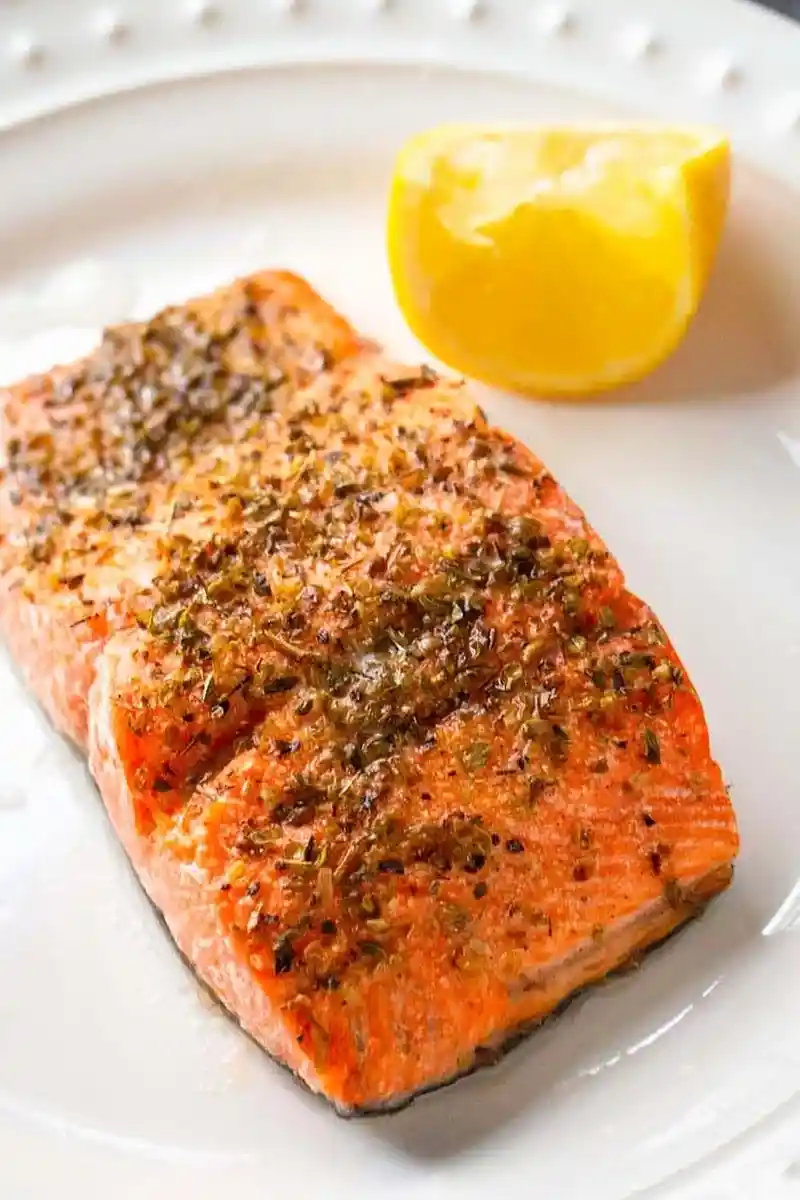
List of ingredients
- 6 oz salmon fillet – skin on or off based on preference.
- 1 teaspoon olive oil – used to help seasonings adhere to the fish.
- 1/8 teaspoon garlic powder – adds a savory, aromatic depth.
- 1/2 teaspoon oregano or Italian seasoning – provides the signature Mediterranean flavor.
- 1/4 lemon – squeezed over the finished fish for brightness.
- Salt – to enhance the natural flavor of the salmon.
- Pepper – for a touch of mild heat.
step-by-step instructions
- Prepare the fish: Pat the salmon fillet dry with paper towels and remove any bones. Place the fillet on a plate.
- Apply oil: Drizzle the fillet with olive oil and rub it evenly into the surface.
- Season: Season the salmon with salt and pepper. Then sprinkle the garlic powder over the top, followed by the oregano.
- Prep the air fryer: Either brush or spray the air fryer basket with oil, or use air fryer parchment paper to prevent sticking. Place the salmon in the basket.
- Cook: Cook at 400 degrees for 7-10 minutes. The exact cook time may vary based on the thickness of your salmon fillet.
- Finish: Plate the salmon, then squeeze fresh lemon juice over the top.
Expert Tips for Perfect Air Fryer Salmon
Pat the Salmon Completely Dry
Removing surface moisture is critical for achieving a proper sear in the air fryer. If the fish is damp, the heat will steam the surface rather than brown it, resulting in a softer texture. Use a clean paper towel to press firmly on all sides of the fillet before adding oil.
Use a Meat Thermometer for Precision
Salmon can overcook in a matter of seconds, turning from flaky to dry. Use an instant-read thermometer to check the internal temperature at the thickest part of the fillet. Aim for 145F for well-done or 130-135F for a more tender, medium-rare finish.
Avoid Overcrowding the Basket
Air fryers rely on the rapid circulation of hot air to cook food evenly. If you are cooking multiple fillets, ensure there is at least an inch of space between each piece. Overcrowding creates steam and prevents the edges from getting a nice golden color.
Use Parchment Paper for Easy Cleanup
While oiling the basket works, air fryer-specific parchment paper makes cleanup effortless. It prevents the delicate salmon flesh from sticking to the grate when you flip or remove it. Ensure the paper is weighed down by the fish so it does not fly into the heating element.
Select Center-Cut Fillets
Center-cut fillets have a uniform thickness, which ensures the entire piece of fish cooks at the same rate. Tapered tail pieces cook much faster and can dry out while the thicker end remains raw. If using uneven cuts, consider adjusting the placement in the basket.
Leave the Skin On During Cooking
Cooking salmon with the skin on acts as a protective barrier between the heat source and the flesh. This helps keep the fillet moist and prevents it from sticking to the basket. You can easily slide the skin off with a spatula after the fish has rested.
Flavor Variations and Substitutions
Swap Oregano for Dried Basil
While oregano is a staple of Greek and Italian cooking, dried basil offers a sweeter, more peppery profile. This substitution shifts the flavor profile toward a classic Caprese style. Use the same measurement of 1/2 teaspoon for a balanced taste.
Replace Olive Oil with Avocado Oil
Avocado oil has a higher smoke point than extra virgin olive oil, making it ideal for high-temperature air frying. This reduces the likelihood of the oil smoking or developing a burnt taste. The flavor is neutral, allowing the lemon and herbs to shine.
Use Fresh Garlic Instead of Powder
For a bolder, more pungent garlic flavor, use finely minced fresh garlic cloves. Rub the minced garlic into the oil before applying it to the salmon. Be careful not to use too much, as fresh garlic can burn and become bitter at 400 degrees.
Add Red Pepper Flakes for Heat
If you prefer a spicy kick, add a pinch of red pepper flakes to the seasoning mix. The heat complements the acidity of the lemon and the earthiness of the oregano. This creates a Mediterranean-fusion flavor that pairs well with creamy sides.
Substitute Lemon with Lime
Lime juice provides a sharper, more tropical acidity compared to lemon. This is a great way to vary the recipe if you have limes on hand. The brightness still cuts through the richness of the salmon fats effectively.
Incorporate Dried Tarragon or Dill
Tarragon adds a subtle anise flavor, while dill provides a fresh, grassy note common in Scandinavian salmon dishes. Use 1/2 teaspoon of either herb in place of the oregano. Both pair exceptionally well with the garlic and lemon base.
Best Side Dish Pairings
Roasted Mediterranean Vegetables
Zucchini, red bell peppers, and red onions are excellent companions to this salmon. Toss them in olive oil and salt, then air fry them before or after the fish. Their natural sweetness balances the salty and acidic notes of the salmon.
Lemon Orzo with Asparagus
Orzo pasta cooked with lemon zest and sautéed asparagus provides a sophisticated texture. The small grains of pasta soak up any remaining juices from the salmon. This combination creates a complete, balanced meal on one plate.
Garlic Sautéed Spinach
Spinach cooks rapidly and provides a nutrient-dense green to balance the protein. Sauté it with a bit of garlic and a splash of water until wilted. The bitterness of the spinach contrasts well with the rich omega-3 fats in the fish.
Quinoa with Fresh Parsley
Fluffy quinoa mixed with chopped parsley and a drizzle of olive oil adds a hearty, grainy element. This is an excellent choice for those seeking a gluten-free side dish. The nuttiness of the quinoa complements the savory garlic powder.
Smashed Cucumber Salad
A chilled cucumber salad with rice vinegar and sesame oil offers a refreshing temperature contrast. The crispness of the cucumber cleanses the palate between bites of the rich salmon. This is especially useful during warmer summer months.
Air Fryer Parmesan Tomatoes
Cherry tomatoes roasted with a sprinkle of parmesan cheese become burst-like flavor bombs. They provide an acidic and salty accompaniment that mirrors the Mediterranean theme. Cook them for 5-7 minutes at the same temperature as the salmon.
Storage and Reheating Guidelines
Proper Refrigeration Method
Store leftover salmon in an airtight glass container to prevent the fish from absorbing other odors in the fridge. Allow the salmon to cool completely before sealing the lid to avoid condensation. Cooked salmon stays fresh and safe to eat for 3 to 4 days.
Freezing Cooked Salmon
While fresh is best, you can freeze cooked salmon by wrapping it tightly in foil and placing it in a freezer bag. This prevents freezer burn and preserves the texture. Use the frozen fillets within two months for the best quality.
Reheating in the Air Fryer
To maintain the texture, reheat the salmon in the air fryer at 350 degrees for 3-5 minutes. This avoids the rubbery texture often caused by microwaves. A quick spray of olive oil before reheating can restore the exterior moisture.
Using a Microwave for Quick Warm-ups
If using a microwave, use a low power setting and heat in 30-second intervals. Cover the fish with a damp paper towel to trap steam and prevent the fish from drying out. Be careful not to overheat, as salmon can become tough quickly.
Serving Cold as a Salad Topper
Cooked Mediterranean salmon is delicious served cold. Flake the chilled fillet over a bed of mixed greens, feta cheese, and olives. This transforms the dinner recipe into a refreshing and high-protein lunch.
Advance Preparation Strategies
Pre-seasoning the Fillets
You can apply the oil and dry seasonings to the salmon a few hours before cooking. Store the seasoned fillets in the refrigerator on a plate covered with plastic wrap. This allows the flavors to penetrate deeper into the flesh.
Preparing Side Dishes in Advance
Grains like quinoa or orzo can be cooked a day ahead and stored in the fridge. Cold salads, such as the cucumber salad, actually taste better after sitting for a few hours. This reduces the active cooking time on the night of the meal.
Planning Portion Sizes for Meal Prep
If cooking for the week, scale the ingredients by quadrupling the measurements for four fillets. Air fry them in batches to ensure the airflow remains optimal. Divide the cooked salmon into containers with pre-portioned vegetables for easy grabbing.
Pre-cutting the Lemon
Slicing your lemon into quarters or wedges before you start the air fryer saves time. Since the salmon cooks so quickly, having the lemon ready prevents the fish from cooling down too much before the final squeeze. Keep the wedges in a small bowl.
Troubleshooting Common Issues
Salmon is Too Dry
Dry salmon is usually the result of overcooking. Reduce the cook time by 1-2 minutes next time, or lower the temperature to 375 degrees. Always check the internal temperature with a thermometer to stop the process at the right moment.
Seasoning is Burning
If the garlic powder or oregano tastes burnt, it may be due to an insufficient amount of oil. Ensure the fillet is well-coated in olive oil to shield the spices from direct heat. Alternatively, apply the seasonings halfway through the cooking process.
Fish is Sticking to the Basket
Sticking occurs when the basket is not sufficiently greased or the fish is placed in before the basket is preheated. Use a higher-quality non-stick spray or a piece of perforated parchment paper. Let the salmon rest for 2 minutes before attempting to remove it.
Salmon is Undercooked in the Middle
This typically happens with very thick fillets or if the air fryer is overcrowded. Increase the cooking time by 2 minutes and ensure the fillets are not touching. If the outside is browned but the inside is raw, lower the heat and extend the time.
Lack of Flavor Intensity
If the dish tastes bland, you may need more salt or a larger squeeze of lemon. Salt is essential for bringing out the herbal notes of the oregano. Always taste a small piece of the cooked fish and adjust the lemon juice accordingly.
Frequently Asked Questions
Can I cook frozen salmon in the air fryer?
It is highly recommended to thaw the salmon completely in the refrigerator before cooking. Cooking from frozen often results in an uneven texture, where the outside is overcooked while the center remains raw. If you must cook from frozen, add 5-7 minutes to the total time.
Should I leave the skin on?
Leaving the skin on is generally better as it protects the delicate flesh from the high heat of the air fryer. It also makes the fillet easier to handle and remove from the basket. You can simply peel the skin off after cooking if you prefer not to eat it.
What is the best salmon cut for this recipe?
The center-cut fillet is the best choice because it provides a consistent thickness from end to end. This ensures that the fish cooks evenly without the thinner tail end drying out. Avoid fillets with large gaps in the meat for the most professional result.
Can I use a different oil?
Yes, any oil with a high smoke point will work, such as avocado oil or grapeseed oil. While olive oil is traditional for Mediterranean flavors, avocado oil is more stable at 400 degrees. Avoid using butter as it can burn and smoke at this temperature.
How do I tell when the salmon is done?
The salmon is done when the flesh changes from a translucent pink to an opaque light pink. When you press the top of the fillet with a fork, the meat should flake easily along the natural lines. The internal temperature should reach 145F for standard doneness.
Can I add fresh herbs at the end?
Adding fresh parsley or cilantro after cooking adds a vibrant color and a burst of freshness. Chop the herbs finely and sprinkle them over the lemon-squeezed salmon just before serving. This preserves the delicate oils in the fresh herbs that would otherwise burn in the air fryer.
Print
Air Fryer Mediterranean Salmon
- Total Time: 15 minutes
- Yield: 1 serving 1x
- Diet: Pescatarian
Description
Air Fryer Mediterranean Salmon is a delicious and healthy salmon dish that cooks up in less than 15 minutes! It’s finished off with a healthy squeeze of fresh lemon juice for brightness!
Ingredients
- 6 oz salmon fillet
- 1 teaspoon olive oil
- 1/8 teaspoon garlic powder
- 1/2 teaspoon oregano (or Italian seasoning)
- 1/4 lemon
- salt
- pepper
Instructions
- Step: Pat the salmon fillet dry with paper towels and remove any bones. Place on a plate. Drizzle the fillet with olive oil and rub into the surface.
- Step: Season the salmon with salt and pepper. Then sprinkle the garlic powder over the top, then the oregano.
- Step: Either brush or spray the air fryer basket with oil, or use air fryer parchment paper. Place the salmon in the air fryer basket.
- Step: Cook at 400 degrees for 7-10 minutes.
- Step: Plate, then squeeze fresh lemon juice over the salmon.
Notes
Cook times may depend on the thickness of your piece of salmon. Using air fryer parchment paper can help keep your salmon from sticking to the air fryer basket. You can also spray the basket or brush with oil. If your salmon has skin, you can either remove it before cooking, or leave it on when cooking, and remove after cooking.
- Prep Time: 5 minutes
- Cook Time: 10 minutes
- Category: Main Course, Seafood
- Method: Air Frying
- Cuisine: American, Mediterranean
Nutrition
- Serving Size: 1 fillet
- Calories: 289 kcal
- Sugar: 1 g
- Sodium: 115 mg
- Fat: 15 g
- Saturated Fat: 2 g
- Unsaturated Fat: 12 g
- Trans Fat: 0 g
- Carbohydrates: 4 g
- Fiber: 1 g
- Protein: 34 g
- Cholesterol: 94 mg