This honey dijon salmon is a fast and nutritious meal perfect for busy weeknights. It uses an air fryer to achieve a caramelized glaze in under ten minutes of cooking time.
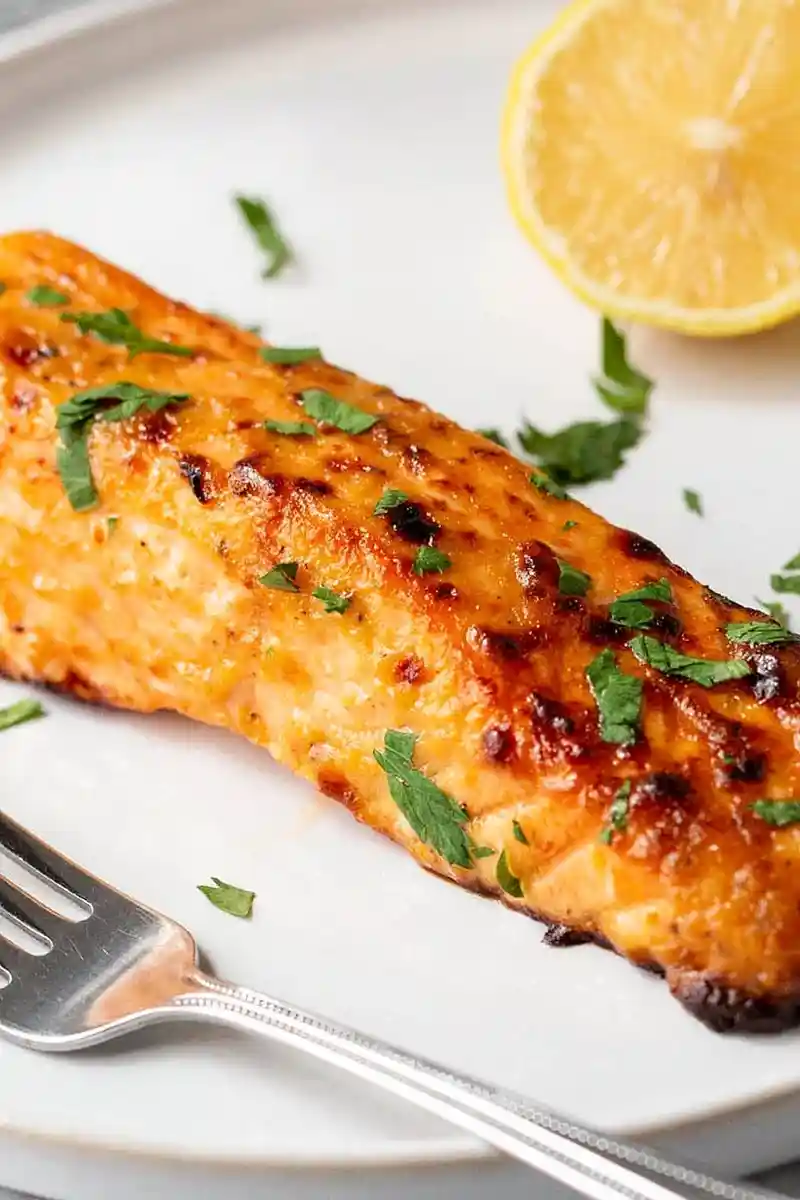
List of ingredients
- 6 oz salmon – a fresh fillet is recommended for the best texture.
- 1 Tablespoon dijon mustard – provides a sharp, tangy base for the glaze.
- 1 Tablespoon honey – adds natural sweetness and helps the glaze caramelize.
- 1 teaspoon olive oil – prevents the fish from sticking and adds richness.
- 1/2 teaspoon garlic powder – adds a savory, aromatic depth.
- Salt (a pinch) – enhances the natural flavors of the salmon.
- Pepper (a pinch) – adds a subtle warmth and spice.
- Lemon wedges – optional for adding a fresh, citrusy finish before serving.
step-by-step instructions
- Preheat: Set your air fryer to 400 degrees F and let it preheat for 5 minutes to ensure an even sear.
- Mix the Glaze: In a small mixing bowl, combine the honey, dijon mustard, garlic powder, and olive oil. Stir the mixture until it is smooth and well-combined.
- Prepare the Fish: Pat the salmon fillets dry with a paper towel to remove excess moisture. Remove any visible pin bones and the skin if desired. Season the fish with a pinch of salt and pepper on all sides.
- Coat the Salmon: Spoon the honey dijon glaze over the top of the salmon and rub it into all sides to ensure full coverage. Reserve a small amount of the glaze to use as a final garnish after cooking.
- Arrange in Basket: Place the salmon fillets in the air fryer basket. If you left the skin on, place the fillets skin side down.
- Cook: Air fry at 400 degrees F for 7 to 9 minutes. The cooking time may vary slightly depending on the thickness of your fillets.
- Finish and Serve: Remove the salmon from the air fryer. Top with the reserved glaze and fresh lemon wedges if desired.
Mastering the Salmon Texture
Use a Digital Meat Thermometer
Checking the internal temperature is the only way to guarantee the salmon is cooked to your preference. For a medium-rare finish, aim for 135 degrees F. For a fully cooked and safer well-done texture, cook until it reaches 145 degrees F.
Adjust for Fillet Thickness
Salmon fillets vary significantly in thickness, which affects the cooking time. Thinner cuts may finish in as little as 7 minutes, while thick center-cuts might need 10 or 11 minutes. Check the fish every 2 minutes after the 7-minute mark to avoid overcooking.
Select a Uniform Cut
Choosing a center-cut fillet ensures that the fish is the same thickness from end to end. This prevents the thinner tail end from drying out while the thicker middle is still raw. If using a tapered cut, you can slightly tuck the thin end under itself.
Flavor Customizations and Swaps
Substituting Dijon with Stone-Ground Mustard
If you prefer a less sharp flavor and a chunkier texture, use stone-ground mustard. It provides a more rustic feel to the glaze while maintaining the essential tanginess. The measurements remain the same as the dijon mustard.
Incorporating Fresh Dill for Herbaceousness
Fresh dill pairs exceptionally well with the sweetness of honey and the richness of salmon. You can mix finely chopped dill directly into the glaze before coating the fish. Alternatively, sprinkle fresh dill over the salmon immediately after it comes out of the air fryer.
Adding Apple Cider Vinegar for Brightness
To cut through the sweetness of the honey, add 1/2 teaspoon of apple cider vinegar to the sauce. This introduces a bright acidity that balances the flavor profile. It mimics the effect of lemon juice but is integrated into the glaze itself.
Mixing in Sriracha for a Spicy Profile
For those who enjoy a bit of heat, add a teaspoon of sriracha or sweet chili sauce to the mixture. This creates a sweet-and-spicy glaze that complements the fatty acids in the salmon. Start with a small amount and adjust based on your heat tolerance.
Ideal Side Dish Pairings
Serving with Steamed Asparagus
Asparagus is a classic companion to salmon due to its earthy flavor. You can steam it quickly or toss it in the air fryer for a few minutes after the salmon is removed. The snap of the asparagus contrasts well with the tender fish.
Pairing with Quinoa or Brown Rice
A grain base like quinoa or brown rice helps soak up any extra honey mustard glaze. These options provide complex carbohydrates and fiber, making the meal more filling. Cook the grains in vegetable broth instead of water for additional flavor.
Adding Roasted Brussels Sprouts
The bitterness of charred brussels sprouts balances the sweetness of the honey glaze. Roast them with a bit of olive oil and salt until the outer leaves are crispy. This adds a savory, nutty dimension to the plate.
Serving with a Fresh Cucumber Salad
A chilled cucumber salad with a light vinegar dressing provides a refreshing contrast to the warm, rich salmon. Use thinly sliced cucumbers, red onions, and a splash of rice vinegar. This palate cleanser keeps the meal feeling light.
Storage and Reheating Guidance
Proper Refrigeration Methods
Place leftover salmon in an airtight container to prevent it from absorbing other fridge odors. Ensure the fish has cooled slightly before sealing the lid to avoid creating excess condensation. Store it on a shelf rather than in the door for a consistent temperature.
Reheating in the Air Fryer
To maintain the best texture, reheat salmon in the air fryer at 350 degrees F for 3 to 5 minutes. This prevents the fish from becoming rubbery, which often happens in a microwave. Avoid overcooking during the reheat process to keep the interior moist.
Maximum Storage Duration
Cooked salmon is best enjoyed within 3 to 4 days when kept in the refrigerator. Beyond this timeframe, the quality of the fats begins to degrade, and the flavor may change. If you cannot eat it within 4 days, it is better to freeze it.
Preparing Salmon for Optimal Results
The Importance of Patting Salmon Dry
Moisture on the surface of the fish creates steam, which prevents the glaze from adhering and the fish from searing. Use heavy-duty paper towels to press firmly on all sides of the fillet. A dry surface ensures the honey caramelizes into a sticky crust.
Correctly Removing Pin Bones
Use a pair of clean tweezers or a fish bone tool to remove any remaining pin bones. Gently run your finger along the center of the fillet to locate them. Pull the bones out in the direction they are pointing to avoid tearing the flesh.
Bringing Salmon to Room Temperature
Take the salmon out of the refrigerator about 15 to 20 minutes before cooking. This prevents the center from remaining cold while the outside overcooks. Room temperature fish cooks more evenly throughout the entire fillet.
Troubleshooting Common Issues
Preventing Salmon from Sticking
If your salmon frequently sticks to the air fryer basket, lightly grease the grate with an oil sprayer. You can also use a small piece of perforated parchment paper specifically designed for air fryers. This allows air to circulate while protecting the fish.
Managing Glaze Burn
Because honey contains high amounts of sugar, it can burn if the temperature is too high for too long. If you notice the glaze darkening too quickly, reduce the heat to 375 degrees F. You can also apply a second layer of glaze after the fish is halfway cooked.
Avoiding Uneven Cooking
Do not overcrowd the air fryer basket; leave space between the fillets for air to flow. Overcrowding creates steam pockets, which results in pale, boiled-looking fish instead of caramelized salmon. Cook in batches if you are preparing more than two fillets.
Frequently Asked Questions
Can I use frozen salmon for this recipe?
Yes, but you must thaw the salmon completely in the refrigerator before starting. Cooking salmon from frozen in the air fryer can lead to uneven textures and prevents the glaze from sticking properly.
What is the best type of salmon for air frying?
Atlantic salmon is widely available and has a higher fat content, which keeps it moist in the air fryer. Sockeye salmon is a great alternative for a bolder flavor, though it is leaner and cooks faster.
Can I use maple syrup instead of honey?
Maple syrup is a suitable replacement and will provide a distinct, woody sweetness. Use the same 1 Tablespoon measurement. Note that maple syrup is thinner than honey, so the glaze may be slightly less thick.
Print
Air Fryer Honey Dijon Salmon
- Total Time: 13 minutes
- Yield: 1 serving 1x
- Diet: Gluten-Free
Description
Air fryer honey dijon salmon is quick and easy to make for lunch or dinner. It takes less than 10 minutes to cook, and is flavorful and delicious!
Ingredients
- 6 oz salmon
- 1 Tablespoon dijon mustard
- 1 Tablespoon honey
- 1 teaspoon olive oil
- 1/2 teaspoon garlic powder
- pinch of salt
- pinch of pepper
- lemon wedges (optional)
Instructions
- Preheat: Preheat air fryer for 5 minutes at 400 degrees F.
- Mix: In a small bowl, add the honey, dijon mustard, garlic powder, and olive oil. Stir to combine.
- Prepare: Take your salmon filets and pat dry with a paper towel. Remove any bones. If desired, remove the skin. Season with salt and pepper.
- Coat: Spoon the honey dijon glaze over the top of the salmon and rub into all sides of the salmon to coat. Reserve a little glaze if you want to spoon a little on top after cooking (optional).
- Place: Place the salmon filets in the air fryer, skin side down (if skin was left on).
- Cook: Cook at 400 degrees F for 7-9 minutes.
- Finish: Remove and top with remaining glaze (optional) and lemon wedges (optional).
Notes
The recipe serves 1 as written. To make 2 salmon fillets, double the recipe. Use a meat thermometer to ensure the salmon is cooked to an internal temperature of 145 degrees F for well-done or 135 degrees F for medium-rare.
- Prep Time: 5 minutes
- Cook Time: 8 minutes
- Category: Main Course
- Method: Air Fryer
- Cuisine: American
Nutrition
- Serving Size: 1 fillet
- Calories: 355 kcal
- Sugar: 17 g
- Sodium: 242 mg
- Fat: 15 g
- Saturated Fat: 2 g
- Unsaturated Fat: 12 g
- Trans Fat: 0 g
- Carbohydrates: 19 g
- Fiber: 1 g
- Protein: 35 g
- Cholesterol: 94 mg