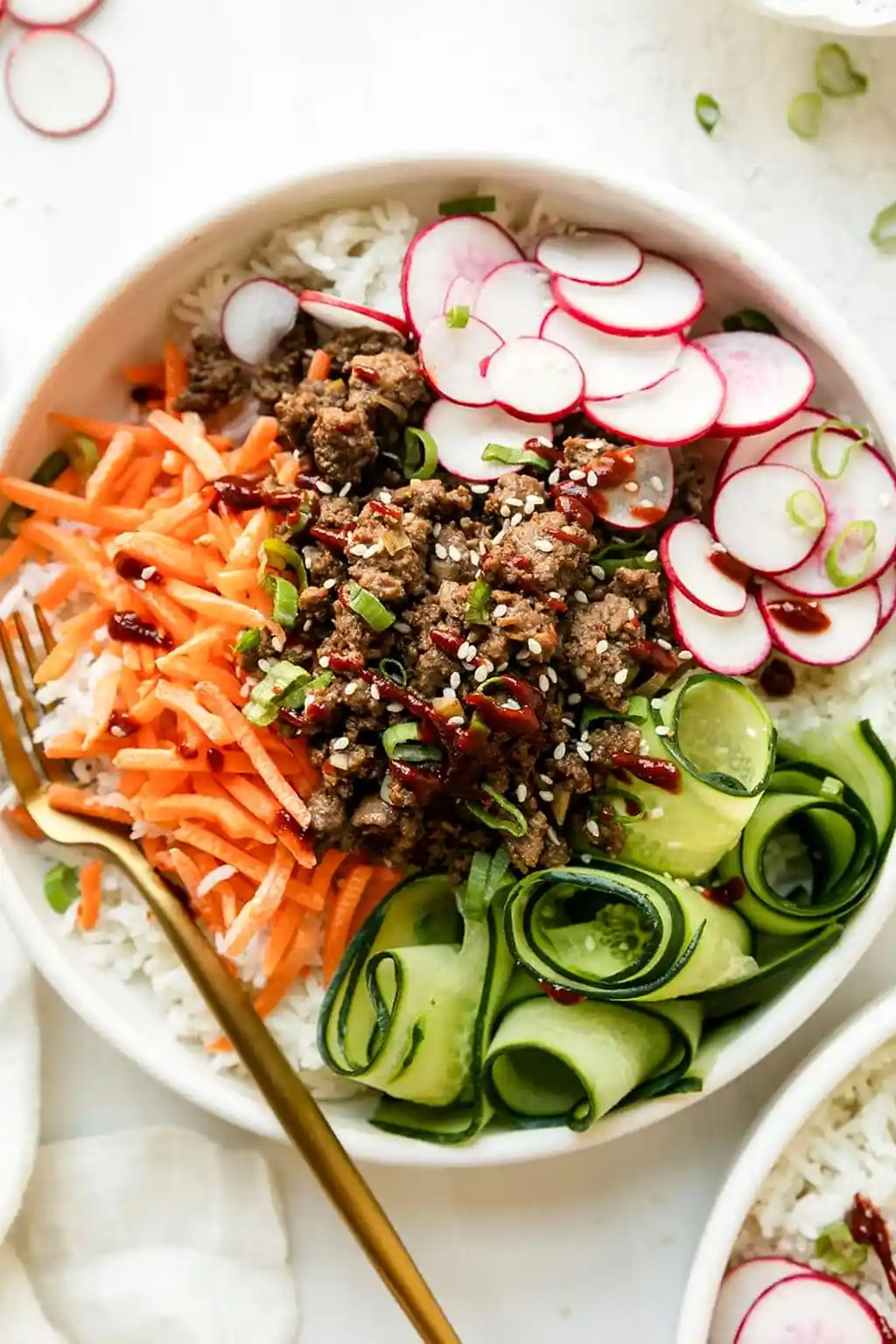
These Korean-inspired beef bowls are the ultimate solution for busy weeknights when you want something satisfying, packed with protein, and ready in less than half an hour. By combining savory aromatics with crisp, fresh vegetables, this dish provides a balanced meal that delivers complex flavors without needing hours in the kitchen.
List of ingredients
- 1 lb. 100% grass-fed ground beef
- ⅓ cup coconut aminos
- 1 tablespoon toasted sesame oil
- 2 teaspoons honey
- 2 tablespoons rice vinegar
- 3 garlic cloves, minced
- ¼ – ½ teaspoon crushed red pepper flakes
- ¼ teaspoon ground ginger
- 3 green onions, sliced (green and white parts separated)
- 3 cups cooked white or brown rice
- 1 teaspoon sesame seeds
- 1 large cucumber, thinly sliced
- 8 radishes, trimmed and thinly sliced
- 2 medium carrots, shredded
- Optional: Sriracha or chili-garlic sauce
step-by-step instructions
- Step: Place a medium or large skillet over medium-high heat. Add the ground beef to the skillet, stirring and crumbling into small pieces until cooked through. Drain any excess liquid.
- Step: In a small bowl, whisk together the coconut aminos, honey, sesame oil, rice vinegar, garlic, red pepper flakes, and ginger.
- Step: Add the sauce and the light green and white parts of the green onions to the ground beef. Stir and cook for 1-2 minutes to bring the sauce to a simmer.
- Step: Remove from heat and serve the beef mixture over hot cooked rice with cucumber, radish, and carrot. Garnish with remaining green onion and sesame seeds. Serve with hot sauce if desired.
Practical Preparation Techniques
Managing Beef Texture for Better Absorption
When browning the ground beef, ensure the skillet is sufficiently hot before adding the meat. Allowing the beef to develop a slight sear before breaking it down completely creates better texture and helps the final sauce cling to the crumbles rather than pooling at the bottom of the pan.
Selecting the Right Rice Texture
Using short-grain or medium-grain rice is generally preferred for this dish as it tends to be slightly stickier, which helps hold the beef and vegetable components together better than long-grain varieties like basmati. If you are using leftover rice, fluff it with a fork and a tiny splash of water in the microwave to restore its moisture before assembling the bowls.
Optimizing Vegetable Crunch
For the best experience, keep your cucumber, radish, and carrot slices quite thin. Using a mandoline or a sharp vegetable peeler allows you to create ribbons or thin discs that integrate better with the rice and beef, ensuring every bite contains a perfect balance of savory meat and fresh, crisp vegetables.
Substitutions and Dietary Adjustments
Alternative Protein Options
If you prefer a lighter base, ground chicken or ground turkey works remarkably well in this recipe. Both poultry options absorb the savory sauce very efficiently; just be mindful that they may cook slightly faster than beef, so monitor the skillet closely to avoid drying out the meat.
Grain-Free and Lower-Carb Bases
For those looking to reduce carbohydrates, cauliflower rice is an excellent substitute that mimics the mouthfeel of steamed rice. Alternatively, serve the seasoned beef inside large butter lettuce leaves to create crunchy, fresh lettuce wraps, or simply pile the ingredients over a bed of finely shredded cabbage or baby spinach.
Managing Soy-Free Requirements
Coconut aminos are a naturally soy-free and gluten-free alternative to soy sauce, but if you do not have them on hand, you can use tamari for a gluten-free soy option. If you opt for traditional soy sauce, consider using a reduced-sodium version to maintain better control over the overall saltiness of the final dish.
Storage and Reheating Advice
Proper Refrigeration Practices
To keep the vegetables fresh and crisp, store them in a separate airtight container from the beef and rice mixture. The cooked beef will maintain its quality for up to three days when kept refrigerated in an airtight glass or plastic container.
Reheating Methods for Best Quality
When reheating on the stovetop, add a splash of water to the skillet to prevent the sauce from burning. For microwave reheating, use a microwave-safe cover to trap moisture, which helps the rice stay fluffy and ensures the meat doesn’t become tough or overly dry during the heating process.
Expanding the Flavor Profile
Enhancing the Sauce Complexity
If you find yourself wanting a more intense depth of flavor, consider adding a teaspoon of toasted sesame paste or a tiny drop of fish sauce to the liquid mixture. These additions introduce an extra layer of umami that elevates the finished dish, though you should adjust the amount of salt added elsewhere to compensate for the intensity of these ingredients.
Adding Different Fresh Elements
While cucumbers, radishes, and carrots are classic, you can easily incorporate other vegetables depending on the season. Thinly sliced bok choy, quick-pickled onions, or even blanched snap peas add wonderful dimensions of color and texture that complement the sweet-salty nature of the beef.
Common Questions
Can I prepare this in advance for meal prep?
Yes, this recipe is perfect for meal prep. Simply prepare the beef mixture, let it cool completely, and store it in individual containers alongside your cooked rice and prepared raw vegetables for a quick grab-and-go meal throughout the week.
How do I make the sauce thicker?
The coconut aminos and honey reduction typically thickens naturally during the short simmering step. If you desire an even thicker glaze, whisk in a tiny pinch of cornstarch or arrowroot powder with the sauce ingredients before adding them to the skillet.
Is this recipe suitable for children?
The flavor profile is generally very friendly for all ages because it balances savory and sweet notes. Simply reduce or omit the red pepper flakes and serve the hot sauce on the side so that each diner can control their own spice level.
What is the benefit of separating the onion parts?
Cooking the white parts of the onion with the beef infuses the base of the dish with a mellow, sweet onion flavor. Adding the fresh green tops at the end provides a bright, sharp contrast and an attractive garnish that adds freshness to every bite.
Print
Korean-Style Ground Beef Bowls: A Fast 30-Minute Meal
- Total Time: 25 minutes
- Yield: 4 servings 1x
- Diet: Dairy-Free, Gluten-Free
Description
These Korean-inspired beef bowls are packed with flavor, protein, and color and ready in under 30 minutes.
Ingredients
- 1 lb. 100% grass-fed ground beef
- ⅓ cup coconut aminos
- 1 tablespoon toasted sesame oil
- 2 teaspoons honey
- 2 tablespoons rice vinegar
- 3 garlic cloves, minced
- ¼ – ½ teaspoon crushed red pepper flakes
- ¼ teaspoon ground ginger
- 3 green onions, sliced (green and white parts separated)
- 3 cups cooked white or brown rice
- 1 teaspoon sesame seeds
- 1 large cucumber, thinly sliced
- 8 radishes, trimmed and thinly sliced
- 2 medium carrots, shredded
- Optional: Sriracha or chili-garlic sauce
Instructions
- Step: Place a medium or large skillet over medium-high heat. Add the ground beef to the skillet, stirring and crumbling into small pieces until cooked through. Drain any excess liquid.
- Step: In a small bowl, whisk together the coconut aminos, honey, sesame oil, rice vinegar, garlic, red pepper flakes, and ginger.
- Step: Add the sauce and the light green and white parts of the green onions to the ground beef. Stir and cook for 1-2 minutes to bring the sauce to a simmer.
- Step: Remove from heat and serve the beef mixture over hot cooked rice with cucumber, radish, and carrot. Garnish with remaining green onion and sesame seeds. Serve with hot sauce if desired.
Notes
May substitute 3 tablespoons tamari or low-sodium soy sauce mixed with 3 tablespoons water for coconut aminos if desired.
- Prep Time: 15 minutes
- Cook Time: 10 minutes
- Category: Main Course
- Method: Stovetop
- Cuisine: Korean-inspired
Nutrition
- Serving Size: 1 bowl
- Calories: 460 kcal
- Sugar: 15 g
- Sodium: 600 mg
- Fat: 14 g
- Saturated Fat: 5 g
- Unsaturated Fat: 7 g
- Trans Fat: 0 g
- Carbohydrates: 50 g
- Fiber: 3 g
- Protein: 26 g
- Cholesterol: 75 mg