This recipe combines pan-fried salmon fillets with spaghetti and spiralized zucchini in a rich tomato and cream sauce. It is designed as a quick weeknight meal that provides a balance of protein and vegetables in one pan.
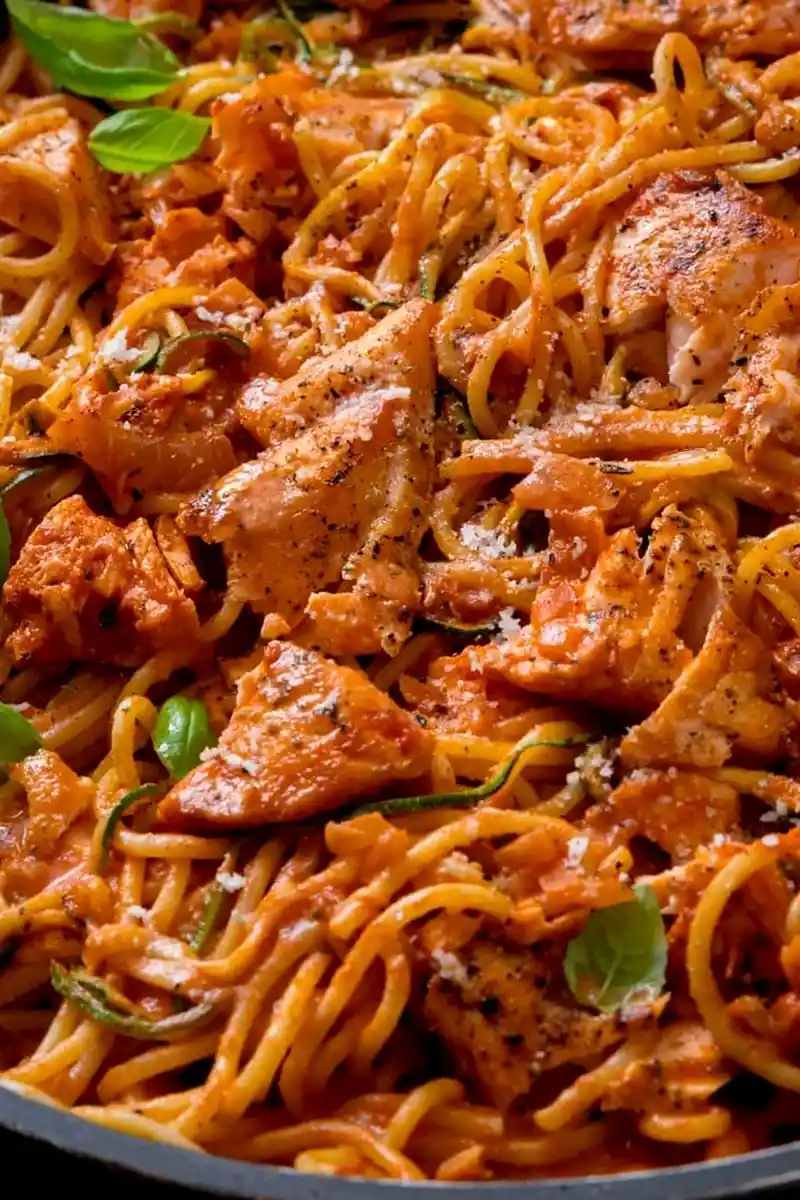
List of ingredients
- 2 tbsp olive oil – used for searing the salmon and sautéing vegetables.
- 3 pieces boneless salmon (approx 400g/14oz) – skin can remain on during initial cooking.
- 1/4 tsp salt – for seasoning the fish.
- 1/4 tsp black pepper – for seasoning the fish.
- 1 medium onion (or 2 small onions) – peeled and finely diced.
- 2 garlic cloves – peeled and minced.
- 500 g (17.5 oz) passata – smooth tomato puree.
- 1 tbsp tomato puree – provides concentrated tomato flavor.
- 1/2 tsp dried thyme – adds an earthy herbal note.
- 1 tsp sugar – balances the acidity of the tomatoes.
- 3 tbsp double (heavy) cream – creates the creamy texture of the sauce.
- 300 g (10.5 oz) dried spaghetti – the main pasta component.
- 1 large courgette (zucchini) – spiralized or sliced into thin matchsticks.
- grated parmesan cheese – for garnish and salty flavor.
- fresh basil – for a fresh aromatic finish.
- black pepper – additional amount for final seasoning.
step-by-step instructions
- Boil Pasta: Place a large pan of water on to boil. Once boiling, add the spaghetti and simmer for 12-13 minutes until cooked.
- Sear Salmon: Heat the olive oil in a large frying pan over medium-high heat. Season salmon fillets with salt and pepper, then place them in the pan skin-side-up.
- Brown and Move: Fry the salmon for 3 minutes until golden. Turn the fillets over and move them to one side of the frying pan.
- Sauté Aromatics: Add diced onions to the empty space in the pan. Cook on medium heat for 3-4 minutes, stirring occasionally until softened.
- Add Garlic: Stir in the minced garlic and cook for an additional 30 seconds to release the aroma.
- Simmer Sauce: Stir in the passata, tomato puree, dried thyme, and sugar. Allow the mixture to simmer for 2-3 minutes.
- Blanch Zucchini: Add the spiralized zucchini to the boiling pasta water for the final 30 seconds of cooking. Drain the pasta and zucchini in a colander, reserving one cup of the cooking water.
- Finish Salmon: Turn the salmon fillets over in the pan. Use tongs to remove the skin and discard it. Break the salmon into chunky pieces using the back of a fork.
- Cream the Sauce: Stir the double cream into the tomato sauce until well blended.
- Combine: Add the cooked spaghetti and zucchini to the pan along with approximately 1/4 cup of the reserved pasta water.
- Toss: Use tongs to toss the spaghetti in the sauce, ensuring salmon pieces are evenly distributed. Add more pasta water if a looser sauce is desired.
- Plate: Divide the pasta into bowls and top with grated parmesan, black pepper, and fresh basil leaves.
Pasta Cooking Techniques
Salting the Pasta Water
Add a generous amount of salt to the water before the pasta is added. This is the only opportunity to season the pasta itself, which enhances the overall flavor of the final dish.
Achieving Al Dente Texture
Check the pasta two minutes before the package directions suggest. Pasta continues to cook slightly when tossed in the hot sauce, so removing it while it still has a firm bite prevents mushiness.
Avoiding Pasta Sticking
Use a large pot with plenty of water to allow the spaghetti to move freely. Stir the pasta immediately after adding it to the boiling water to prevent the strands from clumping together.
Salmon Preparation Tips
Choosing the Right Cut of Salmon
Center-cut fillets provide a consistent thickness, ensuring that all pieces cook evenly in the pan. Avoid pieces with thin tails as they tend to overcook more quickly than the thicker center.
Patting Salmon Dry for a Better Sear
Use paper towels to remove excess moisture from the surface of the salmon before seasoning. Dry fish creates a better Maillard reaction, resulting in a golden-brown crust and better flavor.
Handling Frozen Fillets
Thaw frozen salmon completely in the refrigerator overnight before cooking. Cooking salmon from frozen can lead to uneven temperature distribution and a release of excess water that prevents searing.
Cooking Tips for Perfect Results
Use Pasta Water to Emulsify the Sauce
The reserved pasta water contains starch that acts as a binding agent between the oil and the tomato cream sauce. Adding a splash of this water helps the sauce cling more effectively to the spaghetti.
Avoid Overcooking the Zucchini
Zucchini has a high water content and can become watery if boiled too long. Adding it to the pasta water for only 30 seconds preserves its structural integrity and bright green color.
Searing Salmon for Maximum Flavor
Ensure the pan is hot before adding the oil and fish. A high initial heat seals the surface of the salmon quickly, locking in moisture while creating a savory exterior.
Ingredient Substitutions
Alternative Pasta Shapes
Linguine or fettuccine are excellent alternatives to spaghetti as they hold the creamy sauce well. For shorter shapes like penne or fusilli, simply adjust the cooking time according to the package.
Using Different Types of Cream
If double cream is unavailable, use heavy cream or a mixture of mascarpone and a splash of milk. For a lighter version, a dollop of Greek yogurt can be stirred in at the very end off the heat.
Swapping Passata for Fresh Tomatoes
Freshly blended blanched tomatoes can replace passata for a brighter flavor. Ensure the fresh puree is simmered for a few extra minutes to reduce excess moisture and concentrate the taste.
Flavor Variations
Adding a Spicy Kick with Chilli Flakes
Stir in a pinch of crushed red pepper flakes when adding the garlic to the pan. This infuses the oil with heat, which then distributes evenly throughout the tomato sauce.
Incorporating Fresh Spinach for Extra Greens
Add a handful of baby spinach during the final toss of the pasta and sauce. The residual heat will wilt the spinach quickly without requiring additional cooking time.
Using Different Fresh Herbs
While basil is traditional, fresh parsley or chives provide a different aromatic profile. Add these herbs at the very end to maintain their color and delicate flavor.
Serving Suggestions
Pairing with Garlic Bread
Serve the pasta with toasted baguette slices rubbed with garlic and olive oil. The crisp texture of the bread complements the softness of the creamy pasta and salmon.
Adding a Side Salad
A simple green salad with a lemon-based vinaigrette cuts through the richness of the double cream. Use mixed leaves and sliced cucumbers for a refreshing contrast.
Wine-Free Beverage Pairings
Sparkling water with a squeeze of fresh lemon or lime pairs well with this dish. The acidity of the citrus cleanses the palate between bites of the creamy salmon.
Storage and Reheating
How to Store Leftovers Safely
Allow the pasta to cool slightly before transferring it to an airtight container. Store it in the refrigerator for up to two days to maintain the quality of the fish.
Best Methods for Reheating Salmon Pasta
Reheat the pasta in a skillet over medium heat with a lid on. This traps steam and prevents the salmon from drying out during the heating process.
Preventing Pasta from Drying Out
Add a tablespoon of water or cream to the pan before reheating. This restores the emulsion of the sauce and ensures the spaghetti remains moist.
Make-Ahead Advice
Preparing the Sauce in Advance
The tomato and onion base can be cooked and refrigerated up to 24 hours ahead of time. Simply reheat the sauce in the pan before adding the cream and cooked pasta.
Pre-cutting Vegetables
Dice the onions and mince the garlic in advance and store them in a small container. Spiralize the zucchini and keep it in a sealed bag to save preparation time on the day of cooking.
Troubleshooting Common Issues
Sauce is Too Thick
If the sauce becomes too dense, gradually stir in more of the reserved pasta water. Do this one tablespoon at a time until the desired consistency is reached.
Salmon is Too Dry
Overcooking salmon leads to a dry texture. To avoid this, ensure you follow the timing for searing and remove the fish from high heat once it is golden.
Zucchini is Too Mushy
Mushy zucchini happens when it is boiled for too long or over-stirred. Ensure it only spends 30 seconds in the boiling water and is tossed gently with the pasta.
Frequently Asked Questions
Can this tomato salmon pasta be made ahead?
While it is best eaten fresh, you can make it ahead by cooling it quickly and refrigerating. Reheat in a pan over medium heat with a splash of water to loosen the sauce.
Do I have to remove the salmon skin?
The skin is removed in this recipe to create a more uniform texture with the pasta. However, if you prefer the skin, you can leave it on and simply break the fillets into chunks.
Can I use frozen salmon fillets?
Yes, but they must be fully thawed before cooking. Thawing prevents the fillets from releasing too much water, which would steam the fish instead of searing it.
Print
Creamy Tomato Salmon Pasta
- Total Time: 20 minutes
- Yield: 4 servings 1x
- Diet: General
Description
Tender pan-fried salmon with spaghetti and a little courgetti in a creamy tomato sauce. An easy weeknight dinner!
Ingredients
- 2 tbsp olive oil
- 3 pieces boneless salmon (approx 400g/14oz)
- 1/4 tsp salt
- 1/4 tsp black pepper
- 1 medium onion, peeled and finely diced
- 2 garlic cloves, peeled and minced
- 500 g passata
- 1 tbsp tomato puree
- 1/2 tsp dried thyme
- 1 tsp sugar
- 3 tbsp double cream
- 300 g dried spaghetti
- 1 large courgette, spiralized or sliced into thin strips
- grated parmesan cheese
- fresh basil
- black pepper
Instructions
- Step: Place a large pan of water on to boil. When the water comes to the boil, add the pasta and simmer for 12-13 minutes, until cooked.
- Step: Heat the oil in a large frying pan over a medium-high heat.
- Step: Season the salmon fillets with the salt and pepper. Place in the pan skin-side-up.
- Step: Fry the salmon for 3 minutes, until golden, then turn the salmon over and move it to one side of the pan.
- Step: Add the onions to the space left in the pan. Cook on a medium heat for 3-4 minutes, stirring occasionally, until softened.
- Step: Stir in the minced garlic and cook for a further 30 seconds.
- Step: Add in the passata, tomato puree, dried thyme, and sugar. Stir together and allow to simmer for 2-3 minutes.
- Step: Add the spiralized courgette to the pan with the pasta for the last 30 seconds of cooking. Then drain the pasta in a colander, reserving a cup of the cooking water.
- Step: Turn the salmon over in the frying pan. Remove the skin using a set of tongs and discard.
- Step: Break up the salmon using the back of a fork into chunky pieces. Stir the cream into the sauce.
- Step: Add the cooked spaghetti and spiralized courgette to the pan along with a good splash (about 1/4 cup) of the pasta cooking water.
- Step: Use a set of tongs to toss the spaghetti in the sauce, distributing the pieces of salmon amongst the pasta.
- Step: Divide the pasta between bowls and top with a little grated parmesan, black pepper, and a sprinkling of fresh basil leaves.
Notes
Add the courgetti to the boiling pasta for only the last 30 seconds to keep some bite. Use reserved pasta cooking water to loosen the sauce if needed.
- Prep Time: 5 minutes
- Cook Time: 15 minutes
- Category: Dinner
- Method: Pan-frying
- Cuisine: British
Nutrition
- Serving Size: 1 serving
- Calories: 596 kcal
- Sugar: 12 g
- Sodium: 240 mg
- Fat: 19 g
- Saturated Fat: 5 g
- Unsaturated Fat: 14 g
- Trans Fat: 0 g
- Carbohydrates: 74 g
- Fiber: 6 g
- Protein: 33 g
- Cholesterol: 70 mg