This all-in-one meal combines honey-glazed salmon with roasted potatoes and brussels sprouts for a quick, nutritious dinner. The dish is finished with a creamy, tahini-based Caesar-style dressing that ties all the flavors together.
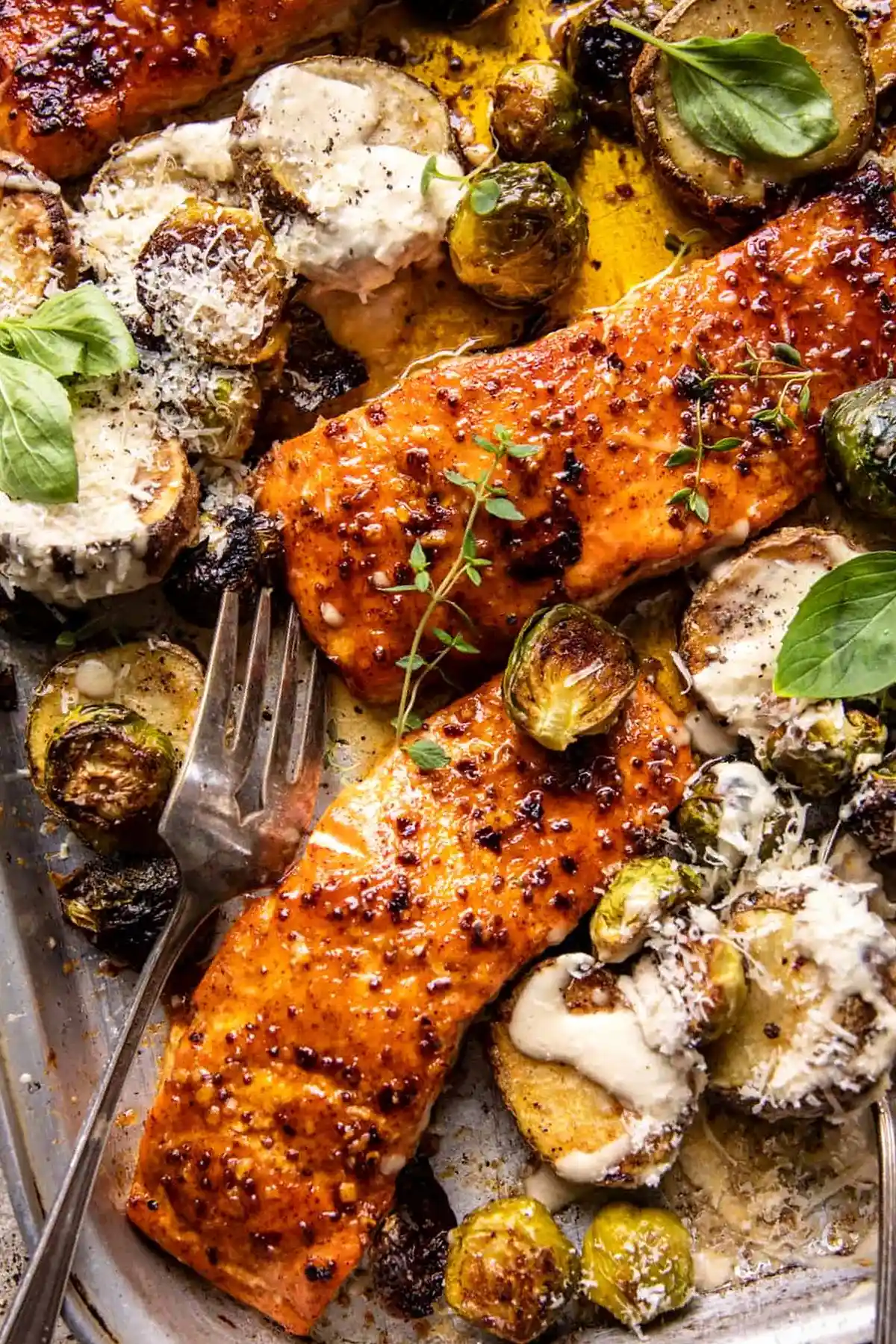
List of ingredients
- 1/2 pound potatoes, cut into 1/2 inch chunks – use waxy potatoes for better roasting.
- 1/2 pound brussels sprouts, halved – ensure they are dry for maximum crispiness.
- 5 tablespoons extra virgin olive oil – divided between roasting and the glaze.
- Kosher salt and black pepper – for seasoning all components.
- 4 (5-6 ounce) salmon fillets – skin-on or skinless based on preference.
- 2 tablespoons honey – provides sweetness and a sticky glaze.
- 2 tablespoons grainy dijon mustard – adds texture and tang.
- 2 cloves garlic, chopped – for aromatic depth.
- 1 teaspoon chili powder – adds a mild earthy warmth.
- 1/2 teaspoon cayenne – provides a subtle spicy kick.
- 3 tablespoons salted butter – added to fillets for richness.
- 1/2 cup extra virgin olive oil – for the Caesar-style dressing.
- 1/2 cup tahini – creates a creamy, dairy-free base for the sauce.
- 1/4 cup lemon juice – adds brightness and acidity.
- 1 tablespoon dijon mustard – for sharp flavor in the dressing.
- 2 teaspoons Worcestershire sauce – adds a salty, umami depth.
- 1/4 cup grated parmesan cheese, plus more for serving – for a classic salty finish.
step-by-step instructions
- Roast the Vegetables: Preheat your oven to 450°F. On a large baking sheet, toss the halved brussels sprouts and potato chunks with 2 tablespoons of olive oil, salt, and pepper. Roast for 15 minutes or until they begin to tenderize.
- Prepare the Salmon Glaze: While the vegetables roast, whisk together the honey, grainy dijon mustard, chopped garlic, chili powder, cayenne, and 2 tablespoons of olive oil. Season the mixture with salt, then spoon it evenly over the salmon fillets on a plate.
- Bake the Salmon: Remove the vegetable tray from the oven. Place the glazed salmon fillets on the sheet pan and top each one with a piece of salted butter. Bake for 10 minutes, or until the salmon reaches your preferred doneness.
- Broil for Texture: During the final minute of cooking, switch the oven to the broil setting. Broil carefully until the glaze is lightly charred and bubbling, watching closely to prevent burning.
- Blend the Dressing: Combine the tahini, 1/2 cup olive oil, lemon juice, dijon mustard, Worcestershire sauce, and parmesan in a blender. Blend until smooth, then whisk in 1/4 to 1/2 cup of water to reach your desired thickness and adjust salt to taste.
- Final Assembly: Immediately after removing the pan from the oven, pour the dressing over the roasted vegetables and sprinkle with extra parmesan. Serve the salmon and any pan juices over the potatoes with additional dressing on top.
Professional Roasting Tips
Maintain Precise Oven Temperature
Keeping the oven at exactly 450°F is critical for achieving a sear on the vegetables. If the temperature drops, the potatoes may steam rather than roast, resulting in a soft texture. Consider using an oven thermometer to verify accuracy.
Ensure Uniform Vegetable Cuts
Cutting the potatoes into consistent 1/2 inch chunks ensures they all cook at the same rate. If some pieces are significantly larger, they will remain raw while the smaller ones burn. Consistency is the key to a perfectly timed sheet pan meal.
Avoid Overcrowding the Pan
Giving the salmon and vegetables enough space allows hot air to circulate freely. Overcrowding leads to steaming, which prevents the brussels sprouts from getting those characteristic charred edges. Use a large rimmed baking sheet to provide ample room.
Check Salmon Internal Temperature
Use an instant-read meat thermometer to ensure the salmon is cooked to your liking. For medium-rare, aim for 125°F, or 145°F for fully cooked. This prevents the fish from becoming dry during the final broiling step.
Ingredient Substitutions
Alternative Potato Varieties
While russet potatoes work, Yukon Gold or red potatoes are ideal because they hold their shape better. Waxy potatoes provide a creamier interior and a crispier exterior. Avoid using overly starchy potatoes if you prefer a firmer bite.
Swapping Brussels Sprouts
If you dislike brussels sprouts, broccoli florets or trimmed asparagus make excellent substitutes. Broccoli takes roughly the same time, while asparagus should be added later in the process. These greens pair equally well with the Caesar dressing.
Honey Replacements for Glazing
Pure maple syrup is a great alternative to honey for a more autumnal flavor. Agave nectar can also be used for a similar sweetness and viscosity. Keep the quantity the same to maintain the balance of the glaze.
Tahini Substitutes for Creaminess
For those who prefer a traditional Caesar base, you can substitute the tahini with a neutral Greek yogurt. Alternatively, a cashew cream made from soaked cashews and water provides a similar richness. Adjust the water content to match the original thickness.
Mustard Variations
If grainy dijon is unavailable, a smooth dijon mustard works well, though you lose some texture. Whole mustard seeds can be added separately to mimic the grainy effect. Avoid using yellow mustard, as its flavor is too mild for this glaze.
Flavor Customizations
Increasing the Heat Level
To add more spice, increase the cayenne pepper to a full teaspoon or add a pinch of crushed red pepper flakes. Sliced fresh jalapeños can also be roasted alongside the vegetables. This balances the sweetness of the honey glaze.
Adding Fresh Herbal Notes
Freshly chopped parsley or dill added at the very end brings a bright, grassy contrast. Thyme can be mixed into the vegetable toss for an earthy undertone. Herbs should be added after cooking to preserve their delicate oils.
Citrus Variations for Zest
Replacing the lemon juice in the dressing with lime juice offers a punchier, more tropical profile. You can also zest the lemon directly onto the salmon before broiling. This enhances the acidity and cuts through the richness of the butter.
Incorporating Toasted Seeds
Sprinkle toasted sesame seeds or pine nuts over the finished dish for added crunch. These nuts complement the nuttiness of the tahini dressing perfectly. Toast them in a dry pan for 2-3 minutes before garnishing.
Plating and Serving Ideas
Pairing with Ancient Grains
For a heartier meal, serve this dish alongside a scoop of quinoa or farro. The grains can soak up the extra honey mustard glaze and Caesar dressing. This adds a chewy texture and extra protein to the plate.
Fresh Garnish Suggestions
A handful of fresh arugula or microgreens placed under the salmon adds a peppery contrast. Thinly sliced radishes can provide a crisp, sharp bite that cleanses the palate. These additions make the meal feel like a restaurant-quality entree.
Balancing the Plate
Ensure a balanced distribution of vegetables and protein on each plate. Spooning the pan juices over the potatoes maximizes the flavor of the honey and butter. Use a wide, shallow bowl to keep the dressing from running off the edges.
Non-Alcoholic Beverage Pairings
A chilled sparkling water with a slice of cucumber and lemon complements the richness of the salmon. A tart pomegranate juice or a crisp apple cider also pairs well with the honey and mustard. These options provide a refreshing acidity to balance the dish.
Storage and Preservation
Refrigeration Guidelines
Store leftover salmon and vegetables in an airtight container for up to three days. Keep the leftover dressing in a separate glass jar to maintain its consistency. Ensure the food is cooled slightly before sealing the lid to prevent excess moisture.
Managing Leftover Texture
Salmon can become rubbery when reheated, so avoid the microwave if possible. Gently warming the fish in a low oven preserves the texture better than high-heat methods. The potatoes may lose some crispness but remain flavorful.
Freezing Salmon Considerations
It is not recommended to freeze cooked salmon that has been glazed and roasted. The texture of the fish degrades significantly upon thawing, and the glaze can become watery. Freshly cooked salmon is always the best experience.
Dressing Storage and Recovery
Tahini-based dressings often thicken or separate in the refrigerator. Shake the jar vigorously or whisk in a teaspoon of warm water to bring back the creamy emulsion. The dressing will stay fresh for about a week in the fridge.
Efficient Kitchen Workflow
Prepping the Glaze in Advance
The honey mustard glaze can be made up to two days before cooking and stored in a small jar. This reduces the active prep time on the night of the meal. Simply stir the glaze before spooning it over the fish.
Organizing the Sheet Pan
Arrange the vegetables toward the edges of the pan and leave the center open for the salmon. This ensures the salmon is surrounded by heat and the vegetables don’t crowd the fish. Using parchment paper makes cleanup effortless.
Coordinating Cooking Times
Start the vegetable roasting process first, as they take longer than the salmon. Prepare the dressing while the salmon is in the oven to maximize efficiency. This timing ensures everything is hot and fresh at the same time.
Preparing the Blender Dressing
Measure all dressing ingredients into the blender jar before you start the oven. This prevents you from rushing to find ingredients while the salmon is under the broiler. A quick pulse is all that is needed for a smooth texture.
Troubleshooting Common Issues
Preventing Burnt Honey Glaze
Honey has a high sugar content and can burn quickly under a broiler. Keep a close eye on the salmon and remove it as soon as the top is golden brown. If the glaze browns too fast, move the oven rack down one level.
Fixing Thin Dressing
If the dressing is too thin, blend in an extra tablespoon of tahini or a bit more parmesan cheese. Avoid adding too much water at once; instead, add it one tablespoon at a time. The dressing should coat the back of a spoon.
Avoiding Overcooked Salmon
Salmon continues to cook for a few minutes after being removed from the oven. Take the fillets out when they are just slightly under your target temperature. This carry-over cooking ensures a moist and flaky result.
Ensuring Crispy Potatoes
If the potatoes are too soft, they may have been overcrowded on the pan. Next time, use two separate baking sheets if necessary. Patting the potatoes completely dry before tossing them in oil also prevents steaming.
Frequently Asked Questions
Can I use frozen salmon?
Yes, but ensure the fillets are fully thawed and patted dry before applying the glaze. Applying a glaze to frozen or damp fish will prevent the sauce from adhering and may lead to steaming instead of roasting.
How do I store the dressing?
Store the dressing in an airtight glass container in the refrigerator. Because of the tahini and lemon juice, it will stay fresh for about 5 to 7 days. Shake well before each use to re-emulsify the oils.
Is tahini a good substitute for mayo?
Tahini provides a similar creaminess to mayonnaise but with a distinct nutty flavor and a more savory profile. It is an excellent substitute that adds depth and a different nutritional value to the Caesar-style sauce.
Can I use a different oil?
You can substitute extra virgin olive oil with avocado oil, especially for the roasting step, as it has a higher smoke point. For the dressing, keep olive oil for the flavor, or use a neutral oil like grapeseed for a milder taste.
Print
Sheet Pan Honey Mustard Salmon with Caesar Roasted Potatoes
- Total Time: 40 minutes
- Yield: 4 servings 1x
- Diet: General
Description
Everything cooks together all at once, making this a delicious fuss-free dinner!
Ingredients
- 1/2 pound potatoes, cut into 1/2 inch chunks
- 1/2 pound brussels sprouts, halved
- 5 tablespoons extra virgin olive oil
- kosher salt and black pepper
- 4 (5-6 ounce) salmon fillets
- 2 tablespoons honey
- 2 tablespoons grainy dijon mustard
- 2 cloves garlic, chopped
- 1 teaspoon chili powder
- 1/2 teaspoon cayenne
- 3 tablespoons salted butter
- 1/2 cup extra virgin olive oil
- 1/2 cup tahini
- 1/4 cup lemon juice
- 1 tablespoon dijon mustard
- 2 teaspoons Worcestershire sauce
- 1/4 cup grated parmesan cheese, plus more for serving
Instructions
- Step 1: Preheat oven to 450° F. On a baking sheet, toss the potatoes and brussels sprouts with 2 tablespoons olive oil. Season with salt and pepper. Roast for 15 minutes, or until tender.
- Step 2: Meanwhile, whisk together the honey, mustard, garlic, chili powder, cayenne, and 2 tablespoons olive oil. Season with salt. Place the salmon on a plate and spoon the sauce evenly overtop.
- Step 3: Remove the vegetables from the oven. Add the salmon to the baking sheet. Add the butter to each filet. Bake for 10 minutes, or until the salmon reaches your desired doneness. During the last minute, switch the oven to broil and broil until lightly charred. Watch close.
- Step 4: To make the dressing, combine all dressing ingredients in a blender and blend until smooth. Add 1/4 to 1/2 cup water to thin the dressing. Taste and adjust the salt.
- Step 5: As soon as you pull everything out, drench the vegetables in dressing, then top with extra parmesan. Serve the salmon and any sauce left on the pan over the potatoes. Add more dressing.
Notes
For a variation, you can use other green vegetables like broccoli or asparagus instead of brussels sprouts.
- Prep Time: 15 minutes
- Cook Time: 25 minutes
- Category: Main Course
- Method: Baking
- Cuisine: American
Nutrition
- Serving Size: 1 serving
- Calories: 789 kcal
- Sugar: 17 g
- Sodium: 1100 mg
- Fat: 75 g
- Saturated Fat: 14 g
- Unsaturated Fat: 61 g
- Trans Fat: 0 g
- Carbohydrates: 50 g
- Fiber: 8 g
- Protein: 41 g
- Cholesterol: 100 mg