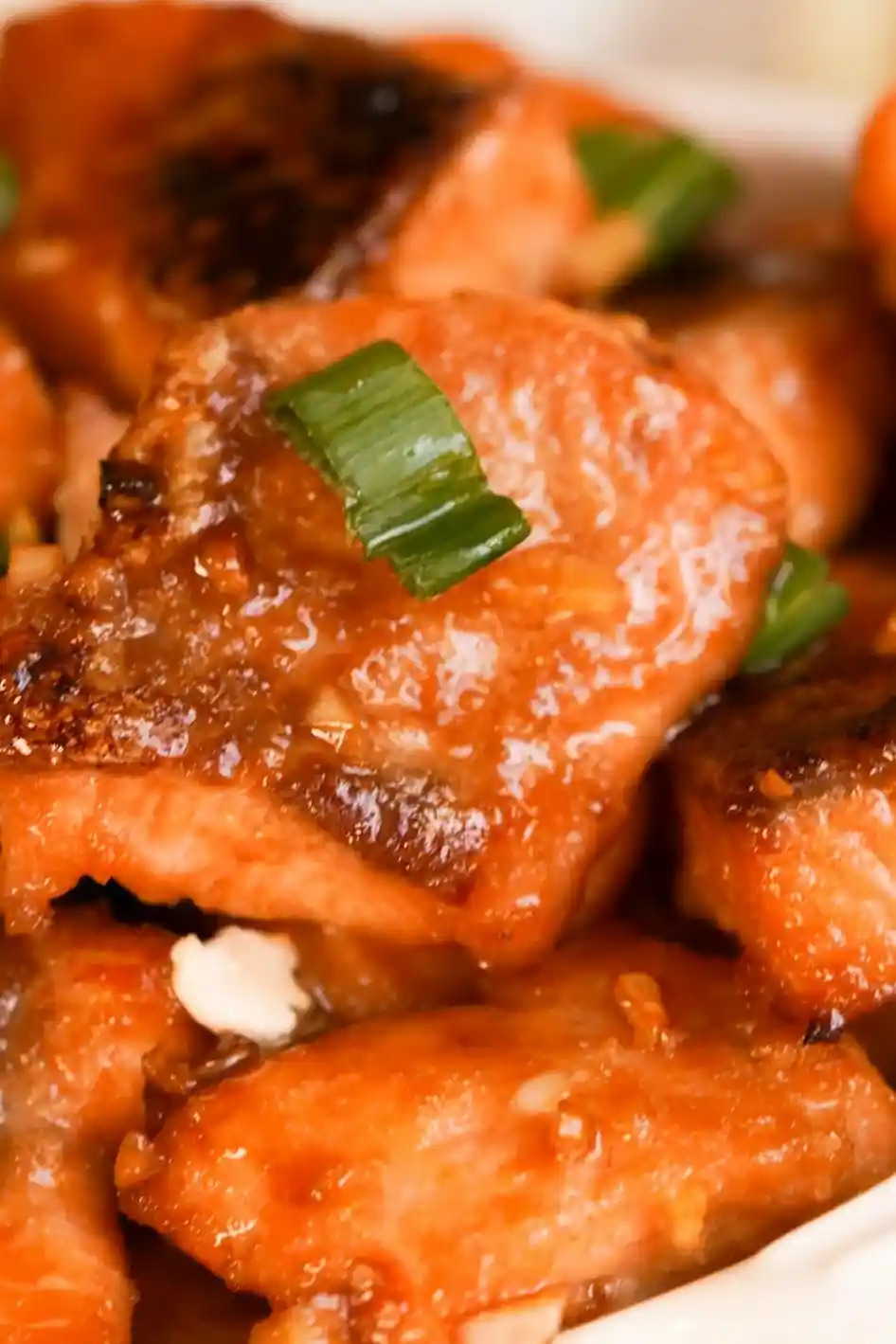
These honey garlic salmon bites provide a quick and nutrient-dense meal option for busy schedules. The combination of a sweet glaze and high-heat broiling creates caramelized edges and tender interiors in under 20 minutes.
List of ingredients
- 1 lb salmon fillet – cut into 1-inch cubes.
- 2 tbsp salted butter, melted – adds richness to the glaze.
- 2 tbsp soy sauce – provides a savory, salty base.
- 2 tbsp honey – creates the sticky sweetness.
- 1 tbsp minced fresh garlic – used for aromatic depth.
- 1 tsp garlic powder – enhances the overall garlic profile.
- Green onions – sliced thin for garnish.
step-by-step instructions
- Prepare Oven: Set your oven to the broil setting to ensure high direct heat from the top.
- Cut Salmon: Using a sharp knife, dice the salmon fillets into roughly 1-inch bite-sized pieces. You may remove the skin at this stage if you prefer a skinless result.
- Mix Glaze: Place the salmon cubes in a medium mixing bowl. Pour in the melted butter, soy sauce, honey, minced garlic, and garlic powder.
- Coat Salmon: Stir the ingredients thoroughly until every piece of salmon is evenly coated in the honey garlic mixture.
- Arrange Pan: Line a baking sheet with aluminum foil for easy cleanup. Place the salmon pieces skin-side down in a single layer, spreading them evenly. Pour any remaining sauce from the bowl over the top.
- Broil: Place the pan under the broiler for 5 minutes. Carefully flip the bites and broil for an additional 3 minutes until caramelized.
- Finish: Remove from the oven and garnish immediately with sliced green onions before serving.
Cooking Optimization Tips
Pat Dry the Salmon for Better Searing
Use a paper towel to pat the salmon fillets completely dry before cutting them into cubes. Removing surface moisture prevents the fish from steaming in the oven, which allows the honey glaze to caramelize and brown more effectively.
Maintain Even Spacing on the Baking Sheet
Ensure the salmon bites are spread out in a single layer with small gaps between each piece. Overcrowding the pan causes the pieces to release moisture and steam rather than roast, leading to a softer texture instead of a sticky crust.
Utilize Fresh Garlic for Maximum Aroma
While garlic powder is used for depth, using fresh minced garlic provides a pungent, aromatic quality that cannot be replicated by dried versions. Mince the garlic immediately before adding it to the bowl to keep the oils potent.
Monitor the Broiler Closely
Broilers vary significantly in intensity between different oven models. Check the salmon at the 4-minute mark during the first cycle to ensure the honey in the sauce does not burn, as sugar caramelizes and then burns very quickly.
Ingredient Substitutions
Replacing Honey with Other Sweeteners
If you do not have honey, pure maple syrup or brown sugar are excellent alternatives. Maple syrup offers a distinct woody flavor, while brown sugar provides a deeper, molasses-like sweetness that pairs well with the salty soy sauce.
Gluten-Free Alternatives to Soy Sauce
To make this recipe gluten-free, replace the soy sauce with Tamari or coconut aminos. Tamari tastes very similar to traditional soy sauce, while coconut aminos are slightly sweeter and lower in sodium.
Substituting Butter with Plant-Based Oils
For a different flavor profile or dietary preference, replace the melted butter with olive oil or sesame oil. Sesame oil, in particular, enhances the Asian-inspired flavor of the dish and provides a nutty aroma.
Using Frozen Salmon Fillets
Frozen salmon works well if it is thawed correctly. Thaw the fillets in the refrigerator overnight rather than using a microwave to maintain the cellular structure of the fish and prevent it from becoming mushy.
Flavor Variations
Adding a Spicy Element
If you prefer a heat-forward dish, stir in a teaspoon of sriracha, cayenne pepper, or red pepper flakes into the marinade. Alternatively, replacing regular honey with hot honey provides a balanced sweet-and-spicy glaze.
Integrating Citrus Notes
A squeeze of fresh lemon or lime juice added at the end of cooking cuts through the richness of the butter and honey. Adding a pinch of lemon zest to the marinade also brightens the overall flavor profile.
Adding Toasted Sesame Seeds
Sprinkle toasted sesame seeds over the finished salmon bites along with the green onions. This adds a subtle crunch and reinforces the savory, nutty elements of the soy sauce.
Ginger Infusion for Added Depth
Adding one teaspoon of freshly grated ginger to the mixing bowl provides a zesty, warm undertone. Ginger pairs naturally with honey and garlic, creating a more complex flavor similar to traditional teriyaki.
Serving Suggestions
Pairing with Grains
Serve these salmon bites over a bed of steamed jasmine rice, brown rice, or quinoa. The grains absorb the excess honey garlic sauce, ensuring that no flavor is wasted on the plate.
Combining with Green Vegetables
Complement the richness of the salmon with steamed broccoli, sautéed snap peas, or roasted asparagus. These vegetables provide a crisp texture and nutritional balance to the meal.
Low-Carb Serving Options
For a lower carbohydrate meal, serve the salmon over cauliflower rice or a bed of fresh baby spinach. A side of sliced cucumbers with a light vinegar dressing also provides a refreshing contrast.
Using as an Appetizer
These bites are naturally portioned for entertaining. Serve them on a platter with toothpicks and a side of extra honey garlic sauce for dipping during a social gathering.
Storage and Preservation
Refrigerating Leftover Salmon
Place leftover salmon bites in an airtight glass or plastic container once they have cooled to room temperature. They will remain fresh and safe to eat for 2 to 3 days when kept at 40°F (4°C) or below.
Avoiding Freezer Burn
If freezing, flash-freeze the bites on a tray first before transferring them to a vacuum-sealed bag. This prevents the pieces from clumping together and reduces the amount of air that can cause freezer burn.
Identifying Spoiled Seafood
Always check for a strong ammonia smell or a slimy texture before consuming stored salmon. If the fish has lost its vibrant color or developed an off-odor, discard it immediately.
Reheating Instructions
Microwave Reheating for Speed
Place the bites on a microwave-safe plate and cover them with a damp paper towel to retain moisture. Heat in short 30-second intervals, stirring gently, to prevent the fish from becoming rubbery.
Oven Reheating for Texture
Preheat the oven to 275°F (135°C) and place the salmon on a baking sheet. Heat for 5 to 8 minutes until the center is warm, which helps preserve the flakey texture better than a microwave.
Air Fryer Reheating for Crispness
Set the air fryer to 350°F (175°C) and heat the bites for 2 to 3 minutes. This method is the most effective way to restore the slightly crisp, caramelized edges of the honey glaze.
Troubleshooting Common Issues
Preventing Overcooked Salmon
Overcooked salmon becomes dry and chalky. To avoid this, use a meat thermometer to ensure the internal temperature reaches 145°F (63°C) and remove the pan from the broiler immediately.
Fixing a Too-Thin Sauce
If the sauce is too runny, you can simmer any leftover marinade in a small saucepan over medium heat for 3 to 5 minutes. This reduces the liquid and thickens the glaze into a syrupy consistency.
Stopping Salmon from Sticking
If the salmon sticks to the pan despite the foil, try using parchment paper instead. Ensure the foil or paper is lightly greased with a small amount of oil or butter before adding the fish.
Managing Burnt Honey Glaze
If the honey burns before the fish is cooked through, lower the broiler rack to a middle position. This increases the distance from the heat source, allowing for more gradual caramelization.
Frequently Asked Questions
Should I remove the salmon skin?
Removing the skin is optional. Many prefer it removed for a more uniform bite-sized experience, but keeping it on provides additional omega-3 nutrients and helps the piece hold its shape during flipping.
How do I know when the salmon bites are perfectly done?
The salmon is ready when it flakes easily with a fork and the center has changed from translucent pink to an opaque light pink. The exterior should have visible brown, caramelized spots from the honey.
Can I use a different fish for this recipe?
Yes, this glaze works well with other fatty fish such as steelhead trout or Arctic char. Leaner fish like cod or halibut can be used, but they require shorter cooking times to avoid drying out.
Is it possible to bake these instead of broiling?
You can bake them at 400°F (200°C) for 10 to 12 minutes, but you will lose the characteristic charred edges. Broiling is recommended for the specific sticky-sweet texture intended for this recipe.
Can I marinate the salmon longer for more flavor?
Yes, marinating the salmon in the refrigerator for 30 minutes to 2 hours will deepen the flavor. Do not marinate for too long, as the salt in the soy sauce can begin to cure the fish and change its texture.
Print
Honey Garlic Salmon Bites
- Total Time: 18 minutes
- Yield: 2–3 servings 1x
- Diet: General
Description
Honey Garlic Salmon Bites are an easy, healthy, and delicious dinner recipe! Made with cubed salmon, butter, honey, fresh garlic, and soy sauce, these bites are tender, flakey, flavorful, and saucy.
Ingredients
- 1 lb salmon fillet
- 2 tbsp salted butter, melted
- 2 tbsp soy sauce
- 2 tbsp honey
- 1 tbsp minced fresh garlic
- 1 tsp garlic powder
- Green onions
Instructions
- Step: Set the oven to broil.
- Step: Cut the salmon filets into bite-size pieces, about 1 inch in size.
- Step: Add the salmon pieces to a medium bowl. Add the melted butter, soy sauce, honey, minced garlic, and garlic powder.
- Step: Combine thoroughly until all the salmon chunks are coated in the honey garlic mixture.
- Step: Place the salmon pieces skin side down on an aluminum foil lined baking sheet. Spread evenly. Add any extra sauce on top.
- Step: Broil for 5 minutes. Flip the salmon bites. Broil for another 3 minutes.
- Step: Serve with green onions and enjoy!
Notes
Pat the salmon fillets dry with a paper towel before cutting to remove excess moisture. You can replace butter with olive oil or sesame oil for a different flavor profile.
- Prep Time: 10 minutes
- Cook Time: 8 minutes
- Category: Dinner
- Method: Broiled
- Cuisine: Asian-inspired
Nutrition
- Serving Size: 1 serving
- Calories: 600 kcal
- Sugar: 14 g
- Sodium: 500 mg
- Fat: 38 g
- Saturated Fat: 10 g
- Unsaturated Fat: 28 g
- Trans Fat: 0 g
- Carbohydrates: 18 g
- Fiber: 1 g
- Protein: 36 g
- Cholesterol: 110 mg