These grilled salmon foil packets are tender and juicy with a rich flavor from the lemon dill butter. This method is efficient for outdoor cooking and requires very little cleanup after the meal.
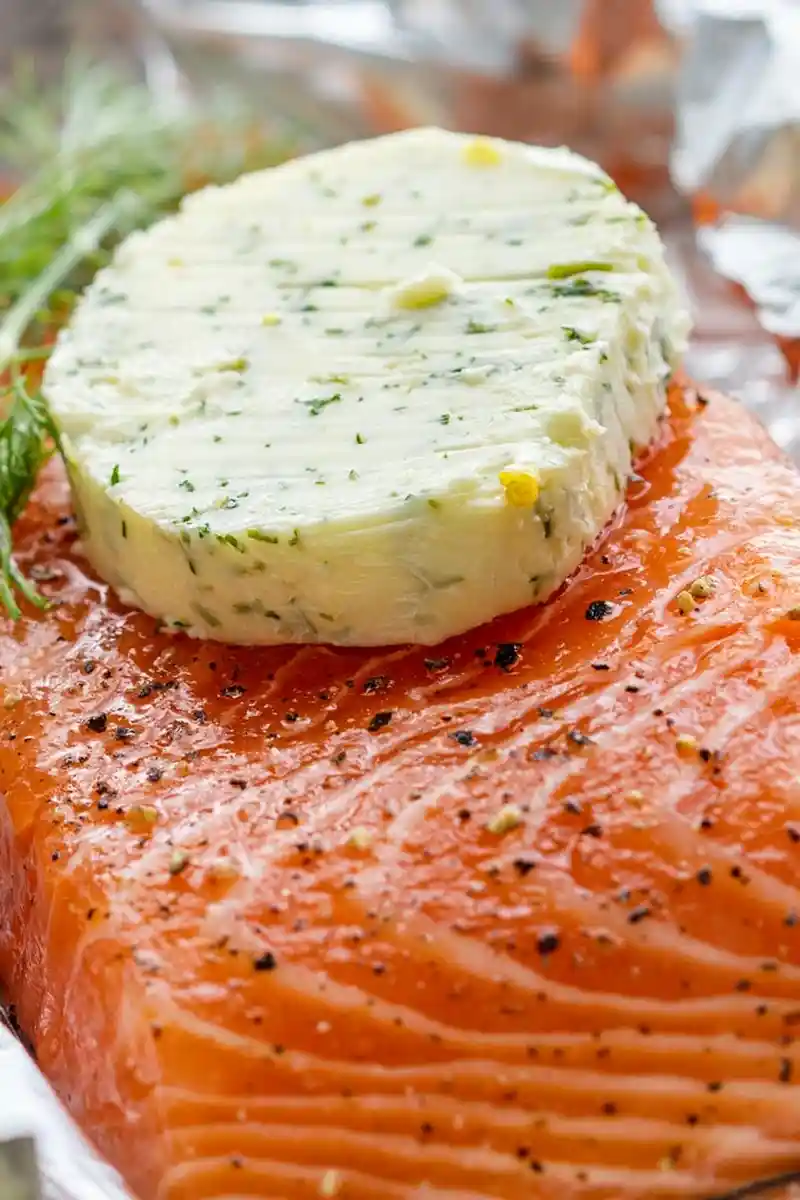
List of ingredients
- 4 Salmon Fillets (about 1.5 pounds/680 grams total) – use fillets of similar size for even cooking.
- Salt – add to taste based on your preference.
- A generous pinch of black pepper – for basic seasoning.
- 4 Fresh Small Dill Sprigs – provides a fresh, aromatic herbal flavor.
- 4 Slices Lemon Dill Compound Butter – adds richness and citrus notes.
- 4 Lemon Wedges (optional) – for serving and additional acidity.
step-by-step instructions
- Prepare the grill: Preheat your grill to medium-high heat to ensure a consistent cooking temperature.
- Season and wrap: Place one salmon fillet in the center of a sheet of aluminum foil. Season the fillet with salt and black pepper, then top it with one slice of lemon dill compound butter and one sprig of fresh dill.
- Seal the packets: Wrap the foil tightly around the fish, ensuring there are no holes or gaps so the steam remains trapped inside. Repeat this process for the remaining three fillets.
- Grill the fish: Place the foil packets onto the pre-heated grill with the skin side facing down. Cook without flipping for approximately 12 minutes or until the fish is fully cooked.
- Rest the salmon: Remove the packets from the grill and allow them to cool for a few minutes before opening.
- Serve: Serve each fillet with an optional lemon wedge and your preferred side dish.
Effective Grilling Techniques
Maintain Medium-High Heat
Keeping the grill at a medium-high temperature ensures that the foil packets heat up quickly enough to steam the fish. If the heat is too low, the salmon may take too long to cook and lose its moisture. If it is too high, the bottom of the foil may burn before the center is done.
Ensure a Completely Airtight Seal
The goal of using foil packets is to create a steam chamber that locks in juices. If there are holes in the foil, the steam escapes, and the salmon is more likely to dry out. Fold the edges of the foil multiple times and crimp them tightly to prevent any leaks.
Position the Salmon Skin Side Down
Placing the fillets skin side down protects the delicate flesh from direct heat. While the foil prevents the skin from becoming crispy, this orientation allows the heat to penetrate the thickest part of the fillet more efficiently. It also makes the fillets easier to lift out of the foil when serving.
Ingredient Selection and Preparation
Choosing Uniform Salmon Fillets
Purchase fillets that are similar in thickness and weight to ensure they all finish cooking at the same time. If you have fillets of varying sizes, the thinner ones may overcook while the thicker ones remain raw in the center. If using a large piece, cut it into four equal portions before starting.
Preparing Lemon Dill Compound Butter
Compound butter is made by mixing softened unsalted butter with lemon zest, finely chopped fresh dill, and a pinch of salt. Once mixed, roll the butter into a log using parchment paper and chill it in the refrigerator. This allows you to cut exact slices for each fillet, ensuring consistent flavoring.
Using Fresh Dill for Maximum Aroma
Fresh dill provides a brighter, more pungent flavor than dried alternatives. If you must use dried dill, use about one-third of the amount called for in the recipe. Place the fresh sprigs directly on top of the butter so the oils infuse into the fish as the butter melts.
Determining Doneness and Temperature
Using a Digital Meat Thermometer
The most accurate way to check if salmon is cooked is to use a digital thermometer. Insert the probe into the thickest part of the fillet, ensuring you do not touch the foil. The salmon is safely cooked when it reaches an internal temperature of 145°F (65°C).
Checking for Flakiness with a Fork
If you do not have a thermometer, you can test the salmon by gently pressing a fork into the thickest part of the fillet. The fish is done when the flesh flakes easily along the natural lines of the muscle. If the center is still translucent or resists flaking, it needs more time.
Observing Color Changes
Raw salmon has a deep, translucent orange or pink hue. As it cooks, the proteins denature and the color becomes opaque and pale. Once the fillet has turned pale throughout the center, it is generally ready to be removed from the heat.
Flavor Customization and Substitutions
Adding Vegetables to the Packets
You can add thin-sliced vegetables to the foil packet to create a complete meal. Asparagus spears, thinly sliced carrots, or zucchini coins work well. Place the vegetables around the salmon, but ensure they are sliced thinly so they cook within the 12-minute window.
Substituting Other Fresh Herbs
While dill is traditional for salmon, other herbs like fresh parsley, chives, or tarragon are excellent substitutes. If using parsley, increase the amount slightly as it has a milder flavor. Combine these herbs with the lemon butter for a different flavor profile.
Swapping Butter for Olive Oil
For a lighter version, replace the compound butter with a mixture of extra virgin olive oil, lemon juice, and minced garlic. Brush the oil mixture generously over the salmon and top with the herbs. This provides a clean, Mediterranean flavor while maintaining the moisture of the fish.
Storage and Advance Preparation
Prepping Packets for Later Use
You can assemble the foil packets several hours in advance and store them in the refrigerator. This makes the actual grilling process much faster. Ensure the packets are tightly sealed and stored on a tray to prevent them from tipping over in the fridge.
Storing Leftover Cooked Salmon
Store any leftover cooked salmon in an airtight container in the refrigerator for up to three days. To maintain quality, keep the salmon in a container that prevents air from circulating, which helps stop the fish from drying out. Avoid leaving the salmon at room temperature for more than two hours.
Freezing Prepped Salmon Packets
Raw salmon fillets wrapped in foil with butter and herbs can be frozen for future use. Wrap the foil packet in an additional layer of freezer-safe plastic wrap or place it in a freezer bag to prevent freezer burn. Thaw the packets completely in the refrigerator before placing them on the grill.
Reheating Instructions
Low-Temperature Oven Reheating
To reheat cooked salmon without drying it out, place the fillet in a baking dish with a tablespoon of water or butter. Cover the dish with foil and heat in an oven at 275°F (135°C) for about 10 to 15 minutes. This slow heating method prevents the proteins from tightening and becoming tough.
Quick Microwave Reheating
For a faster option, place the salmon on a microwave-safe plate and cover it with a damp paper towel. Heat on medium power in 30-second intervals until the fish is warmed through. Avoid using high power, as this often results in rubbery salmon.
Preventing Overcooking During Reheating
The key to reheating fish is to stop just before it reaches a steaming temperature. Since the salmon was already cooked once, reheating it to a high internal temperature will make it dry. Warm it gently and serve immediately.
Serving Suggestions
Pairing with Complex Grains
Serve grilled salmon with a side of quinoa, wild rice, or farro. These grains provide a nutty contrast to the richness of the butter and the acidity of the lemon. Mixing the grains with a bit of chopped parsley and lemon juice complements the flavors of the fish.
Choosing Compatible Vegetables
Steamed broccoli, sautéed spinach, or roasted Brussels sprouts pair well with lemon dill salmon. The bitterness of these greens balances the buttery flavor of the fish. If you did not cook vegetables in the foil, serve them on the side for a balanced plate.
Light Salad Combinations
A fresh cucumber salad with a light vinaigrette is an ideal pairing for this recipe. The crispness of the cucumber and the acidity of the vinegar mirror the lemon in the salmon. A simple arugula salad with shaved parmesan is another sophisticated option.
Troubleshooting Common Issues
Dealing with Foil Sticking
If the salmon sticks to the foil, it is usually because not enough fat was used or the foil was not high-quality. To prevent this, ensure the butter is placed directly between the fish and the foil. Using heavy-duty aluminum foil also reduces the likelihood of tearing or sticking.
Addressing Undercooked Centers
If the salmon is still raw in the center after 12 minutes, your grill may not be hot enough or the fillets may be exceptionally thick. Simply leave the packets on the grill for another 2 to 4 minutes. Always check the thickest part of the fish to ensure it is cooked through.
Managing Burned Foil Bottoms
If the bottom of the foil is turning black or smells burnt, the grill temperature is too high. Move the packets to a cooler part of the grill (indirect heat) and close the lid. This will allow the heat to circulate and cook the fish without scorching the bottom.
Frequently Asked Questions
Do you flip salmon in foil?
No, there is no need to flip the packets. The steam trapped inside cooks the fish evenly from all sides. Flipping the packet increases the risk of breaking the seal and letting the steam escape.
Can I use a different type of fish?
Yes, this method works well for other fatty fish like trout or Arctic char. White fish like cod or halibut can also be used, but they cook faster than salmon, so you should reduce the grilling time to avoid overcooking.
Is aluminum foil safe for grilling?
Aluminum foil is safe for grilling as long as it is not used over extremely high, open flames that could melt the metal. For most standard grill temperatures, foil is a practical tool for steaming and protecting food.
How do I store the compound butter?
Store the compound butter in the refrigerator wrapped in parchment paper or in a plastic container for up to two weeks. It can also be frozen for several months; simply slice it while it is still partially frozen for easier handling.
Print
Grilled Salmon Foil Packets
- Total Time: 15 minutes
- Yield: 4 servings 1x
- Diet: Pescatarian
Description
These grilled salmon foil packets are tender and juicy with a ton of flavor thanks to the lemon dill butter. They are easy to make, only take 12 minutes to cook and can be prepped ahead of time.
Ingredients
- 4 Salmon Fillets (about 1.5 pounds/680 grams)
- Salt to taste
- A generous pinch of black pepper
- 4 Fresh Small Dill Sprigs
- 4 Slices Lemon Dill Compound Butter
- 4 Lemon Wedges (optional)
Instructions
- Step 1: Heat your grill.
- Step 2: Place one salmon fillet onto a sheet of aluminum foil. Season it with salt and black pepper and top with 1 slice of lemon dill compound butter and a sprig of fresh dill. Wrap well so there are no holes. Repeat with the rest of the fillets.
- Step 3: Transfer the packets onto a pre-heated grill, skin side down. Cook on medium-high (without turning) for about 12 minutes or until ready.
- Step 4: When ready, remove packets from the grill and let them cool down a bit before serving.
- Step 5: Serve with a lemon wedge (optional) and side of your choice.
Notes
Buy salmon fillets of similar size for even cooking. The minimum internal temperature should be 145°F/65°C. If you don’t want to make compound butter, top each fillet with finely chopped fresh dill, lemon zest, a lemon slice, and a tablespoon of butter.
- Prep Time: 3 minutes
- Cook Time: 12 minutes
- Category: Dinner, Lunch
- Method: Grilling
- Cuisine: American
Nutrition
- Serving Size: 1 fillet
- Calories: 280 kcal
- Sugar: 3 g
- Sodium: 85 mg
- Fat: 12 g
- Saturated Fat: 2 g
- Unsaturated Fat: 10 g
- Trans Fat: 0 g
- Carbohydrates: 10 g
- Fiber: 3 g
- Protein: 35 g
- Cholesterol: 96 mg