This high-protein dinner comes together in under 30 minutes using a simple foil-packet method. It ensures the fish remains moist and tender while making the cleanup process nearly effortless.
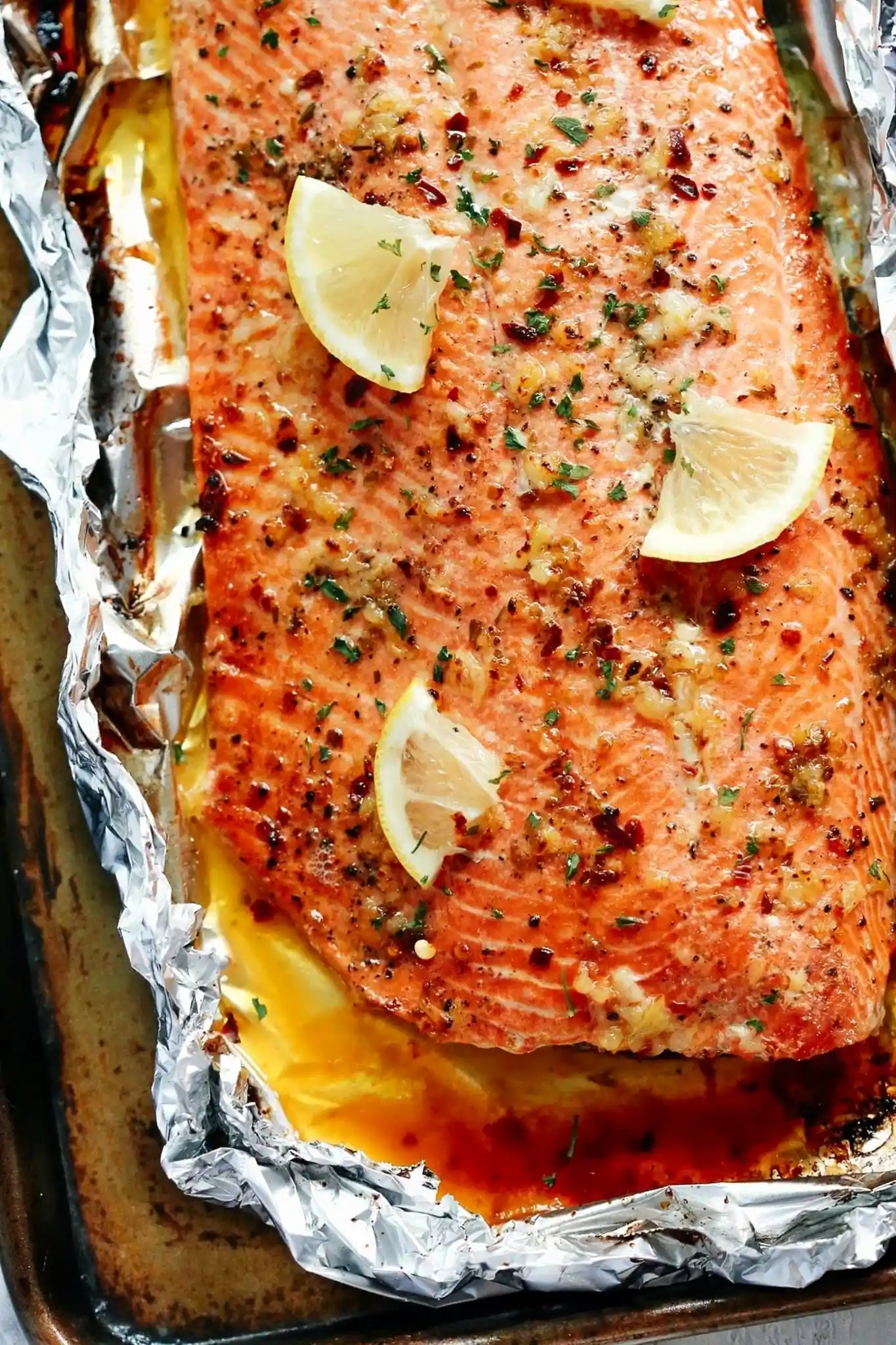
List of ingredients
- 1¼ pounds salmon fillet – use wild-caught for richer flavor.
- 2 tablespoons lemon juice – freshly squeezed for brightness.
- 2 cloves garlic – minced by hand for better infusion.
- 3 tablespoons melted butter or melted ghee – provides a rich, savory base.
- ½ teaspoon salt – use kosher salt for better control.
- ¼ teaspoon black pepper – freshly cracked for aroma.
- ¼ teaspoon dried oregano – adds a subtle earthy note.
- 1/4 teaspoon crushed red pepper – adds mild warmth.
- 1 tablespoon chopped parsley – for a fresh finish garnish.
- lemon slices – used for plating and visual appeal.
step-by-step instructions
- Prepare the Oven: Preheat your oven to 400ºF. Line a baking sheet with a piece of aluminum foil large enough to fully fold over and seal the fish fillets.
- Whisk the Sauce: In a small mixing bowl, combine the lemon juice, minced garlic, and melted butter or ghee. Whisk until the mixture is smooth and fully emulsified.
- Position the Salmon: Place the salmon fillets onto the prepared foil on the baking sheet. Pour the garlic butter mixture evenly over the top of the fish.
- Add Seasoning: Sprinkle the salt, black pepper, dried oregano, and crushed red pepper flakes over the sauce-coated salmon.
- Seal the Packet: Fold the sides of the foil over the salmon, pressing the edges firmly to create a tight seal. This prevents the sauce from leaking and keeps the steam inside.
- Bake the Fish: Place the baking sheet in the oven and bake for 12 to 16 minutes. The exact time depends on the thickness of your fillets; thinner cuts will cook faster.
- Broil for Texture: Carefully open the foil packets and turn the oven to broil. Slide the pan under the broiler for 2 to 3 minutes until the top is golden and slightly caramelized.
- Finish and Serve: Remove from the oven and spoon the accumulated butter sauce from the foil back over the salmon. Garnish with chopped parsley and fresh lemon slices.
Selecting the Best Salmon
Benefits of Wild-Caught Fillets
Wild-caught salmon, such as King, Sockeye, or Coho, typically offers a deeper, more intense flavor than farmed varieties. These fish often have a more vibrant red or orange color and a firmer texture. They provide a richer taste profile that stands up well to the garlic and butter sauce.
Working with Frozen Salmon
Flash-frozen salmon is often a great option because it is processed immediately after being caught. To use it, thaw the fillets overnight in the refrigerator to maintain the integrity of the flesh. Avoid thawing at room temperature to prevent bacteria growth and texture degradation.
Identifying Freshness in the Store
Look for fillets with bright, firm flesh that springs back when lightly pressed. Avoid pieces with grey patches or a strong, fishy odor, as fresh salmon should smell mild and like the ocean. Ensure the edges are clean and the color is consistent across the fillet.
Optimization of Sauce Components
Hand-Mincing Garlic for Flavor
Mincing garlic with a knife instead of using a press results in slightly larger, irregular pieces. These pieces cook more gently in the butter and release their flavor gradually. This prevents the garlic from burning or becoming bitter during the baking and broiling process.
Using Unsalted Butter for Control
Using unsalted butter allows you to control the exact amount of sodium in the dish. Since the sauce is concentrated within a sealed foil packet, salt levels can become intense quickly. If using salted butter, reduce the added kosher salt by a small amount to maintain balance.
The Importance of Fresh Lemon Juice
Freshly squeezed lemon juice contains volatile oils and a brightness that bottled juice lacks. This acidity cuts through the richness of the butter and the fattiness of the salmon. One medium lemon typically provides enough juice for this recipe while leaving slices for garnish.
Mastering the Foil Technique
Creating a Proper Steam Seal
The goal of the foil packet is to create a self-basting environment where moisture cannot escape. Ensure the foil is large enough to fold over the fish with a secure, pressed seam. A tight seal prevents the garlic butter from leaking onto the pan and keeps the fish moist.
Removing Surface Moisture
Patting the salmon dry with paper towels before adding the sauce is a critical step. Excess moisture on the surface can dilute the sauce and lead to uneven steaming. A dry surface allows the butter mixture to adhere better to the fish.
Allowing Room for Circulation
While the seal should be tight, do not wrap the foil so closely that it crushes the fish. Leave a small amount of headspace inside the packet to allow steam to circulate around the fillet. This ensures the salmon cooks evenly from all sides.
Determining Perfect Doneness
Using an Instant-Read Thermometer
A digital thermometer is the most accurate way to avoid overcooking the fish. Insert the probe into the thickest part of the fillet to get an accurate reading. Pull the salmon when it reaches your preferred internal temperature.
Understanding Temperature Ranges
For a silky, medium texture, aim for an internal temperature of 125°F to 130°F. For those who prefer their fish fully cooked, the FDA recommends 145°F. Note that the salmon will continue to cook for a few minutes after being removed from the oven.
The Fork Flake Test
If you do not have a thermometer, use a fork to gently press the thickest part of the fillet. The salmon is done when it flakes easily along the natural lines of the muscle. If the center is still translucent or resists flaking, it needs more time.
Flavor Variations and Substitutions
Alternative Dried Herbs
While oregano provides an earthy flavor, you can substitute it with dried thyme or rosemary for a different aromatic profile. Italian seasoning is another versatile option that blends several herbs together. Use the same quantity as the oregano for a balanced taste.
Adjusting the Heat Level
The crushed red pepper adds a subtle warmth but is not overwhelmingly spicy. For a more pronounced kick, increase the amount to a half teaspoon. If you prefer no heat at all, replace the red pepper with a pinch of smoked paprika for a woody flavor.
Substituting Butter with Ghee
Ghee is an excellent alternative to butter, especially for those seeking a higher smoke point. It provides a similar nutty, rich flavor but is more stable under high heat. This is particularly useful during the final broiling stage to prevent the fats from burning.
Side Dish Pairings
Starchy Accompaniments
Fluffy white rice or quinoa serves as a neutral base that absorbs the extra garlic butter sauce. Mashed potatoes or roasted fingerling potatoes also pair well with the richness of the fish. These options provide a satisfying contrast to the lightness of the lemon.
Green Vegetable Pairings
Roasted green beans, steamed asparagus, or sautéed spinach provide a fresh, crisp element to the meal. These vegetables can often be roasted on the same baking sheet if there is enough room. The acidity of the lemon in the salmon complements the natural flavors of green vegetables.
Storage and Preservation
Refrigeration Guidelines
Store leftover salmon in an airtight glass container to keep it fresh for 3 to 4 days. Glass is preferred over plastic to avoid odors and maintain a better seal. Keep the salmon submerged in any remaining butter sauce to prevent it from drying out.
Freezing the Cooked Fish
Cooked salmon can be frozen for up to 4 months in freezer-safe bags or airtight containers. Ensure the fish is cooled completely before freezing to prevent ice crystals from forming. This is a great way to prepare meals for future weeks.
Safe Thawing Procedures
Always thaw frozen salmon in the refrigerator overnight rather than on the counter. This slow process preserves the texture of the fish and ensures food safety. Once thawed, the salmon can be eaten cold or reheated gently.
Reheating Methods
Stovetop Reheating
To maintain the best texture, reheat salmon in a skillet over medium-low heat with a teaspoon of olive oil. Heat until the fish is warmed through but not sizzling. This method prevents the fish from becoming rubbery.
Microwave Reheating
If using a microwave, use a low power setting and heat in short 30-second intervals. Cover the fish with a damp paper towel to trap moisture. Be careful not to overheat, as microwave energy can quickly make salmon dry and chalky.
Troubleshooting Common Issues
Preventing Dry Salmon
Dry salmon is usually the result of overcooking or removing the fish too early from the foil. Ensure you follow the temperature guidelines and check the fish at the 12-minute mark. If the fillets are thin, reduce the baking time accordingly.
Fixing Sauce Leakage
If you find that your sauce is leaking onto the baking sheet, check your foil folding technique. Ensure you are using a large enough piece of foil to create a complete envelope. Press the seams firmly with your fingers to seal them.
Avoiding Burnt Tops during Broiling
The broiler can burn the surface of the fish in a matter of seconds. Stay by the oven and watch the salmon closely during the final 2 to 3 minutes. Remove the pan the moment the top turns golden brown.
Equipment Recommendations
Choosing the Right Foil
Heavy-duty aluminum foil is recommended for this recipe to prevent tears and ensure a better seal. Standard foil can sometimes rip when folding around the edges of the fish. A sturdy foil helps maintain the steam environment more effectively.
Selecting a Baking Sheet
A standard rimmed baking sheet is essential to catch any accidental drips of butter sauce. Avoid using flat cookie sheets that lack edges, as this can lead to sauce spilling into the oven. A light-colored pan is ideal for monitoring the bottom of the foil.
Thermometer Types
An instant-read digital thermometer is the best tool for this recipe because it provides a result in seconds. This prevents the internal temperature from rising too much while you are waiting for a reading. Avoid using slow-reading analog thermometers.
Frequently Asked Questions
Can I use a different type of fish?
Yes, this method works well with other firm fish like trout or halibut. Adjust the cooking time based on the thickness of the fillet, as some white fish cook faster than salmon.
Is it necessary to broil the salmon?
Broiling is optional but highly recommended for texture. It adds a caramelized crust and visual appeal that steaming alone cannot achieve, though the fish will still be delicious without it.
Can I make this in an air fryer?
You can, but you should use a piece of foil shaped into a bowl or a small baking dish. Reduce the temperature to 380°F and check for doneness after 8 to 10 minutes, as air fryers cook faster than ovens.
What can I use instead of lemon juice?
Lime juice is a suitable substitute and provides a similar citrus lift. If you have no citrus, a small amount of white wine vinegar can provide the necessary acidity, though the flavor will be sharper.
Print
Garlic Butter Baked Salmon in Foil
- Total Time: 19 minutes
- Yield: 4 people 1x
- Diet: Gluten-Free
Description
If you need a salmon dinner on the table in under 30 minutes with almost no cleanup, this is the recipe. A simple garlic butter sauce with melted butter, fresh lemon juice, and minced garlic gets poured over the salmon, sealed in foil, and baked until perfectly flaky. The foil does all the work, locking in every drop of that buttery sauce so the fish stays moist and full of flavour from edge to edge.
Ingredients
- 1¼ pounds salmon fillet
- 2 tablespoons lemon juice
- 2 cloves garlic (minced)
- 3 tablespoons melted butter or melted ghee
- ½ teaspoon salt
- ¼ teaspoon black pepper
- ¼ teaspoon dried oregano
- 1/4 teaspoon crushed red pepper
- 1 tablespoon chopped parsley (to garnish)
- lemon slices (to garnish)
Instructions
- Step: Preheat oven to 400ºF. Line a baking sheet. The piece of foil should be large enough to fold over and seal the fish.
- Step: In a small bowl, add lemon juice, garlic, and melted butter or melted ghee. Whisk everything together.
- Step: Place the salmon on the prepared baking sheet. Pour the butter mixture over the salmon.
- Step: Season with salt, pepper, oregano, and red pepper flakes.
- Step: Fold the sides of the foil over the salmon. Make sure it is well sealed so that the sauce does not leak. Place the pan into the oven, and bake until cooked, about 12-16 minutes.
- Step: Open the foil, and broil the fish for 2-3 minutes.
- Step: Remove from the oven. Using a spoon, pour some of the butter sauce left in the foil onto the salmon before serving. Then, garnish with fresh chopped parsley and lemon slices.
Notes
Don’t wrap the foil too tightly against the fish to allow steam to circulate. Avoid parchment paper when broiling. Leftovers can be stored in an airtight glass container in the refrigerator for 3-4 days or frozen for up to 4 months.
- Prep Time: 5 minutes
- Cook Time: 16 minutes
- Category: Main Course
- Method: Baking
- Cuisine: American
Nutrition
- Serving Size: 1 fillet
- Calories: 250 kcal
- Sugar: 0.1 g
- Sodium: 201 mg
- Fat: 18.1 g
- Saturated Fat: 7 g
- Unsaturated Fat: 11.1 g
- Trans Fat: 0 g
- Carbohydrates: 0.5 g
- Fiber: 0.1 g
- Protein: 29.6 g
- Cholesterol: 105 mg