These high-protein salmon salad sandwiches are a quick and satisfying option for lunch or dinner. Combining fresh vegetables with flaky baked salmon, they offer a refreshing taste and a hearty texture.
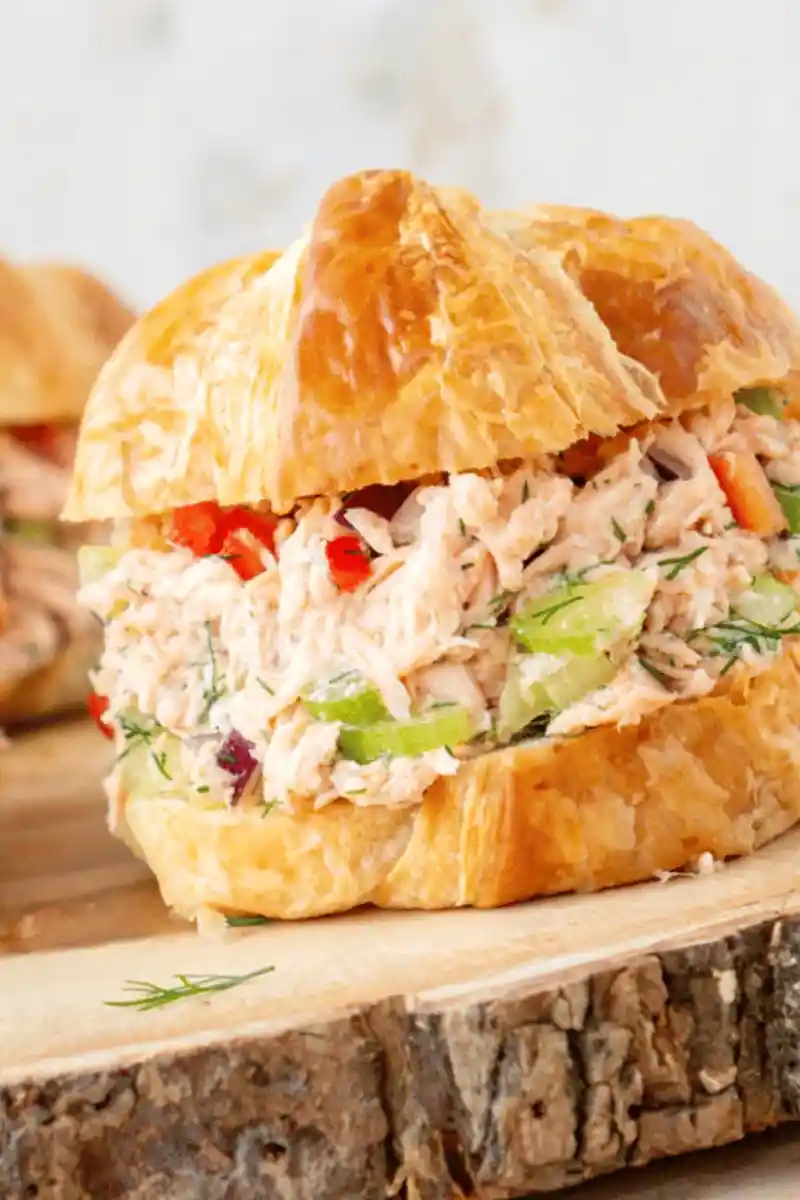
List of ingredients
- 1.5 lbs fresh salmon – use a skin-on fillet for easier removal after baking.
- 1/4 tsp kosher salt – for seasoning the fish.
- 1/4 tsp black pepper – for seasoning the fish.
- 1/4 cup red onion – finely diced for a sharp bite.
- 1 red pepper – finely diced for color and sweetness.
- 1/3 cup celery – finely diced to provide a necessary crunch.
- 2 tablespoons fresh dill – minced to add a bright, herbaceous flavor.
- 8 croissants – sliced in half and lightly toasted for a buttery base.
- 2 tbsps Greek yogurt – or mayonnaise, for a creamy binding agent.
- 1.5 tbsps dijon mustard – adds a tangy, sophisticated depth.
- 1 garlic clove – grated finely to distribute flavor evenly.
- 2 tbsps lemon juice – freshly squeezed for acidity.
- salt and pepper – added to taste for final seasoning.
step-by-step instructions
- Bake the Salmon: Preheat your oven to 400°F. Season the salmon fillet with salt and pepper, then place it on a foil-lined baking sheet and bake for 15-20 minutes until the internal temperature reaches 145°F.
- Prep the Fish: Allow the cooked salmon to cool for 5 minutes. Use a spatula to remove the skin and transfer the meat to a medium mixing bowl, then shred it using two forks.
- Whisk the Dressing: While the salmon is in the oven, combine the Greek yogurt (or mayonnaise), dijon mustard, grated garlic, lemon juice, salt, and pepper in a small bowl and mix until smooth.
- Combine the Salad: Add the finely diced red onion, red pepper, celery, and minced dill to the bowl with the shredded salmon. Pour the dressing over the mixture and stir well to ensure every piece is coated.
- Assemble the Sandwiches: Scoop approximately 1/4 cup of the salmon salad onto each toasted croissant half. Top with the second half and serve immediately.
Optimal Bread Choices
Buttery Toasted Croissants
Croissants provide a rich, flaky texture that complements the creamy salmon salad. For the best results, slice them in half and toast them in an oven or air fryer at 400°F for 2-3 minutes. This prevents the bread from becoming soggy once the salad is added.
Hearty Sourdough or Whole Wheat
For those preferring a more substantial base, toasted sourdough offers a tangy flavor and a sturdy crust. Whole wheat bread is a great alternative for added fiber and a nuttier taste. Ensure the bread is toasted well to support the weight of the filling.
Low-Carb Lettuce Wraps
Replacing bread with lettuce is an excellent option for a lighter meal. Romaine lettuce hearts or butter lettuce leaves provide a crisp, fresh container for the salmon. These wraps keep the focus on the fresh vegetables and the flavor of the fish.
Selecting the Right Salmon
Wild-Caught Salmon Characteristics
Wild salmon typically has a firmer texture and a more pronounced, robust flavor. It is generally leaner and contains high levels of omega-3 fatty acids. This variety is ideal for those who prefer a fishy flavor that stands up well against the acidity of lemon and mustard.
Farmed Salmon Characteristics
Farmed salmon often has a milder taste and a softer, fattier texture due to its controlled diet. This makes the fish very tender and easier to shred with forks. It is a great choice for those who prefer a more subtle flavor profile in their salad.
Using Canned Salmon as a Shortcut
Canned salmon is a convenient substitute that eliminates the need for baking. To use it, drain all liquid from the can and fluff the meat with a fork before adding it to the mixing bowl. This method reduces preparation time and is ideal for a quick weekday lunch.
Creative Serving Methods
Cucumber Slice Rounds
For a low-calorie appetizer, spoon small amounts of salmon salad onto thick slices of English cucumber. These rounds act as refreshing, crunchy crackers. This presentation is particularly effective for parties or as a light snack.
Stuffed Avocado Halves
Scooping the salmon salad into the center of a pitted avocado adds a creamy, healthy fat to the meal. The richness of the avocado pairs perfectly with the tanginess of the dijon mustard and lemon juice. This creates a nutrient-dense, bread-free meal.
Salmon Salad Grain Bowls
Transform the salad into a full meal by serving it over a bed of cooked quinoa or brown rice. Add steamed broccoli or shredded carrots to the bowl for extra volume. This version is more filling and works well as a meal-prep option for the week.
Tortilla Wraps and Tacos
The mixture can be rolled into flour or corn tortillas for a handheld wrap. Add extra greens like spinach or arugula inside the wrap for added freshness. Toasting the tortilla slightly before filling adds a nice warmth and texture to the dish.
Flavor and Texture Enhancements
Incorporating Additional Fresh Herbs
While dill is the classic choice, adding fresh parsley or chives can provide different aromatic layers. Parsley adds a clean, grassy note, while chives offer a mild onion flavor that complements the red onion. Use about one tablespoon of additional herbs for the best balance.
Adding Nutty Textures
To increase the crunch, stir in a tablespoon of toasted sliced almonds or crushed walnuts. These nuts provide a contrast to the soft salmon and creamy dressing. Toasting the nuts beforehand enhances their flavor and aroma.
Mixing in Creamy Toppings
Diced avocado or crumbled feta cheese can be stirred directly into the salad for extra richness. Feta adds a salty, tangy kick that pairs well with the lemon juice. Avocado creates a smoother consistency throughout the mixture.
Converting to a Salmon Pasta Salad
This recipe can be turned into a pasta salad by adding cooked fusilli, bowtie, or orzo pasta. Because pasta absorbs moisture, you will need to double or triple the amount of dressing to prevent the dish from becoming dry. This variation is excellent for large gatherings.
Storage and Freshness Guide
Refrigeration Best Practices
Store leftover salmon salad in an airtight container in the refrigerator for up to three days. It is best consumed within 48 hours to ensure the vegetables remain crisp. Keep the salad chilled until the moment you are ready to serve it to maintain food safety.
Why Freezing is Not Recommended
Freezing salmon salad is not advised because the dressing contains yogurt or mayonnaise, which can separate upon thawing. The texture of the cooked salmon also becomes watery and mushy after the freezing and thawing process. Always prepare this recipe for immediate or short-term consumption.
The Importance of Resting the Salad
Allowing the salad to sit in the refrigerator for 15-20 minutes before serving allows the flavors to meld. The dressing soaks deeper into the shredded fish, and the aromatics of the garlic and dill become more integrated. Cover the bowl with plastic wrap to prevent the salmon from picking up other fridge odors.
Common Preparation Troubleshooting
Preventing the Salmon from Drying Out
Avoid overcooking the salmon by using a digital meat thermometer to check for an internal temperature of 145°F. If the salmon is overcooked, it can become tough and dry, making the salad less creamy. If this happens, add an extra teaspoon of Greek yogurt to restore moisture.
Managing Dressing Consistency
If the salad feels too thick, stir in a teaspoon of extra lemon juice or water to thin it out. If it is too runny, add a small amount of more Greek yogurt or a pinch of salt to bind the ingredients. The goal is a coating that holds the vegetables together without pooling at the bottom of the bowl.
Handling Strong Red Onion Flavor
If you find raw red onion too pungent, soak the diced pieces in cold water for 10 minutes before adding them to the salad. Drain the water and pat the onions dry with a paper towel. This process removes the harsh sulfur compounds while keeping the crunch.
Frequently Asked Questions
Can I use mayonnaise instead of Greek yogurt?
Yes, mayonnaise is a perfect substitute for Greek yogurt and provides a richer, more traditional taste. Greek yogurt is used as a higher-protein, lower-calorie alternative, but mayonnaise offers a more stable emulsion and a creamier mouthfeel.
How do I know when the salmon is perfectly cooked?
The salmon is done when it reaches an internal temperature of 145°F and the flesh flakes easily with a fork. The color should change from translucent pink to an opaque, pale pink throughout the fillet.
What is the most efficient way to shred the fish?
After the salmon has rested for five minutes, use a spatula to lift the meat away from the skin. Transfer the fillet to a bowl and use two forks to pull the meat apart along its natural lines, creating flaky chunks of varying sizes.
Can this be made a day in advance?
Yes, the salmon salad mixture can be made a day ahead and stored in the fridge. However, do not assemble the sandwiches until you are ready to eat them, as the bread will soften and lose its texture if it sits with the filling overnight.
What can I use if I don’t have dijon mustard?
Whole grain mustard is the best substitute as it provides a similar tang and a pleasant texture. In a pinch, a small amount of yellow mustard can work, though it is less complex in flavor and may require a bit more lemon juice for balance.
Print
Flaky Salmon Salad Sandwiches
- Total Time: 35 minutes
- Yield: 8 sandwiches 1x
- Diet: General
Description
Salmon Salad Sandwiches are a high protein lunch or dinner that’s quick and easy to make. Filled with fresh veggies and flaky salmon, you can enjoy it as a refreshing salad or sandwich filling.
Ingredients
- 1.5 lbs fresh salmon
- 1/4 tsp kosher salt
- 1/4 tsp black pepper
- 1/4 cup red onion, finely diced
- 1 red pepper, finely diced
- 1/3 cup celery, finely diced
- 2 tablespoons fresh dill, minced
- 8 croissants, sliced in half and lightly toasted
- 2 tbsps Greek yogurt or mayonnaise
- 1.5 tbsps dijon mustard
- 1 garlic clove, grated
- 2 tbsps lemon juice
- salt and pepper, to taste
Instructions
- Preheat: Preheat the oven to 400℉ and season the salmon with salt and pepper.
- Bake: Place the salmon on a foil-lined baking sheet in the oven for 15-20 minutes or until the internal temperature of the salmon has reached 145℉. When the salmon is finished cooking, let it cool for 5 minutes before using a spatula to separate the salmon from the skin and transferring it into a medium-sized mixing bowl. Shred the salmon with two forks.
- Dressing: While the salmon is cooking, prepare the dressing by mixing the Greek yogurt, dijon mustard, garlic, lemon juice, salt and pepper together in a small mixing bowl.
- Combine: Add the diced red onion, red pepper, celery, dill, and dressing to the bowl with the shredded salmon and mix well to combine.
- Assemble: Place about 1/4 cup of the salmon salad on each croissant half and top with the remaining half and enjoy!
Notes
For a low-carb option, serve the salmon salad in lettuce wraps, on cucumber slices, or stuffed in an avocado.
- Prep Time: 15 minutes
- Cook Time: 20 minutes
- Category: Main Course
- Method: Baking
- Cuisine: American
Nutrition
- Serving Size: 1 sandwich
- Calories: 364 kcal
- Sugar: 8 g
- Sodium: 366 mg
- Fat: 18 g
- Saturated Fat: 8 g
- Unsaturated Fat: 8 g
- Trans Fat: 0 g
- Carbohydrates: 28 g
- Fiber: 2 g
- Protein: 22 g
- Cholesterol: 85 mg