This baked pineapple salmon combines tropical fruit with a savory soy-garlic glaze for a quick and nutritious dinner. It is a one-pan meal that is easy to prepare and perfect for a healthy weeknight rotation.
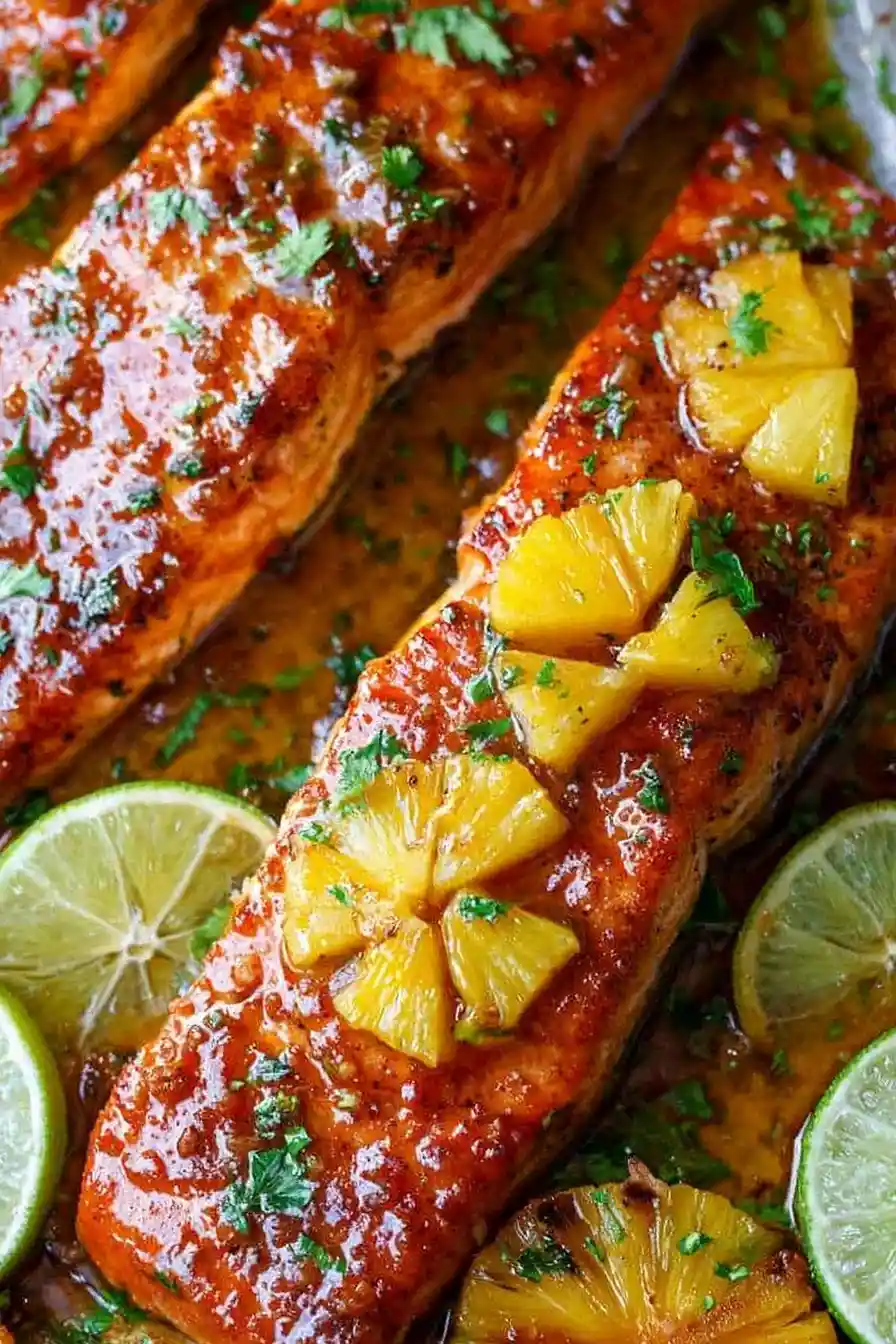
List of ingredients
- 2 salmon fillets (6 oz each) – skin-on or skinless.
- ½ cup pineapple chunks – fresh or canned and drained.
- 2 tbsp pineapple juice – fresh or from the can.
- 1 ½ tbsp soy sauce – use tamari for a gluten-free option.
- 1 tbsp honey – provides a natural sweetness and gloss.
- 1 tbsp olive oil – helps prevent sticking and adds richness.
- 1 clove garlic, minced – for a pungent, savory base.
- ½ tsp grated fresh ginger (optional) – adds a zesty warmth.
- Pinch of red pepper flakes (optional) – for a subtle heat.
- Salt and pepper, to taste – to enhance all flavors.
- Chopped cilantro or parsley – for a fresh garnish.
- Lime wedges – to add acidity and brightness.
step-by-step instructions
- Prepare Oven: Preheat your oven to 375°F. Lightly grease a small baking dish with oil or line it with parchment paper.
- Mix Glaze: In a small mixing bowl, whisk together the pineapple juice, soy sauce, honey, olive oil, garlic, ginger, and red pepper flakes.
- Arrange Dish: Place the salmon fillets in the baking dish and season them with salt and pepper. Surround the fish with pineapple chunks.
- Apply Glaze: Pour the prepared glaze evenly over the salmon fillets and the surrounding pineapple.
- Bake: Bake for 16–20 minutes until the salmon flakes easily with a fork. You may broil for the final 1–2 minutes for extra caramelization.
- Rest and Serve: Let the dish rest for 2–3 minutes. Garnish with chopped herbs and serve with lime wedges.
Expert Cooking Tips for Success
Selecting the Best Salmon Cut
Choose center-cut salmon fillets to ensure a uniform thickness across the fish. This helps the fillets cook evenly, preventing the thinner edges from drying out while the center reaches the correct temperature. Avoid fillets with significant gaps in the meat for a better texture.
Using Fresh Versus Canned Pineapple
Fresh pineapple is recommended because it contains more natural sugars that caramelize beautifully under heat. However, canned chunks are a convenient alternative; just ensure they are well-drained to avoid adding excess water to the pan. This prevents the glaze from becoming too thin.
Monitoring Internal Temperature
To avoid overcooking, use a meat thermometer to check the internal temperature of the salmon. The fish is perfectly cooked when it reaches 125°F to 135°F. It will continue to cook slightly while resting, reaching the ideal flaky consistency.
Preventing the Salmon from Sticking
Using parchment paper or a silicone mat is the most effective way to ensure the fish does not stick to the pan. If you only have a baking dish, ensure it is generously greased with olive oil. This also makes the cleanup process much faster after the honey in the glaze caramelizes.
Adding a Butter Finish
For a richer flavor and a more professional presentation, place a small pat of unsalted butter on each fillet immediately after removing them from the oven. The butter melts into the tropical glaze, adding a creamy element that balances the acidity of the pineapple.
Adding More Vegetables to the Pan
You can turn this into a complete meal by adding sliced red onion, bell pepper strips, or snap peas to the dish. These vegetables roast in the same glaze as the salmon, absorbing the sweet and savory flavors. Arrange them around the fish, ensuring they are not overcrowded.
Tropical Glaze Variations
Coconut Pineapple Version
Stir one tablespoon of full-fat coconut milk into the glaze before pouring it over the fish. This adds a creamy, tropical depth that complements the pineapple and soy sauce perfectly. It creates a thicker sauce that clings better to the salmon.
Ginger Teriyaki Twist
Replace the honey with brown sugar and swap the soy sauce for a teriyaki glaze. After baking, sprinkle toasted sesame seeds over the fillets for a Japanese-inspired flavor profile. This version is slightly saltier and has a deeper caramel flavor.
Spicy Mango Alternative
Substitute the pineapple chunks and juice with diced fresh mango and mango puree. Add a teaspoon of sriracha or a pinch of cayenne pepper to the glaze for a spicy-sweet balance. This variation offers a different type of tropical sweetness that pairs well with the fish.
Adding Herbal Depth
Include a few sprigs of fresh thyme or basil in the baking dish while the salmon cooks. The heat releases the oils from the herbs, adding a subtle earthy note to the sweetness. This is particularly effective when using fresh pineapple.
Recommended Side Dish Pairings
Coconut Jasmine Rice
Cook jasmine rice using a mixture of coconut milk and water for a rich, aromatic base. The creaminess of the coconut rice balances the acidity of the lime and pineapple glaze. It is the most traditional pairing for tropical-style seafood.
Garlic Roasted Potatoes
Small red potatoes halved and roasted with garlic and rosemary provide a hearty contrast to the light fish. Roast them on a separate tray at the same temperature as the salmon. Serve the salmon directly on top of the potatoes to soak up the extra sauce.
Steamed Asparagus or Zucchini
Lightly steamed asparagus or sautéed zucchini slices keep the meal healthy and vibrant. These vegetables provide a fresh crunch that cuts through the richness of the honey glaze. A squeeze of lemon or lime over the greens enhances the overall flavor.
Quinoa or Farro Bowls
For a nutrient-dense option, serve the salmon over a bed of cooked quinoa or farro. These grains have a nutty flavor that works well with the soy and ginger elements. You can stir in some chopped parsley and lime juice to the grains for extra brightness.
Storage and Reheating Advice
Refrigeration Guidelines
Store leftover salmon and pineapple in an airtight container in the refrigerator for up to three days. Keep the glaze and the fish together so the salmon stays moist. Ensure the food is cooled slightly before sealing the lid to prevent condensation.
Gently Reheating the Dish
To reheat, place the salmon in an oven-safe dish and cover it with foil to trap moisture. Heat at 275°F for about 10–15 minutes until warmed through. Avoid high heat or long microwave sessions, as this will make the salmon rubbery.
Meal Prep Strategy
You can prepare the pineapple glaze and chop the pineapple chunks up to 24 hours in advance. Store the glaze in a glass jar in the fridge and the fruit in a separate container. Assemble and bake just before serving to maintain the best texture.
Freezing Considerations
It is not recommended to freeze this dish after it has been cooked, as the texture of the salmon and pineapple will degrade. If you wish to freeze, freeze the raw salmon and the glaze ingredients separately. Thaw the fish completely before applying the glaze and baking.
Troubleshooting Common Issues
Dealing with a Watery Sauce
If the sauce in the pan is too thin after baking, pour the remaining glaze into a small saucepan. Simmer it over medium heat for 3–5 minutes until it reduces into a thick syrup. Spoon this concentrated glaze back over the salmon before serving.
Preventing the Glaze from Burning
Because the glaze contains honey and pineapple juice, it can burn if the oven is too hot or the fish is too thin. If you notice the edges darkening too quickly, cover the dish loosely with aluminum foil. This protects the sugars from direct heat while the fish finishes cooking.
Managing Frozen Salmon Moisture
If using frozen fillets, thaw them completely in the refrigerator overnight. Once thawed, pat the salmon very dry with paper towels before seasoning. Excess moisture on the surface creates steam, which prevents the glaze from adhering and caramelizing.
Fixing Bland Flavors
If the dish tastes too sweet, add an extra squeeze of fresh lime juice or a dash of soy sauce. If it is too salty, add a small amount of honey or a few more pineapple chunks. Balance is key when working with sweet and savory components.
Frequently Asked Questions
Can I use a different type of fish?
Yes, this glaze works well with other firm white fish like cod, halibut, or mahi-mahi. Be mindful that white fish often cooks faster than salmon, so check for doneness a few minutes earlier than the recipe suggests.
Is this recipe gluten-free?
The recipe becomes gluten-free if you replace the standard soy sauce with tamari or coconut aminos. These alternatives provide the same savory, salty depth without containing wheat.
Can I grill this instead of baking?
Absolutely. Place the salmon and pineapple in a foil packet and seal it tightly. Grill over medium heat for 15–18 minutes, turning the packet once halfway through for an outdoor summer version of the dish.
How do I know when the salmon is perfectly done?
The best indicator is the ‘flake test.’ Press a fork gently into the thickest part of the fillet; if the meat separates easily along the natural lines, it is done. The color should be an opaque light pink throughout.
Can I use a different sweetener than honey?
Maple syrup is a great substitute for honey and adds a slightly different, woody sweetness. You can also use agave nectar for a more neutral sweetness that allows the pineapple to be the star flavor.
Print
Sweet and Savory Baked Pineapple Salmon
- Total Time: 28 minutes
- Yield: 4 servings 1x
- Diet: General
Description
A tender and moist salmon dish baked with a sweet and savory pineapple glaze, combining tropical fruit with ginger and garlic for a visually stunning and flavorful meal.
Ingredients
- 2 salmon fillets (6 oz each)
- ½ cup pineapple chunks
- 2 tbsp pineapple juice
- 1 ½ tbsp soy sauce
- 1 tbsp honey
- 1 tbsp olive oil
- 1 clove garlic, minced
- ½ tsp grated fresh ginger
- Pinch of red pepper flakes
- Salt and pepper, to taste
- Chopped cilantro or parsley
- Lime wedges
Instructions
- Step 1: Preheat oven to 375°F. Lightly grease or line a small baking dish.
- Step 2: In a bowl, whisk pineapple juice, soy sauce, honey, oil, garlic, ginger, and red pepper.
- Step 3: Place salmon in dish. Season with salt and pepper. Add pineapple chunks around the fillets.
- Step 4: Pour glaze over salmon and pineapple.
- Step 5: Bake for 16–20 minutes until salmon flakes easily. Broil final 1–2 minutes if desired.
- Step 6: Rest for 2–3 minutes. Garnish with herbs and serve with lime wedges.
Notes
Use center-cut salmon fillets for even cooking. For a gluten-free option, replace soy sauce with tamari or coconut aminos.
- Prep Time: 10 minutes
- Cook Time: 18 minutes
- Category: Main Course
- Method: Baking
- Cuisine: Fusion
Nutrition
- Serving Size: 1 fillet
- Calories: 300 kcal
- Sugar: 12 g
- Sodium: 480 mg
- Fat: 14 g
- Saturated Fat: 3 g
- Unsaturated Fat: 11 g
- Trans Fat: 0 g
- Carbohydrates: 18 g
- Fiber: 2 g
- Protein: 32 g
- Cholesterol: 75 mg