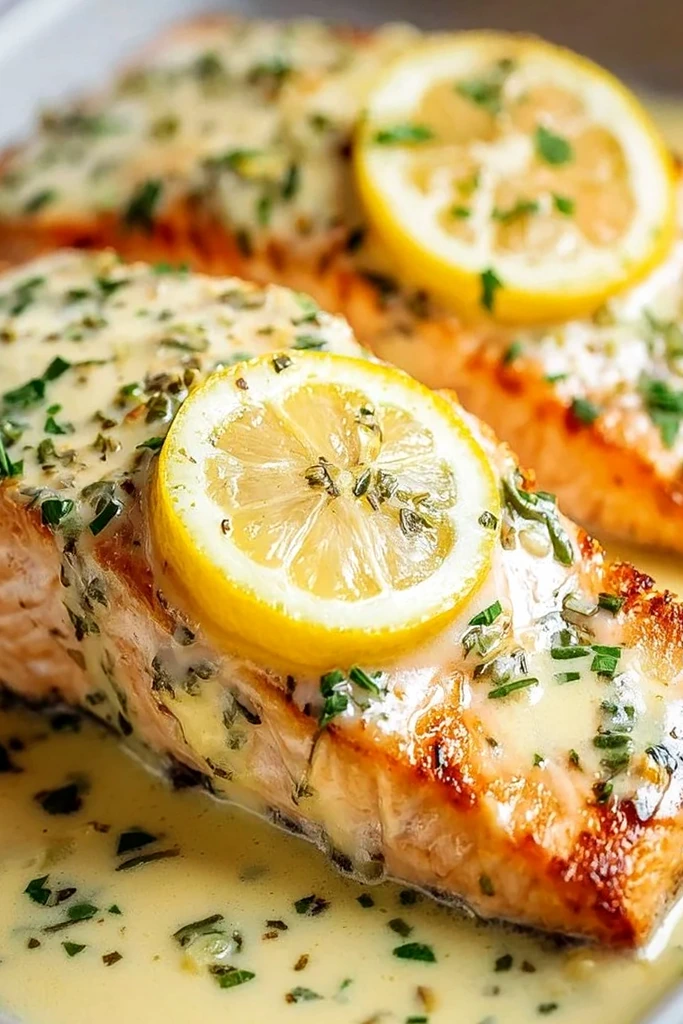
This baked salmon dish features a rich, zesty lemon butter cream sauce that complements the tender fish perfectly. It is a high-protein meal that comes together in under 30 minutes, making it ideal for a quick yet elegant dinner.
List of ingredients
- 2 tablespoons freshly squeezed lemon juice – adds a bright, acidic base to the marinade.
- 1 tablespoon olive oil – helps the marinade adhere and maintains moisture.
- 1 minced garlic clove – provides an aromatic foundation for the fish.
- 2 tablespoons old-style Dijon mustard – adds tang and helps emulsify the marinade.
- 5 skinless salmon fillets (about 5 oz each) – the primary protein source.
- 1/2 teaspoon ground black pepper – adds a subtle, warm spice.
- Salt – used to enhance all natural flavors.
- 1/4 cup unsalted butter – creates the rich base for the cream sauce.
- 1 1/2 tablespoons minced garlic cloves – provides a bold garlic flavor in the sauce.
- 1/2 cup heavy cream – ensures a thick and velvety sauce texture.
- 1-2 tablespoons freshly squeezed lemon juice (optional) – used to adjust the acidity of the final sauce.
- 1 tablespoon parsley (finely chopped) – adds color and a fresh herbal note.
- Lemon slices – used for garnish and added brightness.
step-by-step instructions
- Preheat Oven: Set your oven to 400°F (200°C) to ensure it is fully hot before the salmon goes in.
- Prepare Marinade: Whisk together the lemon juice, olive oil, minced garlic, and Dijon mustard in a small mixing bowl.
- Season and Coat: Place the salmon fillets on a parchment-lined baking sheet, sprinkle with salt and black pepper, and pour the marinade over each piece.
- Bake: Cook the salmon for 12-15 minutes, or until the fish flakes easily with a fork.
- Sauté Garlic: Melt the butter in a saucepan over medium heat and sauté the minced garlic for about 1 minute until fragrant.
- Simmer Sauce: Stir in the heavy cream and optional extra lemon juice, simmering gently until the sauce thickens slightly.
- Final Touch: Stir in the chopped parsley and adjust the seasoning with salt and pepper to your taste.
- Serve: Plate the baked fillets, drizzle the warm cream sauce over the top, and garnish with lemon slices.
Selecting the Ideal Salmon
Understanding Wild vs Farmed Salmon
Wild salmon typically offers a more robust flavor and a deeper red color due to their natural diet. Farmed salmon tends to have a milder taste and a higher fat content, which can make the fillets more forgiving during the baking process.
Choosing the Right Fillet Thickness
Aim for fillets that are consistent in thickness across the board. This ensures that all pieces cook at the same rate, preventing some from drying out while others remain undercooked in the center.
Skin-on versus Skinless Options
While skinless fillets are easier for this specific creamy recipe, skin-on fillets can provide a protective barrier. If using skin-on, simply bake as directed and the skin will act as a shield against the high heat of the oven.
Pro Baking Techniques
The Importance of Full Preheating
Never put the salmon in a warming oven. A fully preheated oven at 400°F creates an immediate sear on the outside of the fish, which helps lock in the natural juices and prevents the fillets from steaming.
Using Parchment Paper for Efficiency
Lining your baking sheet with parchment paper prevents the salmon from sticking to the metal. This allows you to slide the fillets onto the serving plate without breaking the delicate flakes of the cooked fish.
Determining Doneness Without a Thermometer
If you do not have a thermometer, use a fork to gently press the thickest part of the fillet. The salmon is done when the flesh separates easily along the natural lines, known as flaking.
Mastering the Cream Sauce
Preventing the Sauce from Curdling
Avoid boiling the cream sauce on high heat, as this can cause the dairy to separate or curdle. Keep the heat at a gentle simmer and stir constantly to maintain a smooth, homogenous texture.
Balancing Acidity and Richness
The richness of the heavy cream and butter is balanced by the citric acid in the lemon juice. Always taste the sauce before serving and add an extra squeeze of lemon if it feels too heavy on the palate.
Achieving the Perfect Consistency
Simmer the sauce just long enough for it to coat the back of a spoon. If the sauce becomes too thick, stir in a teaspoon of water or milk to loosen it without losing the creamy quality.
Ingredient Substitutions
Dairy-Free Cream Alternatives
You can replace heavy cream with full-fat coconut milk for a dairy-free version. While the flavor profile will shift slightly toward a coconut note, the thickness and richness remain similar.
Swapping the Mustard
If Dijon mustard is unavailable, whole grain mustard is an excellent substitute that adds a nice texture. In a pinch, yellow mustard can be used, though it provides a sharper, less complex flavor.
Using Alternative Fish Varieties
This sauce works beautifully with other firm white fish such as cod, halibut, or trout. Be mindful that white fish often cook faster than salmon, so reduce the baking time by 2-3 minutes.
Alternative Fats for the Sauce
Ghee is a great substitute for unsalted butter if you need a higher smoke point or a dairy-free option. Melted coconut oil also works, though it will add a subtle sweetness to the final dish.
Creative Flavor Variations
Adding a Spicy Kick
Stir a teaspoon of Sriracha or a pinch of cayenne pepper into the cream sauce. The heat cuts through the richness of the butter and cream, adding an exciting dimension to the flavor.
Incorporating Different Fresh Herbs
While parsley is traditional, fresh dill or chives pair exceptionally well with salmon. Use about one tablespoon of finely chopped dill to give the dish a more classic Scandinavian feel.
Experimenting with Citrus Blends
Replace half of the lemon juice with lime or orange juice for a different citrus profile. Orange juice, in particular, adds a subtle sweetness that complements the savory garlic and mustard.
Enhancing the Garlic Profile
For a deeper, sweeter flavor, replace the minced garlic in the sauce with roasted garlic cloves. Mash the roasted cloves into a paste before stirring them into the cream for a mellower taste.
Serving and Pairing Ideas
Low-Carb Vegetable Pairings
Roasted asparagus or sautéed spinach are perfect sides for this dish. These vegetables provide a fresh, earthy contrast to the rich cream sauce and can be cooked quickly in a pan.
Hearty Grain Accompaniments
Serve the salmon over a bed of quinoa, basmati rice, or mashed potatoes. These sides are excellent for soaking up the extra lemon butter sauce left on the plate.
Fresh Salad Combinations
Place the plated salmon on a bed of baby arugula or mixed spring greens. A light lemon-olive oil vinaigrette on the greens will mirror the flavors of the fish without overpowering it.
Storage and Reheating
Safe Refrigeration Practices
Store leftover salmon and sauce in separate airtight containers in the refrigerator for up to two days. Keeping the sauce separate prevents the fish from becoming mushy during storage.
Gentle Reheating Methods
Reheat the salmon in a low-temperature oven or a microwave on a medium power setting. Avoid high heat, as salmon overcooks quickly and can become dry and rubbery during reheating.
Freezing Cooked Salmon
You can freeze the baked salmon for up to a month, but avoid freezing the cream sauce. The sauce may separate upon thawing, whereas the fish maintains its structure relatively well.
Troubleshooting Common Issues
Fixing a Separated Sauce
If your sauce breaks and looks oily, whisk in a teaspoon of water or a splash of cream over very low heat. This helps re-emulsify the fats and liquids back into a smooth consistency.
Preventing Dry Fillets
Dryness is usually caused by overcooking. Always remove the salmon from the oven when it is just barely opaque in the center, as it will continue to cook while resting.
Dealing with Uneven Cooking
If some fillets are thinner than others, remove the smaller pieces first. This prevents the thin ends from overcooking while the thicker centers reach the safe internal temperature.
Frequently Asked Questions
Can I use frozen salmon fillets?
Yes, but ensure they are completely thawed in the refrigerator before cooking. Pat the fillets dry with a paper towel to remove excess moisture, which helps the marinade stick better.
Is this recipe gluten-free?
This recipe is naturally gluten-free as long as the Dijon mustard used does not contain gluten thickeners. Always check the label of your mustard to be certain.
How do I remove a strong fishy smell?
Rinse the fillets under cold water and pat them dry before marinating. The lemon juice in the marinade also helps neutralize any strong odors from the fish.
Can I use foil instead of parchment paper?
Yes, you can use aluminum foil, but be sure to grease it with a small amount of oil or butter. Salmon tends to stick to foil more than it does to parchment paper.
Print
Creamy Lemon Butter Baked Salmon Fillets
- Total Time: 25 minutes
- Yield: 5 servings 1x
- Diet: Gluten-Free
Description
A simple yet stunning baked salmon dish dressed in a rich lemon butter cream sauce.
Ingredients
- 2 tablespoons freshly squeezed lemon juice
- 1 tablespoon olive oil
- 1 minced garlic clove
- 2 tablespoons old-style Dijon mustard
- 5 skinless salmon fillets (about 5 oz each)
- 1/2 teaspoon ground black pepper
- Salt (to taste)
- 1/4 cup unsalted butter
- 1 1/2 tablespoons minced garlic cloves
- 1/2 cup heavy cream
- 1–2 tablespoons freshly squeezed lemon juice (optional)
- 1 tablespoon parsley (finely chopped)
- Lemon slices for serving
Instructions
- Preheat: Preheat your oven to 400°F (200°C).
- Whisk: Whisk together the lemon juice, olive oil, minced garlic, and Dijon mustard in a bowl.
- Season: Place your salmon fillets on a parchment-lined baking sheet. Sprinkle with salt and black pepper, then pour the marinade over the top.
- Bake: Bake your salmon for 12-15 minutes until it flakes easily with a fork.
- Sauté: Melt the butter in a saucepan over medium heat. Add the minced garlic and sauté until fragrant, about 1 minute. Stir in the heavy cream.
- Simmer: Add more lemon juice for extra zing, and simmer until the sauce thickens slightly.
- Finish Sauce: Stir in the chopped parsley and taste the sauce, adjusting salt and pepper as needed.
- Serve: Plate the salmon, drizzle the sauce over the top, and garnish with lemon slices.
Notes
This recipe is easily adjustable for various tastes; feel free to play with flavors and sides!
- Prep Time: 10 minutes
- Cook Time: 15 minutes
- Category: Main Course
- Method: Baking
- Cuisine: American
Nutrition
- Serving Size: 1 serving
- Calories: 400 kcal
- Sugar: 1 g
- Sodium: 350 mg
- Fat: 22 g
- Saturated Fat: 10 g
- Unsaturated Fat: 9 g
- Trans Fat: 0 g
- Carbohydrates: 2 g
- Fiber: 0 g
- Protein: 39 g
- Cholesterol: 100 mg