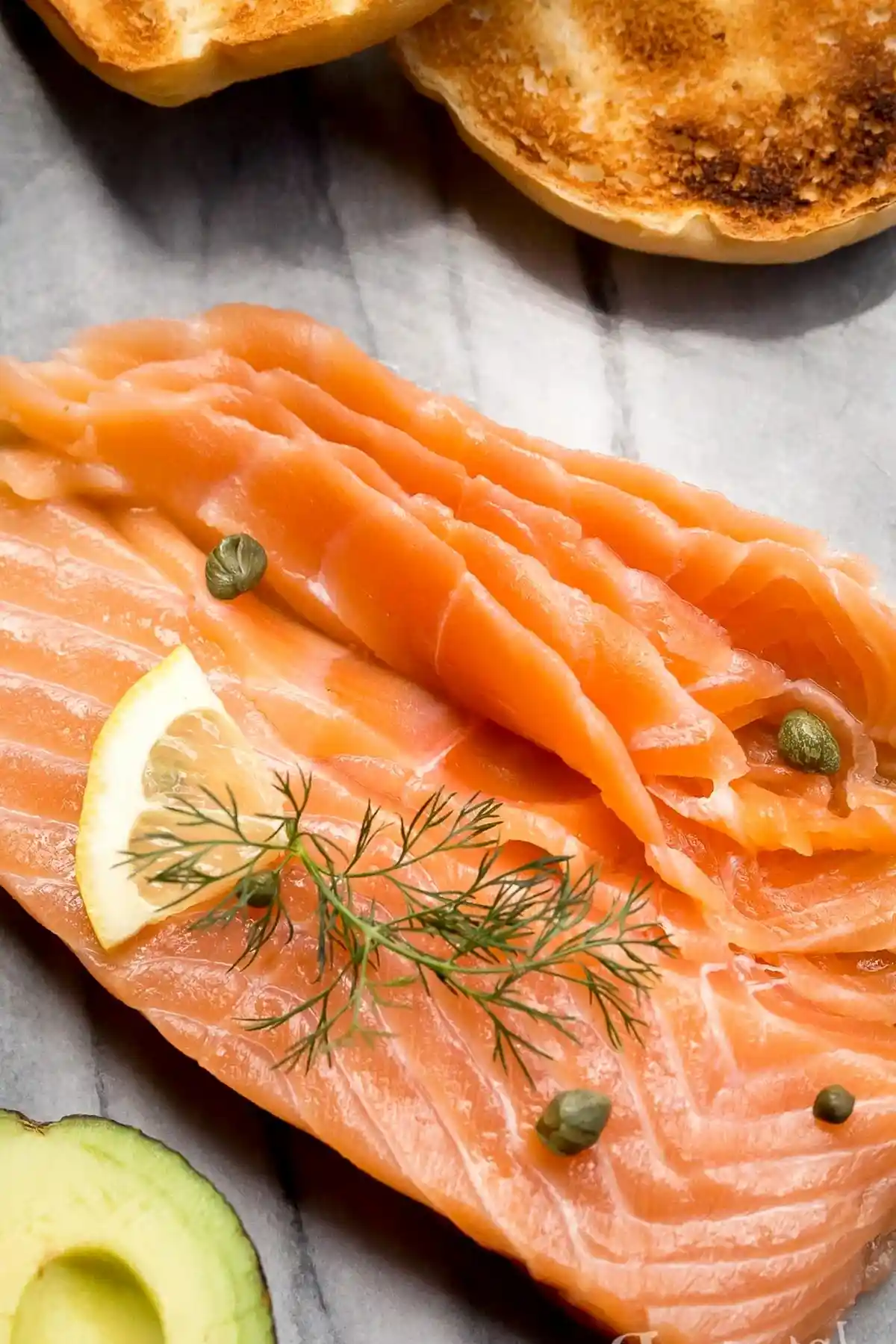
This method allows you to create a savory, cold-cured salmon with a deep smoky profile without needing any specialized equipment. It is an ideal preparation for brunch spreads, elegant appetizer platters, or a high-protein snack.
List of ingredients
- 8 oz salmon fillet (boneless) – use sushi-grade or previously frozen fillets for maximum safety.
- 3 tbsp salt – essential for drawing out moisture and curing the fish.
- 3 tbsp sugar – balances the saltiness and enhances the natural flavor of the salmon.
- 2 drops liquid smoke – provides the characteristic smoky aroma and taste without a smoker.
step-by-step instructions
- Prepare the rub: Combine the salt, sugar, and liquid smoke in a small bowl, stirring well to ensure the liquid smoke is evenly distributed.
- Coat the fillet: Line a small container with plastic wrap, spread half of the dry rub on the bottom, place the salmon on top, and cover with the remaining rub.
- Seal and cure: Gather the ends of the plastic wrap and twist tightly so the salmon is completely encased and the brine cannot leak; refrigerate for 24 hours.
- Finish the cure: Trim a small piece to test for saltiness; if it meets your preference, remove the salmon from the brine and pat it completely dry.
- Firm the fish: Place the dried salmon in the freezer for approximately 30 minutes to make the flesh firmer and easier to slice.
- Slice the salmon: Using a sharp fillet knife, cut the salmon into very thin strips, ensuring you slice against the grain for the best texture.
Salmon Selection and Safety
Using Previously Frozen Salmon
For raw-style preparations like cold-cured salmon, using commercially frozen fish is highly recommended. Freezing at specific industrial temperatures kills potential parasites that may be present in fresh wild salmon. If you cannot find frozen fillets, ensure you purchase certified sushi-grade salmon from a reputable fishmonger.
Choosing the Right Cut
A center-cut boneless fillet provides the most consistent thickness for an even cure. Removing the skin before or after curing depends on preference, but boneless fillets ensure a smoother slicing process. Look for fillets with a vibrant color and firm flesh that springs back when touched.
Identifying High-Quality Fish
Avoid salmon that has a strong fishy odor or a slimy texture on the surface. High-quality salmon should smell like the ocean and have a clean, translucent appearance. Always check the expiration date and ensure the fish has been kept at a constant cold temperature during transport.
Understanding the Curing Process
The Role of Salt in Preservation
Salt works through osmosis to draw moisture out of the salmon cells, which inhibits the growth of bacteria. This process changes the texture of the fish from soft and raw to a denser, more cured consistency. The reduction in water activity is what allows the fish to be preserved for longer periods in the refrigerator.
Balancing Flavor with Sugar
Sugar is used in equal proportions to salt to counteract the intense salinity of the cure. It helps maintain the moistness of the fish and prevents it from becoming overly tough or leathery. This balance creates the classic sweet-and-salty profile found in professional lox or smoked salmon.
The Importance of Airtight Wrapping
Wrapping the salmon tightly in plastic wrap or using a vacuum sealer ensures the cure stays in direct contact with the fish. This prevents the brine from leaking and protects the salmon from oxidation and exposure to other fridge odors. A tight seal also helps the liquid smoke penetrate the fillet evenly.
Flavor Variations and Substitutions
Experimenting with Different Sugars
While granulated white sugar is standard, brown sugar can be used for a deeper, molasses-like sweetness. Coconut sugar is a viable alternative for those seeking a slightly nuttier flavor profile. Adjust the ratio slightly if using a sugar that is significantly sweeter or more intense than white sugar.
Alternative Salt Types
Kosher salt is often preferred for curing because its coarse grains dissolve at a predictable rate. Coarse sea salt can also be used, providing a similar effect, though fine table salt may cure the fish more quickly due to its higher surface area. Always measure by tablespoon for consistency across batches.
Adding Aromatic Herbs
You can enhance the cure by adding fresh dill or lemon zest to the rub mixture. Black peppercorns or a pinch of smoked paprika can add a layer of complexity and a slightly spicier note. Ensure herbs are pressed firmly into the flesh during the wrapping process for maximum flavor infusion.
Precision Slicing Techniques
Using the Right Knife
A long, flexible fillet knife is the best tool for achieving paper-thin slices. The flexibility allows the blade to glide smoothly along the curve of the fish without tearing the flesh. If a fillet knife is unavailable, a very sharp chef’s knife can work, provided you use a steady, slicing motion.
Why Pre-Freezing is Necessary
Chilling the salmon in the freezer for 30 minutes firms up the omega-3 fatty acids in the fish. This prevents the fillet from sliding or compressing while you apply pressure with the knife. It is important not to freeze the fish solid, as this would make thin slicing impossible.
Cutting Against the Grain
Identify the muscle fibers, or grain, of the salmon fillet and slice perpendicular to them. Cutting across the grain breaks up the long muscle fibers, resulting in a more tender bite. This technique prevents the slices from feeling chewy or stringy when eaten.
Serving and Pairing Suggestions
Classic Brunch Combinations
Pair your homemade smoked salmon with toasted bagels and a generous layer of cream cheese. Add capers, thinly sliced red onions, and fresh dill to create a traditional New York-style breakfast. A squeeze of fresh lemon juice over the top brightens the salty notes of the cure.
Fresh Salad Integrations
Toss thin strips of smoked salmon into a bed of baby arugula or mixed spring greens. Use a light lemon vinaigrette and add sliced cucumbers and avocado for a refreshing, nutrient-dense meal. The saltiness of the salmon acts as a natural seasoning for the greens.
Elegant Appetizer Platters
Arrange the salmon slices on a charcuterie board with crisp crackers and cucumber rounds. Pair it with soft cheeses like goat cheese or brie for a contrast in textures. Fresh berries or apple slices provide a sweet acidity that cleanses the palate between bites.
Creamy Pasta Additions
Stir smoked salmon into a light cream sauce with garlic and parmesan cheese. Fold the salmon in at the very end of the cooking process to avoid overcooking it and losing its delicate texture. This adds a luxurious, smoky depth to pasta dishes like fettuccine or penne.
Storage and Maintenance
Refrigeration Guidelines
Store the finished smoked salmon in an airtight container or wrap it tightly in wax paper and plastic. Keep it in the coldest part of the refrigerator, ideally away from the door. Homemade cured salmon typically maintains peak quality for up to 5 days.
Freezing for Long-Term Use
If you cannot consume the salmon within a week, wrap it tightly in multiple layers of plastic wrap and place it in a freezer bag. It can be stored in the freezer for up to 3 months without significant loss of quality. Thaw it slowly in the refrigerator overnight before serving.
Identifying Signs of Spoilage
Check for a strong ammonia smell or a slimy film on the surface of the fish, which indicates bacterial growth. Any significant discoloration, such as graying or dullness, is a sign that the fish is no longer fresh. When in doubt, discard the product to ensure food safety.
Troubleshooting Common Issues
Reducing Excessive Saltiness
If the salmon tastes too salty, submerge the slices in a bowl of boiled water that has been allowed to cool. Let the fish soak for 30 to 60 minutes to draw out some of the excess sodium. Pat the slices dry with a paper towel before serving to restore the texture.
Correcting a Dry Texture
A dry or rubbery texture usually means the fish was cured for too long or the salt ratio was too high. For future batches, try reducing the refrigeration time to 18-20 hours instead of a full 24. This prevents the salt from removing too much internal moisture.
Managing Liquid Smoke Intensity
Liquid smoke varies in concentration depending on the brand. If the smoky flavor is too overpowering, reduce the amount to a single drop for the next batch. You can also balance a strong smoke flavor by adding more lemon juice or fresh herbs during serving.
Frequently Asked Questions
Can I use fresh salmon instead of frozen?
Yes, you can use fresh salmon, but it must be sushi-grade to ensure safety from parasites. Commercially frozen salmon is generally safer for raw-style curing because the freezing process kills potential parasites.
How long does homemade smoked salmon last?
When kept in an airtight container in the refrigerator, homemade smoked salmon lasts up to 5 days. For longer storage, it should be frozen.
Can I freeze it?
Yes, you can freeze cured salmon for up to 3 months. Ensure it is wrapped tightly to prevent freezer burn, and thaw it in the refrigerator before using.
What type of liquid smoke should I use?
Natural liquid smoke with minimal additives is best. Hickory and mesquite varieties are the most popular, providing a deep, traditional smoky taste.
Can I adjust the sweetness?
Absolutely. If you prefer a less sweet result, you can slightly reduce the amount of sugar in the rub. Using brown sugar instead of white sugar will also change the flavor profile to be richer.
Can I add herbs or spices?
Yes, adding fresh dill, cracked black pepper, or smoked paprika to the cure can enhance the flavor. These additions complement the smoky and salty notes without overpowering the fish.
Print
Homemade Smoked Salmon Without a Smoker
- Total Time: 1 day 10 minutes
- Yield: 2 servings 1x
- Diet: General
Description
Learn the trick to make homemade cold smoked salmon at home with an irresistible smokey, salty brine mixture—no smoker required.
Ingredients
- 8 oz salmon fillet (boneless)
- 3 tbsp salt
- 3 tbsp sugar
- 2 drops liquid smoke
Instructions
- Make the Dry Rub: Combine the salt, sugar, liquid smoke and mix it well for the liquid smoke to be evenly distributed all throughout.
- Cover the Salmon in Dry Rub: Line a small container with plastic wrap. Place half the dry rub on the bottom, then place the salmon piece on top. Add the second half of the dry rub and move it around to completely cover the salmon. Gather all ends of the plastic wrap and twist so that the salmon and the salt are completely encased. You want the twist to be tight, so that once the salt and sugar liquify, they do not leak out. Cover the container with a lid and refrigerate for 24 hours. Trim off a piece of the salmon and decide if the salmon is salty enough for your liking. If it is, remove the salmon from the brine, pat dry and refrigerate in a clean container.
- How to Cut the Smoked Salmon: Freeze the salmon for about 30 minutes, to make it easier to cut. Now, using a sharp fillet knife cut it into thin strips, against the grain.
Notes
If you have kept the salmon in the brine too long and it became too salty to your liking, simply submerge the fish in some boiled, then cooled water for 30+ minutes until it is at the desired level of saltiness.
- Prep Time: 10 minutes
- Cook Time: 0 minutes
- Category: Appetizer
- Method: Curing
- Cuisine: American
Nutrition
- Serving Size: 4 oz
- Calories: 368 kcal
- Sugar: 11 g
- Sodium: 7080 mg
- Fat: 14 g
- Saturated Fat: 2 g
- Unsaturated Fat: 12 g
- Trans Fat: 0 g
- Carbohydrates: 12 g
- Fiber: 0 g
- Protein: 45 g
- Cholesterol: 124 mg