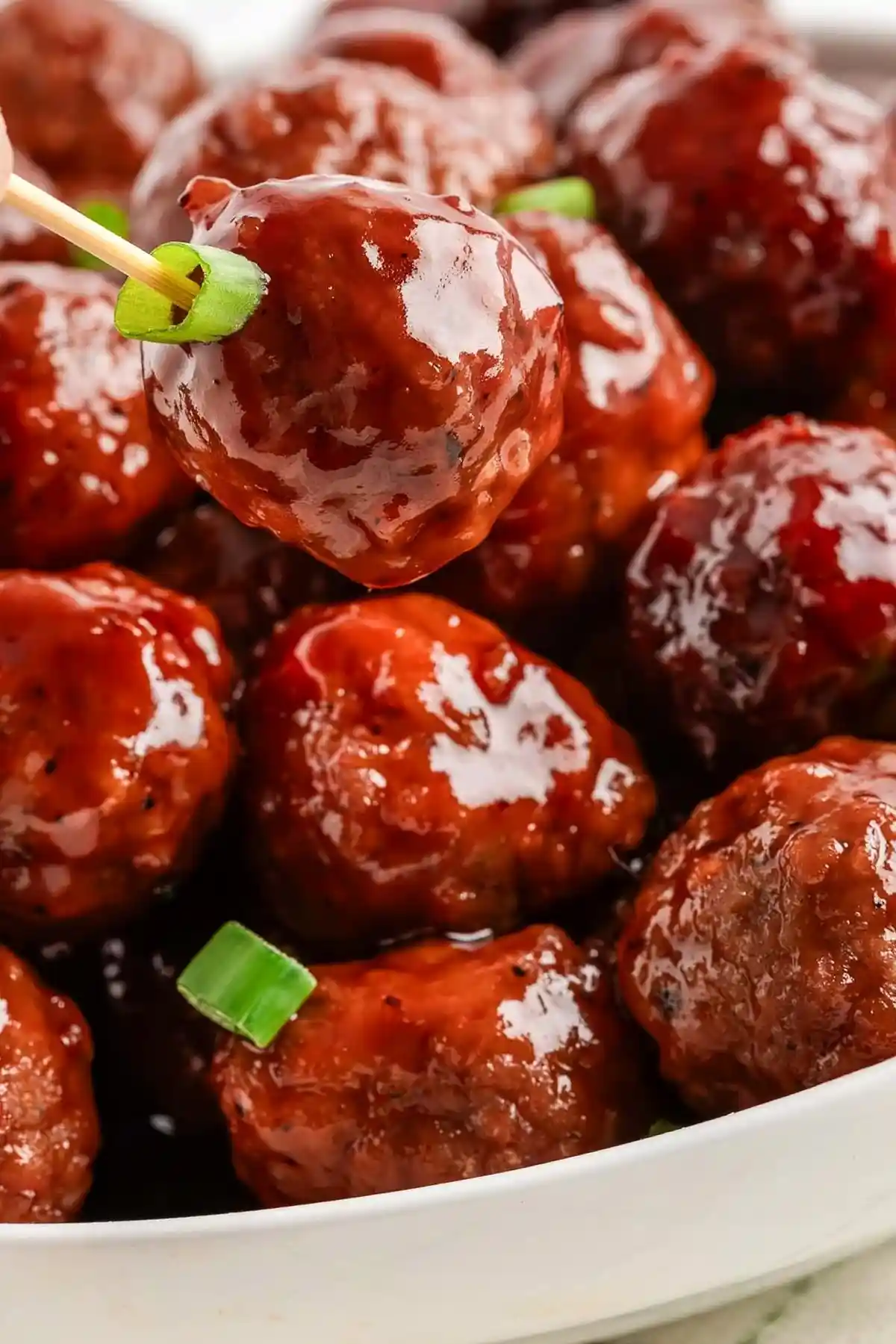
These easy-to-make meatballs combine a sweet glaze with savory meat for a crowd-pleasing result. They are ideal for busy weeknights or party appetizers because they require minimal effort.
List of ingredients
- 2 1/2 cups grape jelly – provides the sweetness and create a glossy finish.
- 18 ounces barbecue sauce – adds a smoky and tangy depth to the glaze.
- 2 lbs. frozen meatballs – use pre-cooked beef or turkey meatballs for maximum convenience.
step-by-step instructions
- Prepare the sauce: Add the grape jelly and barbecue sauce to a slow cooker and stir until the mixture is well combined.
- Combine ingredients: Add the frozen meatballs to the pot and stir carefully to ensure each meatball is evenly coated with the sauce.
- Cook: Cover the slow cooker and cook on high for 3 to 3½ hours, making sure to stir the contents once halfway through the cooking time.
Customizing the Meatball Base
Using Homemade Meatballs for Fresh Flavor
You can replace frozen meatballs with homemade versions made from ground beef or ground turkey. Combine the meat with breadcrumbs, one egg, salt, pepper, and garlic powder before rolling them into balls. Ensure they are lightly browned in a pan before adding them to the slow cooker to maintain their shape.
Adding a Creamy Finish to the Sauce
For a richer and slightly tangier sauce, stir in a few tablespoons of sour cream just before serving. This modification tones down the sweetness of the grape jelly and adds a velvety texture. Make sure the slow cooker is set to warm when adding the cream to prevent it from curdling.
Incorporating a Cheesy Topping
Sprinkle finely grated parmesan or mozzarella cheese over the meatballs during the last 15 minutes of cooking. The cheese melts into the glaze, adding a salty contrast to the sweet sauce. This is particularly effective if you are serving the meatballs as a main course over pasta.
Adjusting the Sauce Consistency
Thinning the Glaze for a Lighter Coat
If the sauce becomes too thick or sticky, stir in a small amount of beef broth or cold water. Add the liquid one tablespoon at a time until you reach your desired consistency. This is helpful if you plan to use the sauce as a pour-over for rice or mashed potatoes.
Thickening the Sauce for Better Adhesion
To achieve a thicker glaze that clings tightly to the meatballs, leave the lid off the slow cooker for the last 30 minutes of cooking. This allows excess moisture to evaporate, concentrating the sugars in the jelly and barbecue sauce. Stir frequently during this time to prevent the bottom from scorching.
Using Alternative Fruit Jellies
While grape jelly is traditional, apricot or apple jelly can be substituted in equal amounts. Apricot jelly provides a brighter, more fruity taste, while apple jelly offers a milder sweetness. These variations work well if you want to experiment with different flavor profiles while keeping the same method.
Meatball Serving Suggestions
Serving as a Party Appetizer
These meatballs are best served directly from the slow cooker with toothpicks placed nearby for easy grabbing. The slow cooker’s warm setting keeps the sauce fluid and the meat tender throughout the event. Serve them alongside a platter of sliced cucumbers or celery for a fresh contrast.
Pairing with Starchy Bases
For a full meal, spoon the meatballs and extra sauce over a bed of mashed potatoes, steamed white rice, or buttered egg noodles. The starch helps absorb the sweet and tangy glaze, making the dish more filling. Adding a side of steamed broccoli or sautéed spinach adds necessary nutrition and color.
Creating Meatball Sub Sandwiches
Place several meatballs into a toasted hoagie roll and top with a slice of provolone cheese. Place the sandwich under a broiler for two minutes until the cheese is bubbly and brown. This transforms the appetizer into a hearty sandwich perfect for a quick family dinner.
Storage and Preservation Guidelines
Refrigeration and Cooling Process
Allow the meatballs to cool completely before transferring them to an airtight container to prevent condensation. Once cooled, they can be stored in the refrigerator for up to four days. Ensure the container is sealed tightly to prevent the sauce from absorbing other odors in the fridge.
Freezing for Long Term Use
Place cooled meatballs and their sauce into a freezer-safe bag or airtight plastic container. They will maintain their quality in the freezer for up to two months. Be sure to leave a small amount of headspace in the container to allow for the sauce to expand as it freezes.
Reheating Best Practices
Using the Microwave for Quick Portions
Place a portion of meatballs in a microwave-safe bowl and add a teaspoon of water or beef broth to loosen the sauce. Cover the bowl with a damp paper towel to steam the meatballs and keep them moist. Heat in 30-second intervals, stirring in between, until they reach an internal temperature of 165°F.
Reheating in the Slow Cooker
For larger quantities, return the meatballs and sauce to the slow cooker on the low setting. Add a splash of beef broth to replace any moisture lost during storage. Heat for 1 to 2 hours until the meatballs are hot throughout and the sauce is bubbling.
Stovetop Reheating Method
Transfer the meatballs to a skillet over medium-low heat. Add a small amount of liquid and cover the pan with a lid to trap the steam. Stir occasionally for about 10 minutes to ensure the meatballs are heated evenly without burning the sugary glaze.
Preparation and Planning Tips
Overnight Setup for Busy Mornings
You can combine the grape jelly, barbecue sauce, and frozen meatballs in the slow cooker insert the night before. Cover the insert and keep it in the refrigerator until you are ready to start cooking. Simply place the insert into the slow cooker base and turn it on high in the morning.
Batch Cooking for Large Crowds
If you are preparing for a large party, double the recipe using a larger slow cooker or two separate pots. Ensure you do not overfill the cooker beyond the maximum fill line to allow for proper heat circulation. Double batches may require an extra 30 minutes of cooking time to reach the proper temperature.
Food Safety and Temperature Control
Monitoring Internal Temperature
Always use a meat thermometer to verify that the meatballs have reached an internal temperature of 165°F. This is the safety standard to ensure that any frozen meat is fully cooked and safe for consumption. Check the center of the largest meatball in the pot for the most accurate reading.
Preventing Sauce Scorching
The high sugar content in grape jelly can cause the sauce to burn if it sits too long on the high setting without movement. Stirring the meatballs halfway through the cooking process redistributes the heat and the sauce. If you notice the edges thickening too quickly, add a tablespoon of water to the sides of the pot.
Frequently Asked Questions
Can I use homemade meatballs instead of frozen?
Yes, homemade meatballs work very well in this recipe. It is recommended to brown them in a skillet first to lock in juices and ensure they hold their shape during the slow cooking process.
How long should I cook the meatballs?
Cook on high for 3 to 3.5 hours for a faster result. If you prefer to cook on low, allow them to simmer for approximately 6 hours to achieve the same tenderness.
Can I make this recipe ahead of time?
Yes, you can assemble all ingredients in the slow cooker insert and refrigerate them overnight. Start the cooking process the next day to save time during a busy morning.
How do I keep the meatballs warm for serving?
Switch the slow cooker to the warm setting once the meatballs have reached 165°F. This prevents the meat from overcooking while ensuring the sauce stays fluid for guests.
What if the sauce is too sweet?
If the glaze is too sweet for your preference, stir in a teaspoon of apple cider vinegar or a pinch of salt. This helps balance the sugars from the grape jelly and enhances the smoky notes of the barbecue sauce.
Can I use turkey meatballs?
Yes, turkey meatballs are a great alternative to beef. They tend to be leaner, so the sauce is especially important for keeping the meat moist during the slow cooking process.
Print
Slow Cooker Grape Jelly Meatballs
- Total Time: 3 hours 40 minutes
- Yield: 16 servings 1x
- Diet: General
Description
Sweet, tangy, and effortless—these slow cooker meatballs are the ultimate crowd-pleasing appetizer made with BBQ sauce and grape jelly.
Ingredients
- 2 1/2 cups grape jelly
- 18 ounces barbecue sauce
- 2 lbs. frozen meatballs
Instructions
- Step 1: Add the grape jelly and barbecue sauce to a slow cooker. Stir until well combined.
- Step 2: Add the meatballs and stir to coat them evenly with the sauce.
- Step 3: Cover and cook on high for 3 to 3½ hours, stirring once halfway through.
Notes
Use fully cooked beef or turkey meatballs. If the sauce becomes too thick, add a splash of beef broth or cold water.
- Prep Time: 10 minutes
- Cook Time: 3 hours 30 minutes
- Category: Appetizers
- Method: Slow Cooker
- Cuisine: American
Nutrition
- Serving Size: 1 serving
- Calories: 352 kcal
- Sugar: 36 g
- Sodium: 377 mg
- Fat: 12 g
- Saturated Fat: 4 g
- Unsaturated Fat: 8 g
- Trans Fat: 0 g
- Carbohydrates: 50 g
- Fiber: 1 g
- Protein: 10 g
- Cholesterol: 41 mg