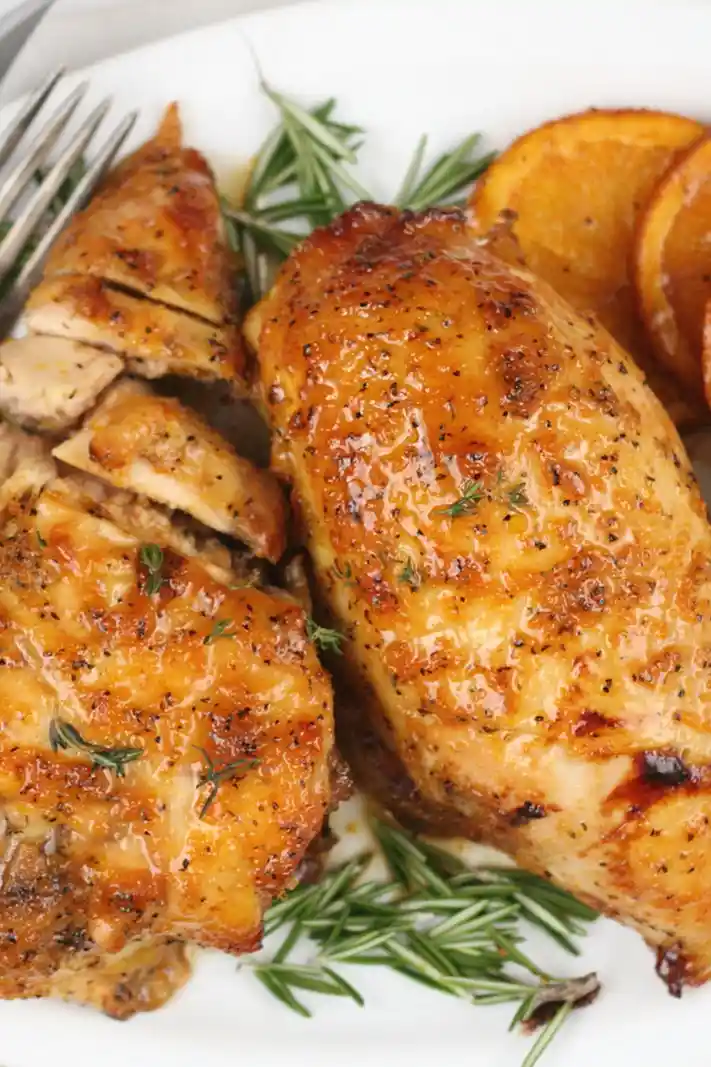
This oven-baked chicken is basted in a sweet and tangy citrus glaze for a juicy finish. It is a versatile main course that works perfectly for family weeknights or holiday gatherings.
List of ingredients
- 2 half chicken breasts – bone-in and skin-on for maximum moisture, or substitute with chicken thighs.
- 3 tablespoons butter – melted, used to help spices adhere and keep the meat tender.
- 1/2 teaspoon smoked paprika – adds a subtle woody depth.
- 1/2 teaspoon chili powder – provides a mild warmth to the seasoning.
- 1/2 teaspoon onion powder – adds a savory base note.
- 1 teaspoon garlic powder – enhances the overall aromatic profile.
- 1 teaspoon fresh rosemary – chopped finely for a piney accent.
- 1 teaspoon fresh thyme leaves – adds an earthy, herbal quality.
- Salt and black pepper – used to taste for basic seasoning.
- 3/4 cup honey – the primary sweetener for the sticky glaze.
- Zest of one orange – contains concentrated citrus oils for aroma.
- 1/2 cup fresh orange juice – provides the tangy liquid base.
- 1/4 cup apple cider – adds a crisp, fruity complexity.
- 1 tablespoon Dijon mustard – provides acidity and acts as an emulsifier.
- Salt and black pepper – to taste for the glaze mixture.
step-by-step instructions
- Prepare the glaze: Mix the honey, orange zest, orange juice, apple cider, Dijon mustard, salt, and pepper in a small bowl. Set aside half of the mixture in a separate container to use for serving later.
- Set up the oven: Preheat your oven to 375 degrees F. Line a half sheet pan with aluminum foil to ensure easy cleanup after the glaze caramelizes.
- Prepare the chicken: Place the chicken breasts on the foil-lined pan with the bone-side facing down. Brush the melted butter over the skin, then evenly sprinkle the paprika, onion powder, garlic powder, salt, and black pepper.
- Initial basting: Apply a small amount of the prepared honey orange glaze over the seasoned chicken. Insert a digital meat thermometer into the thickest part of the breast to monitor internal temperature.
- Bake and baste: Place the pan in the oven and cook for 30 minutes. Every 10 minutes after the initial mark, brush more of the glaze onto the chicken until it reaches the safe internal temperature.
- Rest the meat: Remove the pan from the oven and let the chicken rest for 10 minutes. This allows the juices to redistribute, ensuring the meat stays moist when sliced.
- Final plating: Serve the chicken with the reserved glaze drizzled over the top. Garnish with fresh rosemary and thyme for a professional look.
Expert Techniques for Optimal Results
Utilizing a Digital Meat Thermometer
Using a digital thermometer is the only way to guarantee the chicken is cooked through without overdoing it. Aim for an internal temperature of 165 degrees F at the thickest part of the breast. This prevents the meat from becoming dry or rubbery.
The Science of Basting Every Ten Minutes
Frequent basting creates a layered effect of glaze that caramelizes in the oven. This process forms a protective seal that locks in moisture while building a deep, sticky flavor profile. It also prevents the skin from drying out during the roasting process.
Importance of the Resting Period
Allowing the chicken to rest for 10 minutes before slicing is critical for juice retention. When meat cooks, the fibers tighten and push juices toward the center. Resting allows these juices to flow back throughout the meat for a tender bite.
Optimizing Oven Rack Placement
Place the baking sheet on the middle rack to ensure even heat distribution from both the top and bottom. This prevents the bottom of the chicken from burning while the skin browns. If the skin isn’t browning enough, you can move it to the upper rack for the last five minutes.
Customizing Your Flavor Profile
Increasing the Spicy Kick
For those who prefer more heat, add a pinch of cayenne pepper or red pepper flakes to the dry rub. You can also stir a teaspoon of sriracha into the honey orange glaze. This creates a sweet-heat balance that complements the citrus perfectly.
Enhancing the Tangy Elements
If the glaze feels too sweet, add a teaspoon of apple cider vinegar or lemon juice. This increases the acidity, which cuts through the richness of the honey and butter. It helps brighten the overall flavor of the dish.
Substituting Fresh Herbs for Dried
If fresh rosemary and thyme are unavailable, you can use dried versions. Use a ratio of one-third the amount of dried herbs compared to fresh. Rub the dried herbs between your palms to release their oils before applying them to the chicken.
Swapping Chicken Breasts for Thighs
Chicken thighs are a great alternative because they have a higher fat content and are harder to overcook. They typically require a slightly longer cooking time but result in a richer taste. The glaze adheres exceptionally well to the skin of the thighs.
Recommended Side Dish Pairings
Classic Starchy Accompaniments
Twice-baked potatoes or scalloped potatoes provide a creamy contrast to the tangy glaze. Mashed potatoes with garlic are also an excellent choice for soaking up the extra sauce. Roasted root vegetables like carrots or parsnips mirror the sweetness of the honey.
Fresh and Green Vegetables
Steamed broccoli or roasted asparagus adds a necessary bitterness and crunch to the meal. A crisp garden salad with a light vinaigrette cleanses the palate between bites of the rich glaze. Sautéed green beans with slivered almonds also pair well with citrus flavors.
Grain-Based Side Options
Wild rice or a fluffy quinoa pilaf works well to absorb the orange glaze. You can stir in some chopped parsley or green onions to the rice for extra color. Basmati rice is another great option for a lighter, aromatic base.
Comfort Food Pairings
Green bean casserole or slow-cooked baked beans complement the Southern roots of this recipe. These hearty sides make the dish suitable for a full holiday spread. Cornbread with honey butter also aligns with the flavor profile of the chicken.
Storage and Preservation Guidelines
Safe Refrigeration Methods
Store leftover chicken in an airtight glass or plastic container in the refrigerator. Ensure the chicken is completely cooled before sealing to prevent steam from making the skin soggy. The chicken will remain fresh and safe to eat for 3 to 4 days.
Freezing for Long Term Storage
Cooked orange chicken can be frozen for up to three months. Wrap the chicken tightly in aluminum foil and then place it in a heavy-duty freezer bag to prevent freezer burn. Store any leftover glaze in a separate freeze-safe container.
Proper Thawing Procedures
Thaw frozen chicken slowly in the refrigerator overnight for the best texture. Avoid thawing at room temperature to prevent bacterial growth. If you are in a rush, use the defrost setting on your microwave on low power.
Maintaining Glaze Consistency
If the stored glaze separates or thickens too much in the fridge, give it a vigorous shake or whisk. You can add a teaspoon of warm water or orange juice to bring it back to a pourable consistency. Gently heat it on the stove before serving.
Reheating for Maximum Quality
The Oven Reheating Method
To maintain the skin’s texture, reheat the chicken in the oven at 325 degrees F. Place the pieces in a baking dish and cover with foil to trap moisture. Heat for 10 to 15 minutes or until the internal temperature reaches 165 degrees F.
Using the Microwave Steam Technique
When using a microwave, place the chicken on a plate and cover it with a damp paper towel. This creates a steam chamber that prevents the meat from drying out. Heat in 1-minute intervals, checking for warmth throughout.
Stovetop Simmering for Extra Sauce
Place the chicken in a skillet with a small amount of the reserved glaze and a splash of water. Cover the pan and simmer on low heat for a few minutes. This helps the glaze re-caramelize and coats the meat evenly.
Avoiding Overcooking During Reheat
The biggest risk during reheating is drying out the chicken breasts. Always use the lowest effective heat setting to warm the meat through. Stop heating as soon as the center is warm to preserve the original tenderness.
Troubleshooting Common Issues
Fixing a Glaze That is Too Thin
If your glaze is too runny, simmer it in a small saucepan over medium heat for 5 to 7 minutes. This reduces the water content and concentrates the sugars, making it thicker. Be careful not to burn the honey, as it can turn bitter.
Dealing with Burnt Glaze on the Pan
If the glaze begins to burn on the foil before the chicken is done, carefully slide a new piece of foil under the meat. You can also add a tablespoon of water to the pan to deglaze the surface. This prevents the burnt taste from transferring to the chicken.
Solving Dry Chicken Breast
If the chicken comes out dry, it was likely cooked too long or at too high a temperature. To save it, slice the meat thinly and toss it in the remaining warm glaze. The extra moisture from the sauce helps mask the dryness.
Correcting Oversalted Seasoning
If the rub is too salty, you can balance it by adding more honey or orange juice to the glaze. The sweetness and acidity help neutralize the saltiness. For future batches, taste the glaze before adding additional salt.
Frequently Asked Questions
Can I use a slow cooker for this recipe?
While this is an oven recipe, you can adapt it for a slow cooker by cooking the chicken on low for 6 hours. However, you will lose the caramelization of the skin. For the best results, finish the chicken under a broiler for 5 minutes after slow cooking.
Is this recipe suitable for a whole turkey?
Yes, this glaze works exceptionally well for a roasted turkey breast or a whole turkey. Apply the glaze during the final hour of roasting, basting every 20 minutes. It provides a festive, sweet-savory crust that is perfect for holidays.
How do I zest an orange safely?
Use a microplane or a fine grater to remove only the bright orange outer layer of the skin. Avoid grating into the white pith, as the pith is bitter and will affect the flavor of the glaze. Always zest the orange before juicing it.
Can I use frozen chicken breasts?
You must fully thaw frozen chicken breasts before starting this recipe. Cooking frozen chicken leads to uneven cooking and a higher risk of the outside burning before the inside is safe. Thaw them in the refrigerator for 24 hours.
Print
Honey Orange Glazed Chicken
- Total Time: 60 minutes
- Yield: 4 servings 1x
- Diet: General
Description
Orange Chicken are chicken breasts basted with a sweet and tangy honey orange glaze.
Ingredients
- 2 half chicken breasts (bone-in and skin on or chicken thighs)
- 3 tablespoons butter (melted)
- 1/2 teaspoon smoked paprika
- 1/2 teaspoon chili powder
- 1/2 teaspoon onion powder
- 1 teaspoon garlic powder
- 1 teaspoon fresh rosemary (chopped fine)
- 1 teaspoon fresh thyme leaves
- salt and black pepper to taste
- 3/4 cup honey
- zest of one orange
- 1/2 cup fresh orange juice
- 1/4 cup apple cider
- 1 tablespoon Dijon mustard
Instructions
- Step: Mix all ingredients for the orange honey glaze in a small bowl. Reserve half in a small bowl to serve with the chicken.
- Step: Preheat the oven to 375 degrees F and line a half sheet pan with aluminum foil.
- Step: Place the chicken breasts with the bone-side down on the half sheet pan.
- Step: Brush with the melted butter, sprinkle with paprika, onion, garlic powder, salt, and black pepper.
- Step: Brush with a little orange honey glaze and insert a digital thermometer to check internal temperature.
- Step: Cook for 30 minutes, then continue to baste with orange honey glaze every 10 minutes until the chicken is done.
- Step: Allow the chicken to rest for 10 minutes before slicing.
- Step: Serve with the reserved orange honey glaze and sprinkle with fresh rosemary and thyme before serving.
Notes
Use this recipe with a whole chicken or turkey. Use a digital thermometer to make sure the chicken or turkey is cooked thoroughly.
- Prep Time: 10 minutes
- Cook Time: 50 minutes
- Category: Main Course
- Method: Baking
- Cuisine: American
Nutrition
- Serving Size: 1 serving
- Calories: 453 kcal
- Sugar: 56 g
- Sodium: 183 mg
- Fat: 17 g
- Saturated Fat: 8 g
- Unsaturated Fat: 9 g
- Trans Fat: 0 g
- Carbohydrates: 59 g
- Fiber: 1 g
- Protein: 20 g
- Cholesterol: 80 mg