This rich and aromatic Thai-inspired curry combines pan-seared salmon with a velvety coconut milk base. It is a fast, nutrient-dense dinner that brings bold Asian flavors to your table in under 20 minutes.
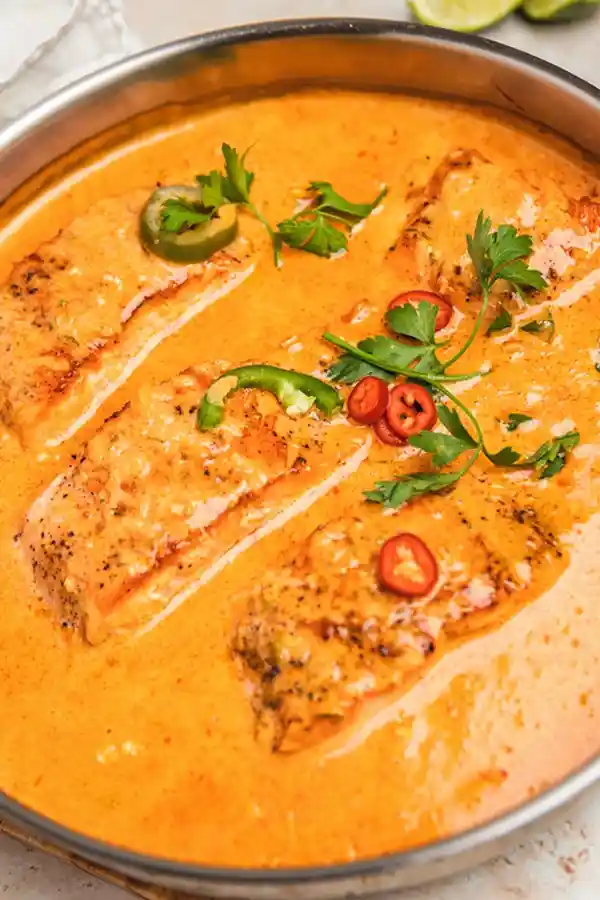
List of ingredients
- 4 Salmon fillets (skin-on or skinless, about 125g each) – pat dry for better searing.
- 400g coconut milk – use full-fat for a creamier texture.
- 1 tbsp brown sugar – balances the heat of the curry paste.
- 2 tbsp olive oil – or any other flavorless oil of your choice.
- 1½ tbsp red Thai curry paste – adjust based on your spice preference.
- 2 large garlic cloves, minced – provides a pungent aromatic base.
- 1 tbsp ginger, minced – adds a fresh, zesty warmth.
- ½ tbsp lemongrass – dried is used here, but fresh is a great alternative.
- 1 tbsp soy sauce – adds saltiness and depth.
- 1 tbsp Worcestershire sauce – provides a savory, umami kick.
- Salt and pepper – used to season the salmon fillets.
- 2 fresh chilies – sliced for an extra spicy hit.
- Parsley – freshly chopped for garnish.
- 1 Lime – both the juice and zest for brightness.
step-by-step instructions
- Prepare the fish: Pat the salmon fillets dry with kitchen paper towels and season both sides with salt and pepper.
- Sear the salmon: Heat vegetable oil in a pan over medium-high heat. Carefully place salmon skin-side down and sear for 3 minutes without moving them. Flip the fillets and cook for another 3 minutes, then transfer to a plate. Remove any excess oil from the pan if necessary.
- Sauté aromatics: Lower the heat and add the minced ginger and garlic. Cook for 30 seconds until fragrant, ensuring they do not burn.
- Bloom the paste: Stir in the brown sugar and lemongrass, cooking for 30 seconds. Add the red curry paste and stir constantly for 1 to 2 minutes to release the oils.
- Simmer the sauce: Pour in the coconut milk, soy sauce, and Worcestershire sauce. Stir until well combined and simmer on low-medium heat for about 5 minutes until the sauce slightly thickens.
- Final seasoning: Taste the sauce and adjust seasonings. Stir in the chopped fresh chilies, lime zest, and lime juice, then cook for one additional minute.
- Combine and serve: Return the seared salmon to the pan and simmer in the sauce for 2 minutes. Serve immediately over boiled rice, garnished with fresh parsley, lime wedges, and extra chilies.
Mastering the Salmon Sear
Achieving Crispy Skin
To get the best sear, ensure the salmon skin is completely dry before it hits the pan. Use a paper towel to press firmly on the skin, as moisture creates steam which prevents browning. Avoid flipping the fish too early; let it naturally release from the pan once a golden crust has formed.
Preventing Overcooking
Salmon continues to cook even after it is removed from the heat due to carry-over cooking. Remove the fillets from the pan when they are slightly underdone in the center. This ensures they remain moist and flaky after the final 2-minute simmer in the curry sauce.
Choosing the Right Pan
A heavy-bottomed stainless steel or cast-iron skillet is ideal for this recipe. These materials distribute heat evenly and provide the high temperature needed for a proper sear. Non-stick pans work but may not produce the same level of caramelized crust on the fish.
Ingredient Substitutions and Alternatives
Alternative Curry Pastes
If you prefer a milder or different flavor profile, you can swap red curry paste for yellow or green curry paste. Green curry is generally spicier and more herbal, while yellow curry is milder and contains more turmeric. Keep the quantities the same for a consistent sauce thickness.
Coconut Milk Varieties
Full-fat coconut milk provides the richest texture and a characteristic creaminess. If you prefer a lighter sauce, you can use light coconut milk, though the result will be thinner. For a nut-based alternative, unsweetened cashew cream can be used to mimic the thickness.
Fresh versus Dried Lemongrass
Dried lemongrass is convenient and concentrated, but fresh lemongrass offers a brighter, more citrusy aroma. To use fresh lemongrass, remove the tough outer layers and finely mince only the pale, tender inner core. Use approximately one tablespoon of the minced inner core to replace the dried version.
Soy Sauce Alternatives
For a gluten-free version, replace the soy sauce with tamari or coconut aminos. Coconut aminos are slightly sweeter and less salty than soy sauce, so you may need to add an extra pinch of salt to the curry sauce. This keeps the umami profile intact while accommodating dietary needs.
Customizing the Flavor Profile
Adjusting the Heat Levels
The spiciness of this dish depends largely on the brand of red curry paste and the amount of fresh chilies used. For a very mild version, omit the fresh chilies and use only one tablespoon of paste. For those who love high heat, add sliced bird’s eye chilies or a pinch of cayenne pepper during the blooming phase.
Adding Seasonal Vegetables
You can easily turn this into a one-pan meal by adding vegetables to the sauce. Stir in sliced bell peppers, snap peas, baby corn, or bamboo shoots during the simmering stage. Ensure the vegetables are cut into uniform sizes so they cook through in 5 minutes.
Plant-Based Modifications
To make this recipe vegetarian or vegan, replace the salmon with extra-firm tofu or chickpeas. Press the tofu to remove excess water and sear it in the same manner as the fish. Ensure the Worcestershire sauce is a vegan version that does not contain fish extracts.
Enhancing the Citrus Notes
While lime is traditional, a small amount of orange zest can add a surprising sweetness that complements the salmon. If the sauce feels too heavy, increase the amount of lime juice at the end. This acidity cuts through the richness of the coconut milk.
Serving Suggestions and Pairings
The Best Rice Options
Fragrant Jasmine rice is the classic choice for Thai curries because it absorbs the sauce without becoming mushy. Basmati rice is another excellent option for a lighter, fluffier texture. For a low-carb alternative, serve the curry over steamed cauliflower rice or sautéed spinach.
Fresh Garnish Combinations
Beyond parsley, fresh cilantro or Thai basil leaves add an authentic aromatic layer to the dish. Sliced scallions provide a mild onion crunch that contrasts well with the creamy sauce. A final squeeze of fresh lime juice over the plate just before eating refreshes the palate.
Complementary Side Dishes
A crisp cucumber salad with rice vinegar and sesame seeds balances the heat of the curry. Steamed bok choy or sautéed kale also work well as nutrient-dense sides. These options add a fresh, crunchy element to the meal.
Storage and Preservation
Refrigerating Leftovers
Store the leftover curry and salmon in an airtight container in the refrigerator for up to 3 days. To maintain the quality of the fish, keep the salmon submerged in the sauce. This prevents the fillets from drying out during the storage process.
Freezing the Curry Sauce
The curry sauce freezes exceptionally well for up to one month. It is recommended to freeze the sauce separately from the salmon to avoid overcooking the fish during reheating. Thaw the sauce in the fridge overnight before warming it on the stove.
Optimal Reheating Methods
Avoid reheating salmon in the microwave as it often makes the fish rubbery. Instead, gently warm the sauce in a pan over low heat. Once the sauce is simmering, carefully slide the salmon back in for a minute or two just to heat through.
Professional Meal Prep Tips
Prepping the Curry Base
You can prepare the entire curry sauce up to three days in advance. Store the cooked sauce in the fridge and simply heat it up when you are ready to eat. This reduces the active cooking time to just the searing of the salmon.
Efficient Mise en Place
Since this recipe moves quickly, have all your ingredients minced and measured before turning on the stove. Chop the garlic, ginger, and chilies first. This prevents the aromatics from burning while you are busy opening the coconut milk can.
Portioning for Work Lunches
If prepping for the week, divide the rice and curry into separate compartments in your meal containers. Keep the lime wedge and fresh herbs in a small separate bag. This keeps the garnish fresh and prevents the rice from becoming too soggy.
Troubleshooting Common Issues
Fixing a Sauce That Is Too Salty
If the curry tastes overly salty, stir in an extra splash of coconut milk or a teaspoon of brown sugar. The fat in the coconut milk and the sweetness of the sugar neutralize the salt. Adding a bit more lime juice can also distract the palate from excess salt.
Preventing Sauce Separation
Coconut milk can sometimes separate or curdle if boiled too aggressively. Keep the heat on a low-medium simmer rather than a rolling boil. If separation occurs, whisk the sauce vigorously over low heat to re-emulsify the fats.
Addressing a Bland Flavor
If the curry lacks depth, check your acidity and salt levels. Adding another teaspoon of red curry paste or a dash more soy sauce usually solves this. A pinch of salt can often unlock the flavors of the ginger and lemongrass.
Frequently Asked Questions
Can I use frozen salmon?
Yes, you can use frozen salmon fillets, but they must be completely thawed. Pat them extra dry with paper towels, as frozen fish tends to release more moisture, which can hinder the searing process.
How do I know when the curry paste is ‘bloomed’?
The paste is bloomed when it becomes fragrant and the oil starts to separate from the solids. This usually happens after 1 to 2 minutes of stirring over medium heat and results in a deeper color and more intense aroma.
Is the skin necessary on the salmon?
The skin is not necessary for flavor, but it protects the fish from overcooking and provides a textural contrast. If you prefer skinless fillets, reduce the initial sear time to about 2-3 minutes per side.
Can I substitute the brown sugar?
Yes, you can use honey, maple syrup, or granulated white sugar. Brown sugar is preferred for its molasses notes, but any sweetener that balances the heat of the curry paste will work effectively.
Print
Creamy Thai-Style Salmon Coconut Curry
- Total Time: 20 minutes
- Yield: 4 servings 1x
- Diet: Dairy-free
Description
This Thai salmon coconut milk curry is packed full of flavour, a hearty 20 minute dinner that does not compromise on flavour. Serve with boiled rice and veggies.
Ingredients
- 4 salmon fillets (about 125g each)
- 400 g coconut milk
- 1 tbsp brown sugar
- 2 tbsp olive oil
- 1½ tbsp red thai curry paste
- 2 large garlic cloves, minced
- 1 tbsp ginger, minced
- ½ tbsp lemongrass
- 1 tbsp soy sauce
- 1 tbsp Worcestershire sauce
- Salt and pepper to season
- 2 fresh chilies
- Parsley to serve
- 1 lime (juice and zest)
Instructions
- Step 1: Pat the salmon dry with a kitchen paper towel and season with salt and pepper.
- Step 2: Heat up vegetable oil on medium high heat, sear salmon skin side down for 3 minutes, flip and cook for another 3 minutes, then remove and transfer to a plate.
- Step 3: Reduce the heat and cook chopped ginger and garlic for about 30 seconds.
- Step 4: Add brown sugar and lemongrass for 30 seconds, followed by the red curry paste, stirring for one to two minutes.
- Step 5: Stir in coconut milk, soy sauce, and Worcestershire sauce; simmer on low-medium heat for 5 minutes or until slightly thickens.
- Step 6: Add chopped fresh chili peppers, lime zest, and lime juice, and cook for an additional minute.
- Step 7: Return the pan seared salmon into the sauce and simmer for about 2 minutes before serving with boiled rice and parsley.
Notes
Taste and adjust seasoning to preference; the salt from the soy sauce may be sufficient for the curry.
- Prep Time: 5 minutes
- Cook Time: 15 minutes
- Category: Main Course
- Method: Pan-frying
- Cuisine: Asian
Nutrition
- Serving Size: 1 serving
- Calories: 448 kcal
- Sugar: 1 g
- Sodium: 89 mg
- Fat: 33 g
- Saturated Fat: 21 g
- Unsaturated Fat: 10 g
- Trans Fat: 0 g
- Carbohydrates: 3 g
- Fiber: 1 g
- Protein: 36 g
- Cholesterol: 94 mg