This savory salmon quiche is an excellent way to transform leftover cooked fish into a sophisticated meal. It combines a buttery, homemade pastry with a rich egg custard and nutrient-dense spinach.
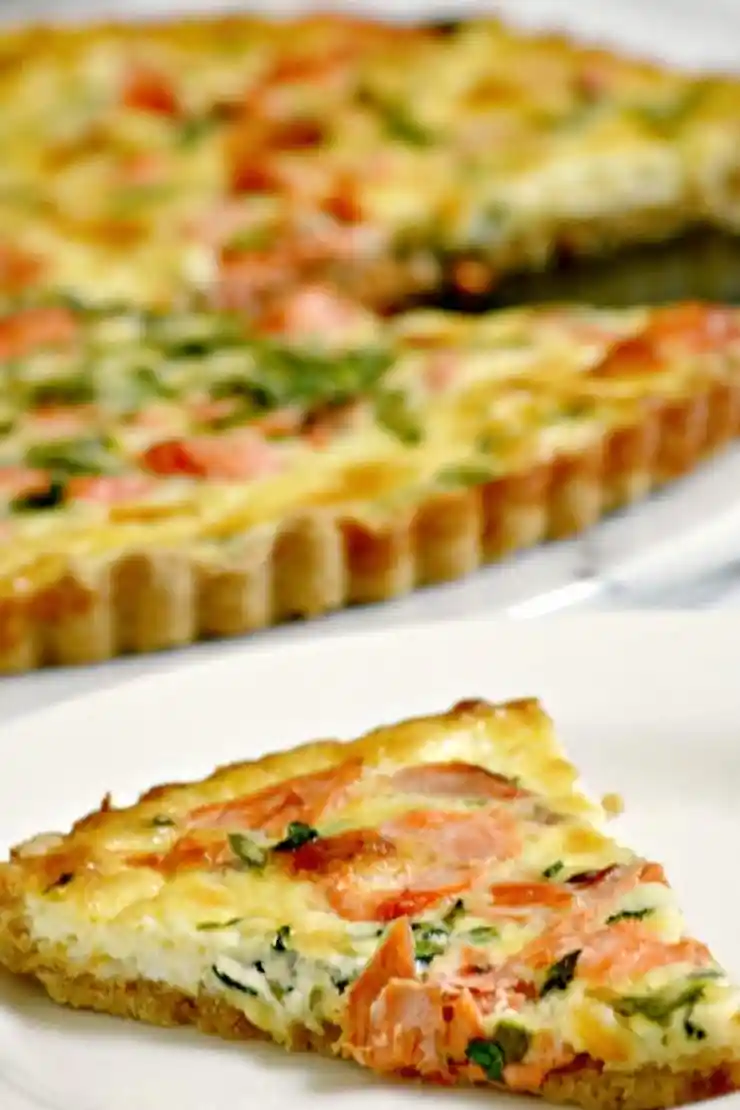
List of ingredients
- 2 cups all-purpose flour – provides the structure for the crust.
- 1 cup butter – ensures a flaky, rich pastry texture.
- 2 to 3 tablespoons water – used to bind the dough together.
- 125g (4oz) white onions or shallots, finely chopped – adds a mild, aromatic base.
- 15g (1/2 oz) butter – for sautéing the onions.
- 2 large eggs – acts as the primary binding agent for the filling.
- Salt and pepper – for essential seasoning.
- 1/2 cup shredded salmon – cooked leftovers or canned sockeye work best.
- 3/4 cup heavy cream – creates a smooth, velvety custard.
- 60g (2 oz) shredded cheese – adds saltiness and a gooey melt.
- 1/4 cup finely chopped spinach – provides color and earthy flavor.
step-by-step instructions
- Prepare the pastry: Mix the flour and butter together until a dough forms. Add approximately 1.5 tablespoons of water only if necessary to bring the mixture together, avoiding over-handling the dough.
- Shape the crust: Place the dough in an 8-inch pie pan and press it firmly into the bottom and up around the edges.
- Chill the dough: Place the pie pan in the refrigerator for about one hour to ensure the crust holds its shape during baking.
- Preheat the oven: Set your oven to 425°F (218°C) to prepare for the initial high-heat bake.
- Sauté the onions: Cook the finely chopped white onions or shallots in butter over low heat for 5 to 6 minutes. Allow the onions to cool completely before adding them to the mixture.
- Create the egg mixture: Beat the eggs with salt and pepper, then stir in the heavy cream and finely chopped spinach.
- Layer the filling: Sprinkle the shredded cheese across the bottom of the chilled pastry crust, then spread the shredded salmon evenly over the cheese.
- Add the custard: Pour the egg and cream mixture over the salmon and cheese layers.
- Initial bake: Bake the quiche at 425°F for 10 minutes to set the pastry edges.
- Final bake: Lower the oven temperature to 375°F and continue baking for 20 minutes.
- Cool and set: Remove the quiche from the oven and allow it to cool slightly to firm up before slicing.
Pastry Preparation Mastery
Use Cold Butter for Maximum Flakiness
Keep your butter chilled until the moment it is mixed into the flour. Cold butter creates small steam pockets during baking, which results in a flaky, layered crust rather than a dense, cookie-like texture. If the butter melts before baking, the crust will lose its signature lift.
Avoid Overworking the Dough
Mix the ingredients only until a dough just begins to form. Over-kneading develops too much gluten, which makes the crust tough and chewy instead of tender. Handle the dough as little as possible to maintain a light crumb.
Chill the Crust to Prevent Shrinking
Allowing the shaped crust to rest in the refrigerator for one hour relaxes the gluten and firms up the fats. This step prevents the sides of the pastry from sliding down the walls of the pan during the baking process. A chilled crust ensures a consistent height and professional appearance.
Pressing the Dough for Even Thickness
When placing the dough in the pan, use your fingers to press firmly into the corners. Ensure the bottom is an even thickness to avoid raw spots or over-browned areas. Consistent thickness allows the heat to penetrate the pastry evenly.
Filling Optimization Techniques
Drain Spinach Thoroughly to Avoid Sogginess
Ensure the chopped spinach is dry before stirring it into the egg mixture. Excess moisture from the greens can leak into the custard, resulting in a watery quiche with a soggy bottom. Squeeze the spinach with a paper towel if it seems too damp.
Flaking Salmon for Even Distribution
Shred the salmon into small, uniform pieces rather than large chunks. This ensures that every slice of the quiche contains an equal amount of fish. Even distribution prevents the filling from separating or collapsing during slicing.
Cooling Sautéed Onions to Protect Eggs
Always let the sautéed onions cool to room temperature before adding them to the beaten eggs. Adding hot onions can prematurely cook the eggs, leading to an uneven, lumpy custard. A cooled aromatic base ensures a smooth, professional finish.
Selecting the Right Melting Cheese
Use a high-moisture melting cheese like Gruyère, Swiss, or sharp Cheddar for the best results. These cheeses blend seamlessly with the cream and eggs, providing a cohesive texture. Avoid extra-hard cheeses that do not melt easily, as they can create oily pockets.
Baking and Temperature Control
The Purpose of Dual-Temperature Baking
Starting at 425°F quickly sets the pastry, preventing it from absorbing too much liquid from the filling. Reducing the heat to 375°F allows the custard to cook through slowly without burning the top. This two-stage process ensures a crisp crust and a creamy center.
Checking for Custard Doneness
The quiche is done when the edges are set and the center has a slight, jelly-like jiggle. Avoid overbaking, as this can cause the eggs to curdle and the filling to shrink away from the crust. A knife inserted into the center should come out clean.
Preventing a Soggy Bottom Crust
Layering the cheese first acts as a moisture barrier between the pastry and the liquid custard. This prevents the dough from becoming saturated and mushy. For extra protection, you can lightly brush the bottom of the crust with egg white before adding the cheese.
Using an 8-Inch Pie Dish for Proper Depth
Using the correct pan size ensures the filling reaches the ideal depth for consistent cooking. If the pan is too wide, the quiche will be too thin and likely to overcook. An 8-inch dish provides the perfect ratio of crust to filling.
Salmon Variations and Substitutions
Using Smoked Salmon for Intenser Flavor
You can replace the shredded cooked salmon with finely chopped smoked salmon for a more pungent, salty profile. If using smoked salmon, reduce the amount of added salt in the egg mixture. Smoked salmon provides a distinct gourmet flavor that pairs well with spinach.
Implementing Canned Sockeye Salmon
Canned sockeye salmon is a practical pantry alternative to leftover fresh fish. Drain the canned salmon thoroughly and remove any large bones or skin before shredding. This option makes the recipe a convenient meal using shelf-stable ingredients.
Swapping Spinach for Kale or Chard
If spinach is unavailable, finely chopped kale or Swiss chard are excellent nutrient-dense alternatives. Because kale is heartier, you may need to sauté it briefly with the onions first. This ensures the greens are tender enough to blend into the custard.
Using Shallots Instead of White Onions
Shallots offer a more refined, sweeter flavor compared to standard white onions. They are particularly effective in seafood dishes as they provide a subtle depth without overpowering the fish. Finely mince them to ensure they integrate smoothly into the filling.
Serving and Pairing Suggestions
Pairing with a Fresh Green Salad
Serve the quiche with a side of mixed greens tossed in a light lemon vinaigrette. The acidity of the lemon cuts through the richness of the cream and butter in the quiche. This creates a balanced meal that feels light yet satisfying.
Serving with Artisan Bread and Butter
A side of warm, toasted artisan bread complements the savory nature of the dish. The crusty texture of the bread contrasts well with the creamy custard of the quiche. Use unsalted butter to allow the flavor of the bread to shine.
Temperature Options for Serving
This quiche can be served hot, warm, or completely cold depending on the occasion. Serving it hot is ideal for dinner, while a chilled slice is perfect for a brunch or lunch. Allow it to rest for at least 15 minutes after baking regardless of the serving temperature.
Garnishing for Presentation
Add a sprinkle of fresh parsley or a few thin slices of radish on top of each slice. A pinch of paprika can also add a pop of color to the golden-brown surface. These simple additions make the dish visually appealing for guests.
Storage and Freshness
Refrigerator Storage Guidelines
Store leftover quiche in an airtight container in the refrigerator for up to three to four days. Ensure the quiche has cooled completely before sealing it to prevent condensation. Condensation can make the crust soft and lose its crispness.
Freezing and Thawing the Quiche
You can freeze the baked quiche by wrapping individual slices in parchment paper and aluminum foil. Store them in a freezer-safe bag for up to two months. Thaw slices in the refrigerator overnight before reheating for the best texture.
Best Methods for Reheating
To maintain the crust’s crispness, reheat slices in a conventional oven or toaster oven at 325°F. Avoid using a microwave, as it can make the pastry rubbery and the filling overly soft. Heat until the center is warmed through but not bubbling.
Maintaining Crust Integrity After Storage
If the crust has softened during refrigeration, a quick toast in the oven can restore the crunch. Avoid stacking slices directly on top of each other without parchment paper. This prevents the slices from sticking and tearing the delicate pastry.
Troubleshooting Common Issues
Dealing with a Cracked Crust
If the crust cracks during the pressing process, simply pinch the dough back together with your fingers. Minor cracks usually seal themselves during the baking process. To avoid cracks, ensure the dough is not too cold when you start shaping it.
Fixing a Runny Center
A runny center usually indicates that the quiche was removed from the oven too early. Return it to the oven at 350°F for another 5 to 10 minutes. Always allow the quiche to cool for at least 15 minutes, as the residual heat continues to set the eggs.
Managing Overbrowned Edges
If the edges of the pastry brown too quickly, cover them with a strip of aluminum foil. This is called a pastry shield and prevents the edges from burning while the center continues to cook. This is common in ovens with uneven heat distribution.
Preventing Filling Overflow
Ensure you leave about a quarter-inch of space between the top of the filling and the rim of the crust. Filling the pan to the absolute brim can cause the custard to bubble over during the initial high-heat bake. This keeps the oven clean and the edges tidy.
Frequently Asked Questions
Can I use a store-bought crust?
Yes, you can use a pre-made frozen or refrigerated pie crust to save time. Simply press it into the pan and follow the chilling and baking instructions provided in the recipe. The homemade version is flakier, but store-bought is a practical time-saver.
How do I prevent the spinach from making the quiche watery?
Sauté the spinach briefly or squeeze it firmly in a kitchen towel to remove excess moisture. If using frozen spinach, thaw it completely and squeeze out every drop of liquid. This ensures the custard remains thick and creamy.
What are the best cheese options?
Gruyère and Swiss are traditional choices because they melt smoothly and have a nutty flavor. Sharp Cheddar is a great alternative for a bolder taste. Avoid pre-shredded cheeses if possible, as they contain anti-clumping agents that can affect the melt.
Can I make this gluten-free?
You can substitute the all-purpose flour with a high-quality 1:1 gluten-free flour blend. You may need to add an extra tablespoon of water or a binder like xanthan gum to keep the crust from crumbling. Bake as directed, but monitor the bottom for doneness.
Print
Creamy Salmon and Spinach Quiche
- Total Time: 111 minutes
- Yield: 6 servings 1x
- Diet: General
Description
A filling and delicious Salmon Quiche that makes great use of leftover salmon. Perfect for dinner, lunch, or as a family brunch addition.
Ingredients
- 2 cups regular flour
- 1 cup butter
- 2–3 tablespoons water
- 125 g white onions or shallots, finely chopped
- 15 g butter
- 2 eggs
- salt and pepper to taste
- 1/2 cup shredded salmon
- 3/4 cup thickened cream
- 60 g microbial-rennet cheese
- 1/4 cup finely chopped spinach
Instructions
- Pastry: Mix flour and butter until a dough forms. Add water if needed (approx 1 1/2 tbsp).
- Prep Crust: Press the dough into the bottom and around the edges of an 8-inch pie pan. Refrigerate for about one hour.
- Sauté: Preheat oven to 425°F. Cook onions slowly in butter for 5-6 minutes, then allow to cool.
- Egg Mixture: Beat eggs with salt and pepper, then stir in the cream and spinach.
- Assembly: Add the cheese to the bottom of the pie pan, then add the salmon, spreading it evenly. Pour the egg mixture on top.
- Bake: Bake at 425°F for 10 minutes, then reduce temperature to 375°F and bake for 20 minutes.
- Finish: Allow to cool slightly to firm up. Serve hot or cold.
Notes
You can substitute fresh salmon with canned sockeye salmon or smoked salmon. This dish also pairs well with a side salad and artisan bread.
- Prep Time: 75 minutes
- Cook Time: 36 minutes
- Category: Dinner
- Method: Baking
- Cuisine: American
Nutrition
- Serving Size: 1 slice
- Calories: 480 kcal
- Sugar: 4 g
- Sodium: 520 mg
- Fat: 34 g
- Saturated Fat: 18 g
- Unsaturated Fat: 14 g
- Trans Fat: 1 g
- Carbohydrates: 24 g
- Fiber: 2 g
- Protein: 17 g
- Cholesterol: 165 mg