This quick and elegant meal combines golden-brown seared scallops with a velvety parmesan sauce. It is a streamlined one-pan dinner that pairs perfectly with your favorite pasta in under 30 minutes.
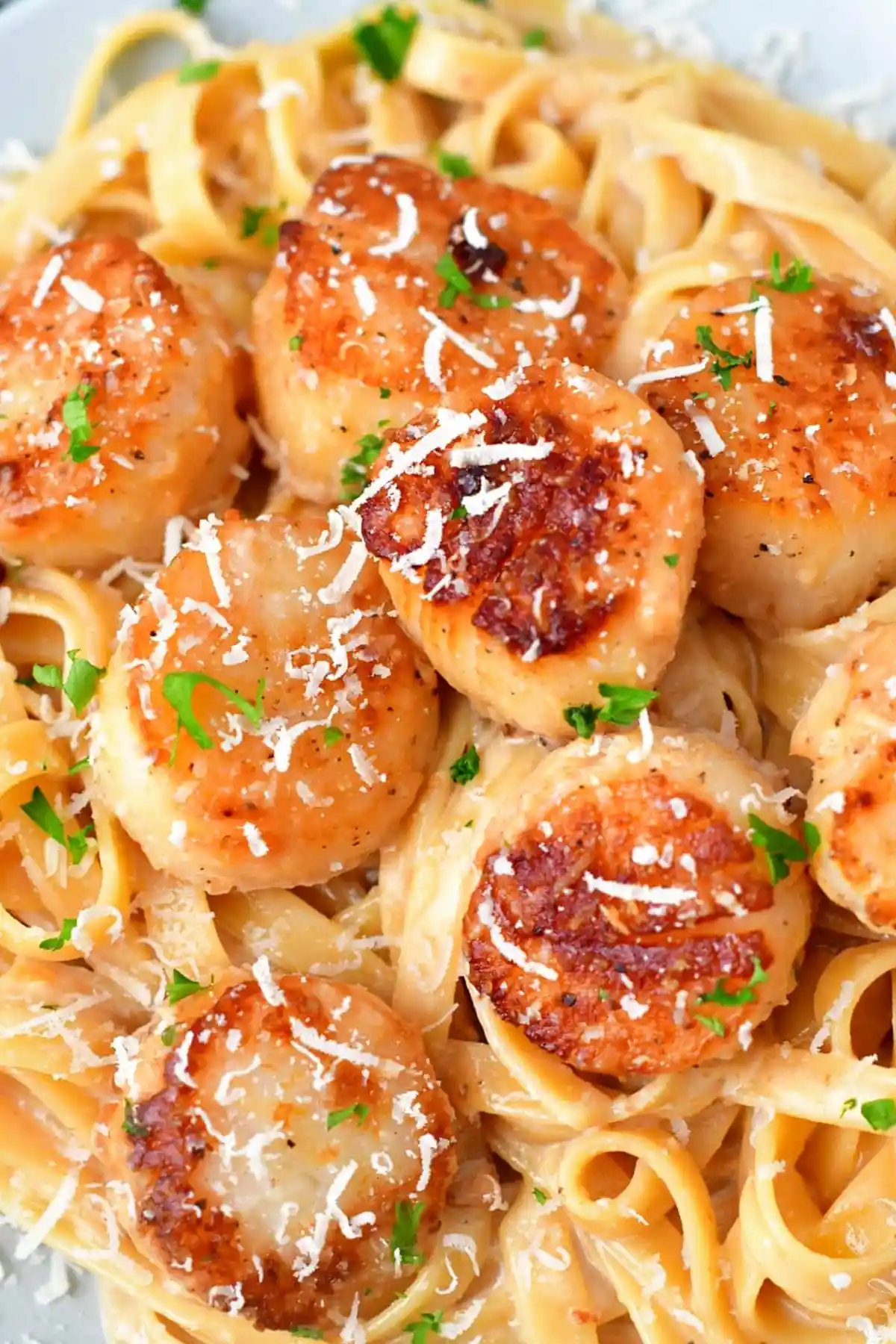
List of ingredients
- 1 lb sea scallops (dry) – ensure they are not chemically treated
- sea salt or kosher coarse salt – for seasoning
- fresh cracked black pepper – for seasoning
- 2 tbsp canola oil – high smoke point for searing
- 2 tbsp unsalted butter – for the sauce base
- 3 garlic cloves – pressed or finely minced
- 3 tbsp chicken or vegetable stock – for deglazing
- 1 cup heavy whipping cream – creates the rich texture
- 3/4 cup fresh grated Parmesan cheese – for flavor and thickening
- salt – to taste for the sauce
- 1/2 lb fettuccine – or any preferred pasta variety
step-by-step instructions
- Boil Pasta: Start cooking the pasta according to the package directions. Drain and set aside once cooked.
- Prepare Shellfish: Rinse scallops under cold water and pat each one completely dry with paper towels. Remove the side muscle if it is still attached to avoid toughness.
- Heat the Pan: Place a skillet over medium-high heat and add canola oil. Wait until the oil is hot and just starting to smoke.
- Sear the Scallops: Season scallops with salt and pepper on both sides immediately before cooking. Place them in the skillet, leaving space between each to prevent steaming.
- Cook First Side: Let the scallops sear undisturbed for about 2 minutes until a golden crust forms.
- Flip and Finish: Flip the scallops in the same order they were placed in the pan. Sear the other side for another 2 minutes. Remove scallops from the pan and set them aside.
- Aromatics: Reduce heat to medium and melt butter in the same pan. Add pressed garlic and sauté for a few seconds until fragrant.
- Deglaze: Pour in the stock and scrape the bottom of the pan to release the browned bits.
- Simmer Sauce: Stir in the heavy whipping cream and heat for 1-2 minutes. Add the grated Parmesan cheese and a pinch of salt. Stir gently and simmer until the sauce thickens.
- Combine: Return the scallops to the pan briefly to warm through. Toss in the cooked pasta to coat evenly with the sauce, then remove from heat.
Guide to Purchasing High Quality Scallops
Identify Dry-Packed Scallops
Always look for scallops labeled as ‘dry.’ Dry scallops are natural and have not been treated with sodium tripolyphosphate, a chemical preservative used to retain moisture. Treated scallops release excess water in the pan, which prevents them from searing and results in a rubbery texture.
Selecting Sea Scallops Over Bay Scallops
Sea scallops are significantly larger than bay scallops and are the best choice for this specific searing method. Their size allows for a distinct crust to form on the top and bottom while the center remains tender. Bay scallops are smaller and cook much faster, which makes them prone to overcooking during the searing process.
Check for Freshness at the Counter
Fresh scallops should have a mild, sweet scent reminiscent of the ocean. Avoid any shellfish that smells overly fishy or like ammonia. The flesh should look ivory or white and feel firm to the touch, not slimy or mushy.
Essential Searing Techniques for a Golden Crust
The Importance of Complete Dryness
Moisture is the enemy of a good sear. Use paper towels to pat every side of the scallop until they are bone-dry before adding seasoning. Any remaining surface water will turn into steam, preventing the Maillard reaction and leaving the scallop pale.
Managing Pan Temperature
Your pan must be very hot before the scallops hit the surface. Use a high-smoke point oil like canola or avocado oil. When the oil begins to shimmer or slightly smoke, it is ready. This high heat ensures the scallops sear quickly without needing to spend too much time in the pan.
Preventing Pan Overcrowding
Leaving ample space between scallops is critical for airflow and heat distribution. If the pan is too full, the temperature drops rapidly and the scallops release moisture into the pan. This causes them to boil in their own juices rather than sear, destroying the golden crust.
The No-Touch Rule
Once the scallops are placed in the oil, do not move or shake them. Let them sit undisturbed for the full two minutes. This allows the protein to bond with the heat and create a thick, caramelized crust that releases naturally from the pan when it is time to flip.
Tips for a Professional Parmesan Sauce
Use Freshly Grated Cheese
Avoid pre-shredded Parmesan cheese, as these often contain cornstarch or other anti-caking agents. These additives can make the sauce grainy or prevent it from emulsifying properly. A microplane zester is ideal for creating fine shreds that melt instantly into the cream.
Temper Your Dairy Ingredients
Bringing your heavy cream to room temperature before adding it to the pan helps prevent the sauce from breaking. Cold cream added to a very hot pan can cause the fats to separate or the dairy to scald. Let the cream sit on the counter for 15-20 minutes while you prep.
The Role of Deglazing
Deglazing with stock is the key to a deep, savory flavor. The browned bits left in the pan after searing the scallops are called ‘fond,’ which is concentrated flavor. By pouring in the stock and scraping the bottom, you incorporate those savory notes directly into the cream sauce.
Recommended Pasta and Side Pairings
Long Pasta Varieties
Fettuccine is the classic choice because its wide surface area catches and holds the heavy cream sauce. Linguine or tagliatelle are excellent alternatives that provide a similar experience. Always cook the pasta slightly al dente, as it will soften further when tossed in the simmering sauce.
Low-Carb and Gluten-Free Alternatives
For a gluten-free option, use brown rice pasta or chickpea-based noodles. To reduce carbohydrates, replace the pasta with zucchini noodles or spaghetti squash. Sauté the vegetable noodles briefly in a separate pan before tossing them with the cream sauce to avoid adding too much water to the dish.
Complementary Vegetable Sides
Broccoli and cauliflower are ideal sides because their florets act like sponges for the parmesan sauce. Sautéed spinach or roasted asparagus also add a fresh, bitter contrast to the richness of the cream. These vegetables can be cooked in the same pan before the scallops to save on cleanup.
Substitutions and Ingredient Variations
Alternative Cooking Fats
If you do not have canola oil, avocado oil or grapeseed oil are great substitutes due to their high smoke points. Avoid using extra virgin olive oil for the searing phase, as its smoke point is too low and it may burn, creating a bitter taste. Butter should only be used for the sauce, not the initial sear.
Substituting the Stock
Vegetable broth is a perfect 1:1 replacement for chicken stock for those avoiding poultry products. For a richer, more concentrated flavor, use a low-sodium bone broth. If no stock is available, a splash of dry white grape juice or a bit of water with a pinch of salt can work for deglazing.
Creamy Texture Adjustments
While heavy whipping cream provides the most stability and richness, half-and-half can be used. Note that half-and-half is thinner, so you may need to simmer the sauce slightly longer or add an extra tablespoon of Parmesan to achieve the desired thickness.
Storage and Reheating Instructions
Safe Refrigeration
Store leftover scallops and pasta in an airtight container in the refrigerator for 3 to 4 days. To keep the sauce from separating, ensure the container is sealed tightly to prevent air from drying out the cream.
Gentle Reheating Methods
Avoid using a microwave, as it can overcook the scallops in seconds, making them rubbery. Instead, place the pasta and scallops in a skillet over low heat. Add a tablespoon of water or cream to loosen the sauce, and heat only until just warmed through.
Preventing Overcooking During Reheat
When reheating, treat the scallops as a final addition. Warm the pasta and sauce first, then gently fold in the scallops for the last 60 seconds. This prevents the delicate seafood from becoming tough.
Troubleshooting Common Issues
Why Are the Scallops Rubbery?
Rubbery scallops are almost always the result of overcooking. Because they are lean proteins, they tighten up and lose moisture quickly once they pass their ideal temperature. Remove them from the heat the moment they feel firm and spongy with a slight give.
How to Fix a Broken Sauce
If the sauce looks oily or separated, it is likely because the heat was too high or the dairy was added too cold. To fix this, whisk in a small amount of warm water or a teaspoon of cornstarch slurry over low heat to re-emulsify the fats and liquids.
Dealing with Lack of Browning
If your scallops are not browning, your pan was likely not hot enough or the scallops were too wet. Increase the heat until the oil shimmers, and use a paper towel to dry the scallops again. Ensure you are not crowding the pan, which lowers the surface temperature.
Frequently Asked Questions
How will I know when the scallops are done?
Scallops are done when they have an even golden-brown crust on both sides and the center is opaque. When pressed gently, they should feel firm but still have a slight spring. For precision, use a meat thermometer to check for an internal temperature of 125-130 degrees Fahrenheit.
Can cooked scallops be reheated?
Yes, but they must be reheated carefully on a stove over low heat. Overheating them during the second cook will make them tough and chewy. Heat them only until they are warm to the touch.
Why are my scallops chewy and rubbery?
This happens when the scallops are overcooked, causing the proteins to contract and squeeze out all the moisture. Once the fat and water are gone, the texture becomes rubbery. Avoid cooking them longer than 2-3 minutes per side.
Which cheese is best for the sauce?
Parmigiano-Reggiano is the gold standard for this recipe due to its sharp, salty profile and superior melting properties. However, a high-quality Parmesan is a suitable substitute as long as it is freshly grated.
Can I use frozen scallops for this recipe?
Yes, but they must be completely thawed and then patted extremely dry. Frozen scallops often release more water than fresh ones, so you may need to sear them in smaller batches to maintain the pan temperature.
Print
Pan-Seared Scallops with Rich Parmesan Cream Sauce
- Total Time: 25 minutes
- Yield: 2 servings 1x
- Diet: General
Description
This scallop recipe features perfectly cooked golden seared scallops, rich and creamy parmesan sauce, and all served over a bed of pasta.
Ingredients
- 1 lb sea scallops (dry)
- sea salt or kosher coarse salt
- fresh cracked black pepper
- 2 tbsp canola oil
- 2 tbsp unsalted butter
- 3 garlic cloves
- 3 tbsp chicken or vegetable stock
- 1 cup heavy whipping cream
- 3/4 cup fresh grated Parmesan cheese
- salt (to taste)
- 1/2 lb fettuccine
Instructions
- Cook Pasta: Start cooking pasta according to the package instructions, strain, and set aside.
- Prepare Scallops: Rinse off scallops with cold water and pat each one dry with a paper towel; remove side muscle if attached.
- Sear Scallops: Preheat a cooking pan over medium-high heat, add oil, season scallops with salt and pepper, and sear for about 2 minutes per side.
- Prepare Sauce: Melt butter in the same pan, sauté pressed garlic, deglaze with stock, stir in heavy whipping cream, then stir in Parmesan cheese and salt, simmering until thickened.
- Combine: Add scallops back to the pan just enough to heat them up and toss with the cooked pasta.
Notes
Leftovers should be stored in an air-tight container in the refrigerator for 3 to 4 days. For a gluten-free version, use gluten-free pasta.
- Prep Time: 5 minutes
- Cook Time: 20 minutes
- Category: Main Course
- Method: Searing
- Cuisine: American
Nutrition
- Serving Size: 1 serving
- Calories: 1381 kcal
- Sugar: 3 g
- Sodium: 1651 mg
- Fat: 85 g
- Saturated Fat: 43 g
- Unsaturated Fat: 41 g
- Trans Fat: 1 g
- Carbohydrates: 94 g
- Fiber: 4 g
- Protein: 60 g
- Cholesterol: 368 mg