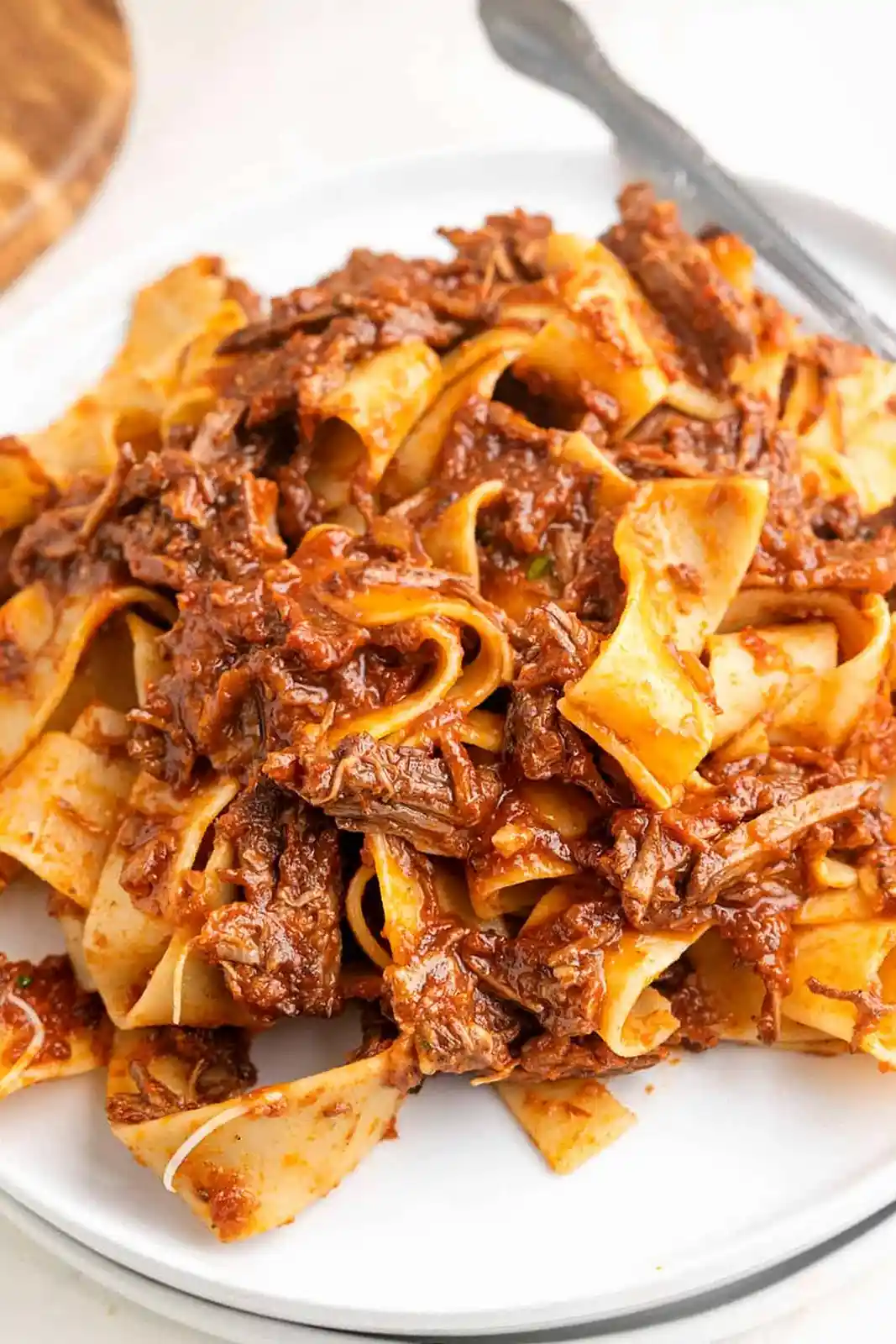
This slow cooker beef ragu transforms a tough cut of meat into a tender, rich sauce perfect for family dinners. It is a convenient set-and-forget meal that delivers deep, savory flavors with minimal effort.
List of ingredients
- 2 tablespoon olive oil – used for searing the meat.
- 2 pound chuck roast – cut into 2-inch cubes for uniform cooking.
- 1 medium onion – chopped for aromatic base.
- 5 cloves garlic – minced for pungent flavor.
- 1 cup beef broth – replaces wine for a rich, non-alcoholic liquid base.
- 28 ounce can fire-roasted crushed tomatoes – undrained, adds a smoky depth.
- 2 tablespoons tomato paste – thickens and concentrates the tomato flavor.
- 4 sprigs fresh thyme – provides earthy herbal notes.
- 2 bay leaves – adds a subtle floral background.
- 2 teaspoons salt – enhances all savory components.
- 1 teaspoon pepper – provides a mild spicy kick.
- 16 ounces pappardelle – cooked according to package directions for serving.
- 1/4 cup freshly grated parmesan cheese – optional garnish for a salty finish.
step-by-step instructions
- Prepare the Crockpot: Coat the interior of a 6-quart crockpot with nonstick spray to prevent sticking.
- Sear the Beef: Heat olive oil in a large nonstick skillet over medium-high heat. Once the oil shimmers, add the beef cubes in batches, searing until browned on all sides, then transfer them to the crockpot.
- Sauté Aromatics: In the same skillet, sauté the chopped onions until they are softened. Stir in the minced garlic and cook for about 20 seconds until fragrant.
- Deglaze the Pan: Pour the beef broth into the skillet to deglaze, simmering for two minutes to incorporate the browned bits from the bottom. Pour this mixture over the beef in the crockpot.
- Combine Ingredients: Add the fire-roasted crushed tomatoes, tomato paste, fresh thyme, bay leaves, salt, and pepper to the crockpot. Stir everything together until well combined.
- Slow Cook: Cover with the lid and cook on low for 6 to 8 hours, or on high for 4 to 6 hours.
- Shred the Meat: Once the beef is tender, use two forks to shred the cubes into small, bite-sized pieces directly in the sauce.
- Assemble and Serve: Spoon the ragu over cooked pappardelle pasta and top with grated parmesan cheese.
Flavor Enhancement Strategies
Searing Beef for the Maillard Reaction
Browning the beef cubes in a skillet before adding them to the slow cooker is essential for depth. This process, known as the Maillard reaction, creates a complex crust that adds a savory, roasted flavor to the final sauce. Avoid overcrowding the pan to ensure the meat sears rather than steams.
Utilizing Fire-Roasted Tomatoes
Using fire-roasted crushed tomatoes instead of standard canned tomatoes introduces a subtle charred taste. This mimics the flavor of a long-simmered sauce made over an open flame. It provides a more robust profile that stands up well to the rich flavor of the chuck roast.
The Importance of Deglazing the Pan
Deglazing the skillet with beef broth allows you to capture the fond, which are the browned protein bits stuck to the pan. These bits contain highly concentrated flavor that would otherwise be wasted. Simmering the liquid for a few minutes ensures all that essence is transferred into the slow cooker.
Ingredient Substitutions and Alternatives
Choosing Different Pasta Shapes
While pappardelle is the traditional choice due to its wide ribbons that hold heavy sauces, other noodles work well. Rigatoni or penne are excellent alternatives as the sauce can get trapped inside the tubes. Fettuccine or wide egg noodles are also suitable for this hearty meat sauce.
Dairy-Free Cheese Options
To keep this meal dairy-free, simply omit the parmesan cheese or use a plant-based alternative. Nutritional yeast can provide a similar nutty, cheesy flavor when sprinkled on top. Many store-bought vegan parmesan shreds also work well for a similar texture.
Substituting Beef Broth for Different Profiles
If you prefer a lighter flavor, you can use a low-sodium vegetable broth instead of beef broth. For a more intense richness, beef bone broth is an excellent choice as it contains more gelatin. This can result in a slightly thicker, more velvety sauce consistency.
Converting Fresh Thyme to Dried Herbs
If fresh thyme is unavailable, you can use dried thyme as a replacement. Use a ratio of one teaspoon of dried thyme for every tablespoon of fresh leaves. Add the dried herbs at the beginning of the slow cooking process to allow the flavors to bloom.
Customizing Your Beef Ragu
Adding a Mirepoix for Sweetness
For a more complex vegetable base, add finely diced carrots and celery along with the onions. This classic aromatic combination, known as a mirepoix, adds a natural sweetness and depth to the ragu. Sauté these vegetables together before deglazing the pan.
Balancing Acidity with Vinegar
If the sauce feels too heavy or lacks brightness, stir in a teaspoon of balsamic or red wine vinegar at the very end. The acidity cuts through the richness of the beef and the fat of the sauce. This small addition can wake up the other flavors in the dish.
Incorporating Spicy Elements
To add a kick to the ragu, stir in a pinch of crushed red pepper flakes during the sautéing stage. You can also add a small amount of chopped chipotle in adobo for a smokier, spicier profile. This works particularly well if you are using the fire-roasted tomatoes.
Professional Serving Suggestions
Pairing with Fresh Green Salads
Because beef ragu is quite rich, it pairs best with a side salad featuring an acidic dressing. An arugula salad with lemon vinaigrette or a classic Caesar salad provides a refreshing contrast. The crispness of raw greens balances the softness of the slow-cooked meat.
Selecting Complementary Bread
Warm garlic bread or a crusty ciabatta loaf are ideal for mopping up the remaining sauce on the plate. Focaccia topped with rosemary and sea salt also complements the herbal notes of the thyme. Toasted sourdough is another great option for adding a slight tang to the meal.
Garnish Ideas for Visual Appeal
Beyond parmesan, garnish the dish with freshly chopped flat-leaf parsley or basil leaves. A drizzle of high-quality extra virgin olive oil over the top adds a professional sheen and a peppery finish. This adds a pop of color and freshness to the dark, rich sauce.
Storage and Preservation Methods
Proper Refrigeration Techniques
Store the leftover ragu in an airtight glass container in the refrigerator for up to six days. It is highly recommended to store the sauce separately from the cooked pasta to prevent the noodles from becoming mushy. This keeps the textures distinct and fresh for reheating.
Freezing for Long-Term Use
This beef ragu freezes exceptionally well for up to six months. Portion the sauce into freezer-safe bags or containers, leaving a small amount of space at the top for expansion. Ensure the sauce has cooled completely before freezing to maintain the best quality.
Thawing and Reheating Process
Thaw frozen ragu in the refrigerator overnight before reheating. For the best results, reheat the sauce slowly on a stovetop over medium-low heat. If the sauce has thickened too much during storage, add a splash of water or beef broth to loosen it.
Planning and Make-Ahead Advice
Advance Ingredient Preparation
To save time on the day of cooking, chop the onions, mince the garlic, and cube the beef the night before. Store these prepped ingredients in separate airtight containers in the fridge. This reduces the active prep time to just the searing and sautéing process.
Timing the Pasta Boil
Begin boiling the water for your pasta about 20 minutes before the slow cooker cycle ends. This ensures the noodles are fresh and al dente exactly when the meat is shredded. Mixing the hot pasta directly with the sauce for a minute before plating improves the coating.
Troubleshooting Common Issues
Fixing a Watery Sauce
If the sauce is too thin after cooking, leave the lid off the slow cooker and cook on high for an additional 30 to 60 minutes. This allows excess moisture to evaporate and concentrate the flavors. Alternatively, you can stir in a small cornstarch slurry if you need an immediate thickening effect.
Addressing Overly Salty Ragu
If the sauce tastes too salty, you can add a handful of fresh spinach or a few more crushed tomatoes to dilute the salt. Adding a small piece of peeled potato during the last hour of cooking can also help absorb some excess salt. Always taste the sauce before adding the final salt measurements.
Dealing with Meat That Won’t Shred
If the beef is not shredding easily, it likely needs more time to break down its connective tissues. Return the lid to the crockpot and cook for another hour on high. The meat should offer almost no resistance when pulled apart with two forks.
Frequently Asked Questions
Can I use stew meat instead of chuck roast?
Yes, you can use pre-cut beef stew meat, but ensure it is from a chuck roast source. Some stew meats are lean and may become dry or tough in a slow cooker. Chuck roast is preferred because its higher fat content ensures the meat stays moist during the long cook time.
How do I make this in a pressure cooker?
To use a pressure cooker, sear the meat and aromatics using the sauté function. Add all ingredients and cook on high pressure for about 45 to 60 minutes, followed by a natural pressure release. You may need to reduce the beef broth slightly as less liquid evaporates in a pressure cooker.
How long does the sauce stay fresh?
When stored in an airtight container in the refrigerator, the beef ragu stays fresh for up to six days. The flavors often improve after a day or two as the herbs and spices continue to meld. Always ensure the container is sealed tightly to prevent odors.
Can I add vegetables like carrots or spinach?
Yes, adding diced carrots, celery, or peas adds great nutritional value and texture. If adding spinach, stir it in at the very end after the cooking cycle is complete. The residual heat of the sauce will wilt the spinach perfectly without overcooking it.
Print
Hearty Slow Cooker Beef Ragu
- Total Time: 6 hours 35 minutes
- Yield: 8 servings 1x
- Diet: General
Description
Including chuck roast, fire-roasted tomatoes, aromatics, and beef broth, this Slow Cooker Beef Ragu has a deep, rich flavor bursting in every bite. Serve over pappardelle or your favorite noodles for an easy weeknight dinner.
Ingredients
- 2 tablespoon olive oil
- 2 pound chuck roast, cut into 2-inch cubes
- 1 medium onion, chopped
- 5 cloves garlic, minced
- 1 cup beef broth
- 28 ounce can fired-roasted crushed tomatoes, undrained
- 2 tablespoons tomato paste
- 4 sprigs fresh thyme
- 2 bay leaves
- 2 teaspoons salt
- 1 teaspoon pepper
- 16 ounces pappardelle, cooked per package directions
- 1/4 cup freshly grated parmesan cheese
Instructions
- Step 1: Coat a 6-quart crockpot with nonstick spray.
- Step 2: Warm olive oil in a large nonstick skillet over medium-high heat, sear the chuck roast pieces until browned, and transfer to the crockpot.
- Step 3: Sauté onions until softened, stir in garlic until fragrant, deglaze the pan with beef broth, simmer for two minutes, and transfer to the crockpot.
- Step 4: Add crushed tomatoes, tomato paste, fresh thyme, bay leaves, salt, and pepper to the crockpot, stir, and cook on low for 6 to 8 hours or high for 4 to 6 hours.
- Step 5: Shred the meat into small pieces using two forks.
- Step 6: Serve the ragu over cooked pasta with a sprinkling of Parmesan cheese.
Notes
Searing the beef and sautéing the aromatics before transferring to the slow cooker adds extra flavor. You can use any pasta as a substitute for pappardelle.
- Prep Time: 15 minutes
- Cook Time: 6 hours 20 minutes
- Category: Main Course
- Method: Slow Cooker
- Cuisine: Italian
Nutrition
- Serving Size: 1 serving
- Calories: 533 kcal
- Sugar: 7 g
- Sodium: 322 mg
- Fat: 20 g
- Saturated Fat: 7 g
- Unsaturated Fat: 12 g
- Trans Fat: 1 g
- Carbohydrates: 51 g
- Fiber: 4 g
- Protein: 33 g
- Cholesterol: 129 mg