This Vietnamese stir-fried macaroni with beef is a savory, comforting meal that combines pasta with traditional Asian flavors. It is a budget-friendly dish that can be prepared in under 30 minutes using simple pantry staples.
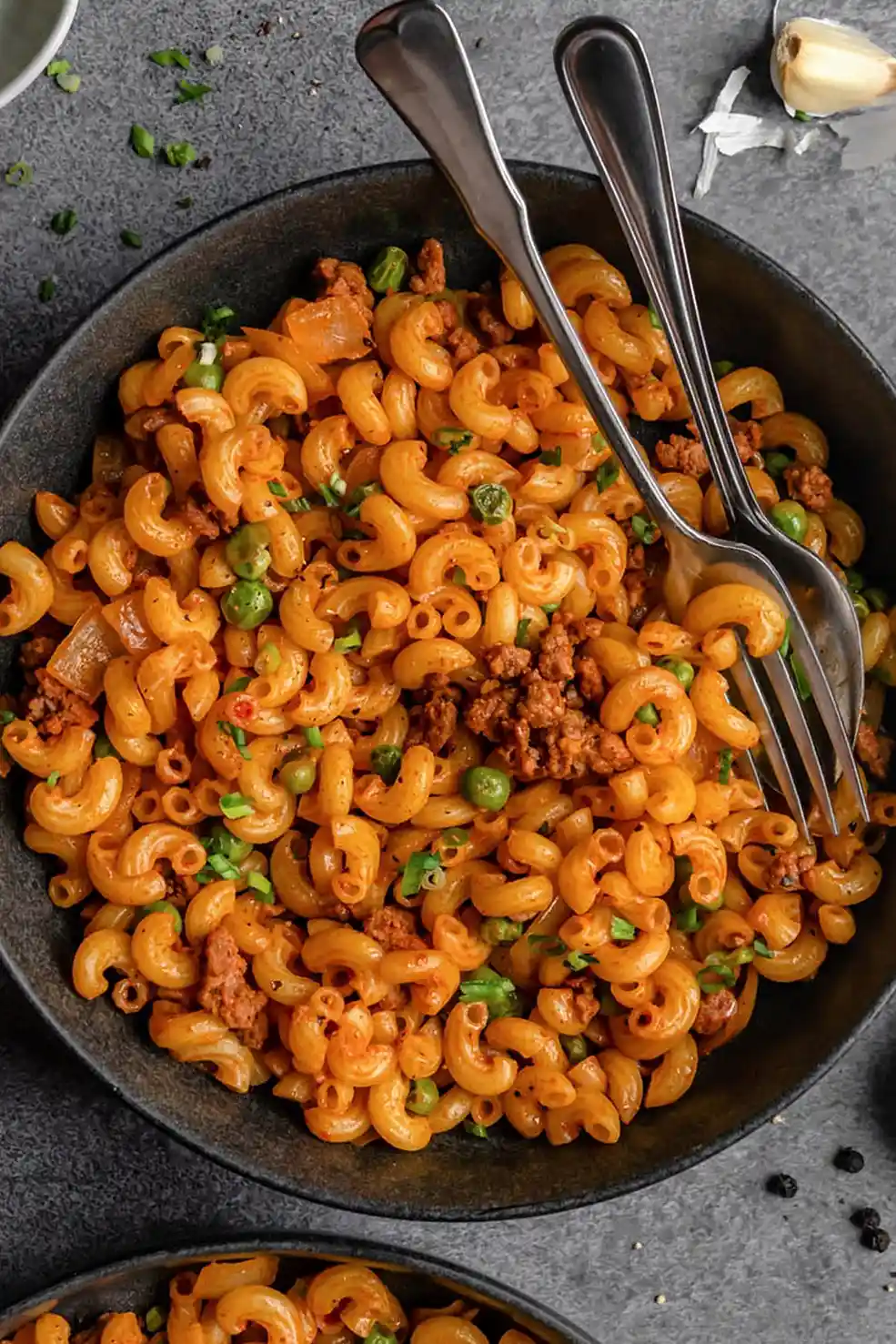
List of ingredients
- 8 oz elbow pasta – cooked slightly under al dente.
- ¼ lb lean ground beef (88/12%) – provides a savory base.
- 2 tsp low-sodium soy sauce (divided) – used for both marinating and the final sauce.
- ½ tbsp cooking oil – for sautéing the aromatics and beef.
- ¼ onion (diced; about ½ cup) – adds sweetness and texture.
- 2-3 cloves garlic (minced) – provides essential aromatic flavor.
- 2 tbsp tomato paste – gives the dish a rich red color and body.
- 1 tbsp oyster sauce – adds deep umami and a glossy finish.
- ½ cup frozen peas – adds a pop of color and sweetness.
- Green onion – used for a fresh garnish.
- Salt and pepper – to taste for seasoning.
step-by-step instructions
- Season the beef: In a bowl, combine the ground beef, 1 tsp of soy sauce, and ¼ tsp of pepper. Mix very lightly to avoid toughening the meat, then set aside.
- Cook the pasta: Bring a large pot of water to a boil and add enough salt to mimic a broth. Add the pasta and cook it 1-2 minutes less than the package instructions. Reserve ¼ cup of the pasta water before draining.
- Sauté the aromatics and beef: Heat cooking oil in a large pan or wok over high heat. Add the diced onion and the seasoned ground beef mixture, sautéing for 3-4 minutes until the beef is no longer pink. Stir in the minced garlic and cook for another 30 seconds until fragrant.
- Stir fry the final mixture: Add the cooked pasta, tomato paste, the remaining 1 tsp of soy sauce, oyster sauce, frozen peas, and the reserved pasta water. Season lightly with salt and pepper, stirring continuously over high heat until the pasta water is fully absorbed.
- Garnish and serve: Remove from heat, season to taste, and garnish with sliced green onions before serving warm.
Essential Equipment for Success
Choosing Between a Wok and a Flat Skillet
A wok is ideal for this recipe because its high walls and curved bottom allow for efficient stirring and high heat distribution. If you do not have a wok, use a large stainless steel or cast iron skillet to ensure there is enough surface area to prevent the pasta from steaming.
Selecting the Right Stirring Utensil
Use a wooden spoon or a silicone spatula to avoid scratching your pan and to move the pasta effectively. A spatula allows you to scrape the bottom of the pan more efficiently, ensuring the tomato paste and oyster sauce are fully incorporated into the noodles.
Using a Large Pasta Pot
Ensure your pot is large enough to allow the pasta to move freely without sticking together. Using too little water can lead to an overly starchy concentrate that may make the pasta gummy before it ever reaches the pan.
Beef Selection and Preparation
Using Lean Ground Beef Percentages
A lean blend like 88/12% is recommended to prevent the dish from becoming too greasy. If you use a higher fat content beef, be sure to drain the excess fat after sautéing before adding the pasta and sauce ingredients.
Substituting with Sliced Steak Cuts
You can replace ground beef with thinly sliced ribeye, flank steak, or sirloin for a different texture. Slice the steak against the grain into thin strips to ensure the meat remains tender during the high-heat stir-fry process.
Avoiding Overmixing the Beef
When seasoning the ground beef, stir the soy sauce and pepper in very lightly. Overworking the meat can lead to a dense, rubbery texture once cooked, whereas a light mix keeps the beef tender.
Pasta Cooking Techniques
Controlling the Boil and Salinity
Season the pasta water generously with salt so that the noodles are seasoned from the inside out. The water should taste like a light broth, which enhances the overall flavor profile of the final stir-fry.
The Importance of Under-cooking Pasta
Cook the macaroni 1-2 minutes shy of the package’s al dente recommendation. This prevents the noodles from becoming mushy when they are cooked a second time in the pan with the sauce.
Utilizing Starchy Pasta Water
Reserving a small amount of the cooking water is crucial for the sauce’s texture. The starch in the water helps the tomato paste and oyster sauce emulsify and cling to the pasta for a silky coating.
Optimizing Sauce and Flavor
Tomato Paste vs. Ketchup
Tomato paste provides a concentrated, deep flavor and a thicker consistency that coats the noodles evenly. While ketchup can be used as a substitute, it will result in a sweeter, thinner sauce that may require less additional seasoning.
The Role of Oyster Sauce
Oyster sauce is the primary source of umami and shine in this recipe. It adds a complex salty-sweet balance that is characteristic of Vietnamese-style fusion pasta dishes.
Managing Soy Sauce Sodium
Low-sodium soy sauce is preferred to allow for better control over the overall saltiness of the dish. Always taste the final product before adding extra salt, as the oyster sauce and pasta water already contain sodium.
Vegetable Integration and Timing
Handling Frozen Peas
Add frozen peas at the same time as the sauce and pasta to avoid overcooking them. Their residual moisture helps loosen the sauce and provides a fresh, sweet contrast to the savory beef.
Dicing Onions for Even Cooking
Cut the onions into uniform, small dice to ensure they sweat evenly and soften quickly. This prevents some pieces from burning while others remain raw during the short sauté period.
Preventing Garlic from Burning
Always add the minced garlic after the beef and onions have mostly cooked. Garlic burns quickly at high heat, which can introduce a bitter taste to the entire dish.
Customizing with Extra Ingredients
Adding Scrambled Eggs
For a heartier version, scramble an egg in the pan before adding the beef or fry an egg separately to place on top. This variation, known as Nui Xao Bo Trung, adds richness and extra protein to the meal.
Incorporating Fresh Carrots
Finely diced or julienned carrots add a nice crunch and natural sweetness. Sauté them along with the onions to ensure they are tender before the pasta is introduced.
Adding Broccoli or Bok Choy
Small broccoli florets or chopped bok choy can be added for more nutrients. Since these take longer to cook than peas, sauté them for 2 minutes before adding the garlic and beef.
Serving and Presentation
Suggested Side Dish Pairings
While this dish is satisfying on its own, it pairs well with a fresh cucumber salad or a light side of steamed rice. The acidity of a vinegar-based salad cuts through the richness of the beef and oyster sauce.
Applying Fresh Garnishes
Slice green onions on a bias for a professional look and sprinkle them over the dish immediately before serving. The raw onion provides a sharp, fresh contrast to the cooked ingredients.
Temperature and Plating
Serve the pasta immediately while it is steaming hot to maintain the glossy texture of the sauce. Use a shallow bowl or a flat plate to allow the sauce to coat the noodles evenly.
Storage and Preservation
Refrigeration Best Practices
Allow the macaroni to cool completely to room temperature before transferring it to an airtight container. Store it in the refrigerator for up to 5 days to keep the flavors fresh.
Freezing for Meal Prep
This recipe is suitable for batch cooking and freezing in individual portions. Use freezer-safe bags and remove as much air as possible to prevent freezer burn, storing them for up to 3 months.
Optimal Reheating Methods
Reheat in a microwave for 2-3 minutes, stirring halfway through to distribute the heat. If using a pan, add a splash of water or beef broth to loosen the sauce and restore the silky texture.
Troubleshooting Common Issues
Correcting Mushy Noodle Texture
If the pasta is too soft, it is likely because it was boiled too long before the stir-fry step. To fix this in the future, reduce the boiling time by an additional minute and ensure the pan is very hot when adding the noodles.
Reducing Excessive Saltiness
If the final dish tastes too salty, stir in a small amount of unsalted butter or a teaspoon of sugar to balance the flavors. Adding more steamed vegetables can also help dilute the salt concentration.
Managing Excess Grease in the Pan
If the beef releases too much oil, use a paper towel to soak up the excess fat before adding the garlic and sauce. This prevents the sauce from separating and becoming oily.
Frequently Asked Questions
Which pasta shape works best for this recipe?
Elbow macaroni is traditional because its hollow center and curved shape trap the thick sauce. However, penne or fusilli are excellent alternatives as they also provide great sauce adhesion.
Can I substitute oyster sauce with something else?
You can use a mixture of soy sauce, a pinch of sugar, and a small amount of mushroom powder or hoisin sauce. While the flavor will differ slightly, these options provide similar umami and thickness.
How long does this dish stay fresh in the fridge?
The stir-fried macaroni stays fresh and safe to eat for up to 5 days when stored in an airtight container. Ensure the container is sealed tightly to prevent the pasta from drying out.
Print
Vietnamese Stir Fried Macaroni with Beef (Nui Xao Bo)
- Total Time: 30 minutes
- Yield: 3 servings 1x
- Diet: General
Description
Vietnamese Stir Fried Macaroni with Beef, or Nui Xao Bo, is an easy, comforting, and budget-friendly dish featuring macaroni pasta stir-fried with onions, peas, and ground beef in an umami-rich sauce.
Ingredients
- 8 oz elbow pasta
- ¼ lb lean ground beef
- 2 tsp low-sodium soy sauce, divided
- ½ tbsp cooking oil
- ¼ onion, diced
- 2–3 cloves garlic, minced
- 2 tbsp tomato paste
- 1 tbsp oyster sauce
- ½ cup frozen peas
- Green onion for garnish
- Salt and pepper to taste
Instructions
- Season: To a bowl, add ground beef, 1 tsp soy sauce, and ¼ tsp pepper. Very lightly mix together, then set aside.
- Boil: Bring a large pot of water to a boil. Add enough salt to make it salty like broth, then add pasta. Cook 1-2 minutes less than what the box says, reserving ¼ cup pasta water. Drain and set aside.
- Sauté: In a large pan or wok, heat oil over high heat. When hot, add onion and ground beef mixture. Sauté for 3-4 minutes, stirring frequently, until no longer pink. Then add garlic, cooking for 30 more seconds until fragrant.
- Stir Fry: Add cooked pasta, tomato paste, remaining 1 tsp soy sauce, oyster sauce, frozen peas, and ¼ cup pasta water. Season lightly with salt and pepper. Stir continuously over high heat until pasta water is absorbed. Season to taste.
- Garnish: Garnish with sliced green onion.
Notes
The number of servings will depend on the size of your meal. Store in an air-tight container in the fridge for up to 5 days, or freeze individual servings in freezer-safe bags for up to 3 months.
- Prep Time: 10 minutes
- Cook Time: 20 minutes
- Category: Main Course
- Method: Stir Fry
- Cuisine: Vietnamese
Nutrition
- Serving Size: 1 serving
- Calories: 393 kcal
- Sugar: 5 g
- Sodium: 391 mg
- Fat: 6 g
- Saturated Fat: 1 g
- Unsaturated Fat: 5 g
- Trans Fat: 1 g
- Carbohydrates: 64 g
- Fiber: 4 g
- Protein: 20 g
- Cholesterol: 23 mg