These chicken thigh rice bowls offer a complete, balanced meal that can be prepared in about 30 minutes. The dish combines tender pan-seared chicken with a sweet and savory glaze, served over fragrant rice with crisp vegetables. It is an ideal solution for a quick weeknight dinner that requires minimal cleanup.
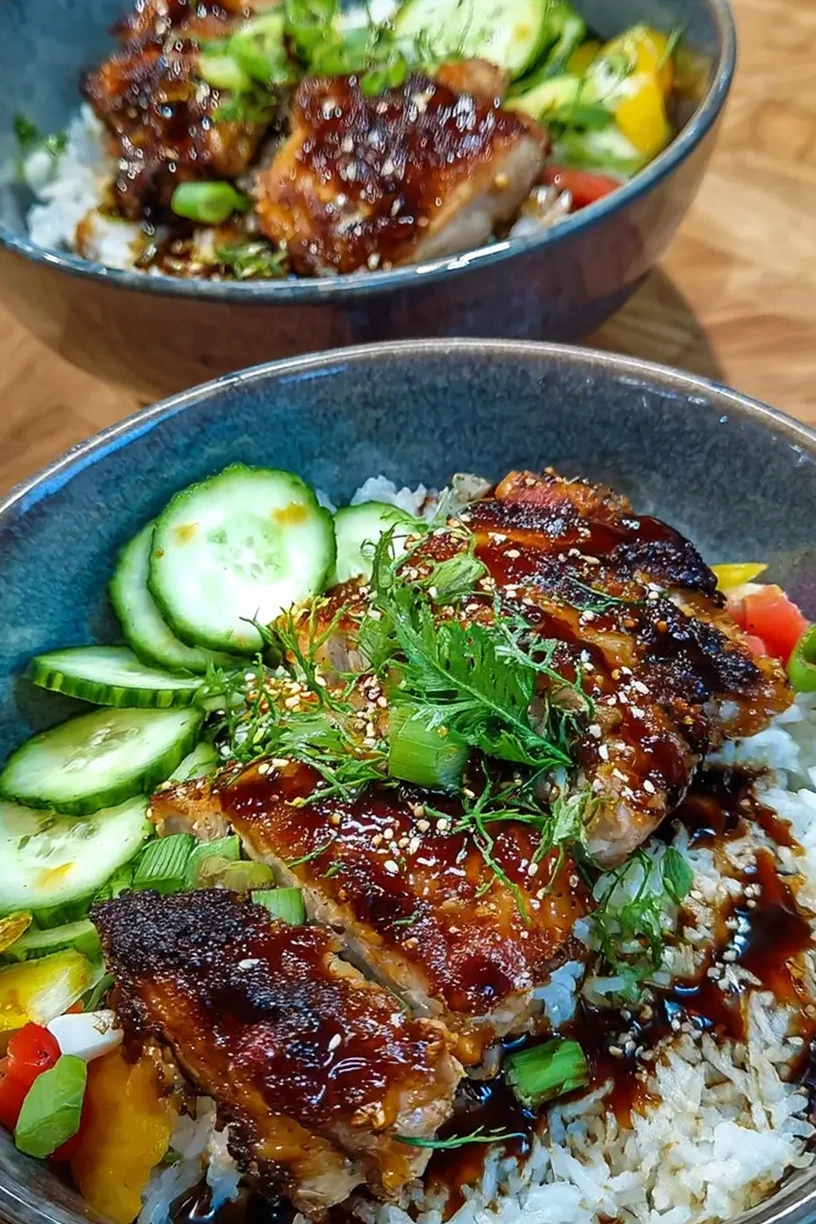
List of ingredients
- 4 boneless, skinless chicken thighs – provides juiciness and flavor.
- 1 cup jasmine rice, uncooked – for a fragrant, fluffy base.
- 1 large cucumber, thinly sliced – adds a cool, refreshing crunch.
- 2 medium carrots, julienned or grated – brings natural sweetness and color.
- 3 green onions, thinly sliced – used for a mild onion flavor and garnish.
- 2 tbsp sesame oil, divided – used for searing and adding nutty aroma.
- 3 tbsp soy sauce – creates the savory umami base of the sauce.
- 2 tbsp honey or maple syrup – adds a sticky sweetness to the glaze.
- 1 tbsp rice vinegar – provides a tang to balance the honey.
- 2 cloves garlic, minced – adds pungent, aromatic depth.
- 1 tsp fresh ginger, grated – contributes a warm, zesty flavor.
- 1 tbsp sesame seeds – used for a nutty finishing touch.
- Salt and black pepper – essential for seasoning the meat.
step-by-step instructions
- Prepare the rice: Rinse 1 cup of jasmine rice under cold water until the water runs clear to remove excess starch. Place the rice in a medium saucepan with 1.5 cups of water and a pinch of salt. Bring to a boil, then reduce heat to low, cover, and simmer for 15 minutes. Remove from heat and let it sit covered for 5 to 10 minutes to ensure the grains are fluffy.
- Sear the chicken: Pat the chicken thighs dry with paper towels and season both sides with salt and black pepper. Heat 1 tablespoon of sesame oil in a large skillet over medium-high heat. Once the oil is shimmering, add the chicken and cook for 5 to 7 minutes per side until golden brown and the internal temperature reaches 165°F (74°C). Remove the chicken and let it rest on a plate.
- Simmer the glaze: In a small bowl, whisk together the soy sauce, honey, rice vinegar, minced garlic, and grated ginger. Lower the skillet heat to medium and pour in the sauce. Let it simmer for 1 to 2 minutes, stirring occasionally, until the mixture thickens and becomes glossy.
- Combine chicken and sauce: Slice the rested chicken thighs into thin strips or bite-sized pieces. Return the chicken to the skillet and toss thoroughly to coat each piece in the glaze. Cook for one additional minute so the sauce caramelizes and clings to the meat.
- Assemble the bowls: Divide the cooked jasmine rice among four bowls. Place a portion of the glazed chicken on top, then arrange the sliced cucumber, julienned carrots, and green onions around the edges. Drizzle any leftover sauce from the pan over the top and garnish with sesame seeds.
Professional Searing Techniques
Pat Dry the Meat for Better Browning
Always use paper towels to remove surface moisture from the chicken thighs before seasoning. When the meat is wet, it creates steam in the pan, which prevents the Maillard reaction from occurring. Drying the surface ensures a deep golden-brown crust and a more intense flavor.
Avoid Overcrowding the Cooking Surface
If the chicken pieces are too close together, they will release moisture and boil in their own juices rather than searing. This results in pale meat and a lack of caramelization. If your skillet is small, cook the thighs in two separate batches to maintain a high pan temperature.
The Importance of Meat Resting
Allowing the chicken to rest for 5 minutes before slicing prevents the juices from leaking out onto the cutting board. This step ensures the meat remains tender and moist. When the meat rests, the fibers relax, allowing the juices to redistribute evenly throughout the thigh.
Temperature Control for the Glaze
When adding the sauce to the pan, keep the heat at a medium level to avoid burning the honey or maple syrup. Sugar-based sauces can go from glossy to burnt very quickly. Constant stirring ensures the glaze thickens evenly without developing bitter burnt spots.
Ingredient Substitutions and Alternatives
Gluten-Free Soy Sauce Options
For those avoiding gluten, replace the soy sauce with tamari or coconut aminos. Tamari provides a very similar salty, umami profile. Coconut aminos are slightly sweeter and lower in sodium, so you may need to slightly reduce the amount of honey used in the recipe.
Alternative Grain Bases
While jasmine rice is traditional, you can use brown rice or quinoa for more fiber. If using brown rice, increase the simmering time and water quantity according to the package instructions. Cauliflower rice is a great low-carb alternative; simply sauté it briefly before assembling the bowls.
Using Chicken Breast Instead of Thighs
Chicken breasts can be used if thighs are unavailable, but be cautious of overcooking. Breast meat is leaner and can dry out quickly. Reduce the searing time per side and ensure you slice them thinly to maintain tenderness when tossing them in the sauce.
Substituting the Sweetener
If you do not have honey or maple syrup, brown sugar is an excellent substitute. Use the same measurement of 2 tablespoons. Brown sugar adds a deeper, molasses-like sweetness that complements the soy sauce and ginger well.
Expanding the Vegetable Components
Incorporating Steamed Broccoli
Steamed broccoli florets add a vibrant green color and extra nutrients to the bowl. Steam them for 3 to 5 minutes until tender-crisp. Place them alongside the carrots and cucumbers for a more substantial vegetable portion.
Adding Sautéed Bell Peppers
Red or yellow bell peppers provide a sweet crunch and visual appeal. Slice them into thin strips and sauté them in the skillet for 2 minutes before adding the sauce. This integrates the peppers into the glaze for added flavor.
Using Shredded Cabbage or Slaw
Thinly shredded red or green cabbage adds a hearty texture and a slight peppery taste. You can leave the cabbage raw for maximum crunch or toss it with a splash of rice vinegar and sesame oil to create a quick slaw.
Including Edamame for Extra Protein
Shelled edamame is a great addition that boosts the protein content of the meal. Use frozen, thawed edamame and add them to the bowl during assembly. They pair perfectly with the savory glaze and sesame seeds.
Serving and Pairing Suggestions
Complementary Side Dishes
A light miso soup is an excellent starter that mirrors the umami notes of the chicken. Alternatively, serve with quick-pickled radishes to provide an acidic contrast to the rich glaze. Steamed edamame with a sprinkle of sea salt also makes a great side.
Refreshing Non-Alcoholic Drinks
Iced green tea with a squeeze of lemon cleanses the palate between bites. Sparkling water with a fresh lime wedge adds a citrusy zing that cuts through the sweetness of the honey. A chilled hibiscus tea also provides a tart, floral balance.
Appropriate Dessert Pairings
Mango sticky rice is a natural follow-up to the jasmine rice used in the main course. For something lighter, fresh pineapple slices provide a bright, acidic finish. Matcha-flavored treats also complement the Asian-inspired flavor profile of the meal.
Storage and Meal Prep Guidance
Refrigeration and Freshness
Store the cooked chicken, rice, and raw vegetables in separate airtight containers in the refrigerator for up to 3 days. Keeping the raw vegetables separate prevents them from becoming soggy. Store the extra sauce in a small jar to drizzle over the meal during reheating.
Freezing and Thawing Process
The cooked chicken and rice can be frozen for up to 2 months. Place them in freezer-safe bags, removing as much air as possible to prevent freezer burn. Thaw the components in the refrigerator overnight before reheating to maintain the best texture.
Best Reheating Methods
To reheat the rice, add a tablespoon of water and cover it with a damp paper towel before microwaving to steam the grains. Warm the chicken gently in a skillet over medium heat with a splash of vegetable broth. This prevents the meat from drying out during the heating process.
Make-Ahead Preparation Tips
You can prep the vegetables and whisk the sauce up to 24 hours in advance. Store the julienned carrots and sliced cucumbers in cold water to keep them exceptionally crisp. This reduces the active cooking time to just searing the chicken and simmering the sauce.
Troubleshooting Common Issues
What to Do if the Sauce is Too Salty
If the glaze tastes overly salty, add a teaspoon of honey or a splash of water to dilute the sodium. A small amount of extra rice vinegar can also help balance the saltiness by introducing acidity. Always taste the sauce before tossing in the chicken.
Correcting a Sauce That is Too Sweet
If the honey or maple syrup dominates the flavor, add an extra teaspoon of rice vinegar or a squeeze of fresh lime juice. The acidity will cut through the sugar and restore the savory balance. You can also add a pinch of extra salt to ground the sweetness.
Preventing Mushy Rice
Mushy rice usually happens due to too much water or over-stirring during the simmering process. Ensure you measure the water accurately and keep the lid closed until the resting period is over. Avoid stirring the rice while it cooks, as this releases starch and makes it sticky.
Handling Chicken That Won’t Brown
If the chicken is grey instead of golden, your pan is likely not hot enough or you have too many pieces in the skillet. Increase the heat and allow the oil to shimmer before adding the meat. Give the chicken a few minutes of undisturbed contact with the pan before flipping.
Essential Kitchen Equipment
Choosing the Right Skillet
A large stainless steel or cast-iron skillet is best for this recipe because they retain heat well. Non-stick pans work but may not produce as deep a sear on the chicken. Ensure the pan is large enough to hold all the thighs without them touching.
Rice Cooker vs. Saucepan
A saucepan is perfectly fine for small batches, but a rice cooker provides more consistency and convenience. If using a rice cooker, follow the machine’s specific water-to-rice ratio. Both methods produce great results as long as the rice is rinsed first.
Vegetable Prep Tools
A sharp chef’s knife is essential for julienning the carrots and thinly slicing the cucumbers. If you prefer a more uniform look, a mandoline slicer can be used for the cucumber rounds. A microplane or fine grater is best for the fresh ginger.
Optimizing Nutritional Balance
Increasing Fiber Content
To add more fiber, substitute the jasmine rice with brown rice or wild rice. You can also double the amount of carrots and add a handful of steamed snap peas. Increasing the ratio of vegetables to rice makes the meal more filling and nutrient-dense.
Boosting Protein Levels
While chicken thighs provide ample protein, adding shelled edamame or a soft-boiled egg to the bowl increases the protein count. This makes the meal more satisfying for those with higher activity levels. Tofu cubes can also be sautéed and added for a mix of proteins.
Reducing Sodium Content
To lower the sodium, use a low-sodium soy sauce or coconut aminos. You can also increase the amount of fresh ginger and garlic to maintain a bold flavor profile without relying on salt. Using fresh lime juice instead of some of the soy sauce adds brightness without adding salt.
Frequently Asked Questions
Can I use brown rice instead of jasmine rice?
Yes, brown rice is a healthy substitute. However, it requires more water and a longer cooking time—usually 40 to 45 minutes instead of 15. Be sure to start the brown rice much earlier than the chicken to ensure everything is ready at once.
How long does the leftover sauce stay fresh?
The glaze can be stored in an airtight container in the refrigerator for about 5 to 7 days. Because it contains honey and soy sauce, it has a decent shelf life. Shake the container well before using it again as the honey may settle.
Can I make this recipe spicy?
Yes, you can easily add heat by stirring a teaspoon of sriracha or chili garlic sauce into the glaze. Alternatively, garnish the finished bowls with red pepper flakes or sliced fresh jalapeños. Adding a pinch of cayenne pepper to the chicken seasoning also works well.
Print
Savory Chicken Thigh Rice Bowls
- Total Time: 30 minutes
- Yield: 4 servings 1x
- Diet: General
Description
Make delicious Chicken Thigh Rice Bowls in 30 minutes! Juicy chicken, fluffy rice, and fresh veggies with a savory glaze.
Ingredients
- 4 boneless, skinless chicken thighs
- 1 cup jasmine rice
- 1 large cucumber
- 2 medium carrots
- 3 green onions
- 2 tbsp sesame oil
- 3 tbsp soy sauce
- 2 tbsp honey or maple syrup
- 1 tbsp rice vinegar
- 2 cloves garlic
- 1 tsp fresh ginger
- 1 tbsp sesame seeds
- Salt and black pepper
Instructions
- Step 1: Start by cooking your rice. Rinse 1 cup of jasmine rice under cold water until the water runs clear—this removes excess starch and keeps the grains separate. Add the rice to a medium saucepan with 1 ½ cups of water and a pinch of salt. Bring it to a boil, then reduce the heat to low, cover, and simmer for about 15 minutes. Once done, remove it from the heat and let it sit, covered, for another 5–10 minutes. You’ll notice the rice will be fluffy and perfectly cooked.
- Step 2: While the rice is cooking, prepare the chicken. Pat the chicken thighs dry with paper towels and season both sides generously with salt and black pepper. Heat 1 tablespoon of sesame oil in a large skillet over medium-high heat. Once the oil is shimmering, add the chicken thighs. Cook for about 5–7 minutes per side, until they’re golden brown and cooked through. The internal temperature should reach 165°F (74°C). Remove the chicken from the skillet and set it aside on a plate to rest.
- Step 3: In a small bowl, whisk together the soy sauce, honey, rice vinegar, minced garlic, and grated ginger. This is your sauce—it should smell savory and slightly sweet, with a nice tang from the vinegar. Lower the heat to medium and pour the sauce into the same skillet you used for the chicken. Let it simmer for 1–2 minutes, stirring occasionally, until it thickens slightly and becomes glossy.
- Step 4: Slice the rested chicken thighs into thin strips or bite-sized pieces. Return the chicken to the skillet, tossing it in the sauce to coat evenly. Let it cook for another minute so the chicken soaks up all that delicious flavor. You’ll notice the sauce will cling to the chicken beautifully, creating a sticky, caramelized coating.
- Step 5: Now, assemble your bowls. Divide the fluffy jasmine rice among four bowls. Top each with a portion of the saucy chicken, then arrange the sliced cucumber, julienned carrots, and green onions around the edges. Drizzle any remaining sauce from the skillet over the top, and finish with a sprinkle of sesame seeds for a little nutty crunch.
Notes
Store components separately in airtight containers for up to 3 days. Freeze cooked chicken and rice for up to 2 months; thaw in fridge before reheating. Using jasmine rice gives a lovely fragrant base.
- Prep Time: 10 minutes
- Cook Time: 20 minutes
- Category: chicken thigh recipes
- Method: Pan-seared
- Cuisine: Asian fusion
Nutrition
- Serving Size: 1 bowl
- Calories: 520 kcal
- Sugar: 12 g
- Sodium: 900 mg
- Fat: 18 g
- Saturated Fat: 4 g
- Unsaturated Fat: 14 g
- Trans Fat: 0 g
- Carbohydrates: 58 g
- Fiber: 3 g
- Protein: 28 g
- Cholesterol: 110 mg