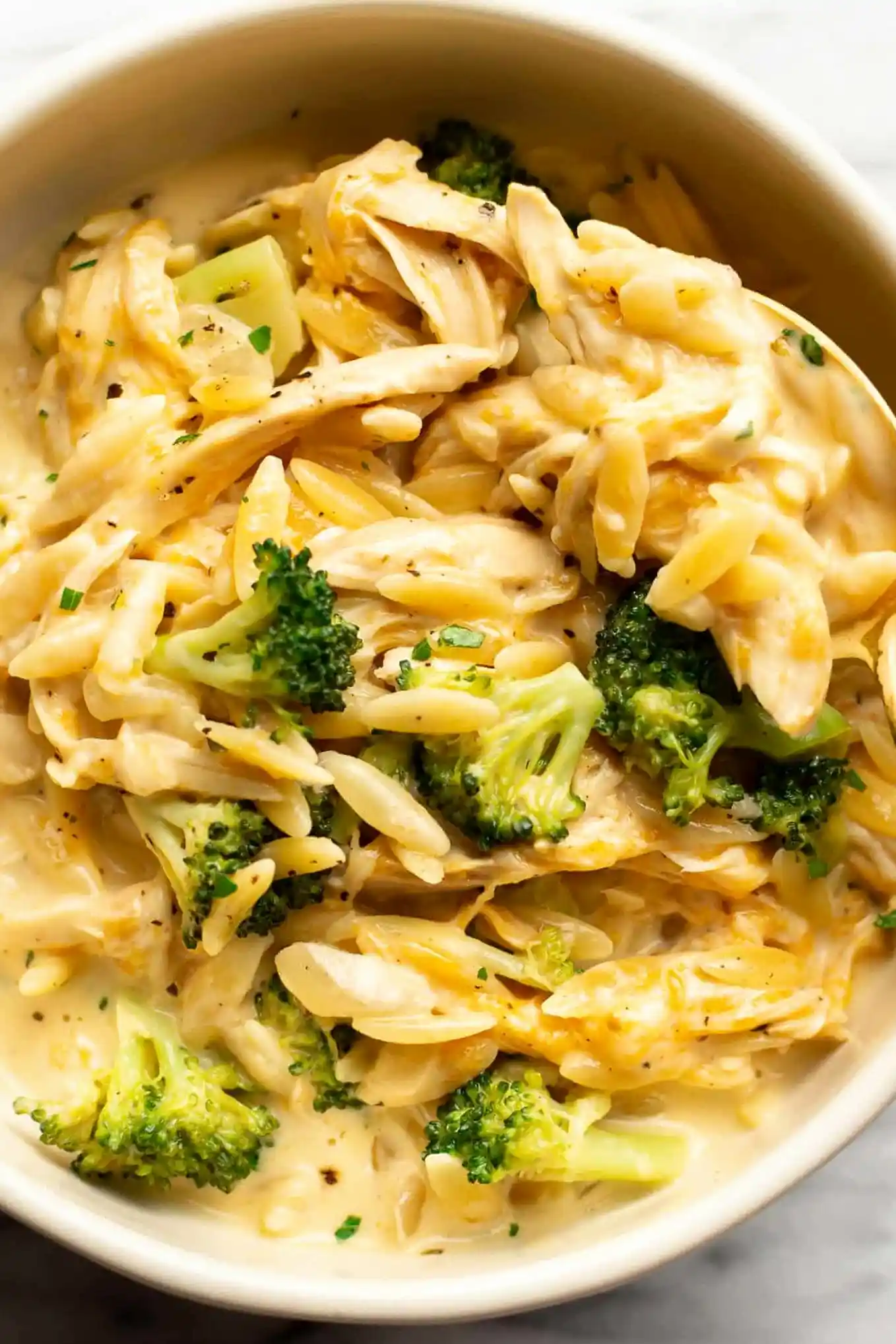
This one-pot chicken and broccoli orzo is a streamlined dinner option that combines protein, vegetables, and pasta. It is designed for efficiency and comfort, making it an ideal choice for busy weeknights.
List of ingredients
- 1 tablespoon olive oil – used for sautéing and preventing sticking.
- 1 tablespoon butter – adds richness and flavor to the aromatics.
- 1/2 medium onion (chopped) – provides a savory base.
- 2 cups broccoli (cut into bite-size florets) – adds texture and nutrients.
- 3 cloves garlic (minced) – adds pungent depth.
- 1/2 teaspoon Italian seasoning – a blend of dried herbs for seasoning.
- 1 cup uncooked orzo pasta – a rice-shaped pasta that thickens the sauce.
- 2 cups chicken broth – the primary cooking liquid.
- 1 cup heavy/whipping cream – creates a rich, creamy consistency.
- 1 teaspoon Worcestershire sauce – enhances the savory umami profile.
- 2 cups cooked shredded/rotisserie chicken – a convenient protein source.
- 2 cups shredded sharp cheddar – provides a bold, cheesy flavor.
- Salt & pepper (to taste) – essential for balancing the final flavors.
step-by-step instructions
- Sauté Aromatics: Add the oil, butter, and onion to a pot over medium-high heat. Sauté the onion for 3-4 minutes.
- Cook Broccoli: Add in the broccoli and continue cooking for another 2 minutes, stirring often.
- Toast Orzo: Stir in the garlic, Italian seasoning, and orzo, and cook for about 30 seconds.
- Simmer Pasta: Add in the chicken broth, cream, and Worcestershire sauce. Once it just starts to boil, reduce the heat (to medium or even medium-low) and continue cooking for 10 minutes, uncovered, stirring fairly often. It should gently (but steadily) bubble vs. furiously boil, and you don’t want the liquid to reduce too much before the pasta has cooked.
- Combine Protein: Stir in the chicken.
- Finish with Cheese: Take the pot off the heat, stir in the cheddar until it’s completely melted in, and season with salt & pepper (I am fairly generous with the salt). If needed, cover the pot and let it sit for a few minutes to let the sauce thicken.
Expert Cooking Tips for Optimal Texture
Sautéing Onions for Maximum Flavor
When sautéing the onions in a combination of olive oil and butter, use medium-high heat to ensure they soften without burning. The butter adds a rich flavor and helps the onions brown slightly, which creates a deeper base for the sauce. Aim for a translucent appearance with light golden edges to maximize the savory profile of the dish.
Managing the Simmer to Prevent Burning
The distinction between a gentle bubble and a furious boil is critical for the texture of the orzo. A rolling boil can cause the liquid to evaporate too quickly, leaving the pasta undercooked and the sauce too thick. Keep the heat on medium-low to maintain a steady simmer that cooks the grain evenly.
Stirring Orzo to Release Starches
Stirring the pot frequently during the 10-minute simmering process is not just to prevent sticking. The physical action of stirring releases starches from the orzo pasta into the liquid. This natural process helps the chicken broth and heavy cream emulsify, resulting in a naturally thicker and glossier sauce.
Controlling the Broccoli Softness
If you prefer your broccoli to maintain a bit more snap, you can skip the initial two-minute sauté step. Instead, add the florets during the last five minutes of the simmering stage. This ensures the vegetable is tender but not overly soft, preserving its bright green color and structural integrity.
Ingredient Substitutions and Customizations
Choosing Alternative Cheeses
While sharp cheddar is recommended for its bold taste, you can substitute it with Gruyere for a nuttier flavor or Monterey Jack for a milder, creamier melt. If using a harder cheese like Parmesan, blend it with a softer cheese to ensure the sauce remains smooth. Always grate the cheese from a block to avoid anti-caking agents found in pre-shredded bags.
Swapping Heavy Cream for Lighter Options
For a lighter version, you can replace the heavy cream with half-and-half or whole milk. Note that these alternatives have a higher water content and lower fat, which may result in a thinner sauce. You may need to simmer the mixture for a few additional minutes or allow it to rest longer after removing it from the heat.
Using Different Protein Options
Rotisserie chicken is used for convenience, but you can use poached chicken breast or sautéed turkey strips. If using raw chicken, ensure it is fully cooked through before adding it to the pot. For a seafood variation, sautéed shrimp can be stirred in at the very end to prevent overcooking.
Replacing Broccoli with Other Greens
If broccoli is unavailable, fresh spinach or chopped kale are excellent alternatives. Spinach should be stirred in at the same time as the cooked chicken, as it wilts almost instantly. Kale requires more heat and should be added during the simmering stage along with the orzo.
Serving Suggestions for a Complete Meal
Pairing with Crusty Garlic Bread
The richness of the cheddar and cream is well-balanced by the crunch of toasted garlic bread. Slicing a baguette, spreading it with garlic butter, and broiling it for 2-3 minutes provides a textural contrast. This also allows guests to scoop up any remaining creamy sauce from their plates.
Complementing with a Zesty Side Salad
A fresh garden salad with a vinaigrette dressing is an ideal accompaniment to this heavy meal. The acidity of lemon juice or apple cider vinegar in the dressing cuts through the fat of the cheese and cream. Focus on bitter greens like arugula or romaine to provide a clean contrast.
Adding a Fresh Herb Garnish
To brighten the visual presentation and add a fresh layer of flavor, garnish the finished dish with chopped parsley or chives. These herbs add a mild, peppery note that complements the Italian seasoning. Adding the herbs just before serving ensures they remain vibrant and aromatic.
Proper Storage and Reheating Methods
Optimal Refrigeration Practices
Store any leftover orzo in an airtight glass container to keep the moisture locked in. The dish will remain fresh in the refrigerator for 3 to 4 days. Ensure the pot is cooled slightly before sealing the lid to prevent excessive condensation from forming on the surface of the pasta.
Reheating to Maintain Creaminess
Orzo continues to absorb liquid as it cools, which can make leftovers seem dry or stiff. When reheating on the stove or in the microwave, add one to two tablespoons of chicken broth or cream. Stir slowly over low heat to re-emulsify the cheese and restore the original creamy consistency.
Avoiding the Freezer for Dairy Pastas
It is not recommended to freeze this dish due to the high content of dairy and pasta. Freezing often breaks the emulsion of the cream and cheese, leading to a grainy or separated texture upon thawing. The starch in the orzo can also become mushy, compromising the overall quality of the meal.
Meal Prep and Time-Saving Advice
Prepping Aromatics in Advance
To reduce active cooking time, chop the onions and mince the garlic several hours before you intend to start. Store them in small containers in the refrigerator. Having these prep tasks completed allows you to move through the sautéing process more efficiently.
Utilizing Pre-Cooked Proteins
Using a store-bought rotisserie chicken is the fastest way to prepare this meal. If you prefer home-cooked chicken, prepare a batch of shredded breast or thighs over the weekend. This turns the active cooking time into a simple assembly process on a busy weeknight.
Pre-Cutting Broccoli Florets
Broccoli can be cut into bite-size pieces and stored in a breathable bag for up to three days. This prevents the need for cutting boards and knives during the actual cooking process. Ensure the florets are uniform in size so they cook evenly in the pot.
Common Troubleshooting Solutions
Fixing a Sauce That Is Too Thick
If the orzo absorbs the liquid too quickly and the sauce becomes like a paste, simply stir in a splash of chicken broth or water. Add the liquid one tablespoon at a time while stirring over low heat. This allows you to reach the desired consistency without making the dish too runny.
Correcting a Too-Thin Consistency
If the sauce appears too liquid after the simmering time, remove the pot from the heat and cover it with a lid for 3 to 5 minutes. The residual heat allows the pasta to absorb the remaining moisture. If it is still too thin, you can simmer it uncovered for an additional few minutes.
Preventing Cheese from Clumping
To avoid the cheese from separating or becoming clumpy, always remove the pot from the active heat source before stirring in the cheddar. High heat can cause the fats in the cheese to separate from the solids, resulting in an oily sauce. Stirring the cheese into a hot but not boiling mixture ensures a smooth melt.
Frequently Asked Questions
Can I use frozen broccoli?
Yes, you can use frozen broccoli florets. However, do not sauté them in the first step as they release more water than fresh broccoli. Instead, add them directly into the liquid during the simmering stage and increase the simmer time by 2-3 minutes.
Is rotisserie chicken the only option?
No, any pre-cooked chicken will work, including grilled or poached chicken. If you are using raw chicken, you should dice it and sauté it at the beginning of the recipe until fully cooked before proceeding to the onion and broccoli steps.
Can this be made in a slow cooker?
This recipe is not suitable for a slow cooker because orzo pasta tends to overcook and become mushy during long cooking cycles. The one-pot stove-top method provides the necessary control over heat and timing to keep the pasta al dente.
What is the best way to shred cheese?
Grating cheese from a block is highly recommended. Pre-shredded cheeses are coated in potato starch or cellulose to prevent them from clumping in the bag, which can hinder their ability to melt smoothly into a creamy sauce.
Print
Creamy Chicken and Broccoli Orzo One-Pot Meal
- Total Time: 30 minutes
- Yield: 4 servings 1x
- Diet: General
Description
This cheesy chicken broccoli orzo recipe is a one pot wonder that’s easy and fast! This weeknight meal has pasta, rotisserie chicken, cheddar cheese, and plenty of broccoli.
Ingredients
- 1 tablespoon olive oil
- 1 tablespoon butter
- 1/2 medium onion, chopped
- 2 cups broccoli, cut into bite-size florets
- 3 cloves garlic, minced
- 1/2 teaspoon Italian seasoning
- 1 cup uncooked orzo pasta
- 2 cups chicken broth
- 1 cup heavy/whipping cream
- 1 teaspoon Worcestershire sauce
- 2 cups cooked shredded/rotisserie chicken
- 2 cups shredded sharp cheddar
- Salt & pepper to taste
Instructions
- Step: Add the oil, butter, and onion to a pot over medium-high heat. Sauté the onion for 3-4 minutes.
- Step: Add in the broccoli and continue cooking for another 2 minutes, stirring often.
- Step: Stir in the garlic, Italian seasoning, and orzo, and cook for about 30 seconds.
- Step: Add in the chicken broth, cream, and Worcestershire sauce. Once it just starts to boil, reduce the heat to medium or medium-low and continue cooking for 10 minutes, uncovered, stirring fairly often.
- Step: Stir in the chicken.
- Step: Take the pot off the heat, stir in the cheddar until it’s completely melted in, and season with salt & pepper.
Notes
If the pasta is soaking up the liquid too fast, turn the heat down and/or add a splash more broth or cream. If you prefer firmer broccoli, skip the 2 minutes of cooking in step 2.
- Prep Time: 10 minutes
- Cook Time: 20 minutes
- Category: Main Course
- Method: Stovetop
- Cuisine: American
Nutrition
- Serving Size: 1 serving
- Calories: 778 kcal
- Sugar: 5 g
- Sodium: 934 mg
- Fat: 53 g
- Saturated Fat: 28 g
- Unsaturated Fat: 18 g
- Trans Fat: 0.1 g
- Carbohydrates: 37 g
- Fiber: 3 g
- Protein: 40 g
- Cholesterol: 186 mg