This vibrant pasta salad combines the richness of sun-dried tomatoes with the tang of artichoke hearts and salty capers. It is an ideal choice for a meatless main course or a sophisticated side dish for summer gatherings.
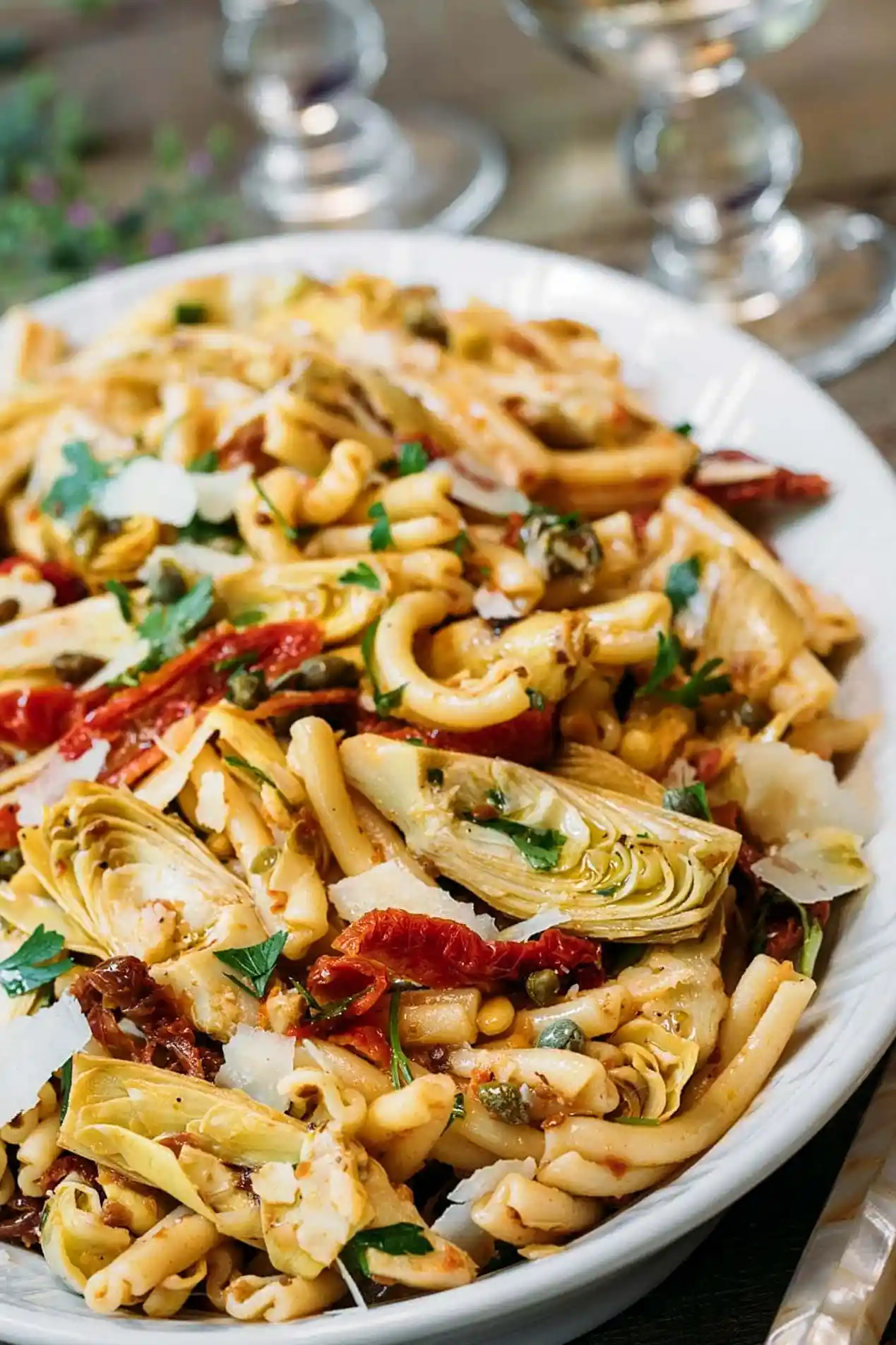
List of ingredients
- 1/2 cup sun-dried tomatoes, drained if oil-packed (about 12 halves) – used for the creamy vinaigrette.
- 2 tablespoons fresh lemon juice – provides essential acidity.
- 2 cloves garlic, peeled – adds a sharp, aromatic base.
- 1 teaspoon Dijon mustard – acts as an emulsifier for the dressing.
- 1/2 cup extra virgin olive oil – the primary fat for a smooth texture.
- 1 teaspoon fresh oregano leaves (about 6-8 leaves) – adds earthy herbal notes.
- 1/2 teaspoon kosher salt – enhances all flavors.
- 1/2 teaspoon freshly-ground black pepper (medium grind) – provides a mild spice.
- 1 pound short pasta, such as casarecce – holds the sauce in its folds.
- 1 pound frozen artichoke hearts, thawed and quartered – the heartiest component.
- 2 tablespoons olive oil – for sautéing the artichokes.
- 1/2 cup chopped shallots – adds a delicate onion flavor.
- 3 tablespoons capers, drained – brings a salty, briny punch.
- 1/2 cup sun-dried tomatoes, cut into thin strips – for texture and bursts of flavor.
- 1/4 to 1/2 teaspoon crushed red pepper flakes (optional) – for a subtle heat.
- 2 ounces toasted pine nuts – adds a nutty crunch.
- 1/4 cup chopped flat leaf parsley – adds freshness and color.
- 1/4 cup chopped fresh basil – provides a classic Italian aroma.
- 1/2 cup shaved Pecorino Romano, plus additional – adds a sharp, salty finish.
- kosher salt and pepper to taste – for final seasoning adjustments.
step-by-step instructions
- Prepare the Sun-Dried Tomato Vinaigrette: Pulse the sun-dried tomatoes, lemon juice, garlic, Dijon mustard, salt, and pepper in a food processor or blender 5-6 times until combined. Scrape the sides of the container to ensure no ingredients are left behind. With the processor running, slowly drizzle in the olive oil in a steady stream to create an emulsion. Add the fresh oregano leaves and pulse briefly to chop them without pureeing. Set the resulting vinaigrette aside.
- Cook the Pasta: Boil the short pasta in a pot of salted water until it is just past al dente. Drain the pasta and either rinse it immediately with cool water to stop the cooking process or lightly coat it with olive oil and spread it on baking sheets to cool.
- Sauté the Artichokes: Heat 2 tablespoons of olive oil in a skillet over medium-high heat. Add the quartered artichoke hearts and season with a pinch of kosher salt and black pepper. Sauté for 5-8 minutes, flipping them occasionally, until they develop a light golden brown color.
- Deglaze and Finish the Mixture: Pour a small splash of vegetable broth or water into the skillet to deglaze, scraping up the browned bits from the bottom of the pan. Remove the pan from the heat and stir in the chopped shallots, drained capers, thin strips of sun-dried tomatoes, and red pepper flakes.
- Assemble the Salad: In a large mixing bowl, combine the cooled pasta with the prepared sun-dried tomato vinaigrette. Fold in the artichoke mixture, toasted pine nuts, chopped parsley, fresh basil, and shaved Pecorino Romano. Season with additional salt and pepper to taste. Serve the salad at room temperature.
Selecting the Right Pasta Shape
Best Short Pasta Options
Casarecce is highly recommended because its twisted shape traps the vinaigrette and small ingredients like capers. Other excellent choices include fusilli or rotini, which have spirals that hold onto the dressing. Penne or orecchiette also work well, though they may not capture as much sauce as the twisted varieties.
Cooking Pasta for Cold Applications
Pasta should be cooked slightly longer than the standard al dente for cold salads. Because the pasta firms up as it cools, standard al dente pasta can feel too chewy or hard when chilled. Cooking it for an extra minute or two ensures a pleasant texture at room temperature.
Preventing Pasta Clumping
Rinsing pasta with cool water is a practical way to quickly lower the temperature and remove excess surface starch. If you prefer not to rinse, tossing the hot pasta with a small amount of olive oil prevents the pieces from sticking together. Spreading the pasta on a flat baking sheet further accelerates the cooling process.
Artichoke Heart Preparation
Frozen versus Canned Artichokes
Frozen artichoke hearts generally offer a more authentic flavor and better structural integrity. Canned hearts are often packed in a citric acid brine, which can make them overly salty or tangy. Frozen hearts hold their shape better during the sautéing process, allowing for a nice golden-brown sear.
Sautéing for Added Depth
Sautéing the artichokes in olive oil creates a Maillard reaction, adding a layer of savory, toasted flavor. This process transforms the texture from soft to slightly crisp on the edges. If using canned artichokes, skip the sautéing step as they are often too soft and may fall apart in the pan.
The Importance of Deglazing
Deglazing the pan with vegetable broth captures the concentrated flavors stuck to the bottom of the skillet. This liquid incorporates those savory bits back into the artichoke mixture. It also helps the shallots and capers integrate smoothly with the sautéed hearts.
Vinaigrette and Flavor Balance
Emulsifying the Dressing
Using a food processor allows the sun-dried tomatoes to break down into a creamy base. Slowly drizzling the olive oil while the motor is running creates a stable emulsion. This ensures the dressing doesn’t separate and coats the pasta evenly.
Balancing Acidity and Salt
The combination of lemon juice and Dijon mustard cuts through the richness of the olive oil and sun-dried tomatoes. Capers and Pecorino Romano provide significant salt, so it is important to taste the salad before adding extra kosher salt. The lemon juice brightens the overall profile and prevents the salad from tasting heavy.
Adjusting the Heat Level
Red pepper flakes provide a gentle warmth that complements the sweetness of the sun-dried tomatoes. Use 1/4 teaspoon for a subtle hint of spice or 1/2 teaspoon for a more noticeable kick. These flakes are optional and can be omitted for those who prefer a mild flavor.
Ingredient Substitutions
Alternative Cheese Options
If Pecorino Romano is unavailable, Parmesan is a suitable substitute, though it is slightly less salty. For a creamier profile, small pearls of fresh mozzarella can be added. Always ensure the cheese is shaved thinly to distribute the flavor evenly throughout the pasta.
Nut and Seed Variations
Toasted pine nuts provide a buttery flavor, but slivered almonds or chopped walnuts are excellent alternatives. For a nut-free version, toasted sunflower seeds provide a similar crunch. Toasting any nut choice in a dry pan for 2-3 minutes enhances the aroma.
Herb Swaps for Freshness
Flat leaf parsley and fresh basil are the classic choices for this Italian-style salad. If you lack basil, fresh spinach or arugula can be stirred in at the end for a peppery note. Dried oregano can be used in the vinaigrette if fresh leaves are unavailable, though the flavor will be more concentrated.
Serving and Presentation
Ideal Serving Temperature
This salad is best served at room temperature to allow the flavors of the olive oil and herbs to fully bloom. If the salad has been refrigerated, let it sit on the counter for 30 to 60 minutes before serving. This prevents the fats in the dressing from masking the more delicate flavors.
Plating for Events
For a professional look, serve the salad in a wide, shallow bowl rather than a deep one. Garnish the top with extra shaved Pecorino Romano and a few whole basil leaves. A sprinkle of toasted pine nuts on top adds a final touch of visual contrast.
Complementary Side Dishes
Pair this pasta salad with grilled vegetables, such as zucchini or bell peppers, for a complete vegetarian meal. It also complements grilled proteins or a crisp green salad with a light lemon vinaigrette. A side of crusty toasted baguette is excellent for scooping up any remaining dressing.
Storage and Longevity
Refrigeration Guidelines
Store the assembled pasta salad in an airtight container in the refrigerator for up to three days. Ensure the container is filled to the top to minimize air exposure, which can dry out the pasta. Keep the cheese separate if you prefer a fresher texture upon serving.
Managing Dressing Absorption
Pasta naturally absorbs liquid over time, which can leave the salad tasting dry after a day in the fridge. To prevent this, prepare a small extra batch of the sun-dried tomato vinaigrette. Stir in a tablespoon or two of fresh dressing just before serving to revive the moisture.
Freezing Considerations
This recipe is not suitable for freezing due to the fresh herbs and the texture of the cooked pasta. Freezing would cause the emulsion in the vinaigrette to break and the pasta to become mushy. Always prepare this dish for immediate consumption or short-term refrigeration.
Troubleshooting Common Issues
Pasta is Too Mushy
Mushy pasta usually results from overcooking or failing to cool the pasta quickly after draining. Always use a timer and check the pasta a minute before the package suggests. Rinsing with cold water immediately after draining is the most effective way to stop the cooking process.
Salad Tastes Too Salty
Excessive salt often comes from the combination of capers, Pecorino, and sun-dried tomatoes. To balance a salty salad, add a squeeze of fresh lemon juice or a small amount of extra olive oil. Adding more fresh herbs or unsalted toasted nuts can also dilute the saltiness.
Dressing is Too Thick
If the vinaigrette is too thick to toss easily, whisk in a teaspoon of warm water or additional lemon juice. This thins the emulsion without significantly altering the flavor. Ensure the pasta is fully cooled before adding the dressing to prevent it from absorbing the liquid too quickly.
Frequently Asked Questions
Can I use canned artichoke hearts instead of frozen?
Yes, you can use canned artichokes. However, since they are softer, you should skip the sautéing step to prevent them from breaking apart. Simply drain and rinse them thoroughly before adding them to the salad.
Which pasta shape is the most traditional for this salad?
While there is no single traditional shape, short, twisted pastas like casarecce or fusilli are preferred. These shapes maximize the surface area and the nooks where the dressing and small ingredients can settle.
How do I toast pine nuts without burning them?
Place pine nuts in a dry skillet over medium-low heat. Stir them constantly for 2 to 5 minutes until they are fragrant and lightly golden. Remove them from the pan immediately, as they continue to cook from residual heat.
Can this recipe be made vegan?
Yes, replace the Pecorino Romano with a plant-based hard cheese alternative or omit it entirely. You can also add extra toasted pine nuts or a sprinkle of nutritional yeast to maintain a salty, nutty flavor profile.
Is it necessary to rinse the pasta?
Rinsing is not strictly necessary, but it is helpful for cold salads to prevent clumping. If you choose not to rinse, toss the hot pasta with olive oil and spread it on a tray to cool quickly.
Print
Savory Sun-Dried Tomato and Artichoke Pasta Salad
- Total Time: 50 minutes
- Yield: 6 to 8 servings 1x
- Diet: Vegetarian
Description
This pasta salad, dressed with a rich sun-dried tomato vinaigrette, is an easy and satisfying summer side dish or vegetarian main course.
Ingredients
- 1/2 cup sun-dried tomatoes, drained
- 2 tablespoons fresh lemon juice
- 2 cloves garlic, peeled
- 1 teaspoon Dijon mustard
- 1/2 cup extra virgin olive oil
- 1 teaspoon fresh oregano leaves
- 1/2 teaspoon kosher salt
- 1/2 teaspoon freshly-ground black pepper
- 1 pound short pasta, such as casarecce
- 1 pound frozen artichoke hearts, thawed and quartered
- 2 tablespoons olive oil
- 1/2 cup chopped shallots
- 3 tablespoons capers, drained
- 1/2 cup sun-dried tomatoes, cut into thin strips
- 1/4 to 1/2 teaspoon crushed red pepper flakes
- 2 ounces toasted pine nuts
- 1/4 cup chopped flat leaf parsley
- 1/4 cup chopped fresh basil
- 1/2 cup shaved Pecorino Romano
- kosher salt and pepper to taste
Instructions
- Vinaigrette: Pulse sun-dried tomatoes, lemon juice, garlic, Dijon mustard, salt, and pepper 5-6 times until combined.
- Vinaigrette: Drizzle in olive oil in a steady stream with the mixer running.
- Vinaigrette: Add fresh oregano leaves and pulse to gently chop.
- Pasta: Cook pasta in salted, boiling water until al dente.
- Pasta: Drain and rinse with cool water or lightly-coat with olive oil and spread onto baking sheets to cool.
- Sauté: Heat 2 tablespoons olive oil in a skillet over medium high heat.
- Sauté: Gently sauté artichoke hearts with salt and black pepper for 5-8 minutes until light golden brown.
- Sauté: Deglaze the pan with a small splash of vegetable broth and cook for 1 minute.
- Sauté: Remove from heat and stir in shallots, capers, sun-dried tomatoes, and red pepper flakes.
- Assemble: Toss cooled pasta with the sun-dried tomato vinaigrette, artichoke mixture, pine nuts, herbs, and Pecorino Romano.
- Finish: Season to taste with salt and pepper.
Notes
If unable to find frozen artichoke hearts, substitute canned. This pasta salad can be made a day in advance and stored, covered, in the refrigerator; return to room temperature before serving.
- Prep Time: 30 minutes
- Cook Time: 20 minutes
- Category: Main Course
- Method: Stovetop
- Cuisine: Italian
Nutrition
- Serving Size: 1 serving
- Calories: 706 kcal
- Sugar: 3 g
- Sodium: 757 mg
- Fat: 42 g
- Saturated Fat: 6 g
- Unsaturated Fat: 36 g
- Trans Fat: 0 g
- Carbohydrates: 67 g
- Fiber: 5 g
- Protein: 15 g
- Cholesterol: 8 mg