Prepare a quick and healthy dinner with these sticky Asian chicken thighs. This one-pan meal is designed for busy weeknights and is loved by both adults and children.
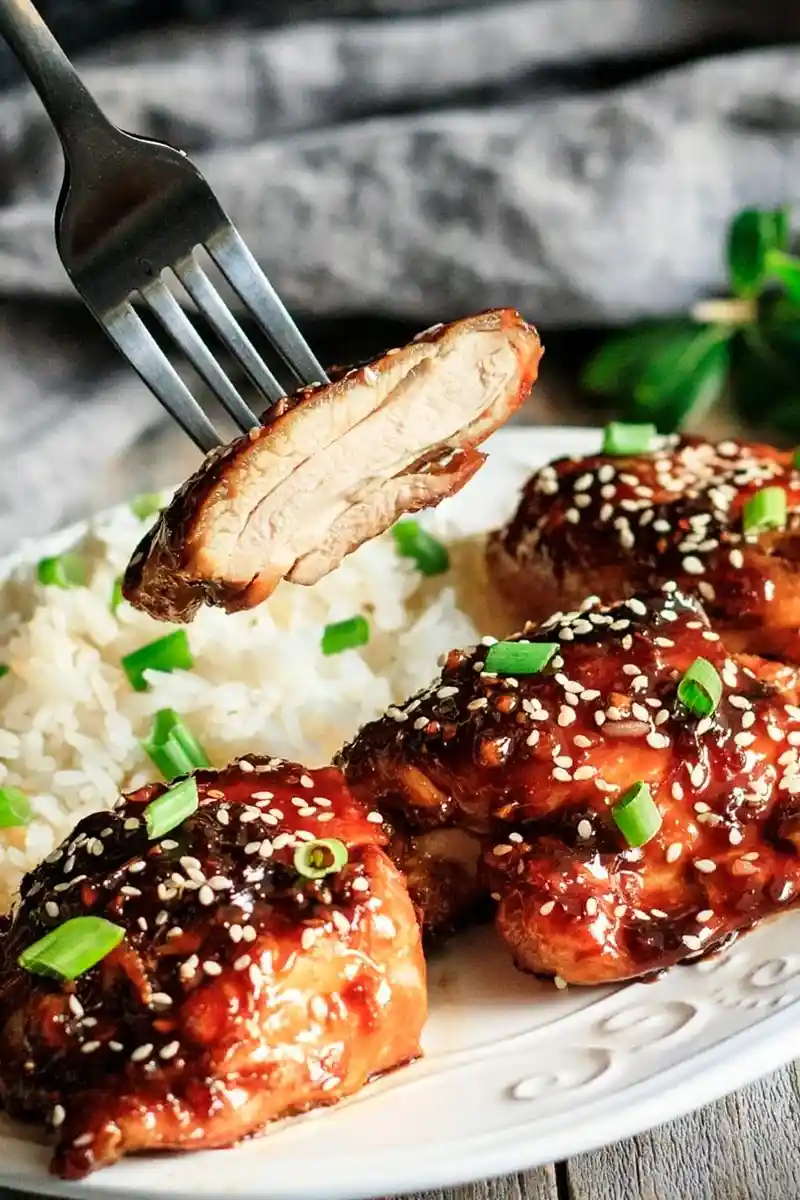
List of ingredients
- 1 tablespoon sesame oil – used for searing the chicken.
- 1½ to 2 pounds boneless skinless chicken thighs (5 pieces) – ensure they are room temperature for even cooking.
- Sprinkle of salt and pepper (optional) – for basic seasoning.
- ½ cup low sodium soy sauce – provides the salty, umami base.
- 3 tablespoons dark brown sugar – creates the sticky texture and sweetness.
- 2 tablespoons hoisin sauce – adds depth and a thick consistency.
- 1 tablespoon Thai sweet chili sauce – adds a hint of sweetness and mild heat.
- 2 teaspoons minced garlic – for aromatic flavor.
- 2 teaspoons fresh ginger root (grated) – provides a zesty, pungent kick.
- 2 green onions (sliced) – used for fresh garnish and color.
- 1 tablespoon sesame seeds – adds a nutty finish and visual appeal.
step-by-step instructions
- Prepare the meat: Blot the chicken thighs with a paper towel to remove excess moisture. Pierce the meat with the tip of a sharp knife to help the sauce absorb and speed up the cooking time.
- Sear the chicken: Heat the sesame oil in a 12-inch skillet over medium-high heat. Once the oil is shimmering, place the thighs smooth side down, avoiding overcrowding.
- Cook through: Sear the meat for 7½ minutes per side until crispy and golden. Use a meat thermometer to ensure an internal temperature of 165°F. Turn the heat down to medium after a few minutes to prevent over-browning.
- Clean the pan: Remove the meat to a large plate. Drain the fat, scrape off browned bits, and use a paper towel to wipe out any remaining extra fat.
- Simmer the sauce: Whisk the soy sauce, brown sugar, hoisin, sweet chili sauce, garlic, and ginger in a bowl. Pour the mixture into the skillet over medium-high heat, cover, and bring to a boil for 1-2 minutes.
- Thicken the glaze: Uncover the pan and lower the heat. Stir constantly for 1-2 minutes until the sauce reaches your desired thickness.
- Combine and serve: Add the chicken thighs back into the skillet one by one and coat thoroughly with the sauce. Garnish with sesame seeds and sliced green onions, then serve hot over rice.
Mastering the Searing Process
The Importance of Patting Meat Dry
Surface moisture creates steam when it hits the pan, which prevents the meat from browning. By blotting the chicken thighs with paper towels, you ensure the surface is dry. This allows the Maillard reaction to occur immediately, creating a golden-brown crust.
Managing Pan Temperature
Start with medium-high heat to get the oil shimmering, which is the signal that the pan is ready. Once the chicken is searing and the color begins to develop, lower the heat to medium. This prevents the exterior from burning before the interior reaches the safe temperature of 165°F.
Preventing Pan Overcrowding
Leaving enough space between each chicken thigh allows steam to escape. If the pan is too full, the chicken will boil in its own juices rather than sear. This results in grey, rubbery meat instead of a crispy, golden exterior.
Using a Meat Thermometer
Visual cues like color can be deceiving depending on the thickness of the thigh. A digital meat thermometer is the only way to guarantee the chicken is cooked to exactly 165°F. This prevents overcooking, which keeps the boneless thighs moist and tender.
Ingredient Substitutions and Tweaks
Using Honey Instead of Brown Sugar
If you do not have dark brown sugar, honey is an excellent alternative. Honey provides a similar sweetness and helps the sauce achieve a sticky consistency. Be aware that honey can burn faster than sugar, so monitor the heat closely during the reduction phase.
Adapting for Chicken Breasts or Drumsticks
While thighs are preferred for their moisture, you can use cubed chicken breasts or bone-in drumsticks. If using breasts, reduce the searing time to prevent them from drying out. Drumsticks will require a longer cooking time and may be best finished in the oven.
Adding Extra Spice
For those who prefer a spicier profile, add dried red chili flakes or a teaspoon of sriracha to the sauce mixture. You can also add sliced fresh jalapeños during the searing process. This complements the sweet and salty notes of the hoisin and soy sauce.
Gluten-Free Sauce Options
To make this recipe gluten-free, replace the low sodium soy sauce with tamari or coconut aminos. Ensure that the hoisin sauce you select is also certified gluten-free. The flavor profile remains virtually identical while accommodating dietary needs.
Serving and Pairing Recommendations
Choosing the Right Rice
Jasmine rice is the traditional choice due to its fragrant aroma and slightly sticky texture. Basmati rice is another great option for a fluffier grain. For a more nutrient-dense version, try brown rice or black forbidden rice.
Low-Carb and Grain-Free Bases
Cauliflower rice is a practical substitute for those avoiding grains. You can also serve the chicken over a bed of sautéed spinach or shredded cabbage. Rice noodles or zucchini noodles provide a lighter alternative that still carries the sauce well.
Complementary Vegetable Sides
Steamed broccoli or bok choy pairs perfectly with the sticky glaze. Snow peas or snap peas provide a crisp texture that contrasts with the tender chicken. For a complete meal, consider a side of Asian-style coleslaw with a vinegar-based dressing.
Enhancing the Garnish
While green onions and sesame seeds are classic, you can add toasted cashew nuts for extra crunch. A sprinkle of fresh cilantro or a squeeze of lime juice adds a bright, acidic note. These additions cut through the richness of the sticky sauce.
Storage and Reheating Advice
Refrigeration Guidelines
Store leftover chicken and sauce in an airtight container in the refrigerator. The meat will stay fresh for up to three to four days. Keep the sauce and chicken together so the meat remains moist during storage.
Freezing Instructions
Allow the chicken to cool completely before placing it in a freezer-friendly container or vacuum-sealed bag. It can be stored in the freezer for up to one month. Thaw the container in the refrigerator overnight before reheating.
Best Reheating Methods
Reheat leftovers in a skillet over medium heat with a teaspoon of sesame oil. Adding a small splash of water or extra soy sauce helps loosen the thickened glaze. Avoid the microwave if possible, as it can make the chicken rubbery and the sauce uneven.
Managing Sauce Absorption
Chicken continues to absorb sauce as it sits in the refrigerator. When reheating, you may find the meat is less ‘sticky’ than when first cooked. To fix this, whisk together a small amount of soy sauce and honey to refresh the glaze in the pan.
Meal Prep and Make-Ahead Tips
Preparing the Sauce in Advance
The sauce ingredients can be whisked together and stored in a mason jar in the fridge for up to three days. This reduces the active prep time on the night of cooking. Simply pour the pre-mixed sauce into the pan after searing the meat.
Prepping the Chicken
You can blot and pierce the chicken thighs several hours before cooking. Store them in a covered dish in the refrigerator. This allows you to move straight to the searing process when you are ready to eat.
Scaling for Large Groups
If doubling the recipe, use two separate skillets or sear the chicken in batches. Overcrowding a single pan with ten thighs will lead to steaming instead of searing. Double the sauce quantity to ensure every piece of meat is well-coated.
Cooking Troubleshooting and FAQ
Why is my sauce too thin?
The sauce may be thin if it wasn’t boiled long enough or if the heat was too low. Continue to simmer the sauce uncovered over medium heat while stirring constantly. It should reduce and thicken into a glaze within a few minutes.
Why didn’t the chicken brown?
This usually happens if the chicken was too wet or the pan wasn’t hot enough. Ensure the oil is shimmering before adding the meat. If you add too many pieces at once, the temperature drops, and the meat will steam instead of brown.
How do I prevent the sauce from burning?
Because of the sugar content in the brown sugar and hoisin, the sauce can burn quickly. Once you uncover the pan to thicken the sauce, lower the heat and stir constantly. Do not leave the sauce unattended during the final reduction phase.
What is the Maillard reaction?
The Maillard reaction is a chemical reaction between amino acids and reducing sugars that gives browned food its distinctive flavor. It occurs at temperatures above 300°F. In this recipe, it creates the savory, complex crust on the chicken thighs.
How do I know when the chicken is safe to eat?
The only reliable method is using a digital meat thermometer to check the thickest part of the thigh. The internal temperature must reach 165°F. If you do not have a thermometer, ensure the juices run clear when the meat is pierced.
Print
Sticky Asian Chicken Thighs Recipe
- Total Time: 30 minutes
- Yield: 5 chicken thighs 1x
- Diet: Dairy Free
Description
Sticky Asian chicken thighs is a one pan healthy weeknight dinner recipe that is simple and quick to make for your kids. This stovetop version uses skinless, boneless thighs which are coated in a finger licking good homemade sticky sauce.
Ingredients
- 1 tablespoon sesame oil
- 1½ to 2 pounds boneless skinless chicken thighs (5 pieces)
- sprinkle of salt and pepper (optional)
- ½ cup low sodium soy sauce
- 3 tablespoons dark brown sugar
- 2 tablespoons hoisin sauce
- 1 tablespoon Thai sweet chili sauce
- 2 teaspoons minced garlic
- 2 teaspoons fresh ginger root (grated)
- 2 green onions (sliced)
- 1 tablespoon sesame seeds
Instructions
- Prepare: Blot the meat with paper towel and pierce them with the tip of a sharp knife.
- Sear: Heat the oil in a 12-inch skillet set over medium-high heat. Once the oil is shimmering, place the thighs in the skillet smooth side down. Sear the meat for 7½ minutes each side, until the meat is crispy, golden, and has an internal temperature of 165°F on a meat thermometer. After a couple minutes of cooking, turn the heat down to medium to prevent over-browning.
- Clean: Remove the meat from the skillet and place on a large plate. Drain the fat and scrape off any browned bits from the skillet, then use a paper towel to wipe out the extra fat.
- Simmer Sauce: Whisk the sauce ingredients in a bowl, then pour into the skillet and set over medium high heat. Cover and bring the sauce to a boil, 1-2 minutes. Uncover and lower the heat, stirring constantly, until the sauce is the desired thickness, about 1-2 minutes.
- Coat: Add the thighs back into the skillet one piece at a time and coat the meat with the sauce. Garnish with sesame seeds and sliced green onion.
Notes
Double the sauce recipe if you want extra for the rice. Pat the meat dry before cooking to ensure proper browning. The sauce can be made ahead and stored in the fridge in an airtight container for up to 3 days.
- Prep Time: 12 minutes
- Cook Time: 18 minutes
- Category: Main Course
- Method: Stovetop
- Cuisine: Asian
Nutrition
- Serving Size: 1 chicken thigh
- Calories: 265 kcal
- Sugar: 11 g
- Sodium: 1114 mg
- Fat: 10 g
- Saturated Fat: 2 g
- Unsaturated Fat: 6 g
- Trans Fat: 1 g
- Carbohydrates: 16 g
- Fiber: 1 g
- Protein: 28 g
- Cholesterol: 129 mg