This creamy tuna pasta salad is a protein-packed option perfect for quick lunches. It combines fresh vegetables with a tangy Greek yogurt dressing for a nutritious twist on a classic.
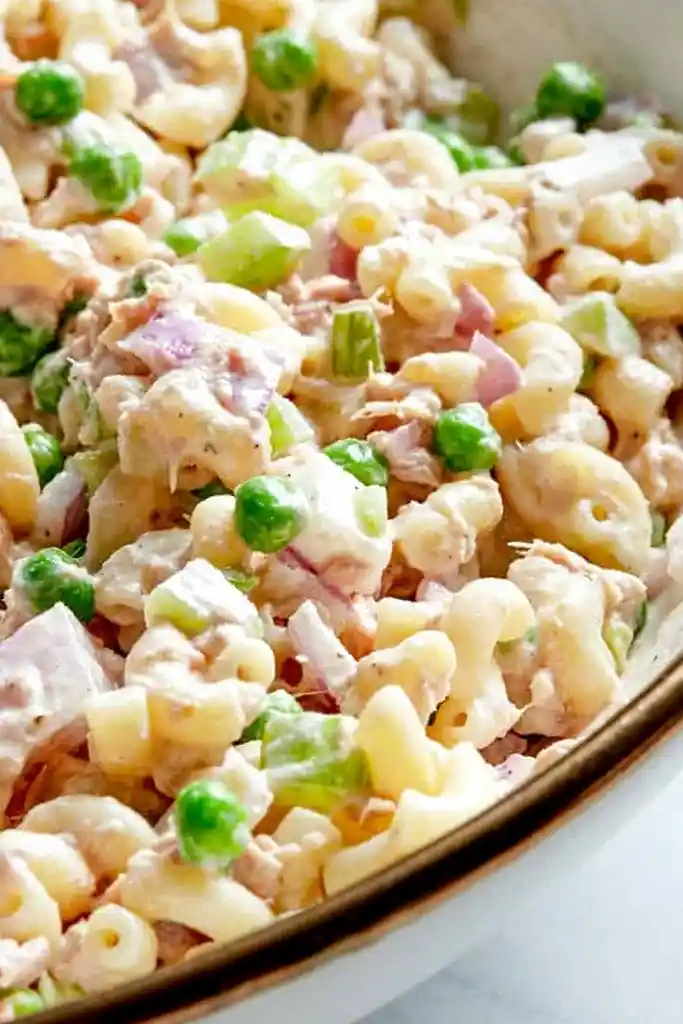
List of ingredients
- 1 cup diced red onion – provides a sharp, pungent flavor.
- 1 cup diced celery – adds a necessary fresh crunch.
- 2 cans of chunk light tuna packed in water and drained – the main source of lean protein.
- 3 cups elbow pasta, cooked – serves as the hearty base of the salad.
- 1 cup frozen peas, defrosted – contributes sweetness and color.
- 2 tbsp mayonnaise – adds richness and a smooth texture.
- 1/2 cup plain Greek yogurt – increases protein while maintaining creaminess.
- 1 tbsp red wine vinegar – adds a zesty, acidic balance to the dressing.
- Salt and pepper to taste – used for basic seasoning and flavor enhancement.
step-by-step instructions
- Prepare the pasta: Cook pasta according to package directions. Drain and rinse under cold water to stop the cooking and prevent sticking.
- Combine ingredients: In a large bowl, combine cooked pasta, onion, celery, tuna, peas, mayonnaise, Greek yogurt, vinegar, salt, and pepper.
- Mix and serve: Stir the mixture well until all ingredients are evenly coated. Taste and adjust seasoning before serving.
Optimizing Your Pasta Choice
Using Whole Grain Pasta for Fiber
Substituting white elbow pasta with a whole grain variety increases the fiber content of the meal. This helps you feel full longer and provides a nuttier flavor profile. Ensure you cook it slightly longer if the package suggests it to avoid a too-firm texture.
Integrating Bean or Lentil Pasta for Protein
For those seeking a higher protein intake, chickpea or lentil pasta is an excellent alternative. These pastas naturally contain more protein and fiber than traditional wheat pasta. Be careful not to overcook them, as they can become mushy more quickly than durum wheat pasta.
Preventing Pasta Clumping
Rinsing the pasta under cold water immediately after draining is a critical step for cold salads. This removes excess surface starch that otherwise acts like glue. It ensures the pasta remains individual pieces rather than a clumped mass in the bowl.
Adjusting Pasta Texture
Cook the pasta to an al dente state, meaning it still has a slight bite. Since the pasta will sit in the acidic vinegar and creamy dressing, it will soften slightly over time. Starting with a firmer noodle prevents the salad from becoming too soft during storage.
Dressing Customization and Balance
Making the Salad Dairy Free
To remove the dairy, omit the Greek yogurt and replace it with an equal amount of mayonnaise or a vegan mayonnaise alternative. This maintains the creamy consistency without the use of yogurt. You may need to add an extra teaspoon of vinegar to mimic the tanginess of the yogurt.
Lowering Fat with All-Yogurt Dressing
For a lower-calorie version, skip the mayonnaise entirely and use plain Greek yogurt for the full dressing volume. This significantly reduces the fat content while boosting the overall protein. The result is a lighter, tangier dressing that still coats the ingredients well.
Using Lemon Juice as an Acid Substitute
If red wine vinegar is unavailable, fresh lemon juice is a great alternative. It provides a bright, citrusy acidity that pairs exceptionally well with tuna and peas. Use the same measurement of one tablespoon for a similar flavor balance.
Adjusting the Creaminess Level
Depending on the size of your pasta and the amount of tuna, you may find the salad too dry. Simply stir in an extra tablespoon of Greek yogurt or mayonnaise until the desired consistency is reached. Do this gradually to avoid making the salad soupy.
Vegetable Enhancements and Variations
Adding Fresh Herbs for Brightness
Chopped fresh parsley or dill adds a sophisticated, herbaceous note to the dish. Add these herbs at the very end of the mixing process to keep them from bruising. Parsley offers a clean taste, while dill provides a classic pairing for tuna.
Using Green Onions for Milder Flavor
If red onions are too pungent, substitute them with sliced green onions or scallions. Green onions provide a milder, sweeter onion flavor that is often more appealing to children. Use both the white and green parts for visual appeal.
Incorporating Diced Bell Peppers
Adding finely diced red, yellow, or orange bell peppers introduces more color and a sweet crunch. This increases the vitamin C content of the salad without altering the core flavor profile. Ensure the pieces are diced small enough to mix evenly with the elbow pasta.
Adding Shredded Carrots for Texture
Finely shredded or grated carrots add a subtle sweetness and a different textural element. They blend well with the peas and celery, creating a more diverse vegetable mix. Use a box grater for the best consistency.
Storage and Maintenance Guidelines
Using Airtight Containers
Store the tuna pasta salad in a high-quality airtight container to keep it fresh. This prevents the salad from absorbing other odors in the refrigerator. It also helps maintain the moisture levels of the dressing by preventing air exposure.
Maintaining Moisture After Refrigeration
Pasta tends to absorb moisture from the dressing as it sits in the fridge, which can lead to a dry salad. To fix this, stir in a small dollop of Greek yogurt or mayonnaise immediately before serving. This restores the creamy texture and refreshes the flavor.
Safe Refrigeration Timelines
This salad remains safe and tasty for up to five days when stored at the correct temperature. Ensure your refrigerator is set to 40°F (4°C) or below. If the salad begins to smell overly fishy or the yogurt separates, discard it.
Freezing Considerations
This recipe is not suitable for freezing due to the mayonnaise and Greek yogurt. Freezing and thawing these ingredients causes the emulsion to break, resulting in a grainy and watery texture. Always store this dish in the refrigerator.
Serving Ideas and Pairings
Serving as a Main Course
This salad is filling enough to be the centerpiece of a lunch. Serve it chilled in a large bowl with an extra crack of black pepper on top. It provides a balanced mix of carbohydrates, protein, and vegetables.
Using as a Sandwich or Wrap Filler
Scoop the pasta salad into a whole-wheat wrap or between two slices of toasted sourdough bread. This transforms the salad into a portable sandwich. Adding a leaf of crisp romaine lettuce can provide extra crunch and structure.
Pairing with Side Salads
Serve the tuna pasta salad alongside a simple side of mixed greens or sliced cucumbers. A light vinaigrette on the side salad complements the creamy nature of the pasta. This creates a more comprehensive and refreshing meal.
Serving in Lettuce Cups
For a lower-carb presentation, scoop the salad into sturdy butter lettuce or romaine leaves. This replaces the need for bread and adds a fresh, watery crunch. It is an ideal option for those looking to reduce their overall starch intake.
Common Troubleshooting
Preventing a Watery Consistency
The most common cause of a watery salad is improperly drained tuna or under-defrosted peas. Press the tuna firmly against the can lid to remove all liquid. Pat the defrosted peas dry with a paper towel before adding them to the bowl.
Managing Overly Strong Onion Tastes
If the red onion is too overpowering, soak the diced pieces in cold water for ten minutes before adding them. Drain the onions and pat them dry. This process removes the harsh sulfur compounds while keeping the crunch.
Balancing Excessive Saltiness
Some brands of canned tuna are saltier than others. To balance an overly salty salad, add an extra squeeze of lemon juice or a bit more Greek yogurt. The acidity and creaminess help neutralize the salt perception on the palate.
Fixing Lumpy Dressing
If the mayonnaise and yogurt do not blend smoothly, whisk them together in a separate small bowl first. Once you have a smooth cream, fold it into the pasta and vegetables. This ensures an even coating without lumps of yogurt.
Frequently Asked Questions
Can I use canned peas instead of frozen?
Yes, you can use canned peas, but make sure to drain and rinse them thoroughly. Frozen peas are generally preferred for their better color and firmer texture. If using canned, add them last to prevent them from mashing.
Which type of tuna is best for this recipe?
Chunk light tuna packed in water is recommended for a leaner profile and a mild taste. You can use white albacore for a firmer texture and stronger flavor. Regardless of the type, always ensure it is well-drained.
Can I make this recipe vegan?
To make this vegan, replace the tuna with mashed chickpeas, the Greek yogurt with unsweetened vegan yogurt, and the mayonnaise with vegan mayo. The process remains the same, and the result is a hearty plant-based salad.
Do I need to cook the pasta specifically for this?
You can use leftover cooked pasta, provided it has been stored correctly in the fridge. Simply rinse it under warm water to loosen the noodles before mixing. Freshly cooked and chilled pasta usually provides the best texture.
How do I make it spicier?
Add a pinch of cayenne pepper, some red pepper flakes, or a teaspoon of Dijon mustard. These additions introduce heat and depth without changing the fundamental creaminess of the dish. Stir them into the dressing before combining with the pasta.
Essential Ingredient Tips
Selecting the Right Greek Yogurt
Use plain, unsweetened Greek yogurt to avoid adding unwanted sugar to the salad. Full-fat or 2% Greek yogurt provides a creamier mouthfeel than non-fat versions. The thickness of the yogurt is key to the salad’s structure.
The Role of Red Wine Vinegar
Red wine vinegar is chosen for its bold flavor and distinct color. It cuts through the richness of the mayonnaise and yogurt. If you prefer a softer taste, apple cider vinegar is a suitable substitute.
Tuna Packing Liquids
Tuna packed in water is preferred over tuna packed in oil for this specific recipe. Since the dressing already contains fat from the mayo and yogurt, oil-packed tuna can make the salad feel greasy. If using oil-packed, drain it very thoroughly.
Celery and Onion Sizing
Aim for a consistent dice for the celery and red onion, roughly the size of the peas. This ensures that every bite contains a balanced proportion of all ingredients. Uniform cutting also improves the overall visual presentation of the dish.
Advanced Preparation Advice
Batch Prepping for the Week
This recipe is ideal for meal prep as it holds up well over several days. Divide the finished salad into five separate containers immediately after mixing. This reduces the amount of handling and keeps the ingredients fresher.
Pre-Cooking Pasta in Bulk
You can cook a large pot of pasta at the start of the week and store it in the fridge. When you are ready to make the salad, simply measure out three cups of the pre-cooked noodles. This reduces the active prep time to just a few minutes.
Pre-Chopping Vegetables
Dice the onion and celery in advance and store them in a container with a damp paper towel. This keeps them crisp and ready for assembly. However, do not mix them with the dressing until you are ready to store the final salad.
Print
Creamy Tuna Pasta Salad for Healthy Meal Prep
- Total Time: 25 minutes
- Yield: 6 servings 1x
- Diet: Healthy
Description
This Healthy Tuna Pasta Salad is made with elbow noodles, peas, tuna, celery, red onion, mayonnaise, and Greek yogurt. It’s an easy, healthy, dish that is family-friendly and great for meal prep.
Ingredients
- 1 cup diced red onion
- 1 cup diced celery
- 2 cans of chunk light tuna packed in water and drained
- 3 cups elbow pasta, cooked
- 1 cup frozen peas, defrosted
- 2 tbsp mayonnaise
- 1/2 cup plain Greek yogurt
- 1 tbsp red wine vinegar
- Salt and pepper to taste
Instructions
- Step 1: Cook pasta according to package directions. Drain and rinse under cold water.
- Step 2: In a large bowl, combine cooked pasta onion, celery, tuna, peas, mayonnaise, Greek yogurt, vinegar, salt, and pepper.
- Step 3: Stir well and enjoy!
Notes
This tuna pasta salad will last up to 5 days when stored in the fridge. To keep this recipe dairy-free, skip the yogurt and use all mayonnaise. To lower the fat and increase the protein, skip the mayonnaise, and use all yogurt.
- Prep Time: 15 minutes
- Cook Time: 10 minutes
- Category: Lunch
- Method: Mixing
- Cuisine: American
Nutrition
- Serving Size: 1 serving
- Calories: 355 kcal
- Sugar: 5 g
- Sodium: 114 mg
- Fat: 5 g
- Saturated Fat: 1 g
- Unsaturated Fat: 4 g
- Trans Fat: 0 g
- Carbohydrates: 59 g
- Fiber: 4 g
- Protein: 17 g
- Cholesterol: 11 mg