This 30-minute meal combines juicy marinated shrimp and caramelized pineapple in a sweet and tangy glaze. It is served over a bed of fragrant cilantro jasmine rice for a refreshing dinner.
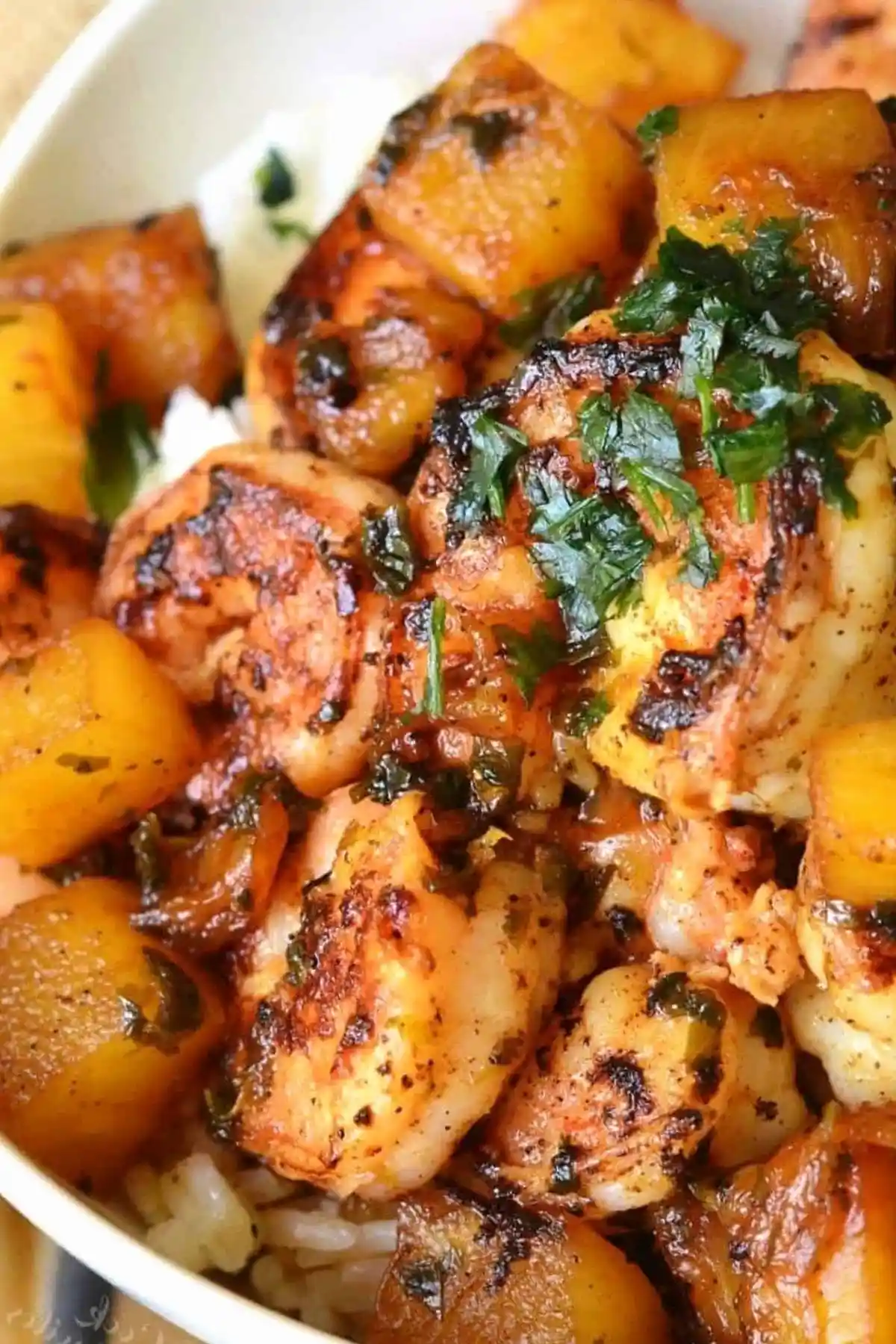
List of ingredients
- 3 cups cooked jasmine rice – served as the base.
- 1/2 Tbsp fresh minced cilantro – folded into the rice.
- Salt – used for seasoning the rice.
- 1/2 lb shrimp – peeled and deveined.
- 1 tbsp lime juice – for the shrimp marinade.
- 2 Tbsp pineapple juice – for the shrimp marinade.
- 1/4-1/2 tsp chili powder – for the shrimp marinade, adjusted to taste.
- Salt – for the shrimp marinade, adjusted to taste.
- 8 oz can of pineapple chunks – drained, but reserve the juice.
- 1/2 cup pineapple juice – for the glaze.
- 3 Tbsp soy sauce – for the glaze.
- 2 Tbsp honey – for the glaze.
- Zest from 1 lime – for the glaze.
- Juice from 1 lime – for the glaze.
- 1/2 tsp chili powder – for the glaze.
- 1 Tbsp fresh minced cilantro – for the glaze.
step-by-step instructions
- Prepare the rice: Cook jasmine rice in slightly salted water according to the package instructions. Once cooked, fluff the rice and fold in the minced cilantro. Divide the rice between two bowls when ready to serve.
- Mix the glaze: In a bowl, combine the pineapple juice, soy sauce, honey, lime juice, lime zest, chili powder, and minced cilantro. Set the sauce aside until the shrimp and pineapple are ready.
- Marinate the shrimp: Peel, devein, and rinse the shrimp. In a bowl, mix the shrimp with lime juice, pineapple juice, chili powder, and salt, allowing them to sit while you preheat the pan.
- Sear the shrimp: Heat a cooking pan over medium to medium-high heat with about a tablespoon of oil. Add the shrimp without the marinade and sear without touching them until they turn pink and opaque, then flip and cook the other side. Remove the shrimp from the pan and set them aside.
- Caramelize the pineapple: Lower the heat to medium and add a small amount of additional oil to the pan. Add the drained pineapple chunks and sear them until they are nicely browned.
- Simmer the sauce: Stir the prepared glaze into the pan with the browned pineapple. Let the mixture simmer for 2-3 minutes to thicken slightly.
- Combine and serve: Quickly stir the cooked shrimp back into the sauce and pineapple mixture. Divide the shrimp and pineapple mixture evenly over the two rice bowls.
Expert Tips for Perfect Shrimp
Avoid Overcooking for Better Texture
Shrimp cook very quickly and can become rubbery if left in the pan too long. Monitor them closely and remove them as soon as they curl into a ‘C’ shape and turn opaque. Using a timer is less reliable than observing the physical changes in the meat.
Patting Shrimp Dry for Better Sear
To get a golden-brown crust on your shrimp, pat them dry with a paper towel after rinsing and before marinating. Removing excess surface moisture prevents the shrimp from steaming in the pan. This ensures a proper sear that enhances the overall flavor.
Choosing the Right Shrimp Size
Medium or large shrimp are ideal for rice bowls as they maintain their structure during the searing process. Very small shrimp may overcook too quickly before they brown. Consistent sizing ensures that all pieces cook evenly at the same time.
Ingredient Substitutions and Alternatives
Gluten-Free Soy Sauce Options
To make this recipe gluten-free, replace the standard soy sauce with tamari or coconut aminos. Both alternatives provide the necessary salty, umami depth without containing wheat. The taste profile remains nearly identical to the original version.
Fresh vs. Canned Pineapple
While canned chunks are convenient, fresh pineapple adds a brighter acidity and firmer texture. If using fresh fruit, ensure you use bottled pineapple juice for the sauce and marinade to maintain consistency. Cut the fresh pineapple into uniform 1-inch chunks for even caramelization.
Alternative Grains for the Base
Brown rice or quinoa can be used as a healthier alternative to jasmine rice. These grains offer more fiber and a nuttier taste that complements the sweet glaze. If using quinoa, follow the same process of folding in fresh cilantro after cooking.
Honey Replacements for Sweetness
If you prefer a different sweetener, maple syrup or agave nectar work well as substitutes for honey. These liquids integrate easily into the sauce and provide the necessary viscosity. Maple syrup adds a slight woody note that pairs well with the lime.
Creative Flavor Variations
Adding Extra Heat with Sriracha
For those who prefer a spicier bowl, stir in a teaspoon of Sriracha or hot sauce into the glaze. This adds a vinegary heat that cuts through the sweetness of the honey and pineapple. You can also drizzle extra sauce on top before serving.
Incorporating Fresh Ginger for Zest
Adding one teaspoon of freshly grated ginger to the sauce mixture adds a pungent, aromatic quality. Ginger complements the citrus and pineapple notes perfectly. Stir it in during the simmer phase to mellow the raw bite of the ginger.
Adding Red Bell Peppers for Crunch
Dice a red bell pepper and sauté it along with the pineapple chunks for added color and texture. The sweetness of the pepper mirrors the pineapple and adds a vegetable component to the meal. Sauté the peppers for 3-4 minutes until tender-crisp.
Topping with Toasted Sesame Seeds
Sprinkle toasted sesame seeds over the finished bowls for a subtle nutty flavor and professional presentation. Toast the seeds in a dry pan for 1-2 minutes until golden. This adds a slight crunch to the soft rice and juicy shrimp.
Serving Suggestions and Side Dishes
Pairing with Tropical Salsas
Serve the bowls with a side of fresh mango or pineapple salsa to increase the brightness of the meal. A mix of diced mango, red onion, lime, and cilantro provides a cool contrast to the warm shrimp. This addition adds fresh enzymes and vibrant colors to the plate.
Using Coconut Rice for Extra Creaminess
Replace the water used for cooking the jasmine rice with a mixture of coconut milk and water. This creates a rich, creamy base that enhances the tropical theme of the dish. The coconut flavor pairs naturally with the pineapple glaze.
Adding Steamed Bok Choy for Nutrition
Serve the rice bowls alongside steamed or sautéed bok choy for a balanced meal. The mild, bitter flavor of the greens offsets the sweetness of the honey glaze. Briefly sauté the bok choy with a splash of soy sauce and garlic.
Recommended Non-Alcoholic Beverage Pairings
A chilled fruit punch or sparkling water with a squeeze of lime complements these flavors. The carbonation of sparkling water cleanses the palate between bites of the sweet glaze. Avoid heavy drinks that might overpower the delicate taste of the shrimp.
Storage and Food Safety
Refrigerating Leftovers Safely
Store any remaining shrimp and rice in airtight food storage containers. Ensure the food has cooled to room temperature before sealing the lid to prevent condensation. This helps maintain the texture of the rice and shrimp.
Optimal Storage Container Types
Glass containers are preferable for storing seafood dishes as they do not absorb odors and are easier to clean. Separate the rice from the shrimp and pineapple if you plan to store them for more than 24 hours. This prevents the rice from absorbing too much sauce and becoming mushy.
Maximum Shelf Life for Cooked Shrimp
Cooked shrimp should be consumed within 2-3 days when stored in the refrigerator. Beyond this window, the texture of the seafood can degrade and the risk of spoilage increases. Always check for any off-smells before reheating.
Reheating Guide for Best Results
Avoiding the Microwave for Shrimp
Microwaves often heat seafood unevenly, which can make shrimp tough and rubbery. To maintain the best texture, avoid using the microwave for the protein. Instead, use a stovetop method to gently warm the shrimp.
Pan-Searing for Better Texture
Reheat the shrimp and pineapple in a pan over medium heat with a small amount of olive oil. Flip them frequently and remove them as soon as they are warmed through. This method preserves the sear and prevents overcooking.
Reviving Dried-Out Rice
Rice often dries out in the refrigerator, losing its fluffy texture. To revive it, add a tablespoon of water, vegetable broth, or a mix of pineapple juice and soy sauce before heating. This introduces moisture back into the grains.
Troubleshooting Common Issues
Fixing a Sauce That is Too Thin
If the glaze is too watery after simmering, continue to cook it for another 1-2 minutes on medium-high heat. The sugars in the honey and pineapple juice will naturally thicken as they reduce. Avoid adding flour or cornstarch, as it may dull the bright tropical flavors.
Managing Too Much Heat from Chili Powder
If the dish is too spicy, stir in a small amount of extra honey or a squeeze of fresh lime juice. The sugar and acidity help neutralize the capsaicin in the chili powder. You can also serve the dish with extra plain rice to dilute the heat.
Preventing Pineapple from Burning
Pineapple contains high amounts of natural sugar, which can burn quickly at high temperatures. Keep the heat at medium and stir the chunks frequently during the searing process. If the pan becomes too hot, add a teaspoon of oil or water to lower the surface temperature.
Frequently Asked Questions
Can I use frozen shrimp?
Yes, you can use frozen shrimp. Ensure they are fully thawed in the refrigerator and patted completely dry with paper towels before marinating to ensure a proper sear.
How do I know when shrimp are done?
Shrimp are finished when they change from translucent to opaque and curl into a ‘C’ shape. Avoid letting them curl into a tight ‘O’ shape, as this is a sign of overcooking.
Can I make this recipe in a wok?
A wok is an excellent choice for this recipe because it allows for higher heat and faster stirring. Use the same sequence of steps, but be mindful that the shrimp will cook even faster in a wok.
Is this recipe freezer-friendly?
It is not recommended to freeze this completed dish. The texture of the cooked shrimp and the rice will change significantly upon thawing, resulting in a mushy consistency.
Print
Tropical Pineapple Shrimp Rice Bowls
- Total Time: 30 minutes
- Yield: 2 servings 1x
- Diet: Gluten Free
Description
Tropical shrimp rice bowl features juicy marinated shrimp and caramelized pineapple simmered in a sweet-tangy glaze of pineapple juice, soy sauce, honey, fresh cilantro, and a pinch of chili powder, on a bed of fluffy cilantro jasmine rice.
Ingredients
- 3 cups cooked jasmine rice
- 1/2 Tbsp fresh minced cilantro
- Salt
- 1/2 lb shrimp
- 1 tbsp lime juice
- 2 Tbsp pineapple juice
- 1/4–1/2 tsp chili powder
- 8 oz can of pineapple chunks (drained, juice reserved)
- 1/2 cup pineapple juice
- 3 Tbsp soy sauce
- 2 Tbsp honey
- Zest from 1 lime
- Juice from 1 lime
- 1/2 tsp chili powder
- 1 Tbsp fresh minced cilantro
Instructions
- Step: Cook rice in slightly salted water according to package instructions, fluff once cooked, and fold in fresh cilantro.
- Step: For the sauce, mix together pineapple juice, soy sauce, honey, lime juice, lime zest, chili powder, and cilantro.
- Step: Peel, de-vein, and rinse shrimp, then mix with lime juice, pineapple juice, chili powder, and salt; let it sit.
- Step: Preheat a pan over medium to medium-high heat with a tablespoon of oil, sear shrimp (without marinade) until pink and opaque, flip, sear the other side, and set aside.
- Step: Lower heat to medium, add a little more oil, and sear drained pineapple chunks until browned.
- Step: Pour in the sauce and simmer for 2-3 minutes.
- Step: Stir in the shrimp and divide the shrimp, pineapple, and sauce mixture over two rice bowls.
Notes
Store leftovers in an airtight container in the refrigerator for 2-3 days. To reheat, avoid the microwave; instead, warm shrimp in a pan over medium heat with a little olive oil and reinvigorate rice with water, broth, or pineapple juice.
- Prep Time: 10 minutes
- Cook Time: 20 minutes
- Category: Main Course
- Method: Stovetop
- Cuisine: American
Nutrition
- Serving Size: 1 bowl
- Calories: 500 kcal
- Sugar: 41 g
- Sodium: 1527 mg
- Fat: 1 g
- Saturated Fat: 0.2 g
- Unsaturated Fat: 0.6 g
- Trans Fat: 0 g
- Carbohydrates: 114 g
- Fiber: 3 g
- Protein: 10 g
- Cholesterol: 125 mg