This sheet pan meal combines tender salmon fillets with crisp roasted broccoli, all coated in a savory garlic butter glaze. It is a nutritious dinner option that minimizes cleanup by using a single baking sheet. This recipe is ideal for those seeking a quick yet elegant protein-rich meal.
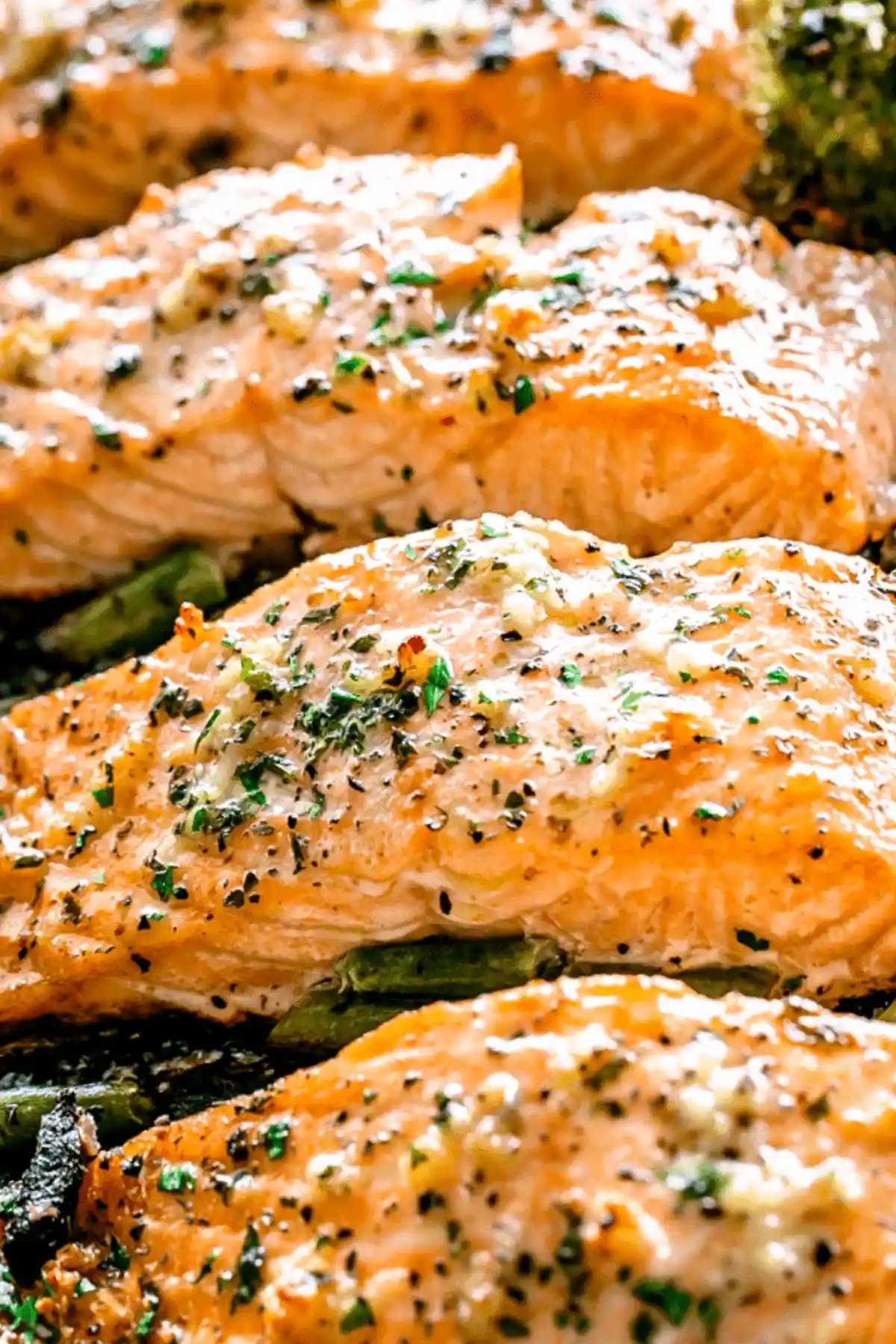
List of ingredients
- 4 salmon fillets (6 ounces each) – skin-on or skinless based on preference.
- 4 to 6 cups broccoli florets – cut into bite-sized pieces.
- 4 cloves garlic, minced – fresh garlic provides the best flavor.
- 6 tablespoons unsalted butter, melted – serves as the base for the herb sauce.
- 1 tablespoon light brown sugar – adds a touch of sweetness to balance the garlic.
- ½ teaspoon dried oregano – provides an earthy, herbal note.
- ½ teaspoon dried thyme – adds a subtle lemony fragrance.
- ½ teaspoon dried rosemary – gives the dish a woody aroma.
- Salt and freshly ground black pepper – used to season to taste.
- 1 lemon, halved and divided – used for juice and serving slices.
- Chopped fresh parsley – used as a garnish for color and freshness.
step-by-step instructions
- Prepare the oven: Preheat your oven to 400°F and lightly grease a large sheet pan with cooking spray to prevent sticking.
- Arrange the pan: Place the salmon fillets and broccoli florets on the sheet pan, then rub the minced garlic directly onto the top of each salmon fillet.
- Mix the glaze: In a small mixing bowl, whisk together the melted butter, brown sugar, dried oregano, thyme, and rosemary until well combined.
- Apply the sauce: Drizzle the prepared garlic butter mixture evenly over the salmon fillets and the surrounding broccoli.
- Season: Squeeze the juice from half of the lemon over the entire pan and sprinkle with salt and black pepper.
- Bake: Place the pan in the oven and cook for 15 minutes, or until the salmon reaches an internal temperature of 145°F and flakes easily with a fork.
- Finish: Remove from the oven, garnish with chopped fresh parsley, and serve with the remaining lemon slices.
Essential Cooking Techniques for Salmon
Use a Meat Thermometer for Accuracy
Salmon can overcook in a matter of minutes, leading to a dry and tough texture. Using a digital meat thermometer allows you to pull the fish out exactly at 145°F. This ensures the center remains moist while the edges are perfectly cooked.
Pat the Salmon Dry Before Seasoning
Moisture on the surface of the fish can create steam, which prevents the garlic butter from adhering and limits browning. Use a paper towel to pat the fillets dry on all sides before rubbing them with garlic. This helps the glaze stick better and improves the overall texture.
Select the Right Cut of Fish
Center-cut fillets are generally the most consistent in thickness, which means they cook evenly across the pan. If you have fillets of varying sizes, place the thicker ones toward the center of the pan. This allows them to receive more direct heat than the thinner pieces on the edges.
Managing the Albumin
You may notice a white, opaque substance called albumin pushing out of the salmon during baking. This is simply a protein that is pushed to the surface as the muscle fibers contract. It is completely safe to eat and does not indicate that the fish is overcooked.
Ingredient Substitutions and Customizations
Replacing Butter with Olive Oil
For a dairy-free version, you can substitute the melted butter with an equal amount of extra-virgin olive oil. While you will lose the creamy richness of the butter, olive oil provides a clean, fruity flavor. This substitution keeps the dish healthy and suitable for those avoiding butter.
Using Honey Instead of Brown Sugar
If you do not have light brown sugar, honey is an excellent alternative. Honey provides a similar sweetness and helps the glaze caramelize in the oven. Use one tablespoon of honey for a slightly more floral sweetness.
Alternative Vegetable Pairings
While broccoli is a classic choice, other green vegetables work well on a sheet pan. Asparagus, green beans, or snap peas can be used without changing the cooking time. Simply arrange them around the salmon and coat them in the same garlic butter sauce.
Swapping Dried Herbs for Fresh
If you prefer fresh herbs, use a 1:3 ratio compared to the dried measurements. For example, use 1.5 teaspoons of fresh thyme instead of 0.5 teaspoons of dried. Fresh herbs provide a brighter, more vibrant flavor profile to the butter glaze.
Choosing Different Fish Types
Steelhead trout is a fantastic alternative to salmon as it has a similar texture and fat content. Arctic char also works well in this recipe and cooks in approximately the same amount of time. Adjust the cooking time slightly if using a significantly thinner fillet.
Serving Suggestions and Pairings
Complementary Grains
Serve this meal with a side of quinoa or wild rice to add complex carbohydrates. The grains can be tossed with a bit of lemon juice and parsley to mirror the flavors of the salmon. This creates a balanced meal with healthy fats, protein, and fiber.
Adding a Fresh Side Salad
A crisp arugula or spinach salad with a light vinaigrette cuts through the richness of the garlic butter. Use a dressing made of lemon juice and olive oil to keep the flavors cohesive. Adding sliced cucumbers or cherry tomatoes adds a refreshing crunch to the plate.
Low-Carb Side Options
For those following a ketogenic or low-carb diet, cauliflower rice is a perfect accompaniment. Sauté the cauliflower rice with a bit of garlic and salt to complement the roasted broccoli. This keeps the entire meal within a low-carbohydrate range.
Creating a Platter Presentation
To serve this for a dinner party, transfer the salmon and broccoli to a large ceramic platter. Drizzle any remaining pan juices over the fish to add extra moisture. Garnish the platter with extra lemon wedges and fresh herb sprigs for a professional look.
Storage and Reheating Advice
Refrigerating Leftover Salmon
Place completely cooled salmon and broccoli in an airtight glass container. Store them in the refrigerator for up to 3 to 4 days. To maintain quality, avoid sealing the container while the food is still hot, as this creates condensation that can make the fish mushy.
Freezing Baked Salmon
Baked salmon can be frozen for up to 3 months if wrapped tightly in foil and placed in a freezer bag. Note that the texture may change slightly upon thawing. Always thaw the fish in the refrigerator overnight before reheating to ensure food safety.
Reheating Without Overcooking
The best way to reheat salmon is in the oven at 275°F until just warmed through. Avoid using a high-power microwave, which can make the salmon rubbery and dry. If you must use a microwave, use a medium power setting and cover the fish with a damp paper towel.
Repurposing Leftovers
Cold baked salmon is excellent when flaked into a salad or used in a salmon cake. Mix the leftover fish with a bit of Greek yogurt, lemon, and dill for a quick lunch. The roasted broccoli can be blended into a creamy soup or added to a pasta dish.
Troubleshooting Common Issues
Preventing Dry Salmon
If your salmon often comes out dry, check your oven temperature with an oven thermometer. Many ovens run hotter than the dial suggests, which can overcook fish quickly. Reducing the temperature by 25°F and cooking for an extra 2-3 minutes can provide more control.
Avoiding Burnt Garlic
Minced garlic can burn quickly at 400°F, becoming bitter. To prevent this, ensure the garlic is rubbed onto the fish and then covered by the butter glaze. The fat in the butter protects the garlic from direct heat, preventing it from scorching.
Fixing Mushy Broccoli
Mushy broccoli usually occurs when the pan is overcrowded, causing the vegetables to steam instead of roast. Use a large enough sheet pan so the florets are in a single layer with space between them. This allows hot air to circulate and crisp the edges of the broccoli.
Correcting an Oversalted Dish
If you accidentally add too much salt, an extra squeeze of fresh lemon juice can help balance the flavor. The acidity of the lemon neutralizes the perception of salt on the palate. Adding a side of unseasoned grains can also dilute the saltiness of the overall meal.
Frequently Asked Questions
Can I use frozen salmon fillets?
Yes, you can use frozen fillets, but they must be fully thawed before baking. Thaw them in the refrigerator overnight for the best results. If you bake them from frozen, the outside will likely overcook before the center reaches the safe temperature.
How do I know when the salmon is perfectly done?
The most reliable method is using a meat thermometer to hit 145°F. Visually, the salmon should change from a translucent raw look to an opaque pink. It should also flake easily when pressed with a fork.
Can this recipe be made in an air fryer?
Yes, you can cook the salmon and broccoli in an air fryer at 380°F. Cook for about 8 to 12 minutes depending on the thickness of the fillet. Be careful not to overcrowd the air fryer basket to ensure the broccoli crisps properly.
Is skin-on salmon better for this recipe?
Skin-on salmon is generally preferred because the skin acts as a barrier that protects the flesh from the heat. This helps keep the fillet moist. You can simply leave the skin on during baking and decide whether to remove it before eating.
Can I use garlic powder instead of fresh garlic?
Garlic powder can be used if fresh garlic is unavailable. Use about 1/8 teaspoon of garlic powder per clove of fresh garlic called for in the recipe. Mix the powder directly into the melted butter instead of rubbing it on the fillets.
Print
Garlic Butter Baked Salmon with Roasted Broccoli
- Total Time: 30 minutes
- Yield: 4 servings 1x
- Diet: General
Description
This Garlic Butter Baked Salmon is tender, flaky, and drizzled with a delicious garlic butter sauce! Baked on a sheet pan with your favorite veggies, it’s quick, easy, and perfect for busy weeknights.
Ingredients
- 4 (6 ounces each) salmon fillets
- 4 to 6 cups broccoli florets
- 4 cloves garlic (minced)
- 6 tablespoons unsalted butter (melted)
- 1 tablespoon light brown sugar
- ½ teaspoon dried oregano
- ½ teaspoon dried thyme
- ½ teaspoon dried rosemary
- salt and freshly ground black pepper (to taste)
- 1 lemon (halved, divided)
- chopped fresh parsley (for garnish)
Instructions
- Step: Preheat oven to 400˚F. Grease a sheet pan with cooking spray.
- Step: Arrange broccoli florets and salmon fillets on the sheet pan. Rub minced garlic over each fillet. Set aside.
- Step: In a mixing bowl whisk together melted butter, brown sugar, oregano, thyme, and rosemary.
- Step: Pour the butter mixture over the salmon and veggies.
- Step: Take half of a lemon and squeeze lemon juice over everything; then, season with salt and pepper.
- Step: Place the sheet pan in the oven and cook for 15 minutes, or until the fish flakes easily with a fork and the internal temperature is 145˚F degrees.
- Step: Remove from oven and garnish with parsley. Serve with lemon slices.
Notes
Storage: Place completely cooled salmon in an airtight container and keep it refrigerated for 3 to 4 days, or freeze it for up to 3 months.
- Prep Time: 10 minutes
- Cook Time: 20 minutes
- Category: Dinner
- Method: Baking
- Cuisine: Italian
Nutrition
- Serving Size: 1 fillet
- Calories: 448 kcal
- Sugar: 5 g
- Sodium: 109 mg
- Fat: 28 g
- Saturated Fat: 13 g
- Unsaturated Fat: 13 g
- Trans Fat: 1 g
- Carbohydrates: 13 g
- Fiber: 3 g
- Protein: 37 g
- Cholesterol: 139 mg