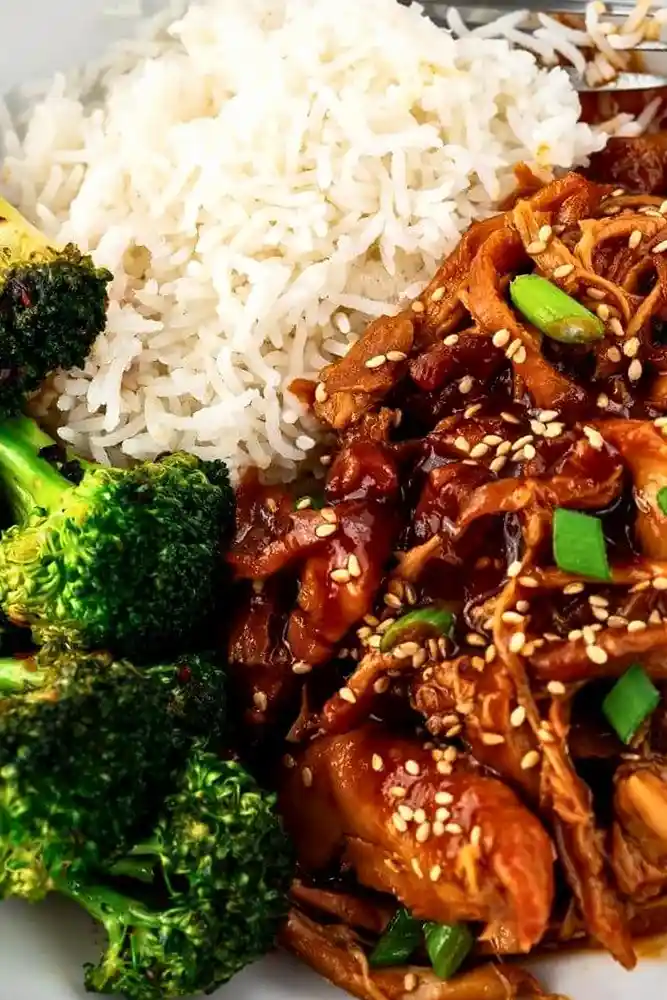
This slow cooker recipe produces tender chicken coated in a sticky, sweet, and savory glaze. It requires minimal active preparation, making it an efficient choice for healthy weeknight meals.
List of ingredients
- 4 boneless, skinless chicken thighs (about 1 ½ lb) – provides moisture and flavor.
- ¼ cup low-sodium soy sauce – adds salt and umami.
- ⅓ cup honey – creates the sweetness and glaze.
- 2 tbsp tomato paste – thickens and adds depth.
- 1 tbsp sriracha (or to taste) – provides a subtle spicy kick.
- 1 tbsp apple cider vinegar – balances the sugar with acidity.
- 3 garlic cloves, minced – adds pungent aromatic flavor.
- 1 tsp sesame seed oil – contributes a nutty undertone.
- 4 tbsp water, divided – used for sauce and cornstarch slurry.
- 1 ½ tbsp cornstarch – used to thicken the final sauce.
- 2 green onions, sliced – used for fresh garnish.
- 2 tsp sesame seeds – used for garnish and texture.
step-by-step instructions
- Prepare the sauce: In a small bowl, whisk together the soy sauce, honey, tomato paste, sriracha, sesame seed oil, minced garlic, apple cider vinegar, and 2 tbsp of water. Mix until the tomato paste is fully incorporated.
- Arrange the chicken: Place the chicken thighs in the inner pot of your slow cooker. Pour the prepared sauce evenly over the meat to ensure full coverage.
- Cook the chicken: Set the slow cooker to low for 4 hours, or to high for 2-3 hours. Avoid opening the lid frequently to maintain the internal temperature.
- Shred the meat: Once the cooking time is complete, remove the chicken thighs. Use two forks to shred the meat into bite-sized pieces, then return the chicken to the pot.
- Thicken the glaze: In a small cup, combine the remaining 2 tbsp of water with the cornstarch to create a slurry. Stir this mixture into the slow cooker and cook for an additional 5-10 minutes until the sauce reaches a thick, glossy consistency.
- Serve and garnish: Spoon the chicken and sauce over cooked rice, quinoa, or mashed potatoes. Top with sliced green onions and sesame seeds.
Meat Selection and Preparation
Using Chicken Thighs for Maximum Tenderness
Chicken thighs are preferred for slow cooking because they contain more fat and connective tissue than breasts. This allows the meat to remain juicy over several hours of heat. They are less likely to become dry or rubbery during the simmering process.
Adjusting Cook Times for Chicken Breasts
If you prefer to use boneless, skinless chicken breasts, the cooking times remain the same. However, because breasts are leaner, check them at the earliest recommended time to prevent overcooking. Shredding them immediately after cooking helps them absorb the sauce.
Managing Cooking Times for Bone-In Meat
Bone-in chicken thighs add extra flavor to the sauce but require more time to cook through. Increase the total cooking time by approximately 30 minutes regardless of the setting. Ensure the thickest part of the meat reaches an internal temperature of 165°F.
Sauce Component Guide
Balancing Sweetness with Honey
Honey acts as the primary thickening agent and sweetener in this glaze. It caramelizes slowly in the slow cooker, creating a sticky texture that clings to the meat. For a milder sweetness, you can slightly reduce the amount of honey used.
Controlling Sodium with Soy Sauce Choices
Using low-sodium soy sauce allows you to control the salt levels without losing the essential umami flavor. If you are sensitive to salt, you can further dilute the sauce with a small amount of water. Always stir the sauce well to avoid salt pockets.
Improving Color and Body with Tomato Paste
Tomato paste provides a rich, reddish-brown color and adds a concentrated savory base to the sauce. It helps the glaze feel more substantial on the palate. Ensure the paste is whisked smoothly into the liquid before adding it to the pot.
Modifying Spice Levels with Sriracha
Sriracha adds a vinegary heat that cuts through the sweetness of the honey. For those who prefer a mild dish, reduce the sriracha to a teaspoon or omit it entirely. To increase the heat, add extra sriracha or a pinch of red pepper flakes.
Adding Nutty Aromatics with Sesame Oil
Sesame oil is a potent aromatic and should be used sparingly. It provides a distinct toasted flavor that complements the garlic and soy sauce. Be careful not to over-pour, as too much sesame oil can overpower the other ingredients.
Using Apple Cider Vinegar for Balanced Acidity
The acidity from apple cider vinegar is crucial for balancing the heavy sweetness of the honey. It brightens the overall flavor profile and helps tenderize the chicken fibers. Distilled white vinegar is a suitable alternative if cider vinegar is unavailable.
Slow Cooker Settings and Timing
Optimizing the Low Temperature Setting
Cooking on low for 4 hours is the ideal method for achieving the most tender shredded texture. Low heat allows the collagen in the chicken to break down slowly. This results in meat that pulls apart effortlessly with a fork.
Speeding Up Preparation with the High Setting
The high setting reduces the cooking time to 2-3 hours for those with a tighter schedule. While effective, high heat can sometimes cause the edges of the meat to toughen slightly. Stir the chicken halfway through if your slow cooker has hot spots.
Avoiding Overcooked Meat Texture
Overcooking chicken in a slow cooker can lead to a stringy or dry consistency. Once the meat is tender enough to shred, it should be removed or the heat should be turned down. Use a meat thermometer to ensure accuracy.
Thickening the Sauce
Preparing a Smooth Cornstarch Slurry
A slurry is a mixture of cornstarch and cold water that prevents clumps from forming in the sauce. Always mix the cornstarch with the water in a separate small container before adding it to the pot. Stirring cornstarch directly into hot liquid often results in lumps.
Preventing Lumps in the Final Sauce
Once the slurry is added, stir the slow cooker contents continuously for a few minutes. This ensures the starch is evenly distributed as it heats up. The sauce will transition from a liquid to a glossy glaze as the starch gelatinizes.
Using Arrowroot as a Cornstarch Alternative
Arrowroot powder can be used as a substitute for cornstarch for a similar thickening effect. It often produces a clearer, more transparent glaze. Use the same ratio of arrowroot to water as you would with cornstarch.
Serving Suggestions
Serving Over Steamed White or Brown Rice
White jasmine or basmati rice is the traditional pairing, as the grains absorb the honey garlic sauce efficiently. Brown rice offers a nuttier flavor and more fiber. Ensure the rice is fluffy and steamed just before serving.
Utilizing Quinoa for a Nutritious Base
Quinoa is an excellent alternative for those seeking a higher protein base. Its slightly nutty taste pairs well with the sesame oil and garlic. Cook the quinoa in vegetable broth for added flavor.
Pairing with Mashed Potatoes
For a more comforting meal, serve the shredded chicken over a bed of creamy mashed potatoes. The savory glaze acts as a rich gravy for the potatoes. Use skin-on potatoes for added texture.
Incorporating Steamed Broccoli and Carrots
Adding steamed vegetables like broccoli florets or sliced carrots adds color and nutrition to the plate. Steam them separately and toss them in a small amount of the sauce. This keeps the vegetables crisp rather than mushy.
Storage and Meal Prep
Safe Refrigeration and Cooling Methods
Allow the chicken and sauce to cool slightly before transferring them to the refrigerator. Store the dish in an airtight container to prevent the meat from drying out. It will remain fresh and safe to eat for up to 3 days.
Freezing and Thawing Guidelines
This recipe is freezer-friendly and can be stored for up to 3 months. Use a freezer-safe bag or container and remove as much air as possible to prevent freezer burn. Thaw the chicken in the refrigerator overnight before reheating.
Best Methods for Reheating Shredded Chicken
To reheat, place the chicken in a skillet over medium heat with a splash of water or broth. This restores the moisture to the sauce and prevents the honey from burning. Alternatively, microwave on medium power, stirring every minute.
Selecting Airtight Containers for Storage
Glass containers are recommended for storing this dish because they do not absorb the strong odors of garlic and soy. Ensure the lid creates a complete seal to keep the sauce from leaking and the meat from oxidizing.
Cooking Troubleshooting
Correcting a Thin Sauce Consistency
If the sauce remains too thin after adding the slurry, mix an additional teaspoon of cornstarch with a teaspoon of water. Stir it into the slow cooker and cook on high for another 5-10 minutes. Do not add too much, or the sauce will become gelatinous.
Reducing Excessive Saltiness in the Glaze
If the sauce tastes too salty, add a tablespoon of honey or a splash of water to dilute the sodium. A small amount of extra apple cider vinegar can also help mask the saltiness. Always taste the sauce after each adjustment.
Fixing Dry Chicken Texture
If the chicken feels dry, it may have been overcooked or the sauce was not distributed evenly. To fix this, shred the chicken more finely and toss it thoroughly with the thickened glaze. Adding a teaspoon of butter can also add back some richness.
Frequently Asked Questions
Can I add vegetables to the slow cooker?
Yes, you can add broccoli, carrots, or cauliflower. Add them during the last 40 minutes of cooking to ensure they remain tender-crisp and do not turn into mush.
Is it necessary to brown the chicken first?
Browning is not required for this recipe because the chicken is shredded at the end. The flavor comes primarily from the slow-simmered sauce rather than the sear.
Can I substitute honey with another sweetener?
Maple syrup is a great substitute for honey and provides a similar consistency. Brown sugar also works well, though it may change the flavor profile slightly toward a more traditional BBQ style.
How spicy is this honey garlic sauce?
The spice level is mild due to the balance of honey and soy sauce. You can easily adjust the heat by increasing or decreasing the amount of sriracha used in the initial mix.
Print
Slow Cooker Honey Garlic Chicken with Savory Glaze
- Total Time: 4 hours 5 minutes
- Yield: 4 servings 1x
- Diet: General
Description
The sauce is so good, you’ll want to spoon it over a side of rice!
Ingredients
- 4 boneless, skinless chicken thighs (about 1 ½ lb)
- ¼ cup low-sodium soy sauce
- ⅓ cup honey
- 2 tbsp tomato paste
- 1 tbsp sriracha (or to taste)
- 1 tbsp rice vinegar
- 3 garlic cloves, minced
- 1 tsp sesame seed oil
- 4 tbsp water, divided
- 1 ½ tbsp cornstarch
- 2 green onions, sliced for garnish
- 2 tsp sesame seeds for garnish
Instructions
- Prepare Sauce: Make the sauce by combining the soy sauce, honey, tomato paste, sriracha, sesame seed oil, minced garlic, rice vinegar, and 2 tbsp of water in a small bowl.
- Slow Cook: Place the chicken thighs in the pot of your slow cooker and pour the sauce over them.
- Cook: Cook on low for 4 hours or high for 2-3 hours.
- Shred: Once cooked, grab two forks and shred the chicken thighs.
- Thicken: Make a slurry by combining the remaining 2 tbsp of water with the cornstarch. Add this to the slow cooker and cook for an additional 5-10 minutes or until the sauce thickens. Serve over freshly cooked rice, quinoa, or mashed potatoes with sesame seeds and sliced green onions on top.
Notes
You can use any cut of chicken you prefer; bone-in chicken is also great, but remember to add 30 minutes to the cooking time. For boneless chicken breasts, the cooking time remains the same.
- Prep Time: 5 minutes
- Cook Time: 4 hours
- Category: Main Course
- Method: Slow Cooking
- Cuisine: American
Nutrition
- Serving Size: 1 serving
- Calories: 335 kcal
- Sugar: 25 g
- Sodium: 844 mg
- Fat: 12 g
- Saturated Fat: 3 g
- Unsaturated Fat: 9 g
- Trans Fat: 0 g
- Carbohydrates: 30 g
- Fiber: 1 g
- Protein: 29 g
- Cholesterol: 135 mg