This creamy chicken and asparagus casserole is a protein-rich meal that is both comforting and simple to prepare. It combines tender chicken and fresh asparagus in a savory dijon-lemon cream sauce for a satisfying dinner.
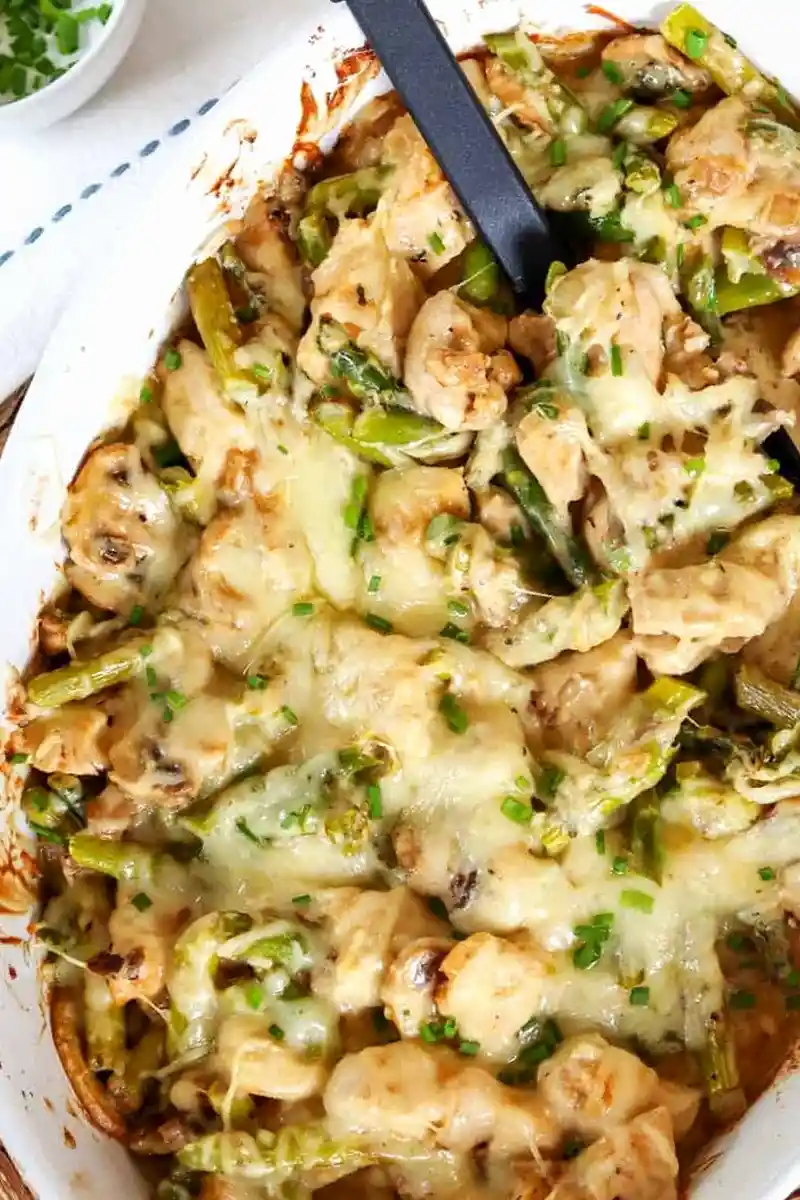
List of ingredients
- 4 tablespoons butter – used for searing the chicken and sautéing vegetables.
- 1½ pounds boneless skinless chicken breasts – cut into 1″ pieces for even cooking.
- 1 pound asparagus – cut into 1″ to 2″ pieces and steamed.
- ¼ cup onion – finely chopped to integrate into the sauce.
- 8 ounces mushrooms – sliced thinly for texture.
- ½ cup chicken broth – provides a savory base for the cream sauce.
- ¾ cup heavy cream – adds richness and thickness.
- ½ teaspoon kosher salt – enhances the overall flavor.
- ½ teaspoon pepper – adds a mild spicy note.
- ½ teaspoon dried thyme – provides an earthy herbal aroma.
- ¼ cup mayonnaise – helps emulsify the sauce for extra creaminess.
- 1 tablespoon dijon mustard – adds a tangy, sharp flavor profile.
- 1 tablespoon lemon juice – cuts through the richness of the cream and cheese.
- 1½ cups shredded gouda or swiss cheese – used for the main sauce and topping.
- ½ cup shredded parmesan cheese – reserve ¼ cup for the final topping.
step-by-step instructions
- Prep the Oven: Preheat your oven to 375 degrees Fahrenheit to ensure it is at the correct temperature before baking.
- Steam the Asparagus: Place the cut asparagus pieces in a microwave-safe dish with ¼ cup of water. Cover the dish and steam for 3 minutes or until tender, then drain the water and set the vegetable aside.
- Brown the Chicken: Melt the butter in a 12″ skillet over medium-high heat. Add the chicken pieces and cook for 3 to 4 minutes, turning them once they start to brown, and continue cooking for another 3 to 4 minutes until fully cooked.
- Assemble Base: Remove the cooked chicken from the skillet and place it into a greased casserole dish. Top the chicken with the steamed asparagus, then cover the dish to keep the ingredients warm.
- Sauté Vegetables: In the same skillet used for the chicken, add the chopped onions and sliced mushrooms. Sauté these ingredients over medium heat until they become tender.
- Prepare the Sauce: Reduce the heat to medium and whisk in the chicken broth, heavy cream, salt, pepper, thyme, dijon mustard, mayonnaise, and lemon juice. Bring the mixture to a gentle simmer.
- Thicken the Sauce: Cook the sauce while stirring frequently for 8 to 10 minutes until it reduces and begins to thicken. Once thickened, stir in the gouda or swiss cheese until melted.
- Final Bake: Pour the creamy cheese mixture over the chicken and asparagus in the casserole dish. Sprinkle the remaining parmesan and cheese on top, then bake for 30 minutes until the cheese is bubbly and the chicken is thoroughly heated.
Practical Preparation Tips
Cut Chicken into Uniform Pieces
Ensuring that the chicken breasts are cut into consistent 1-inch cubes is vital for even cooking. If the pieces vary significantly in size, smaller pieces may overcook and become dry while larger pieces remain undercooked. This uniformity allows every piece to brown at the same rate in the skillet.
Avoid Over-steaming Asparagus
The asparagus is steamed twice: once in the microwave and again during the final bake. To prevent the vegetable from becoming mushy, stop the microwave steaming as soon as the stalks are tender-crisp. This ensures they maintain a pleasant bite and a vibrant green color after the 30-minute oven process.
Use a Large Skillet for Searing
A 12-inch skillet is recommended to provide ample surface area for the chicken. Overcrowding the pan can lead to the meat releasing too much moisture, which causes the chicken to steam rather than sear. Searing the meat properly creates a golden crust that adds significant flavor to the finished dish.
Properly Grease the Baking Dish
Greasing your casserole dish with butter or non-stick spray prevents the cheese and cream sauce from sticking to the edges. This makes serving the portions easier and significantly reduces the amount of scrubbing required during cleanup. A ceramic or glass baking dish works best for even heat distribution.
Ingredient Substitutions
Alternative Green Vegetables
If asparagus is unavailable or not preferred, broccoli florets are an excellent substitute. Simply steam the broccoli for 3 to 4 minutes until tender-crisp before adding it to the casserole. Cauliflower or snap peas can also work, though they may require slightly different steaming times.
Using Chicken Thighs for More Moisture
While chicken breasts are standard for this recipe, boneless skinless chicken thighs offer a richer flavor and more moisture. Thighs are less likely to dry out during the final baking stage. If using thighs, trim excess fat before cutting them into 1-inch pieces.
Substituting Different Cheeses
If you cannot find gouda or swiss, gruyere is a sophisticated alternative that melts beautifully. Fontina or a mild provolone also provide a similar creamy consistency and salty flavor. Ensure the cheese is shredded finely to allow it to incorporate quickly into the sauce.
Replacing Heavy Cream
For a slightly lighter sauce, you can use half-and-half, although the sauce will be thinner and may require an extra 2 to 3 minutes of simmering. Coconut cream is a suitable plant-based alternative, though it will introduce a slight coconut flavor to the dijon and lemon profile.
Selecting the Right Mushrooms
White button mushrooms are the most common choice, but baby bella (cremini) mushrooms offer a deeper, earthier taste. For a more gourmet variation, oyster or shiitake mushrooms can be used, provided they are sliced thinly to match the texture of the other ingredients.
Flavor Variations
Adding Fresh Garlic for Depth
Incorporating two to three minced cloves of fresh garlic during the sautéing of the onions and mushrooms adds a pungent depth to the sauce. Add the garlic in the last minute of sautéing to prevent it from burning, which can create a bitter taste.
Enhancing with Fresh Herbs
While dried thyme is used in the sauce, garnishing the final dish with fresh parsley or chives adds a bright, fresh contrast. You can also stir in a tablespoon of fresh chopped thyme or rosemary during the sauce reduction phase for a more potent herbal flavor.
Increasing the Citrus Brightness
If you prefer a tangier sauce, add one teaspoon of fresh lemon zest along with the lemon juice. The zest contains essential oils that provide a more intense citrus aroma without adding extra acidity, which balances the richness of the heavy cream and gouda.
Adding a Spicy Kick
For those who enjoy heat, adding a pinch of red pepper flakes or a dash of cayenne pepper to the sauce mixture is recommended. This provides a subtle warmth that complements the sharp notes of the dijon mustard and the richness of the cheese.
Recommended Side Dishes
Low-Carb Vegetable Pairings
Since this casserole is rich and creamy, pairing it with a light vegetable side is ideal. Roasted cauliflower florets or riced cauliflower provide a low-carb alternative that complements the sauce. Steamed broccoli or sautéed spinach also work well to add more nutrients to the meal.
Fresh Salad Options
A crisp green salad with a light vinaigrette or a blue cheese dressing provides a refreshing contrast to the heavy cheese sauce. Use a mix of romaine, arugula, and cucumber to add crunch and acidity, which cleanses the palate between bites of the casserole.
Hearty Grains and Starches
To make the meal more filling, serve the casserole over a bed of mashed potatoes or steamed white rice. For a pasta-based option, wide egg noodles or penne are excellent choices as they can hold the thick cream sauce effectively.
Creative Mash Alternatives
Mashed cauliflower is a great keto-friendly substitute for traditional potatoes. Blend steamed cauliflower with a small amount of butter and salt until smooth. This provides a creamy base that mirrors the texture of the casserole sauce without adding significant carbohydrates.
Storage and Freezing Guide
Refrigerator Storage
Once the casserole has cooled to room temperature, transfer any leftovers into an airtight container. Store the dish in the refrigerator for up to 4 days. Ensure the container is sealed tightly to prevent the cream sauce from absorbing odors from other foods in the fridge.
Freezing Instructions
This dish can be frozen for up to 3 months. Place the cooled casserole in a freezer-safe container or wrap individual portions in foil and then plastic wrap. Be aware that dairy-based sauces can sometimes separate during the freezing and thawing process.
Thawing Process
The best way to thaw the frozen casserole is to place it in the refrigerator overnight. This slow thawing process helps maintain the integrity of the chicken and vegetables. Avoid thawing the dish at room temperature to prevent bacterial growth in the dairy sauce.
Reheating Instructions
Oven Reheating for Texture
To maintain the best texture and a bubbly cheese top, reheat the casserole in the oven at 325 degrees Fahrenheit. Cover the dish with foil to prevent the top from burning, and heat until the center is hot. Remove the foil for the last 5 minutes to crisp the cheese.
Quick Microwave Reheating
For individual portions, use a microwave on medium power. Heat in 1-minute intervals, stirring gently in between, to ensure the sauce heats evenly. This method is faster but may result in a softer cheese topping compared to oven reheating.
Restoring Sauce Moisture
Dairy sauces often thicken or separate when cooled and reheated. To restore the original creamy consistency, add a tablespoon of heavy cream or chicken broth before reheating. This helps the sauce emulsify again and prevents the chicken from drying out.
Troubleshooting Common Issues
Addressing a Thin Sauce
If the sauce is too thin after simmering, continue to cook it over medium heat for an additional 3 to 5 minutes. Constant stirring is necessary to prevent the bottom from scorching. The sauce should coat the back of a spoon before you stir in the cheese.
Fixing a Sauce That is Too Thick
If the sauce becomes overly thick or paste-like, whisk in a small amount of chicken broth or water one tablespoon at a time. Do this over low heat until the desired consistency is reached. This usually happens if the sauce is reduced for too long.
Preventing Dry Chicken
To avoid dry chicken, ensure you do not overcook the pieces during the initial searing phase. The chicken will finish cooking during the 30-minute bake in the oven. Remove the chicken from the skillet as soon as the outside is browned and the center is barely opaque.
Handling Mushy Asparagus
If the asparagus turns out too soft, reduce the initial microwave steaming time by 30 to 60 seconds. Alternatively, you can blanch the asparagus in boiling water for 2 minutes and then plunge it into an ice bath to stop the cooking process before adding it to the dish.
Frequently Asked Questions
Can I make this as a one-pan meal?
Yes, you can use an oven-proof skillet to save on cleanup. Sauté the chicken and vegetables in the skillet, prepare the sauce in the same pan, and then sprinkle the cheese on top before placing the entire skillet directly into the oven to bake.
Is this recipe gluten-free?
This recipe is naturally gluten-free as long as the chicken broth and dijon mustard you use are certified gluten-free. Always check the labels of processed ingredients to ensure there are no hidden wheat-based thickeners or additives.
How do I prevent the cheese from burning?
If the cheese begins to brown too quickly during the 30-minute bake, loosely cover the dish with a piece of aluminum foil. This reflects some of the heat and allows the chicken and sauce to heat through without over-browning the topping.
Can I use a different type of mustard?
While dijon is recommended for its sharp flavor, whole grain mustard can be used for a more textured sauce. Yellow mustard is not recommended as it lacks the depth and complexity required to balance the heavy cream and cheese.
Print
Creamy Chicken and Asparagus Casserole
- Total Time: 50 minutes
- Yield: 6 servings 1x
- Diet: Keto, Low Carb, Gluten-Free
Description
An easy and very tasty casserole dinner! With tender chicken and asparagus in a cheesy dijon and lemon cream sauce – you are gonna love it.
Ingredients
- 4 tablespoons butter
- 1½ pounds boneless skinless chicken breasts (cut into 1″ pieces)
- 1 pound asparagus (cut into 1″ to 2″ pieces then steamed)
- ¼ cup onion (chopped)
- 8 ounces mushrooms (sliced)
- ½ cup chicken broth
- ¾ cup heavy cream
- ½ teaspoon kosher salt
- ½ teaspoon pepper
- ½ teaspoon dried thyme
- ¼ cup mayonnaise (avocado oil mayonnaise)
- 1 tablespoon dijon mustard
- 1 tablespoon lemon juice
- 1½ cups shredded gouda or swiss cheese
- ½ cup shredded parmesan cheese
Instructions
- Step: Preheat oven to 375 degrees.
- Step: Place asparagus pieces in a microwave-safe dish with ¼ cup water. Cover and steam for 3 minutes or until tender. Drain and set aside.
- Step: In a 12″ skillet, melt butter over medium-high heat. Add chicken cook for 3 to 4 minutes, turn after it starts to turn brown. Continue cooking until done, about 3 to 4 more minutes.
- Step: Remove chicken and place in a greased casserole dish. Top with the steamed asparagus. Cover and keep warm.
- Step: Add onions and mushrooms to the skillet. Sautee until tender.
- Step: Reduce heat to medium and add broth, cream, salt, pepper, thyme, dijon, mayonnaise, and lemon juice. Whisk together and bring to a simmer.
- Step: Stirring frequently, cook until sauce is reduced and starts to thicken about 8 to 10 minutes. Stir in the cheese.
- Step: Pour the mixture over the casserole. Sprinkle the top with the remaining cheeses. Bake for 30 minutes until bubbly and chicken is done.
Notes
You can make this a one-pan casserole by using an ovenproof skillet. Broccoli can be substituted for asparagus.
- Prep Time: 20 minutes
- Cook Time: 30 minutes
- Category: chicken recipes
- Method: Baking
- Cuisine: American
Nutrition
- Serving Size: 1 serving
- Calories: 543 kcal
- Sugar: 4 g
- Sodium: 1026 mg
- Fat: 34 g
- Saturated Fat: 15 g
- Unsaturated Fat: 19 g
- Trans Fat: 0 g
- Carbohydrates: 12 g
- Fiber: 3 g
- Protein: 49 g
- Cholesterol: 173 mg