This Mongolian Chicken features thinly sliced breast meat seared until crispy and coated in a savory-sweet glaze. It is a fast, high-protein meal that mimics the flavor of restaurant-style stir fry.
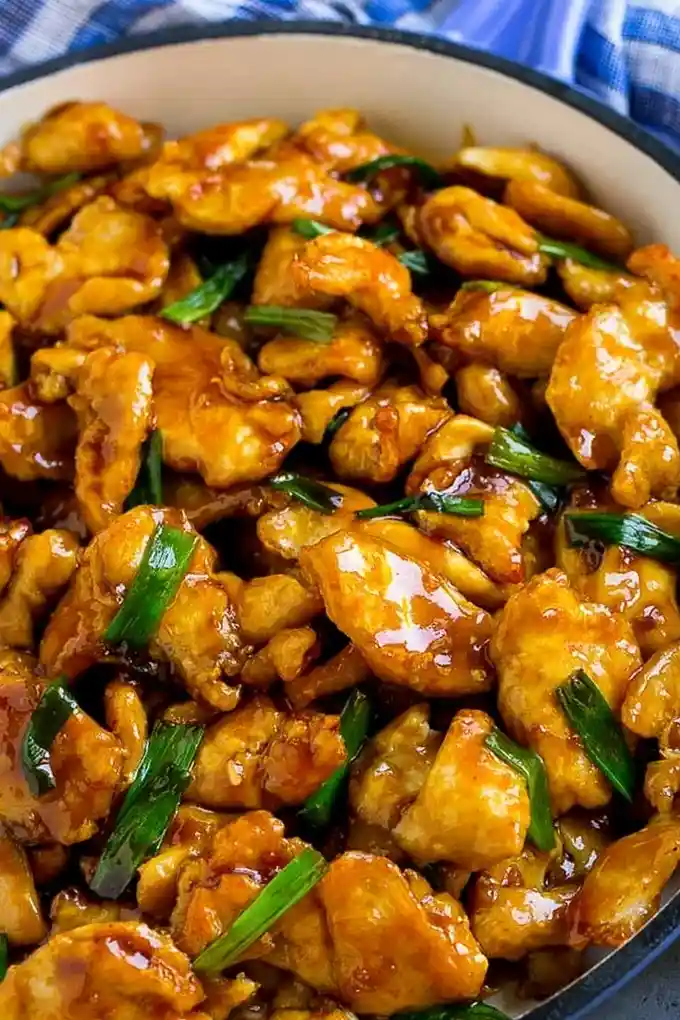
List of ingredients
- 1 1/4 pounds boneless skinless chicken breast, thinly sliced – ensure slices are uniform for even cooking.
- 1/4 cup + 2 teaspoons cornstarch, divided – used for dredging and thickening the sauce.
- 3 tablespoons vegetable oil – a neutral oil with a high smoke point is best.
- 1 1/2 teaspoons minced garlic – fresh garlic provides the best aromatic base.
- 1 teaspoon minced ginger – fresh ginger adds a sharp, clean heat.
- 1 teaspoon toasted sesame oil – adds a distinct nutty aroma to the glaze.
- 1/2 cup low sodium soy sauce – provides the salty base for the sauce.
- 1/3 cup water – thins the sauce to the correct consistency.
- 1/2 cup dark brown sugar – creates the deep color and sweetness.
- 1/2 cup green onions, cut into 1 inch pieces – adds freshness and color.
- Salt and pepper to taste – used for seasoning the raw chicken.
step-by-step instructions
- Coat the chicken: Place the sliced chicken and 1/4 cup of cornstarch in a resealable plastic bag. Shake well until every piece is evenly coated in cornstarch.
- Heat the pan: Pour vegetable oil into a large pan or wok and heat over high heat until the oil begins to shimmer.
- Sear the meat: Add the chicken in a single layer to avoid steaming. Season with salt and pepper, then cook for 3-4 minutes per side until the edges are browned and crispy. Work in batches if the pan is too small.
- Drain the chicken: Remove the browned chicken from the pan and set it on a plate lined with paper towels to remove excess oil.
- Sauté aromatics: In the same pan, add minced garlic and ginger. Stir-fry for about 30 seconds until fragrant but not burnt.
- Simmer the sauce: Stir in the soy sauce, toasted sesame oil, water, and brown sugar. Bring the mixture to a simmer over medium-high heat.
- Thicken the glaze: In a small bowl, whisk together 2 teaspoons of cornstarch and 1 tablespoon of cold water to make a slurry. Pour this slurry into the simmering sauce and boil for 30-60 seconds until the sauce thickens.
- Combine and serve: Return the crispy chicken and the sliced green onions to the pan. Toss quickly to coat everything in the glaze and serve immediately over rice.
Meat Preparation Techniques
Partially Freeze Chicken for Precision Slicing
Place chicken breasts in the freezer for 20 to 30 minutes before slicing. This firms up the meat, allowing you to cut very thin, consistent strips without the meat sliding. Thin slices increase the surface area for the cornstarch and sauce to adhere to.
Slicing Against the Grain
Identify the direction of the muscle fibers in the chicken breast and slice perpendicular to them. This breaks up the tough fibers, resulting in a more tender bite after searing. Slices should be roughly 1/4 inch thick for optimal texture.
Ensuring a Dry Surface Before Dredging
Pat the chicken dry with paper towels before adding it to the cornstarch bag. Excess moisture can cause the cornstarch to clump or become gummy. A dry surface ensures a light, crispy coating that browns efficiently in hot oil.
Sauce Customization and Substitutions
Using Chicken Thighs for Richer Flavor
Substitute chicken breasts with boneless, skinless chicken thighs for a juicier result. Thighs have a higher fat content, which prevents them from drying out during the high-heat searing process. Follow the same dredging and cooking steps as the breast meat.
Swapping Chicken for Shrimp
Replace the chicken with large peeled and deveined shrimp for a seafood version. Dredge the shrimp in cornstarch just like the chicken, but reduce the searing time to 1-2 minutes per side. Add them back to the sauce at the very end to avoid overcooking.
Honey as a Brown Sugar Alternative
Use honey instead of brown sugar for a slightly different sweetness and a glossier finish. Honey may cause the sauce to thicken faster, so keep a tablespoon of water nearby to adjust the consistency. The flavor profile remains very similar to the original version.
Coconut Aminos for Lower Sodium
Replace soy sauce with coconut aminos to reduce sodium levels or avoid soy. Coconut aminos are naturally sweeter than soy sauce, so you may want to reduce the brown sugar by one tablespoon. The result is a slightly milder, earthier glaze.
Adding Vegetable Variations
Incorporating Fresh Broccoli
Add small broccoli florets to the pan after the garlic and ginger have cooked. Stir-fry them for 2-3 minutes before adding the sauce liquids. This ensures the broccoli is tender-crisp and well-coated in the glaze.
Using Sliced Carrots for Texture
Slice carrots into thin coins or matchsticks to add a crunch to the dish. Add them at the same time as the broccoli or slightly before, as carrots take longer to soften. They add a natural sweetness that complements the brown sugar.
Adding Sliced Zucchini
Sauté sliced zucchini for 2 minutes before adding the sauce. Avoid overcooking the zucchini to prevent it from releasing too much water, which could thin out the glaze. Zucchini adds a fresh, mild flavor and a soft texture.
Integrating Red Bell Peppers
Slice red bell peppers into thin strips and stir-fry them with the aromatics. The peppers provide a bright color and a sweet, peppery taste. They should be cooked just until they soften slightly but still retain their shape.
Using Water Chestnuts for Crunch
Add canned, drained water chestnuts during the final toss with the chicken and green onions. Since they are already cooked, they only need to be heated through. They provide a distinct, crisp texture that contrasts with the tender meat.
Serving and Pairing Suggestions
Serving Over Steamed Jasmine Rice
Steam jasmine rice to serve as a neutral base that absorbs the extra Mongolian sauce. The floral aroma of jasmine rice pairs well with the ginger and garlic in the glaze. Scoop a generous portion of rice and top with the chicken.
Cauliflower Rice for Low Carb Options
Pulse cauliflower in a food processor and sauté it in a pan with a small amount of oil until tender. This provides a low-carbohydrate alternative to traditional rice. It maintains the bulk of the meal while reducing the glycemic load.
Using Zucchini Noodles as a Base
Spiralize zucchini into noodles and lightly sauté them for 1-2 minutes. Place the Mongolian chicken directly on top of the noodles. The juice from the sauce acts as a dressing for the zucchini strands.
Pairing with Vegetable Chow Mein
Serve the chicken alongside stir-fried chow mein noodles mixed with shredded cabbage and carrots. This creates a heartier, restaurant-style platter. The savory noodles complement the sweetness of the Mongolian glaze.
Storage and Reheating Guidelines
Refrigerator Storage Duration
Store leftovers in an airtight container in the refrigerator for up to 3 to 4 days. Keep the rice and chicken in separate containers if possible to prevent the rice from absorbing all the sauce. Ensure the container is fully sealed to maintain freshness.
Reheating in a Skillet
For the best texture, reheat the chicken in a skillet over medium heat with a teaspoon of oil. This helps recapture some of the crispness lost during refrigeration. Stir occasionally until the sauce bubbles and the meat is heated through.
Microwave Reheating Method
Place the chicken in a microwave-safe dish and cover it with a damp paper towel. Heat in 30-second intervals, stirring in between, to avoid overcooking the meat. Be aware that the chicken will lose its crispness and become softer when microwaved.
Cooking Troubleshooting
Fixing a Sauce That is Too Thin
If the sauce has not thickened enough after boiling, mix another teaspoon of cornstarch with a teaspoon of cold water. Stir this additional slurry into the simmering sauce and boil for another 30 seconds. Remove from heat immediately once the desired thickness is reached.
Preventing Burned Garlic and Ginger
Ensure the pan is not smoking excessively before adding the garlic and ginger. If the oil is too hot, the aromatics will burn in seconds, creating a bitter taste. If necessary, lower the heat slightly before adding the minced ingredients.
Avoiding Tough or Overcooked Chicken
Do not leave the chicken in the pan once it has reached a golden brown color. Overcooking chicken breast leads to a rubbery, dry texture. Remove the meat immediately and only return it to the pan for the final toss in the sauce.
Frequently Asked Questions
Can I use corn flour instead of cornstarch?
Yes, corn flour can be used as a substitute, though the thickening power may vary slightly. Ensure you use the same measurements and follow the slurry process to avoid lumps in your sauce.
How do I make the sauce spicier?
Add a teaspoon of sriracha, red pepper flakes, or a finely diced Thai bird’s eye chili during the aromatic sauté step. This introduces a heat element that balances the sweetness of the brown sugar.
Is this recipe freezer friendly?
The cooked chicken and sauce can be frozen for up to two months. However, the texture of the cornstarch coating will change, and the chicken will no longer be crispy after thawing and reheating.
What is the best oil for high-heat stir frying?
Vegetable oil, canola oil, or peanut oil are ideal because they have high smoke points. Avoid using extra virgin olive oil or butter, as they will burn at the temperatures required to sear the chicken.
Print
Crispy Mongolian Chicken
- Total Time: 30 minutes
- Yield: 4 servings 1x
- Diet: General
Description
This Mongolian chicken is crispy slices of chicken breast stir fried in a sweet and savory sauce. A restaurant favorite that tastes even better when you make it at home!
Ingredients
- 1 1/4 pounds boneless skinless chicken breast, thinly sliced
- 1/4 cup + 2 teaspoons cornstarch, divided use
- 3 tablespoons vegetable oil
- 1 1/2 teaspoons minced garlic
- 1 teaspoon minced ginger
- 1 teaspoon toasted sesame oil
- 1/2 cup low sodium soy sauce
- 1/3 cup water
- 1/2 cup dark brown sugar
- 1/2 cup green onions, cut into 1 inch pieces
- salt and pepper to taste
Instructions
- Step 1: Place the chicken and 1/4 cup cornstarch in a resealable plastic bag, shake to coat evenly.
- Step 2: Heat the vegetable oil in a large pan over high heat.
- Step 3: Add the chicken to the pan in a single layer and season to taste with salt and pepper.
- Step 4: Cook for 3-4 minutes per side or until browned. Cook in multiple batches if needed.
- Step 5: Remove the chicken from the pan and place on a plate lined with paper towels.
- Step 6: Add the garlic and ginger to the pan and cook for 30 seconds. Add the soy sauce, sesame oil, water and brown sugar to the pan and bring to a simmer.
- Step 7: Mix the 2 teaspoons of cornstarch with 1 tablespoon of cold water. Add the cornstarch to the sauce and bring to a boil; boil for 30-60 seconds until just thickened.
- Step 8: Add the chicken and green onions to the pan and toss to coat with the sauce.
Notes
Partially freeze chicken breasts to make them easier to slice. You can substitute chicken breast with chicken thighs or shrimp. Optional vegetable additions include zucchini, water chestnuts, carrots, broccoli, mushrooms, or red peppers. Serve over steamed rice, zucchini noodles, cauliflower rice, or chow mein.
- Prep Time: 10 minutes
- Cook Time: 20 minutes
- Category: Main
- Method: Stir Fry
- Cuisine: Asian
Nutrition
- Serving Size: 1 serving
- Calories: 452 kcal
- Sugar: 27 g
- Sodium: 739 mg
- Fat: 15 g
- Saturated Fat: 9 g
- Unsaturated Fat: 6 g
- Trans Fat: 0 g
- Carbohydrates: 46 g
- Fiber: 2 g
- Protein: 32 g
- Cholesterol: 90 mg