This bright and refreshing pasta dish combines sautéed zucchini with a velvety lemon butter sauce. It is a fast, nutritious meal that highlights the fresh flavors of summer produce.
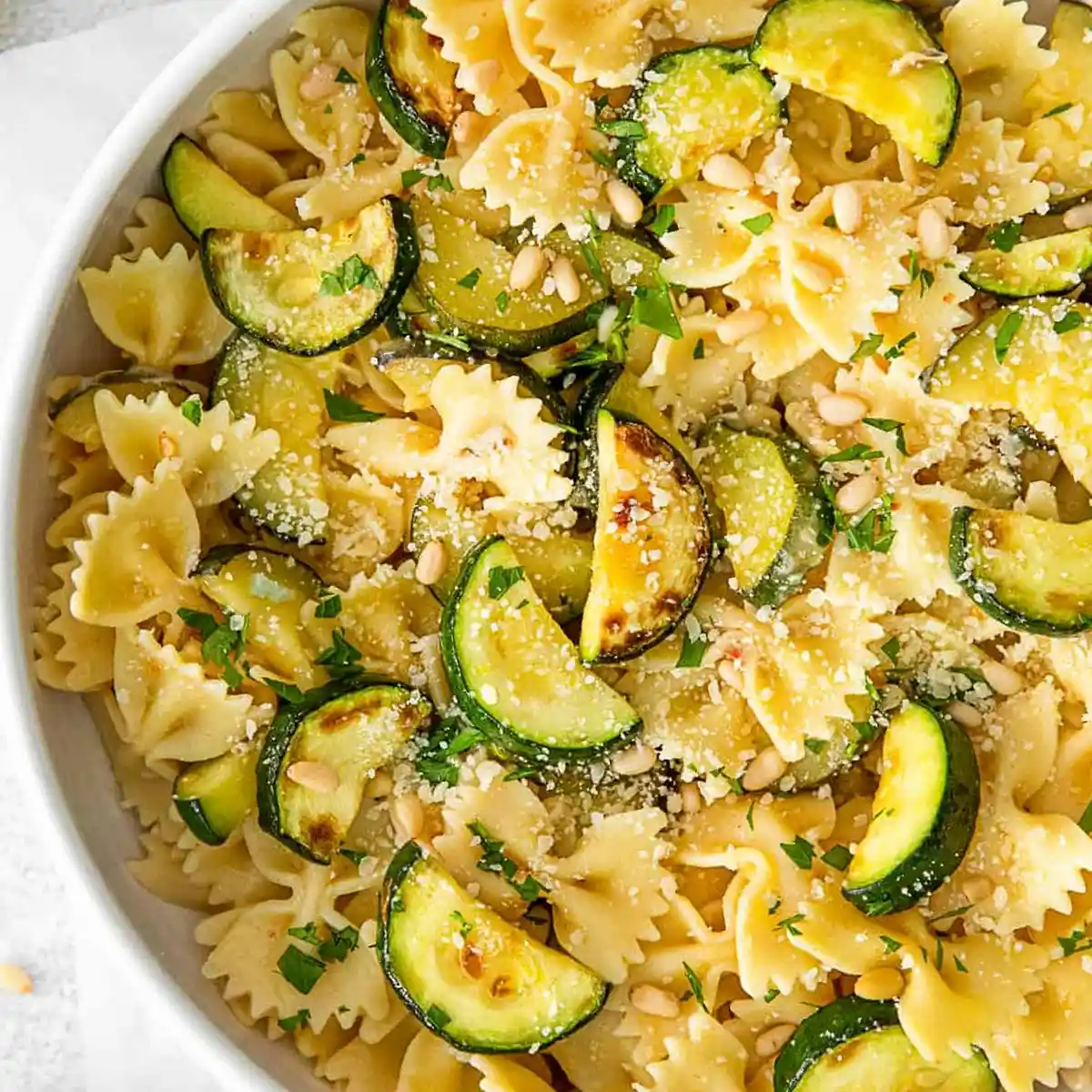
List of ingredients
- 1 pound bowtie pasta – provides a great shape for catching the sauce.
- 2 tablespoons olive oil – used for searing the zucchini to a golden brown.
- 2 cups zucchini, cut into 1/4 inch thick half moons – the primary vegetable component.
- 2 cloves garlic, minced – adds a pungent, aromatic base.
- 1 teaspoon fresh thyme, minced – provides an earthy, herbaceous quality.
- 1/2 teaspoon crushed red pepper – adds a customizable level of spicy heat.
- 2 tablespoons butter – creates a rich and creamy emulsion for the sauce.
- 1/2 lemon, juiced – adds a bright, citrusy acidity to balance the fats.
- 1/2 cup grated parmesan cheese (microbial rennet) – provides a salty, umami finish.
- Fresh parsley, minced – used for a fresh, colorful garnish.
- Toasted pine nuts – adds a buttery crunch and nutty flavor.
step-by-step instructions
- Boil the Pasta: Bring a large pot of heavily salted water to a boil. Cook the bowtie pasta until it reaches an al dente texture according to the package instructions. Reserve 1 cup of the starchy pasta water before draining the noodles.
- Sear the Zucchini: Heat a large skillet over medium-high heat and add the olive oil. Once the oil is hot, add the zucchini half moons. Cook for 2 minutes without stirring, then stir and cook for another 2 minutes to achieve a hard sear.
- Add Aromatics: Stir in the minced garlic, fresh thyme, and crushed red pepper flakes. Cook these for one additional minute until the garlic is fragrant but not browned.
- Create the Sauce Base: Add the butter, lemon juice, and 1/4 cup of the reserved pasta water to the skillet. Stir continuously until the butter has completely melted and combined.
- Combine and Season: Stir in 1/4 cup of the grated parmesan cheese until melted. Add the cooked bowtie pasta to the skillet and toss thoroughly to coat. Season with salt and pepper to taste.
- Adjust Consistency: If the sauce appears too thin or not creamy enough, stir in another small splash of the reserved pasta water.
- Garnish and Serve: Plate the pasta and top with the remaining grated parmesan, minced fresh parsley, and toasted pine nuts. Serve immediately.
Zucchini Selection and Preparation
Choosing Firm Zucchini
Select medium-sized zucchini that feel heavy for their size and have firm skins. Avoid oversized zucchini as they tend to have larger seeds and a softer, more watery texture. Firm zucchini hold their shape better during the searing process.
Cutting Uniform Half Moons
Slice the zucchini lengthwise first and then cut across into 1/4 inch thick pieces. Uniform thickness ensures that every piece cooks at the same rate. This prevents some pieces from becoming mushy while others remain raw.
Managing Pan Crowding
Avoid adding too many zucchini slices to the skillet at once. If the pan is overcrowded, the vegetables will steam in their own moisture rather than searing. Work in batches if necessary to maintain a high surface temperature.
Pasta Cooking Techniques
The Utility of Bowtie Pasta
Farfalle, or bowtie pasta, is ideal for this recipe because of its shape. The center pinch and wide wings create pockets that trap the lemon butter sauce and small pieces of garlic and thyme. This ensures a balanced flavor in every bite.
Perfecting Al Dente Texture
Start tasting the pasta two minutes before the package directions suggest. Al dente pasta should have a slight resistance in the center. This prevents the noodles from overcooking when they are tossed in the hot skillet with the sauce.
The Importance of Salting Water
Use a generous amount of salt in the boiling water to season the pasta from the inside out. Since the pasta does not sit in a heavy sauce, this internal seasoning is critical for the overall flavor profile of the dish.
Flavor Enhancement Secrets
The Science of Pasta Water Emulsion
Reserved pasta water contains starch that acts as a bridge between the fat in the butter and the acidity of the lemon juice. When stirred into the pan, it helps the sauce cling to the noodles. This creates a cohesive glaze rather than a pool of oil at the bottom.
Toasting Pine Nuts Carefully
Place pine nuts in a small pan over medium-low heat without any oil. Stir them constantly for a few minutes until they smell fragrant and turn a light golden brown. Because of their high oil content, they can burn in seconds, so remain attentive.
Balancing Acidity with Fresh Lemon
Always use fresh lemon juice rather than bottled concentrates for this recipe. Fresh juice provides a bright, clean acidity that cuts through the richness of the butter and parmesan. This contrast is what makes the dish feel light and summery.
Layering Aromatics Properly
Add the garlic and thyme only after the zucchini has been seared. Garlic burns quickly at high temperatures, which can introduce a bitter taste to the sauce. Adding them at the end preserves their delicate flavor.
Protein Pairing Options
Adding Pan-Seared Shrimp
Sauté peeled and deveined shrimp in the skillet before adding the zucchini. Once they turn pink and opaque, remove them from the pan and set them aside. Fold the shrimp back into the pasta at the very end to avoid overcooking them.
Incorporating Grilled Chicken
Use pre-cooked rotisserie chicken or grilled chicken breasts for a fast protein boost. Slice the chicken into bite-sized pieces and toss them in during the final step with the pasta. The lemon butter sauce complements the savory flavor of the chicken.
Using Pressed Tofu
For a plant-based protein, use extra-firm tofu that has been pressed to remove excess water. Cube the tofu and brown it in olive oil until crispy before starting the zucchini. This adds a hearty texture and absorbs the lemon garlic flavors.
Adding Canned Chickpeas
Rinse and drain a can of chickpeas and add them to the skillet along with the garlic. Sautéing them for a few minutes allows the chickpeas to develop a slight crust. This provides a nutty flavor and additional fiber to the meal.
Ingredient Substitutions
Alternative Herb Choices
If fresh thyme is unavailable, fresh basil or oregano can be used. Basil should be added at the very end to prevent wilting and browning. Oregano provides a more Mediterranean flavor profile that pairs well with parmesan.
Different Pasta Shapes
While bowtie pasta is recommended, fusilli or penne are excellent alternatives. These shapes also have ridges or holes that hold onto the emulsified sauce. Avoid very thin pastas like spaghetti, as they may not support the zucchini pieces as well.
Substituting Hard Cheeses
If you do not have parmesan, Pecorino Romano is a great substitute for a saltier, sharper taste. For a dairy-free version, use nutritional yeast or a plant-based parmesan alternative. Ensure the substitute is finely grated to melt smoothly into the sauce.
Oil Alternatives for Sautéing
If you prefer not to use olive oil, avocado oil or grapeseed oil are suitable alternatives. These oils have high smoke points, which is essential for achieving the hard sear on the zucchini. Avoid using butter for the initial sear as it can burn at high heat.
Storage and Reheating Guidelines
Airtight Storage Methods
Place leftover pasta in a glass airtight container once it has cooled slightly. This prevents the pasta from absorbing too much moisture and becoming mushy. Store the container in the refrigerator for up to three days.
Effective Microwave Reheating
Transfer the pasta to a microwave-safe dish and cover it loosely with a damp paper towel. This creates a small amount of steam that prevents the noodles from drying out. Heat in 1-minute intervals, stirring in between until warmed through.
Stovetop Reheating Techniques
For the best texture, reheat the pasta in a skillet over medium heat. Add a small tablespoon of water or butter to loosen the sauce. Toss gently to avoid breaking the bowtie pasta shapes.
Troubleshooting Common Issues
Preventing Zucchini Sogginess
Ensure the skillet is very hot before adding the zucchini. Stirring too frequently releases moisture and lowers the pan temperature, which leads to steaming. Let the zucchini sit undisturbed for the first two minutes to lock in the texture.
Correcting a Watery Sauce
If the sauce is too thin, stir in an extra tablespoon of grated parmesan cheese. The cheese acts as a thickener. If it is still too thin, simmer the sauce for an extra minute before adding the pasta to reduce the liquid.
Managing Garlic Bitterness
If the garlic turns dark brown or black, it will taste bitter. If this happens, it is best to wipe the pan and start the aromatic step over. Always keep the heat at a medium level once the garlic is added.
Balancing Excessive Acidity
If the lemon juice makes the dish too tart, add an extra small knob of butter. The fat in the butter coats the palate and neutralizes the sharp acidity. A tiny pinch of sugar can also balance a very acidic lemon.
Frequently Asked Questions
Can I use zucchini spirals instead of half moons?
You can use zucchini spirals, but they cook much faster than half moons. Add them during the final two minutes of cooking to prevent them from disintegrating into the sauce.
How do I keep the pasta from sticking together?
Toss the pasta with the sauce immediately after draining. If you must wait, drizzle a small amount of olive oil over the drained noodles to keep them separate until they hit the skillet.
What is the best substitute for pine nuts?
Slivered almonds or chopped walnuts are excellent alternatives. Toast them in the same manner as pine nuts to ensure they provide the necessary crunch and depth of flavor.
Can this be made as a one-pot meal?
It is not recommended to cook the pasta in the same pan as the zucchini to avoid overcooking the vegetables. However, you can cook the pasta and then finish it in the skillet to keep the cleanup minimal.
Print
Zesty Lemon Zucchini Pasta
- Total Time: 25 minutes
- Yield: 4 servings 1x
- Diet: Vegetarian
Description
This lemon zucchini pasta has adorable bowtie noodles and sweet zucchini, mixed with earthy garlic and fresh lemon for the perfect summertime supper!
Ingredients
- 1 pound bowtie pasta
- 2 tablespoons olive oil
- 2 cups zucchini (cut into ¼ inch thick half moons)
- 2 cloves garlic (minced)
- 1 teaspoon fresh thyme (minced)
- ½ teaspoon crushed red pepper
- 2 tablespoons butter
- ½ lemon (juiced)
- ½ cup grated microbial-rennet parmesan cheese
- Fresh parsley (minced, for topping)
- Toasted pine nuts (for topping)
Instructions
- Boil: Bring a large pot of very salty water to a boil. Cook the bowtie pasta until al dente, according to the package directions. Before draining, reserve 1 cup of starchy pasta water.
- Heat Oil: Heat a large skillet over medium-high heat and add the olive oil.
- Sear Zucchini: When the oil is hot, add the zucchini. Cook the zucchini for 2 minutes, then stir and cook for an additional 2 minutes.
- Aromatics: Next add the garlic, thyme, and red pepper flakes. Stir and cook for an additional minute.
- Emulsify: Next add the butter, lemon juice, and ¼ cup of reserved pasta water. Stir until the butter has melted.
- Combine: Next, add ¼ cup of microbial-rennet parmesan cheese and stir it into the sauce. Add the pasta and toss to combine. Season with salt and pepper, to taste.
- Adjust: If the sauce becomes too thin, add another splash of reserved pasta water.
- Serve: Serve the pasta with the remaining grated microbial-rennet parmesan, fresh chopped parsley, and toasted pine nuts.
Notes
Store any leftovers in an airtight container in the fridge for up to three days.
- Prep Time: 10 minutes
- Cook Time: 15 minutes
- Category: Pasta
- Method: Sautéing
- Cuisine: American
Nutrition
- Serving Size: 1 serving
- Calories: 603 kcal
- Sugar: 5 g
- Sodium: 280 mg
- Fat: 18 g
- Saturated Fat: 7 g
- Unsaturated Fat: 11 g
- Trans Fat: 0.2 g
- Carbohydrates: 90 g
- Fiber: 5 g
- Protein: 20 g
- Cholesterol: 26 mg