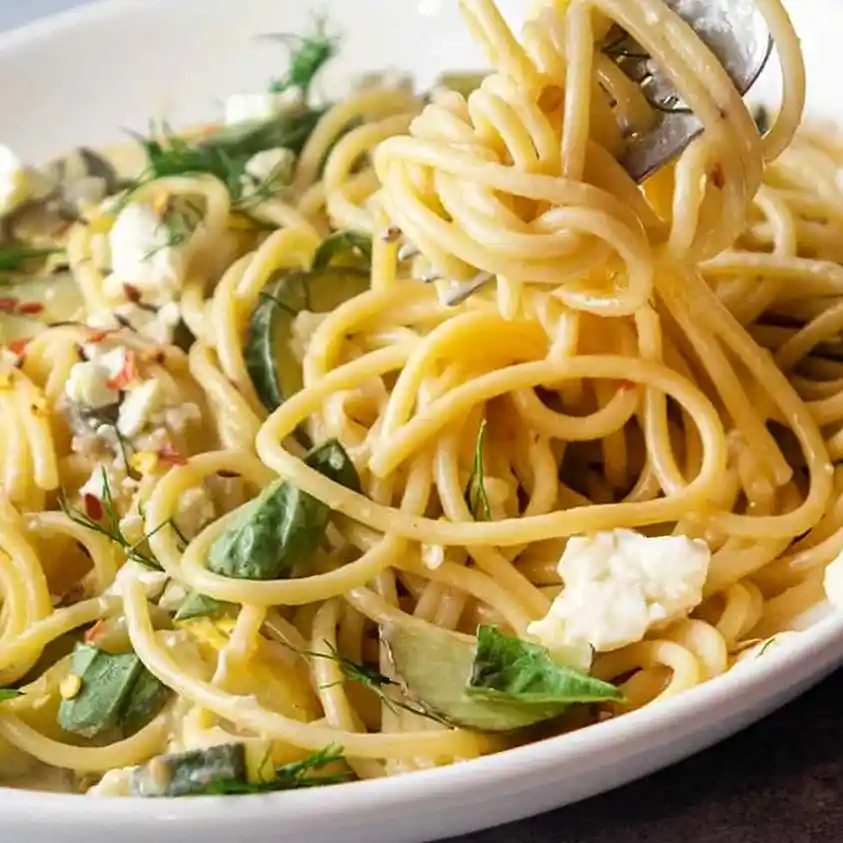
This pasta dish combines bright citrus notes with sautéed zucchini for a light yet satisfying meal. It is a practical choice for a quick dinner that emphasizes fresh produce and pantry staples.
List of ingredients
- 1 lemon – thinly sliced and seeds removed
- 3 tablespoons olive oil – used for sautéing aromatics
- 2 shallots – sliced thinly
- 2 cloves garlic – smashed and peeled
- 1 1/2 teaspoon kosher salt – divided for pasta water and vegetables
- 1 teaspoon anchovy paste – provides a salty, umami depth
- 1/4 cup capers – drained
- 1/2 teaspoon red pepper flakes – for a hint of heat
- 4 small zucchini – about 2 pounds total, halved and sliced 1/3 inch
- 1/2 pound pasta – such as Spaghetti Chittara or Vermicelli Lunghi
- 1/2 cup freshly grated parmesan cheese – use a microbial-rennet variety
- 1/2 cup fresh dill – roughly chopped
- 1/2 cup fresh basil – roughly chopped or torn
- 1 cup crumbled feta or goat cheese – use a microbial-rennet variety
step-by-step instructions
- Blanch the Lemons: Bring a large pot of water to a boil over high heat and season generously with salt. Add the sliced lemons and blanch for 30 seconds. Use tongs to remove the lemons and place them on a paper towel lined plate to drain and dry well.
- Sauté Aromatics: Heat a large skillet over medium-high heat. Add the olive oil and heat for 30 seconds. Add the sliced shallots and garlic, season with 1/2 teaspoon salt, and cook for about 2 minutes, stirring often until fragrant and slightly browned.
- Build the Flavor Base: Stir in the anchovy paste, capers, red pepper flakes, and the blanched lemon slices. Cook for another 2 minutes, stirring occasionally to dissolve the anchovy paste and allow the lemons to brown.
- Cook the Zucchini: Add the sliced zucchini and the remaining salt to the skillet. Cook on medium-high for 10 minutes, stirring occasionally, until some pieces are deep brown and others remain al dente.
- Boil the Pasta: While the zucchini cooks, add the pasta to the boiling water. Cook for 2 minutes less than the package directions, which is typically around 8 minutes for most spaghetti varieties.
- Deglaze and Combine: Pour 1/3 cup of the starchy pasta water into the zucchini skillet and stir to deglaze the pan. Use tongs to transfer the pasta directly from the water into the zucchini skillet.
- Emulsify the Sauce: Sprinkle the parmesan cheese over the pasta and toss well. The softened zucchini and cheese will combine with the pasta water to create a silky coating. Add another 1/2 cup of pasta water if the sauce is too thick.
- Final Touch: Top the finished pasta with fresh dill, basil, and crumbled feta or goat cheese before serving immediately.
Zucchini Selection and Preparation
Choosing the Right Size Zucchini
Select small to medium zucchini rather than oversized ones. Smaller zucchini have a firmer texture and fewer seeds, which prevents the dish from becoming too watery during the sautéing process.
Precision Slicing for Even Cooking
Cut the zucchini into 1/3 inch slices to ensure a balance between soft and al dente textures. Consistent thickness allows the zucchini to brown evenly in the skillet without some pieces overcooking while others remain raw.
Managing Excess Moisture
If the zucchini seems particularly watery, pat the slices dry with a paper towel before adding them to the pan. This helps the zucchini sear and brown properly instead of steaming in its own juices.
Pasta Pairing and Cooking Tips
Selecting the Ideal Pasta Shape
Long, thin noodles like Spaghetti Chitarra or Vermicelli Lunghi work best because they provide a high surface area for the zucchini and lemon sauce to cling to. These shapes integrate well with the sliced zucchini pieces.
The Importance of Under-boiling
Cook the pasta for 2 minutes less than the package instructions to ensure it finishes cooking in the skillet. This process allows the noodles to absorb the flavors of the sauce and prevents them from becoming mushy.
Utilizing Starchy Pasta Water
Save a cup of the boiling pasta water before draining. The starch in the water acts as a binder, helping the parmesan cheese and olive oil emulsify into a smooth, cohesive sauce that coats the pasta.
Optimizing Flavor Profiles
Working with Anchovy Paste
Anchovy paste dissolves quickly into hot oil, providing a savory base without a strong fishy taste in the final dish. Ensure it is fully dissolved during the sauté step to evenly distribute the umami flavor.
Selecting the Best Capers
Use capers that are packed in salt or brine, ensuring they are well-drained before adding them to the pan. These add a sharp, salty contrast to the sweetness of the sautéed shallots and zucchini.
Maximizing Lemon Intensity
Blanching the lemon slices reduces their raw bitterness and softens the rind. Searing them in the skillet further concentrates the citrus oils, adding a deep, caramelized lemon flavor to the oil.
Fresh Herb Application
Add the dill and basil at the very end of the cooking process. High heat can cause fresh herbs to lose their vibrant color and delicate aroma, so stirring them in just before serving preserves their freshness.
Cheese Variations and Substitutions
Choosing Microbial-Rennet Parmesan
For those avoiding animal-derived rennets, look for parmesan labeled as made with microbial or vegetable rennet. This ensures the cheese meets specific dietary requirements while maintaining the sharp, salty profile needed for the sauce.
Feta versus Goat Cheese
Feta provides a tangy, salty punch and holds its shape well when crumbled over the hot pasta. Goat cheese offers a creamier, milder taste that melts slightly into the dish, adding a richer texture.
Dairy-Free Cheese Alternatives
Replace parmesan with nutritional yeast or a vegan parmesan alternative for a dairy-free version. For the crumbled cheese, use a firm almond-based feta to maintain the salty, tangy contrast.
Advanced Cooking Techniques
Achieving the Perfect Zucchini Sear
Avoid stirring the zucchini too frequently once it hits the pan. Allowing the vegetables to sit undisturbed for a few minutes creates the deep brown caramelization that adds complexity to the flavor.
Effective Deglazing Methods
Pour the pasta water around the edges of the pan to lift the browned bits of garlic and lemon from the bottom. This incorporates all the concentrated flavors back into the sauce rather than leaving them stuck to the pan.
Temperature Management
Keep the skillet on medium-high heat throughout the zucchini cooking phase. If the heat is too low, the zucchini will release water and steam; if too high, the garlic and shallots may burn before the zucchini is ready.
Serving and Presentation
Plating for Visual Appeal
Use tongs to twirl the spaghetti into a high mound in the center of the bowl. Arrange the browned lemon slices and zucchini pieces on top to showcase the textures and colors of the ingredients.
Complementary Side Dish Ideas
Pair this pasta with a light arugula salad dressed in lemon and olive oil to mirror the citrus notes. Grilled shrimp or seared scallops also complement the briney and zesty flavors of the dish.
Adding Final Garnishes
A final sprinkle of freshly cracked black pepper or a pinch of lemon zest can brighten the presentation. These small additions enhance the aromatic quality of the dish just before it reaches the table.
Storage and Reheating
Proper Refrigeration Techniques
Store leftovers in an airtight container in the refrigerator for up to three days. Keep the fresh herbs separate and add them only after reheating to prevent them from turning dark and limp.
Reheating Without Overcooking
Reheat the pasta in a skillet over medium heat with a splash of water or vegetable broth. This restores the moisture to the sauce and prevents the spaghetti from becoming dry or sticky.
Avoiding the Microwave
Microwaving pasta can lead to uneven heating and can make the zucchini overly soft. A stovetop reheat is preferred to maintain the integrity of the vegetable textures.
Troubleshooting Common Issues
Fixing a Dry Pasta Sauce
If the pasta looks dry after adding the cheese, stir in additional pasta water one tablespoon at a time. The combination of starch and fat will create a creamier consistency without diluting the flavor.
Preventing Mushy Zucchini
Ensure the zucchini is cooked quickly over high heat and removed from the heat source as soon as it reaches the desired tenderness. Overcooking the zucchini in the sauce can lead to a loss of structure.
Balancing Excessive Saltiness
If the anchovies and capers make the dish too salty, add a squeeze of fresh lemon juice or a pinch of sugar. The acidity or sweetness helps neutralize the salt levels and balances the overall palate.
Frequently Asked Questions
Can I use yellow summer squash instead of zucchini?
Yes, yellow summer squash can be used as a direct substitute or mixed with zucchini. It has a similar texture and flavor profile, though it may soften slightly faster than green zucchini.
How do I remove lemon seeds efficiently?
Slice the lemon into rounds first, then use the tip of a small paring knife to poke out the seeds. This method is faster than trying to seed the lemon before slicing.
Is this recipe suitable for meal prep?
This dish is best served fresh, but it can be prepped by slicing the vegetables and grating the cheese in advance. For better results, cook the pasta and sauté the zucchini on the day of consumption.
Can I substitute the anchovy paste?
If you prefer not to use anchovy paste, replace it with a tablespoon of soy sauce or a pinch of extra salt and a dash of Worcestershire sauce. This provides a similar salty, umami depth.
What is the best way to blanch lemons?
Drop the slices into boiling water for exactly 30 seconds and immediately transfer them to a paper towel. This removes the harsh bitterness from the white pith without cooking the fruit through.
Print
Lemon Zucchini Spaghetti
- Total Time: 30 minutes
- Yield: 4 servings 1x
- Diet: General
Description
This pasta is loaded with fresh flavors like lemon and zucchini. It tastes like summer in Italy!
Ingredients
- 1 lemon (thinly sliced and seeds removed)
- 3 tablespoons olive oil
- 2 shallots (sliced)
- 2 cloves garlic (smashed and peeled)
- 1 1/2 teaspoon kosher salt (divided)
- 1 teaspoon anchovy paste
- 1/4 cup capers (drained)
- 1/2 teaspoon red pepper flakes
- 4 small zucchini (about 2 pounds total, halved and sliced 1/3 inch)
- 1/2 pound pasta, such as Spaghetti Chittara or Vermicelli Lunghi
- 1/2 cup freshly grated microbial-rennet parmesan cheese
- 1/2 cup fresh dill
- 1/2 cup fresh basil (roughly chopped or torn)
- 1 cup crumbled microbial-rennet feta or goat cheese
Instructions
- Step 1: Bring a large pot of water to a boil over high heat. Season it generously with salt. Add the sliced lemons and blanch for 30 seconds. Using tongs, remove the lemons to a paper towel lined plate to drain. Dry well.
- Step 2: Heat a large skillet over medium high heat. Add the olive oil and heat another 30 seconds. Add the shallots and garlic to the pan and season with 1/2 teaspoon salt. Cook, stirring often with a wooden spoon for about 2 minutes or until fragrant and beginning to brown slightly.
- Step 3: Add the anchovy paste, capers, red pepper flakes and the blanched lemon slices. Cook for another 2 minutes stirring occasionally with a wooden spoon to ‘dissolve” the anchovy paste and brown the lemons.
- Step 4: Add the zucchini and remaining salt. Cook on medium high for 10 minutes, stirring occasionally. Parts of the zucchini should turn deep brown while some parts remain al dente.
- Step 5: Meanwhile, add the pasta to the boiling water and cook for 2 minutes less than package directions, about 8 minutes.
- Step 6: Add 1/3cup pasta water to the zucchini pan and stir to deglaze. Use a pair of tongs to remove the pasta directly to the zucchini pan. Sprinkle the bare pasta with the parmesan cheese and toss well to coat the pasta with the zucchini sauce.
- Step 7: Add another 1/2 cup water if needed to maintain the sauce. Top the pasta with the herbs and feta cheese and serve.
Notes
Pairs deliciousy with grilled seafood.
- Prep Time: 10 minutes
- Cook Time: 20 minutes
- Category: Main Course
- Method: Sautéing
- Cuisine: Italian
Nutrition
- Serving Size: 1 serving
- Calories: 530 kcal
- Sugar: 6 g
- Sodium: 950 mg
- Fat: 26 g
- Saturated Fat: 8 g
- Unsaturated Fat: 18 g
- Trans Fat: 0 g
- Carbohydrates: 48 g
- Fiber: 4 g
- Protein: 17 g
- Cholesterol: 45 mg