I find that many homemade pad thai recipes fall flat, but this version finally captures that rich, street food flavor I crave.
This easy chicken pad thai recipe hits all the right notes with its smoky gochujang glaze and vibrant color. We’re skipping bland takeout versions and creating a unique sauce that makes this dish truly special. It’s the perfect combination of sweet, sour, salty, and savory, designed to be a family-friendly weeknight meal. The gochujang gives this chicken pad thai a beautiful, rich color and a subtle smokiness that elevates standard pad thai. Get ready for a delicious dinner that’s far better than delivery.
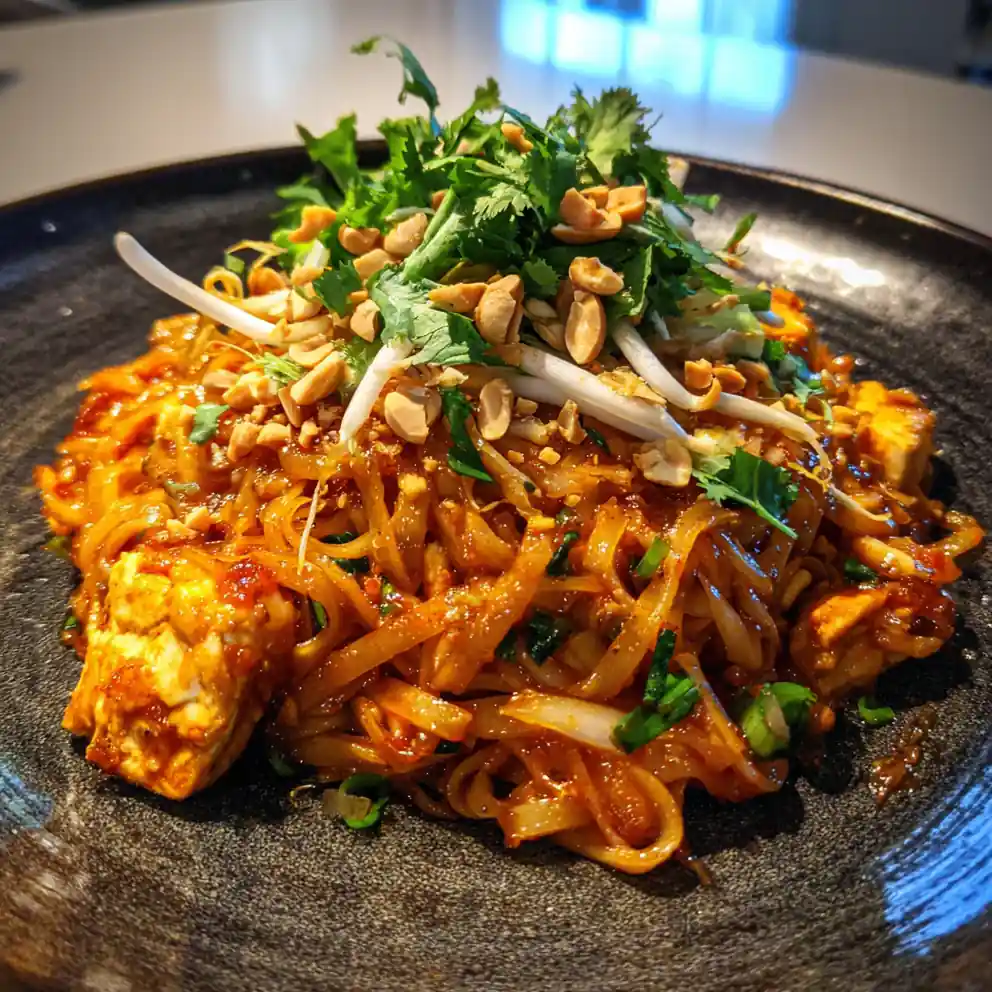
Ingredients
- 200 g dried flat rice stick noodles (about 5 mm wide): Choose a flat noodle for optimal sauce coating; wider noodles absorb more flavor. Rice noodles are essential for the traditional texture.
- 340 g boneless, skinless chicken breast: Slice thinly against the grain (about 1/4-inch thick) to ensure tenderness and quick cooking. You can swap this for boneless chicken thighs for extra flavor, but slice them similarly thin.
- Marinade components (1 tbsp neutral oil, 1 tbsp gochujang, 1 tsp fish sauce, 1/2 tsp white pepper): Use neutral oil (like canola or vegetable) for high-heat cooking. The gochujang (Korean chili paste) adds a unique smoky and slightly spicy flavor foundation. This ingredient forms the core flavor for our easy chicken pad thai recipe.
- Smoky Gochujang Glaze ingredients (3 tbsp tamarind paste, 45 g palm sugar, 3 tbsp gochujang, 3 tbsp fish sauce, 2 tbsp fresh lime juice, 60 ml warm water): Tamarind paste (concentrate) provides the essential sour component; do not omit it. Palm sugar (finely chopped or grated) creates a rich, rounded sweetness; white sugar can be substituted in a pinch. The unique flavor profile of this chicken pad thai recipe comes from this glaze.
- Aromatics and Tofu (2 tbsp neutral oil, 2 cloves garlic, 1 large shallot, 100 g firm tofu): Press the firm tofu between paper towels to remove excess water, then cut into small cubes. Shallots provide a milder, sweeter flavor than onions, which is ideal here.
- Finishing touches (1 large egg, 80 g fresh bean sprouts, 2 tbsp fresh chives): The egg adds richness and texture to the noodles as it scrambles into the dish. Bean sprouts add fresh crunch; make sure they are thoroughly rinsed before using.
- Garnishes (30 g roasted peanuts, fresh cilantro leaves): Crushing the peanuts just before serving ensures maximum flavor and texture. Cilantro provides a bright, refreshing contrast to the rich glaze.
Instructions
- Soak the noodles: Place dried rice noodles in a large bowl and cover with hot tap water from the sink. Let them soak for 20-30 minutes, or until they are pliable and bend easily but still have a firm bite in the center. Drain thoroughly and set aside; do not oversoak, as they finish cooking in the wok.
- Marinate the chicken: Combine the thinly sliced chicken in a medium bowl with 1 tablespoon neutral oil, 1 tablespoon gochujang, 1 teaspoon fish sauce, and white pepper. Toss thoroughly until every piece of chicken is evenly coated in the marinade. Let marinate for at least 15 minutes while you prepare the remaining ingredients and sauce.
- Prepare the Smoky Gochujang Glaze sauce: In a small bowl, whisk together the tamarind paste, finely chopped palm sugar, 3 tablespoons gochujang, 3 tablespoons fish sauce, lime juice, and warm water. Continue whisking until the palm sugar is fully dissolved and the mixture forms a smooth, glossy sauce. Set the sauce aside.
- Cook the chicken: Heat 1 tablespoon of neutral oil in a large wok or a 12-inch non-stick skillet over medium-high heat until shimmering. Add the marinated chicken and stir-fry for 3-4 minutes, turning frequently, until the pieces are cooked through and lightly browned on the edges. Remove the chicken from the wok and set it aside on a plate.
- Fry aromatics and tofu: Add 1 more tablespoon of neutral oil to the wok. Add the minced garlic and sliced shallots, and stir-fry for only 30 seconds until they become fragrant. Add the pressed tofu cubes and stir-fry for 2-3 minutes until they are lightly golden on several sides.
- Add noodles and sauce: Add the drained rice noodles to the wok, pouring the prepared Smoky Gochujang Glaze sauce over the noodles and tofu immediately. Toss continuously with tongs for 2-4 minutes, allowing the noodles to absorb the sauce and become tender and glossy. The sauce should fully coat the noodles, turning them a beautiful reddish-orange color. To make sure your chicken pad thai recipe turns out perfectly, keep the heat high during this stage. If the noodles seem dry at this stage, add a splash (1-2 tablespoons) of warm water or broth to loosen them and help the sauce distribute evenly.
- Scramble the egg: Push the noodles and tofu mixture to one side of the wok to create an empty space. Pour the lightly beaten egg into the empty space and scramble until just set. Break the egg into smaller pieces, then quickly incorporate it into the noodles.
- Add finishing ingredients: Return the cooked chicken to the wok. Add the fresh bean sprouts and chives, tossing everything together vigorously for another 1-2 minutes. The goal is to heat the sprouts through so they soften slightly, but still retain their fresh crunch.
- Serve immediately: Serve the finished chicken pad thai immediately while hot. Garnish generously with crushed roasted peanuts and fresh cilantro leaves. Drizzle any remaining glossy sauce over the top for extra flavor.
Making Pad Thai for the Family: Adjusting the Heat for Kids
Gochujang provides a mild, smoky heat rather than a sharp spice, making it more kid-friendly than traditional chili. For very young children or sensitive palates, reduce the amount of gochujang in the marinade to 1/2 tablespoon. If serving a mix of adults and children, keep the heat separate by offering extra chili flakes or sriracha at the table for a customizable, family-friendly meal. This makes our chicken pad thai recipe accessible to all.
A Note on Ingredients: Tamarind Paste and Palm Sugar Explained
Tamarind paste is essential for the authentic tangy-sour flavor of pad thai; look for unsweetened concentrate. Palm sugar provides a deeper, caramel-like sweetness compared to white sugar. For best results, finely grate or chop the palm sugar so it dissolves quickly in the sauce for this healthy chicken pad thai recipe.
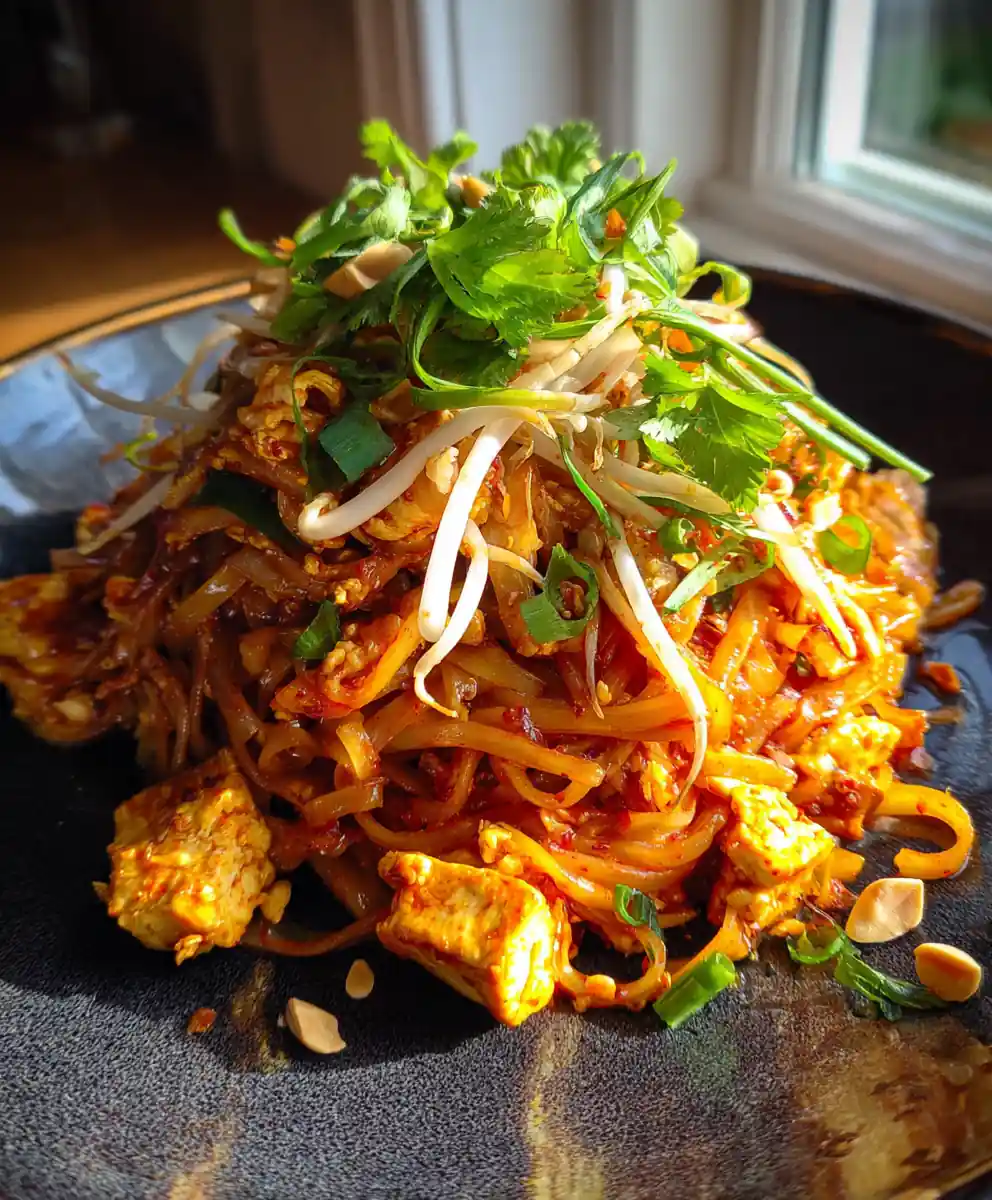
Make-Ahead and Storage Tips
For meal prep, the Smoky Gochujang Glaze sauce can be prepared up to 3 days ahead and stored in the refrigerator in an airtight container. Place cooled chicken pad thai in an airtight container and refrigerate for up to 3 days. Reheat gently in a wok or skillet over medium heat, adding a splash of water or broth to loosen the noodles as they heat, making it perfect for quick meals during the week. This easy chicken pad thai recipe is a great option for high-protein meal prep.
FAQs
Q: Why is my pad thai sauce turning thick and clumpy?
A: This usually means the noodles were oversoaked or the sauce cooked too long. Keep the noodles slightly firm when soaking and work quickly when tossing with the sauce. Ensure the heat isn’t too high when incorporating the sauce to avoid over-reduction.
Q: Can I use different protein, like shrimp or beef?
A: Yes, follow the same steps. Shrimp cooks faster (2 minutes per side) and beef stir-fries in 3-5 minutes depending on the cut. This chicken pad thai recipe works well with other high-protein options, too.
Q: What if I can’t find tamarind paste for the glaze?
A: While not ideal, you can substitute 2 tablespoons of rice vinegar or extra lime juice for the sour component. For a slightly different flavor profile, I actually prefer the rice vinegar substitute when I’m out of tamarind for this healthy chicken pad thai recipe.
Q: How do I prevent the rice noodles from sticking together?
A: Ensure they are fully drained after soaking. Tossing them quickly with the sauce and a little oil in the hot wok helps prevent clumping. If they do stick, add a small splash of water during reheating to loosen them.
Q: Can I make this dish vegetarian or vegan?
A: Yes, replace chicken with extra tofu (or tempeh) and use a vegan fish sauce substitute. You can add a little more gochujang or soy sauce for depth if needed for a fully vegetarian chicken pad thai recipe alternative. This is a very versatile recipe.
Conclusion
This easy chicken pad thai recipe delivers maximum flavor in minimum time, perfect for a satisfying weeknight meal that will become a new family favorite. Pin this recipe now and plan to make this quick meal a part of your healthy eating rotation this week!
Print
chicken pad thai recipe
- Total Time: 45 minutes
- Yield: 4 servings 1x
- Diet: General
Description
This easy chicken pad thai recipe uses a unique smoky gochujang glaze to achieve a rich, street food flavor that elevates standard takeout versions. It combines sweet, sour, salty, and savory notes for a family-friendly weeknight meal.
Ingredients
- 200 g dried flat rice stick noodles (about 5 mm wide)
- 340 g boneless, skinless chicken breast, thinly sliced
- 1 tbsp neutral oil
- 1 tbsp gochujang
- 1 tsp fish sauce
- 0.5 tsp white pepper
- 3 tbsp tamarind paste
- 45 g palm sugar, finely chopped
- 3 tbsp gochujang
- 3 tbsp fish sauce
- 2 tbsp fresh lime juice
- 60 ml warm water
- 2 tbsp neutral oil
- 2 cloves garlic, minced
- 1 large shallot, sliced
- 100 g firm tofu, pressed and cubed
- 1 large egg, lightly beaten
- 80 g fresh bean sprouts
- 2 tbsp fresh chives, chopped
- 30 g roasted peanuts, crushed
- fresh cilantro leaves
Instructions
- Soak The Noodles: Place dried rice noodles in a large bowl and cover with hot tap water. Soak for 20-30 minutes until pliable but firm in the center. Drain thoroughly.
- Marinate The Chicken: In a medium bowl, combine chicken slices, 1 tablespoon neutral oil, 1 tablespoon gochujang, 1 teaspoon fish sauce, and white pepper. Toss to coat and marinate for at least 15 minutes.
- Prepare The Gochujang Glaze: In a small bowl, whisk together tamarind paste, palm sugar, 3 tablespoons gochujang, 3 tablespoons fish sauce, lime juice, and warm water until the palm sugar dissolves. Set aside.
- Cook The Chicken: Heat 1 tablespoon neutral oil in a large wok or skillet over medium-high heat. Add the marinated chicken and stir-fry for 3-4 minutes until cooked through and lightly browned. Remove from the wok and set aside.
- Fry Aromatics And Tofu: Add 1 more tablespoon neutral oil to the wok. Add minced garlic and sliced shallots, stir-fry for 30 seconds until fragrant. Add tofu cubes and stir-fry for 2-3 minutes until lightly golden.
- Add Noodles And Sauce: Add the drained rice noodles and the prepared glaze to the wok. Toss continuously for 2-4 minutes, allowing the noodles to absorb the sauce and become glossy. If dry, add 1-2 tablespoons warm water.
- Scramble The Egg: Push the noodle mixture to one side of the wok. Pour the lightly beaten egg into the empty space and scramble until just set. Incorporate the scrambled egg into the noodles.
- Combine Finishing Ingredients: Return the cooked chicken to the wok. Add bean sprouts and chives, tossing vigorously for 1-2 minutes until heated through but still crunchy.
- Serve Immediately: Serve hot, garnished generously with crushed roasted peanuts and fresh cilantro leaves.
Notes
To achieve a perfect consistency, be careful not to oversoak the rice noodles initially, as they will finish cooking in the wok. If the noodles appear dry during the final cooking stage, add a splash (1-2 tablespoons) of warm water or broth to loosen them and help the sauce distribute evenly.
- Prep Time: 30 minutes
- Cook Time: 15 minutes
- Category: Main Course
- Method: Stir-frying
- Cuisine: Thai
Nutrition
- Serving Size: 1 serving
- Calories: 550 calories
- Sugar: 16 g
- Sodium: 1800 mg
- Fat: 18 g
- Saturated Fat: 4 g
- Unsaturated Fat: 11 g
- Trans Fat: 0 g
- Carbohydrates: 55 g
- Fiber: 3 g
- Protein: 38 g
- Cholesterol: 100 mg
FREE PRINTABLE RECIPE
Get the Printable Recipe PDF (Free)
Enter your email and we’ll send you the ingredients + step-by-step instructions as a clean PDF you can save to your phone.
- ✅ Printable PDF (ingredients + steps)
- ✅ Save it to your phone (no long scrolling)
- ✅ Includes cook time + servings
- ✅ Easy to follow
FAQ
Where’s the full recipe?
It’s delivered as a printable PDF so you can save it and cook without scrolling.
I didn’t get the email.
Check Spam/Promotions and search your inbox for your site name. Then click Confirm to receive the PDF.