This balsamic glazed salmon is the perfect go-to dinner for busy weeknights when you want a restaurant-quality meal with minimal effort. By utilizing a high-heat grilling technique, you achieve a smoky, charred finish that pairs beautifully with the tangy sweetness of the balsamic reduction. With only four main components, this recipe is designed to be accessible, fast, and consistently delicious regardless of your experience level in the kitchen.
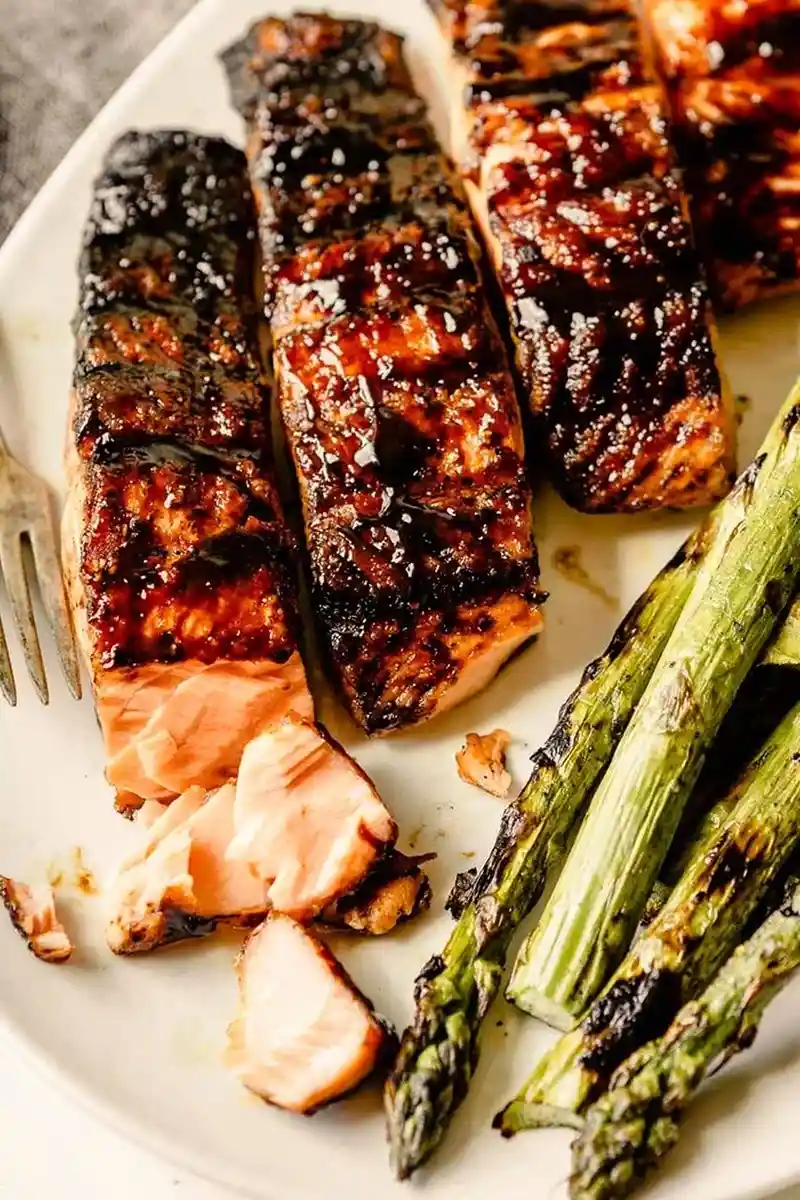
List of ingredients
- 4 (6-ounce) salmon fillets (about 1-inch thick), skin removed
- 2 tablespoons extra-virgin olive oil, divided
- Vegetable oil for brushing grill grate
- Kosher salt and black pepper
- 3 tablespoons balsamic glaze
- 1 pound asparagus, trimmed
- Crusty whole-grain seeded bread for serving
step-by-step instructions
- Step: Heat grill for direct cooking over high, 450ºF–550°F (232ºC–288ºC). Brush grill grate clean and close lid to heat.
- Step: Generously coat all sides of salmon fillets with 1 ½ tablespoons olive oil and season tops generously with salt and pepper. Toss asparagus with remaining ½ tablespoon olive oil and season with salt and pepper.
- Step: Brush grill grate with vegetable oil.
- Step: Place salmon, top side down, and asparagus on grill grate, close lid, keeping temperature around 500ºF (260ºC). Cook salmon until ⅔ of the fillets are lighter in color, they’re becoming firm to touch, and they easily release from the grate, 4–6 minutes. Cook asparagus until charred and fork-tender, 6 minutes, turning halfway through.
- Step: Transfer asparagus to a platter. Flip fillets and generously brush tops of fillets with glaze, close lid and continue to cook until a thermometer inserted in the centers registers 130ºF (54ºC) for medium-rare, 2 minutes. (Cook to 145ºF for medium to well done) Transfer fillets to platter with asparagus.
- Step: Serve salmon with additional balsamic glaze and some crusty bread with good olive oil for dipping.
Techniques for Successful Grilling
Selecting the Best Fillets
When shopping for salmon, prioritize fillets that are approximately one inch thick throughout to ensure even cooking times. Look for a vibrant, consistent color across the fillet and ensure the flesh feels firm and bounces back slightly when pressed with your finger. Avoid any fish that has a strong, pungent odor or displays graying edges, as these are indicators of poor quality or improper storage.
Achieving the Perfect Sear
The secret to keeping salmon from sticking to the grill is proper grate preparation and patience. Ensure the grill is fully preheated before adding the fish, as cold grates are the primary cause of tearing. Once the fish is on the grill, avoid the temptation to move or flip it too early; wait until the natural release happens, which indicates a good crust has formed.
Managing Grill Heat
Consistency is vital when cooking fish over a high-heat fire. If you find your grill temperature dropping, ensure the lid remains closed as much as possible to retain the heat. If you are cooking in cooler weather, you may need to increase your grill setting slightly to compensate for the heat loss caused by the ambient air temperature.
Alternative Preparation Methods
Roasting in the Oven
If the weather is not cooperating or you prefer to stay indoors, you can easily adapt this recipe for an oven. Preheat your oven to 400ºF and line a rimmed baking sheet with aluminum foil for easy cleanup. Arrange the fillets skin-side down, brush them with the glaze, and bake for 5 minutes, followed by a second coat of glaze and an additional 5 to 10 minutes of cooking until the fish flakes easily.
Crafting Homemade Glaze
If you cannot find a commercial balsamic glaze, it is quite simple to create your own by simmering one cup of high-quality balsamic vinegar in a small saucepan. Reduce the heat to low once the liquid reaches a gentle bubble and cook for about 12 minutes until it becomes thick enough to coat the back of a metal spoon. Allow it to cool entirely before using, as it will thicken significantly during this stage.
Practical Serving Suggestions
Balancing the Plate
While asparagus is a classic, low-effort partner for this meal, you can round out the dinner with more substantial sides if you are serving a crowd. Garlic-infused mashed potatoes or a light, crisp fennel salad offer textural contrast to the buttery, glazed salmon. For a simple addition, consider a side of quinoa or farro dressed in lemon and fresh herbs to soak up any stray balsamic notes.
Enhancing the Presentation
To give your plated dinner a professional look, ensure you leave a small border of clean plate around the salmon and asparagus. A light drizzle of extra-virgin olive oil over the finished vegetables can add a nice sheen. Sprinkle a pinch of fresh herbs or coarse sea salt over the salmon immediately before serving to provide a bright, visual pop.
Storage and Handling
Keeping Leftovers Fresh
Store any remaining salmon in an airtight glass or plastic container within the refrigerator for no longer than 48 hours. When storing, try to keep the pieces in a single layer to prevent them from becoming mashed or crushed under their own weight. The balsamic glaze itself, if homemade, can be stored in a separate jar in the refrigerator for up to three months.
Revitalizing Reheated Salmon
To avoid drying out the fish during reheating, use a low-and-slow approach. A 300ºF oven works best, heating the fish for about 8 to 10 minutes until warmed through without turning tough. If using a microwave, use a lower power setting and perhaps place a small cup of water in the microwave to provide a steam effect, which helps maintain the moisture within the protein.
Frequently Asked Questions
Can I freeze the cooked salmon?
It is generally not recommended to freeze cooked salmon, as the texture of the fish tends to degrade significantly upon thawing. The salmon will often become mushy or overly dry, losing the appealing flake that makes freshly cooked salmon so enjoyable. It is better to prepare only the amount you intend to consume within two days.
How do I know if the salmon is cooked enough without a thermometer?
You can test for doneness by using a fork to gently pull apart the thickest part of the fillet. If the salmon easily separates into flakes and the center is opaque rather than translucent, it is ready to be removed from the heat. Keep in mind that residual heat will continue to cook the fish for a minute or two after it is taken off the grill.
What is the benefit of removing the skin for this recipe?
Removing the skin allows the balsamic glaze and seasoning to penetrate more effectively from both sides of the fillet. Furthermore, removing the skin eliminates the risk of it sticking to the grill grates or becoming rubbery if the skin doesn’t crisp up perfectly. However, if you enjoy crispy fish skin, you are welcome to leave it on, provided you oil the grates thoroughly.
Is balsamic glaze the same as balsamic vinegar?
No, they are quite different in consistency and usage. Balsamic vinegar is a thin, acidic liquid, while balsamic glaze is a reduction that has been simmered to concentrate the natural sugars into a thick, syrupy consistency. Substituting vinegar for glaze will result in a runny, watery dish that lacks the necessary sweetness to balance the salty, charred fish.
Print
4-Ingredient Balsamic Glazed Salmon (Grilled or Baked)
- Total Time: PT15M
- Yield: 4 servings 1x
- Diet: Pescatarian
Description
This grilled Balsamic Glazed Salmon is the ultimate anytime meal. This easy dinner uses only 4 ingredients, making it a recipe you can master successfully.
Ingredients
- 4 (6-ounce) salmon fillets (about 1-inch thick), skin removed
- 2 tablespoons extra-virgin olive oil, divided
- Vegetable oil for brushing grill grate
- Kosher salt and black pepper
- 3 tablespoons balsamic glaze
- 1 pound asparagus, trimmed
- Crusty whole-grain seeded bread for serving
Instructions
- Step: Heat grill for direct cooking over high, 450ºF–550°F (232ºC–288ºC). Brush grill grate clean and close lid to heat.
- Step: Generously coat all sides of salmon fillets with 1 ½ tablespoons olive oil and season tops generously with salt and pepper. Toss asparagus with remaining ½ tablespoon olive oil and season with salt and pepper.
- Step: Brush grill grate with vegetable oil.
- Step: Place salmon, top side down, and asparagus on grill grate, close lid, keeping temperature around 500ºF (260ºC). Cook salmon until ⅔ of the fillets are lighter in color, they’re becoming firm to touch, and they easily release from the grate, 4–6 minutes. Cook asparagus until charred and fork-tender, 6 minutes, turning halfway through.
- Step: Transfer asparagus to a platter. Flip fillets and generously brush tops of fillets with glaze, close lid and continue to cook until a thermometer inserted in the centers registers 130ºF (54ºC) for medium-rare, 2 minutes. (Cook to 145ºF for medium to well done) Transfer fillets to platter with asparagus.
- Step: Serve salmon with additional balsamic glaze and some crusty bread with good olive oil for dipping.
Notes
You can use skinless or skin-on, either works great but I find skinless is easier to cook on the grill. Use skin-on if baking the salmon. If cooking in the oven, preheat to 400°F, place salmon on a foil-lined baking sheet, brush with glaze, and bake for 5 minutes. Brush again, then bake for 5–10 more minutes.
- Prep Time: PT5M
- Cook Time: PT10M
- Category: Main Dish
- Method: Grilling
- Cuisine: American
Nutrition
- Serving Size: 1 salmon fillet + 1/4 of the asparagus
- Calories: 369 kcal
- Sugar: 5.5 g
- Sodium: 104 mg
- Fat: 14 g
- Saturated Fat: 2 g
- Unsaturated Fat: 12 g
- Trans Fat: 0 g
- Carbohydrates: 9 g
- Fiber: 2.5 g
- Protein: 47 g
- Cholesterol: 101 mg