This nourishing miso noodle soup is a quick, immune-supporting meal that brings comforting flavors to your table in just fifteen minutes. By combining simple staples like tofu, fresh vegetables, and savory miso paste, you create a wholesome bowl perfect for any day of the week. It is an ideal plant-based option that balances convenience with traditional Japanese-inspired comfort.
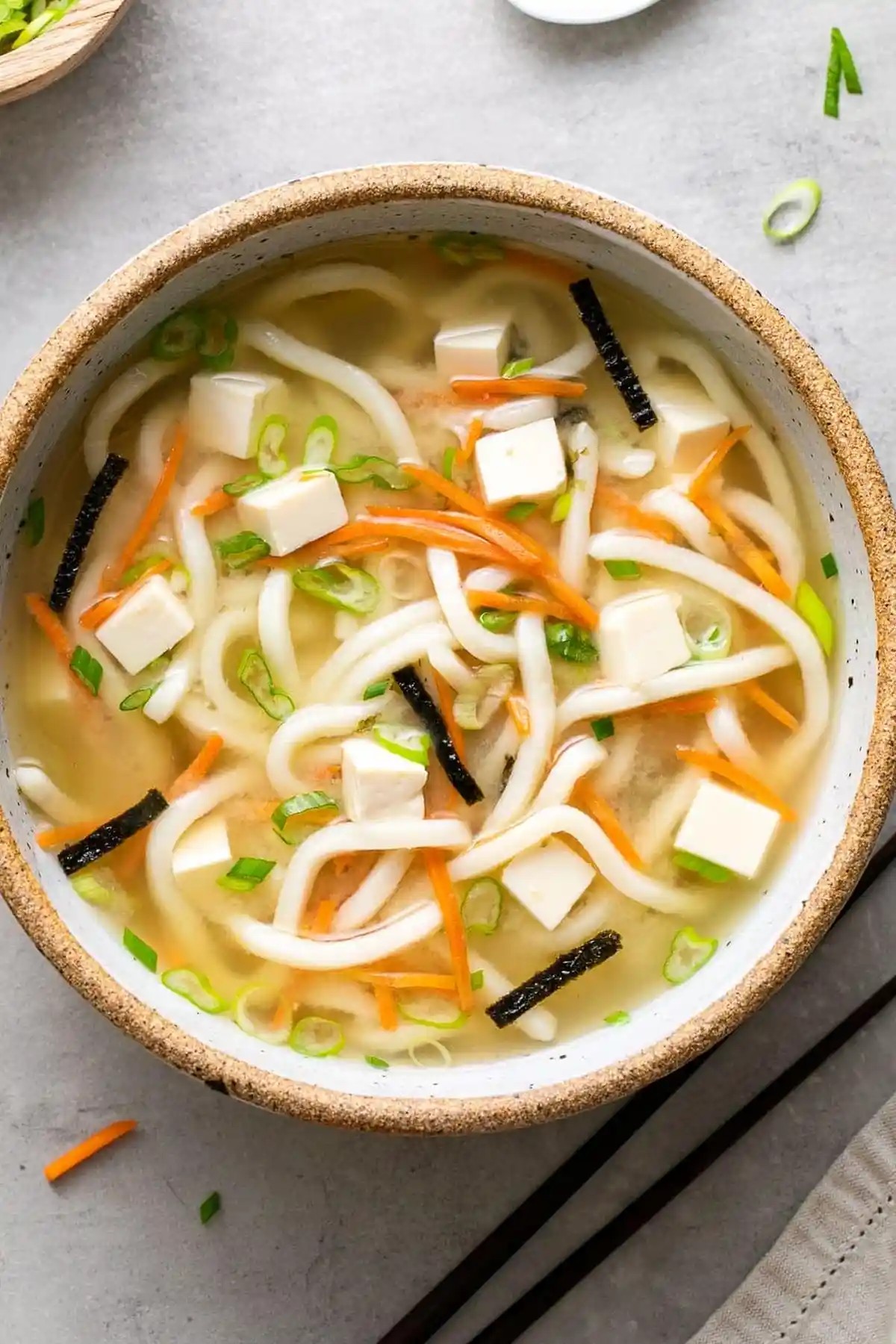
List of ingredients
- 1 package (9 oz) noodles (udon, soba, ramen, mung bean or rice noodles) or 2 packages (7 oz) fresh udon noodles
- 5 cups of water
- 4 – 5 tablespoons miso
- 14 oz organic tofu (firm or extra-firm), cut into 1/2 inch cubes
- 1 nori sheet, cut into slivers or small handful of wakame or dulse
- 1 cup shredded carrots
- 2 – 3 scallions, thinly sliced
step-by-step instructions
- Cook Noodles: Cook noodles according to package directions and set aside. If using the precooked or fresh noodles, simply add to the soup to warm through.
- Heat Soup: In a medium size pot, add water and miso, gently heat over medium-low, stirring occasionally, until miso has dissolved. If using a seaweed that needs to be soaked, add it with the soup. Remove the seaweed with tongs, slice and place back into the soup.
- Combine: Add tofu and noodles to the pot, continue to cook until warmed through.
- Serve: Using tongs, place noodles in individual bowls. Ladle in the soup broth and tofu cubes. Add the shredded carrots, scallions and nori slivers over top and give a good stir.
Refining Your Soup Base
Maintaining Miso Integrity
Miso is a fermented product teeming with beneficial probiotics and enzymes that are sensitive to extreme heat. To preserve these health-promoting properties, ensure the soup never reaches a rolling boil after the miso has been added. Maintain a gentle simmer and pull the pot from the heat as soon as it is warmed to keep the nutritional profile at its peak.
Selecting the Best Seaweed
Nori, wakame, and dulse offer different textures and intensities of oceanic flavor. Nori adds a delicate, crisp element, while wakame softens into a silky consistency that mimics fresh greens. If you prefer a stronger sea-like essence, consider using kombu, which is particularly prized for its ability to deepen the savory notes of a vegan broth.
Balancing Salt and Umami
Because miso pastes vary in salt content and fermentation age, start with four tablespoons and taste your broth before adding the final tablespoon. Red miso is typically much saltier and more potent than the milder white variety. Adjust the ratio to suit your palate, adding a splash of extra water if the flavor becomes too concentrated.
Preparation and Storage Considerations
Maximizing Freshness
While this soup is designed to be a quick meal, the textures of the noodles and vegetables can change if they sit in the broth for too long. If you anticipate having leftovers, consider storing the cooked noodles separately from the broth in the refrigerator. This prevents the noodles from absorbing too much liquid and becoming soft or mushy overnight.
Efficient Reheating Techniques
When reheating your soup, use a stovetop method over medium-low heat rather than a microwave to maintain an even temperature. If the broth has thickened from the starches in the noodles, add a splash of extra water to restore the desired consistency. Always avoid boiling the mixture again to keep the miso probiotics intact during the second heating.
Planning Ahead for Weeknights
To streamline your cooking process, you can pre-cube your tofu and slice the scallions up to two days in advance. Store the prepared vegetables in an airtight container to keep them crisp. Having the noodles pre-portioned and ready makes this dish a viable option for a busy evening, reducing the total active prep time to just a few minutes.
Dietary Adjustments and Variations
Ensuring Gluten-Free Compliance
Traditional ramen and some udon noodles are made from wheat, which contains gluten. To adapt this recipe for a gluten-free diet, opt for 100% buckwheat soba noodles or rice-based noodles. Always verify the ingredients on the package to ensure no wheat flour has been added to the starch blend.
Creating a Soy-Free Version
If you need to avoid soy, you can still enjoy this soup by using chickpea miso or brown rice miso, both of which offer a similar savory profile to traditional soy-based miso. Omit the tofu entirely and swap in heartier vegetables like bok choy or snap peas to ensure the meal remains satisfying and filling.
Adding Texture and Complexity
For a more robust bowl, consider adding sliced shiitake mushrooms or thinly shaved ginger to the broth while it warms. These additions introduce an earthy, warming dimension that pairs perfectly with the salinity of the miso. Adding a dash of sesame oil or toasted sesame seeds just before serving can also introduce a pleasant nutty aroma that elevates the simple ingredients.
Frequently Asked Questions
Can I use a different vegetable base?
Yes, this recipe is highly adaptable. Feel free to stir in baby spinach, kale ribbons, or thinly sliced bok choy during the final minute of cooking. These leafy greens wilt rapidly in the hot broth and provide an extra boost of vitamins.
Is this soup suitable for meal prep?
This soup stores well in the refrigerator for up to five days when kept in a sealed glass container. Because the flavors of miso and seaweed intensify over time, the soup often tastes even better on the second or third day, provided the noodles remain stored separately.
Why is my broth cloudy?
The cloudy appearance is perfectly normal and is actually a sign of properly dissolved miso. The sediment you see consists of the fermented soy and grain particles that provide the signature flavor and health benefits of the soup. Give the pot a quick stir before serving to ensure the components are evenly distributed.
Can I freeze the leftovers?
Freezing is not recommended for this specific soup. Freezing tends to alter the texture of the tofu, making it spongy and dry, and can cause the noodles to break down completely when thawed. It is best enjoyed fresh or from the refrigerator within a few days of preparation.
What if I prefer a spicier profile?
If you enjoy a bit of heat, try adding a small teaspoon of chili paste or a sprinkle of shichimi to your bowl after serving. Avoid adding spicy components directly to the main pot if you are serving others who may prefer a milder flavor, as the spice will permeate the entire batch.
Print
Simple Miso Noodle Soup (7 Ingredients)
- Total Time: PT15M
- Yield: 2 servings 1x
- Diet: Vegan
Description
This simple, 7 ingredient miso noodle soup with tofu is healing, comforting and delicious! It’s naturally vegan and so healthy!
Ingredients
- 1 package (9 oz) noodles (udon, soba, ramen, mung bean or rice noodles) or 2 packages (7 oz) fresh udon noodles
- 5 cups of water
- 4 – 5 tablespoons miso
- 14 oz organic tofu (firm or extra-firm), cut into 1/2 inch cubes
- 1 nori sheet, cut into slivers or small handful of wakame or dulse
- 1 cup shredded carrots
- 2 – 3 scallions, thinly sliced
Instructions
- Cook Noodles: Cook noodles according to package directions and set aside. If using the precooked or fresh noodles, simply add to the soup to warm through.
- Heat Soup: In a medium size pot, add water and miso, gently heat over medium-low, stirring occasionally, until miso has dissolved. If using a seaweed that needs to be soaked, add it with the soup. Remove the seaweed with tongs, slice and place back into the soup.
- Combine: Add tofu and noodles to the pot, continue to cook until warmed through.
- Serve: Using tongs, place noodles in individual bowls. Ladle in the soup broth and tofu cubes. Add the shredded carrots, scallions and nori slivers over top and give a good stir.
Notes
Gluten-free: To make this miso noodle soup gluten-free, use 100% soba or rice noodles. Grain-free: Use 100% soba buckwheat noodles. Soy-free: Use chickpea miso or brown rice miso and omit the tofu.
- Prep Time: PT5M
- Cook Time: PT10M
- Category: Entree
- Method: Boiling
- Cuisine: Vegan
Nutrition
- Serving Size: 1 bowl
- Calories: 280 kcal
- Sugar: 3 g
- Sodium: 850 mg
- Fat: 6 g
- Saturated Fat: 1 g
- Unsaturated Fat: 4 g
- Trans Fat: 0 g
- Carbohydrates: 42 g
- Fiber: 4 g
- Protein: 14 g
- Cholesterol: 0 mg