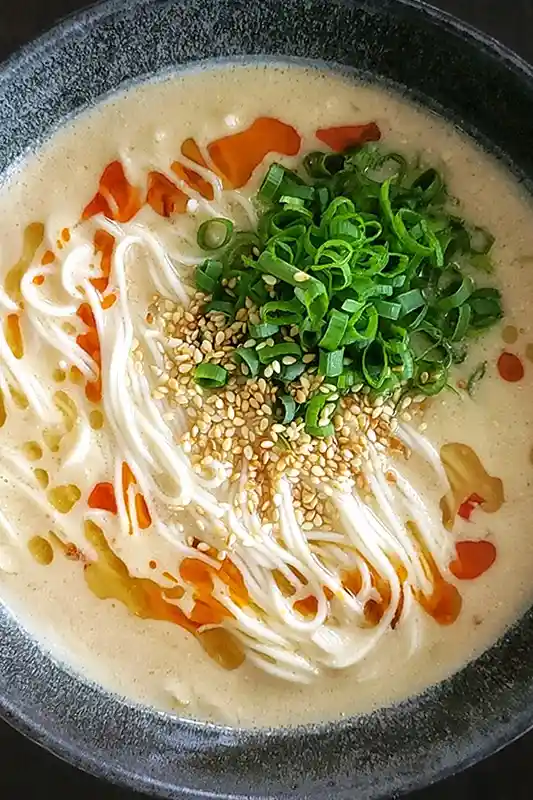
This vibrant noodle dish balances rich, nutty flavors with a spicy, aromatic broth that feels both sophisticated and deeply comforting. By combining traditional Japanese staples like miso with globally accessible ingredients such as tahini and peanut butter, you can create a restaurant-quality meal in your own kitchen. It is the perfect solution for busy weeknights when you crave something wholesome, warm, and intensely satisfying.
List of ingredients
- 1/4 cup miso
- 3 tbsp unsweetened tahini
- 2 tbsp unsweetened creamy peanut butter
- 1/2 tbsp cane sugar
- 2 tbsp rice vinegar
- 1/4 cup water
- 1 tbsp neutral oil
- 3 cloves garlic, minced
- 1 1/2 tbsp minced ginger
- 2 scallions, thinly sliced (separate green and white parts)
- 1/2 tsp red chili pepper flakes
- 3 cups water
- 2 servings dried somen noodles (about 3.5 oz / 100 g per serving)
- 1/4 tsp sea salt
- 2 tsp toasted sesame seeds
- 2 tsp toasted sesame oil
step-by-step instructions
- Step: In a small prep bowl or a measuring cup, combine miso, tahini, peanut butter, sugar, rice vinegar, and water. Use a small whisk to stir until well blended. Set aside.
- Step: In a medium to large sauce pan, start boiling water for cooking somen noodles.
- Step: Meanwhile, heat neutral oil in another medium saucepan over medium heat. Add garlic, ginger, the white part of scallions, and red chili pepper flakes. Cook for 1-2 minutes until fragrant and slightly browned.
- Step: Add 3 cups water and bring to a gentle boil, then reduce heat to medium-low.
- Step: Add the creamy sesame miso mixture to the pan. Use a whisk to stir until well blended and simmer gently. Adjust with sea salt if necessary. Keep the soup warm.
- Step: Cook somen noodles in the boiling water for about 2 minutes. Drain and rinse under running water to remove excess starch, then shake off water.
- Step: Pour the hot soup into a serving bowl and add the drained somen noodles. Top with the green part of scallions, toasted sesame seeds, and a drizzle of toasted sesame oil.
Refining Your Broth Consistency
Achieving the Perfect Texture
The creaminess of this dish relies heavily on the emulsification of the tahini and peanut butter with the water. If you find the broth is becoming too thick as it simmers, add an additional tablespoon of water or vegetable broth at a time to reach your desired consistency. Keeping the heat at a gentle simmer rather than a rapid boil is critical to ensuring the miso maintains its delicate flavor profile and the nut butters remain smooth rather than oily.
Balancing the Miso Profile
Not all miso pastes are created equal; some are quite salty while others focus more on sweetness. If your broth tastes too intense after the initial whisking, you can balance it by increasing the sugar by a tiny amount or adding a splash more rice vinegar. The goal is to reach a savory-sweet equilibrium where the nutty elements of the tahini shine through clearly.
Somen Noodle Handling Techniques
Preventing Sticky Noodles
Somen noodles are extremely thin and prone to clumping due to their high starch content. It is essential to rinse them thoroughly under cold running water immediately after draining. This step is not just for cooling; it physically removes the gelatinous starch coating that forms during the short boiling process, ensuring each strand remains distinct and silky when added to the hot soup.
Timing the Cooking Process
Because somen noodles are so delicate, they overcook in seconds. Set a timer for 120 seconds the moment they hit the boiling water. If you are preparing this for a dinner party or a busy household, keep the soup warm on the lowest heat setting while the noodles are cooked just before assembly to ensure the best possible texture.
Customizing Your Bowl
Incorporating Fresh Vegetables
While the recipe is delicious on its own, you can easily increase the nutritional profile by adding quick-cooking vegetables. Thinly sliced bok choy, baby spinach, or shredded carrots can be added to the soup during the final two minutes of simmering. These vegetables will soften just enough to integrate with the broth without losing their vibrant color or fresh crunch.
Exploring Spicy Additions
If you prefer a higher level of heat, replace the standard chili flakes with a generous dollop of chili oil, specifically those labeled as ‘crispy’ or ‘garlic-infused’. You can also incorporate fresh sliced bird’s eye chilies into the aromatics phase for a cleaner, sharper spice profile that lingers on the palate. Adjust the amount of these additives gradually, tasting the broth frequently to ensure the spice does not overwhelm the delicate sesame and miso base.
Preparation and Storage Advice
Managing Leftover Broth
If you have leftover broth, store it in an airtight container in the refrigerator for up to three days. Note that the nut butters may cause the soup to thicken considerably when chilled. When reheating, you will likely need to add a splash of water or vegetable broth to restore the original liquid consistency. Reheat slowly on the stovetop over low heat to prevent the miso from losing its probiotic-rich, delicate flavor notes.
Preparing Ahead for Efficiency
You can whisk the creamy sesame miso mixture up to 24 hours in advance and store it in the refrigerator. This significantly reduces the active cooking time when you are ready to eat. Keep the aromatics minced and ready to go in a small prep dish so that the assembly process takes less than ten minutes from start to finish.
Common Questions Regarding Ingredients
Can I substitute other nut butters?
Yes, almond butter makes an excellent substitute for peanut butter. It offers a slightly different, earthier sweetness that pairs exceptionally well with miso. Ensure the almond butter is smooth and unsweetened to maintain the correct texture and flavor balance intended for the broth.
What if I cannot find traditional somen noodles?
If somen is unavailable, thin wheat-based noodles such as thin ramen noodles or capellini pasta are the best alternatives. While traditional Japanese somen is distinct in its manufacturing, these substitutes hold the creamy sauce well. Avoid very thick noodles like udon or bucatini, as they require a much higher ratio of broth to fully coat the surface area of the noodle.
Is there a substitute for rice vinegar?
If you are out of rice vinegar, apple cider vinegar is the most appropriate alternative. Use it in the same quantity, as it provides a similar mild acidity that cuts through the fat of the tahini. Avoid using strong, distilled white vinegars, as they can be overly aggressive and may clash with the more subtle fermented notes of the miso.
Enhancing the Presentation
Selecting the Right Bowl
Serving this dish in a deep, wide-rimmed bowl allows the aromatics and toppings to remain visible and accessible. Ceramic or stoneware bowls retain heat longer, which is vital since the hot broth acts as the primary cooking medium for the delicate somen noodles once combined. Ensure your bowls are warmed beforehand by rinsing them with hot water if you want to maintain the perfect eating temperature for longer.
The Art of the Final Garnish
The final drizzle of toasted sesame oil is essential for the aroma. Because the scent of sesame oil is volatile, adding it as the very last step ensures the diner experiences the full olfactory impact before they take their first bite. For an added visual flourish, you can arrange the green scallions in a small mound in the center of the bowl, providing a sharp contrast to the creamy, tan-colored broth.
Print
Vegan Somen Noodles in Creamy Sesame Miso Soup
- Total Time: PT30M
- Yield: 2 servings 1x
- Diet: Vegan
Description
This warm, hearty, and easy-to-make Vegan Somen Noodles in Creamy Sesame Miso Soup is a comforting dish with a rich broth made from miso, tahini, and peanut butter. Enhanced with ginger, garlic, and chili, this meal is both aromatic and satisfying.
Ingredients
- 1/4 cup miso
- 3 tbsp unsweetened tahini
- 2 tbsp unsweetened creamy peanut butter
- 1/2 tbsp cane sugar
- 2 tbsp rice vinegar
- 1/4 cup water
- 1 tbsp neutral oil
- 3 cloves garlic, minced
- 1 1/2 tbsp minced ginger
- 2 scallions, thinly sliced (separate green and white parts)
- 1/2 tsp red chili pepper flakes
- 3 cups water
- 2 servings dried somen noodles (about 3.5 oz / 100 g per serving)
- 1/4 tsp sea salt
- 2 tsp toasted sesame seeds
- 2 tsp toasted sesame oil
Instructions
- Step: In a small prep bowl or a measuring cup, combine miso, tahini, peanut butter, sugar, rice vinegar, and water. Use a small whisk to stir until well blended. Set aside.
- Step: In a medium to large sauce pan, start boiling water for cooking somen noodles.
- Step: Meanwhile, heat neutral oil in another medium saucepan over medium heat. Add garlic, ginger, the white part of scallions, and red chili pepper flakes. Cook for 1-2 minutes until fragrant and slightly browned.
- Step: Add 3 cups water and bring to a gentle boil, then reduce heat to medium-low.
- Step: Add the creamy sesame miso mixture to the pan. Use a whisk to stir until well blended and simmer gently. Adjust with sea salt if necessary. Keep the soup warm.
- Step: Cook somen noodles in the boiling water for about 2 minutes. Drain and rinse under running water to remove excess starch, then shake off water.
- Step: Pour the hot soup into a serving bowl and add the drained somen noodles. Top with the green part of scallions, toasted sesame seeds, and a drizzle of toasted sesame oil.
Notes
The flavor profile of miso varies by brand; koji miso is recommended for a balanced, slightly sweet savory taste. Ensure tahini and peanut butter used are unsweetened for best results.
- Prep Time: PT10M
- Cook Time: PT20M
- Category: Main
- Method: Boiling
- Cuisine: Japanese Inspired
Nutrition
- Serving Size: 1 serving
- Calories: 380 kcal
- Sugar: 7 g
- Sodium: 950 mg
- Fat: 18 g
- Saturated Fat: 2.5 g
- Unsaturated Fat: 14 g
- Trans Fat: 0 g
- Carbohydrates: 46 g
- Fiber: 4 g
- Protein: 12 g
- Cholesterol: 0 mg