This vibrant and velvety soup brings together the natural sweetness of roasted winter squash with the earthy depth of fresh carrots and a warming zing of ginger. It is a perfect bowl for chilly evenings, providing a nourishing and comforting plant-based meal that comes together with minimal effort. Whether you prefer using a pressure cooker for speed or a traditional stovetop pot to watch the process unfold, this recipe results in a consistently smooth and savory dish that the whole family will enjoy.
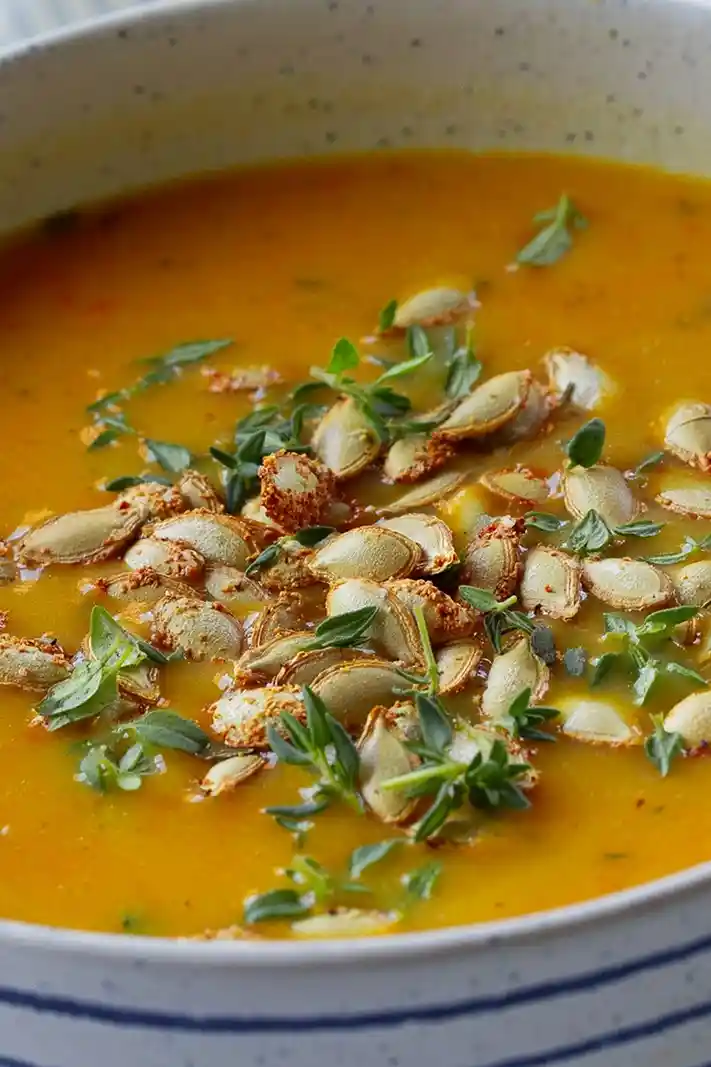
List of ingredients
- 1 medium onion (yellow or sweet work well)
- 3-4 cloves of garlic, minced
- 1 inch of ginger root, grated
- 1 large butternut squash, peeled and cut in 1-inch cubes (approx. 8 cups)
- 2-3 medium carrots, peeled and chopped
- 3 cups vegetable broth
- 2 teaspoons dried thyme, divided
- Salt and pepper, to taste
- 1 to 1 ½ cups canned coconut milk
- Roasted squash seeds (optional)
step-by-step instructions
- Sauté Aromatics: In an Instant Pot or large pot, sauté onion until soft. Add garlic and ginger and sauté for another minute.
- Simmer: Add cubed squash, carrots, broth, and half of the thyme.
- Cook: If using an Instant Pot, cook on high pressure for 12 minutes with a 15-minute natural release. If on the stove, bring to a boil, then simmer covered for 20-30 minutes until squash is fork-tender.
- Blend: Use an immersion blender or countertop blender to process the soup until smooth.
- Finish: Stir in the coconut milk, remaining thyme, and salt and pepper to taste. Serve warm.
Refining Your Technique
Sourcing and Preparing Your Squash
Selecting a firm, heavy butternut squash ensures the best flavor and texture. When peeling, a Y-shaped vegetable peeler often works better than a swivel peeler on the thick, tough skin of the squash. If you find the squash too difficult to cut, microwave the whole squash for 3-4 minutes to slightly soften the flesh, making it much easier to handle with a sharp chef’s knife.
Maximizing Freshness in Ingredients
Using freshly grated ginger instead of pre-packaged powder makes a significant difference in the vibrancy of the soup. Use a microplane or the smallest side of a box grater to ensure the ginger melts into the soup without leaving large, fibrous chunks. Fresh garlic should be minced finely to distribute its flavor evenly throughout the 12-cup yield of the recipe.
Achieving the Perfect Consistency
The secret to a truly restaurant-quality soup is in the blending process. While an immersion blender is convenient, a high-speed countertop blender will create a much finer emulsion if you prefer an exceptionally smooth mouthfeel. Remember to always work in small batches and hold a kitchen towel over the blender lid to protect yourself from hot splashes.
Customization Options
Flavor and Herb Adjustments
While thyme is the primary herb in this recipe, you can experiment with rosemary or sage for a more woodsy aroma. If you prefer a brighter profile, consider adding a squeeze of fresh lime juice just before serving. This acidity helps lift the heavy, creamy elements of the coconut milk and highlights the natural sugars in the roasted carrots.
Protein Additions
To turn this soup into a more substantial meal, consider adding cooked chickpeas or white beans into the blend for extra protein and fiber. Alternatively, you can serve the soup with a topping of pan-seared tofu cubes or tempeh crumbles. These additions provide a savory contrast to the sweet, creamy soup base.
Alternative Creamy Elements
If you find that canned coconut milk is not to your liking, you can replace it with homemade cashew cream. Simply soak raw cashews in boiling water for 30 minutes, drain, and blend them with fresh water until smooth before stirring into your soup. This creates a neutral, rich base that mimics dairy cream without the need for coconut flavor.
Best Practices for Storage
Refrigeration and Reheating
Store any leftover soup in an airtight container in the refrigerator, where it will remain fresh for up to five days. When reheating, it is best to do so over low heat on the stovetop rather than at a high boil, as high temperatures can break the emulsion of the coconut milk. Add a small splash of water if the soup thickens too much during storage.
Freezing for Later Use
This soup freezes beautifully for up to three months, making it an excellent candidate for meal prepping. Use freezer-safe silicone molds or heavy-duty bags to store individual portions. Always label the container with the date and ensure you leave about an inch of space at the top, as the liquid will expand during the freezing process.
Common Queries Addressed
Can I use different types of squash?
Yes, you can substitute the butternut squash with other winter varieties such as acorn, sugar pie pumpkin, or delicata. Keep in mind that sugar pie pumpkins have a slightly different water content, so you may need to adjust your broth amount slightly to achieve your desired thickness.
Why is the soup watery?
If your soup turns out too thin, you have likely added a bit too much vegetable broth. To fix this, you can simmer the soup on the stovetop with the lid off to reduce the liquid, or blend in a few extra cooked potatoes or a handful of white beans to thicken the texture naturally.
Is it necessary to remove the seeds?
You do not have to remove the seeds if you are using a very powerful, high-speed blender, as it will pulverize them entirely. However, for the best texture and appearance, it is standard practice to scoop the seeds out before cooking the squash. If you want a zero-waste kitchen, wash and roast the seeds as a crunchy garnish for the final dish.
Can I serve this at a formal dinner?
This soup is visually appealing and highly sophisticated, making it a wonderful starter for a holiday meal or a dinner party. You can elevate the presentation by drizzling a tiny bit of high-quality olive oil or coconut milk over the surface in a swirl pattern. Adding a few fresh thyme sprigs and the roasted seeds makes it look like a gourmet dish.
Why should I use low-sodium broth?
Using low-sodium vegetable broth allows you to control the salt levels precisely. Different brands of vegetable broth vary wildly in their salt content, and since some ingredients like squash and carrots become sweeter as they cook, too much initial salt can overpower the delicate natural flavors. Always salt to taste only after the final blending step.
Print
Creamy Butternut Squash and Carrot Ginger Soup
- Total Time: PT45M
- Yield: 12 cups 1x
- Diet: Vegan
Description
This rich and creamy Vegan Butternut Squash Carrot Ginger Soup is so cozy and delicious. Packed with nutrients, this soup is easy to throw together.
Ingredients
- 1 medium onion (yellow or sweet work well)
- 3–4 cloves of garlic, minced
- 1 inch of ginger root, grated
- 1 large butternut squash, peeled and cut in 1-inch cubes (approx. 8 cups)
- 2–3 medium carrots, peeled and chopped
- 3 cups vegetable broth
- 2 teaspoons dried thyme, divided
- Salt and pepper, to taste
- 1 to 1 ½ cups canned coconut milk
- Roasted squash seeds (optional)
Instructions
- Sauté Aromatics: In an Instant Pot or large pot, sauté onion until soft. Add garlic and ginger and sauté for another minute.
- Simmer: Add cubed squash, carrots, broth, and half of the thyme.
- Cook: If using an Instant Pot, cook on high pressure for 12 minutes with a 15-minute natural release. If on the stove, bring to a boil, then simmer covered for 20-30 minutes until squash is fork-tender.
- Blend: Use an immersion blender or countertop blender to process the soup until smooth.
- Finish: Stir in the coconut milk, remaining thyme, and salt and pepper to taste. Serve warm.
Notes
Note 1: Substitutes for coconut milk include sunflower seed cream, cashew cream, or plant-based creamer. Note 2: Seeds can be rinsed, dried, seasoned, and roasted at 350°F for 5-15 minutes.
- Prep Time: PT15M
- Cook Time: PT30M
- Category: Soup
- Method: Pressure Cooker, Stove top
- Cuisine: American
Nutrition
- Serving Size: 1 cup
- Calories: 145 kcal
- Sugar: 6 g
- Sodium: 320 mg
- Fat: 8 g
- Saturated Fat: 7 g
- Unsaturated Fat: 1 g
- Trans Fat: 0 g
- Carbohydrates: 18 g
- Fiber: 4 g
- Protein: 3 g
- Cholesterol: 0 mg