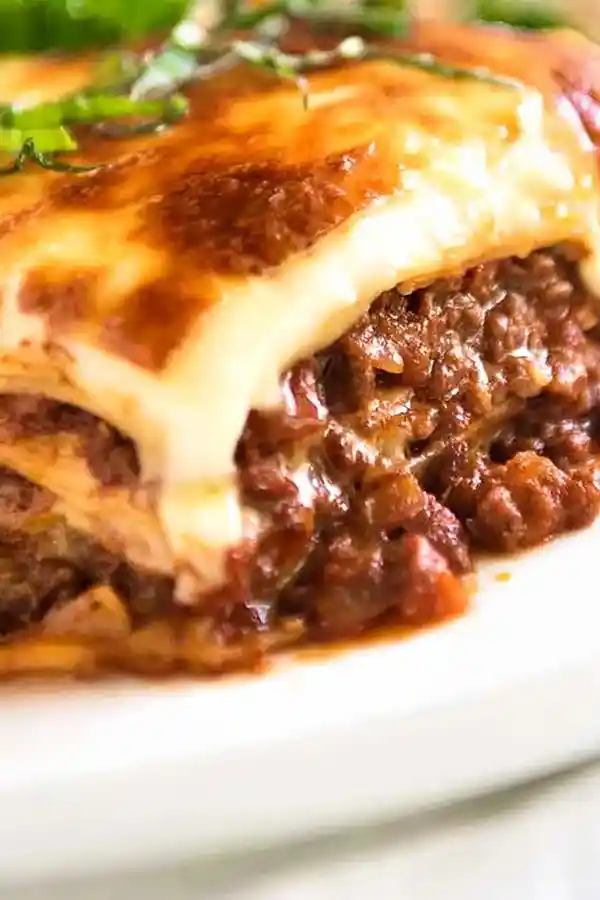
Creating a truly authentic lasagna from scratch is an act of love that pays off with every savory, comforting bite. This traditional preparation features layers of slow-simmered meat sauce and a silky, homemade white sauce, completely skipping the ricotta to focus on a rich, melt-in-your-mouth flavor profile. Follow this method for a professional-grade result that is sure to become the highlight of any family dinner or special occasion gathering.
List of ingredients
- 1 tbsp olive oil
- 1 onion, finely chopped
- 1 medium carrot, peeled and very finely diced
- 1 celery stick, very finely diced
- 2 garlic cloves, minced
- 1 kg beef mince
- 800g canned crushed tomato
- 1/4 cup tomato paste
- 1 cup beef broth
- 3 beef bouillon cubes, crumbled
- 2 bay leaves
- 1/2 tsp EACH dried thyme and oregano
- 2 tsp Worcestershire sauce
- 1-2 tsp sugar
- 1/2 tsp salt and black pepper
- 60g butter
- 1/2 cup flour
- 4 cups milk
- 2 cups shredded gruyere or Colby cheese
- Pinch of freshly ground nutmeg
- 350g fresh lasagna sheets
- 1 1/2 cups mozzarella cheese, shredded
- Finely chopped basil or parsley, for garnish
step-by-step instructions
- Ragu: Heat oil in a large pot. Add garlic, onion, celery, and carrots. Cook for 10 minutes until softened. Add beef, browning it thoroughly. Add tomato, paste, broth, bouillon, bay leaves, herbs, and seasonings. Simmer covered for 1.5-2 hours, then remove lid and simmer for 30 minutes until thick.
- Cheese Sauce: Melt butter in a saucepan, stir in flour for 1 minute. Gradually add milk, whisking until smooth. Cook over medium-high heat until thickened (5-8 minutes). Remove from heat, stir in cheese, nutmeg, salt, and pepper.
- Assemble: Preheat oven to 180°C/350°F. In a 13×9 inch dish, layer meat sauce, lasagna sheets, and cheese sauce. Repeat layers and finish with mozzarella on top. Bake for 25 minutes until golden.
Refining the Ragu Texture
Maintaining Consistent Simmering Temperatures
To achieve the signature melt-in-your-mouth tenderness, the beef must simmer gently rather than boil rapidly. If your stove runs hot, ensure the lid is slightly offset or switch to the smallest burner to keep the bubbles very small and infrequent. This low-temperature approach breaks down the connective tissues in the beef over time, resulting in a superior, restaurant-quality ragu.
Adapting to Different Pot Types
Heavy-based pots with tight-fitting lids are ideal because they retain steam and prevent the sauce from drying out too quickly. If you are using a thinner pot, keep a splash of beef broth on hand to replace any moisture lost to evaporation. Maintaining a specific level of sauce thickness is vital so the lasagna does not become watery during the final oven bake.
Perfecting the Bechamel Sauce
Achieving a Lump-Free Cheese Sauce
The key to a smooth bechamel is the slow incorporation of liquid into your flour-butter roux. Adding the first cup of milk slowly while whisking creates a thick paste that acts as a base, making it easier to whisk in the remaining milk without forming clumps. If you accidentally form lumps, simply use a wire whisk vigorously or strain the sauce through a fine-mesh sieve before adding your cheese.
Selecting the Right Melting Cheese
Shredding your own cheese is essential because pre-shredded varieties often contain anti-caking agents that can leave your sauce grainy. Choose cheeses that melt cleanly, such as gruyere, Colby, or Monterey Jack, to ensure the sauce stays silky and cohesive when heated. A quick pinch of fresh nutmeg is the traditional touch that brings out the creamy, comforting profile of the milk-based sauce.
Mastering the Assembly Process
Optimizing Sheet Placement for Stability
When laying your pasta sheets, rotate their orientation by 90 degrees for each subsequent layer. This cross-hatching pattern provides extra structural integrity when you slice the lasagna, ensuring the layers stay stacked rather than sliding apart. Ensure every inch of the pasta is covered by the sauce to prevent dried-out, crunchy edges.
Managing Liquid Content for Dried Pasta
If you choose to use dried pasta sheets, the ragu must contain enough moisture to hydrate the noodles while they are in the oven. Check the instructions on your specific pasta packaging to see if it requires pre-boiling; if you use ‘no-boil’ sheets, increase your ragu liquid by a small amount to compensate for absorption. Always check that the edges are fully submerged in sauce to ensure they soften correctly during the baking cycle.
Storage and Reheating Strategies
Managing Leftovers Effectively
Lasagna holds up exceptionally well as a leftover, often tasting even better the next day as the flavors continue to meld. Store individual portions in airtight containers in the refrigerator for up to three days. When reheating, the microwave is often the most efficient method to keep the pasta moist and the sauce from drying out, though covering the dish with foil in a low-temperature oven works well for larger portions.
Freezing Prepared Lasagna
This recipe is an excellent candidate for advance preparation and freezing, making it perfect for busy weeks. Assemble the lasagna in a freezer-safe dish, allow it to cool completely, and wrap it tightly in multiple layers of plastic wrap and foil. You can bake it straight from frozen by adding extra time to the cooking process, or thaw it in the refrigerator overnight for a more even cook.
Common Kitchen Inquiries
How can I ensure the top doesn’t burn?
If you notice the mozzarella browning too quickly before the center is piping hot, tent the baking dish loosely with aluminum foil for the first 15 minutes of baking. Remove the foil for the final 10 minutes to allow the cheese to bubble and develop that appetizing golden color without scorching the edges.
Why is my lasagna watery after cutting?
Wateriness is often caused by not allowing the lasagna to rest after pulling it from the oven. Resting for at least 10 minutes is non-negotiable, as it allows the cheese sauce and ragu to firm up slightly, ensuring that your layers remain distinct and clean when you lift a piece out of the dish. Also, ensure your ragu has been simmered down enough to be thick rather than soupy before you begin the assembly.
Print
Classic Homemade Lasagna
- Total Time: 260 minutes
- Yield: 10 servings 1x
- Diet: Non-Vegetarian
Description
One of my signature recipes! This is a lasagna made the traditional Italian way, with a slow cooked ragu and a rich béchamel sauce. Though it requires patience to make, it is worth every minute. The ragu is melt-in-the-mouth tender and the sauce is rich and thick.
Ingredients
- 1 tbsp olive oil
- 1 onion, finely chopped
- 1 medium carrot, peeled and very finely diced
- 1 celery stick, very finely diced
- 2 garlic cloves, minced
- 1 kg beef mince
- 800g canned crushed tomato
- 1/4 cup tomato paste
- 1 cup beef broth
- 3 beef bouillon cubes, crumbled
- 2 bay leaves
- 1/2 tsp EACH dried thyme and oregano
- 2 tsp Worcestershire sauce
- 1–2 tsp sugar
- 1/2 tsp salt and black pepper
- 60g butter
- 1/2 cup flour
- 4 cups milk
- 2 cups shredded gruyere or Colby cheese
- Pinch of freshly ground nutmeg
- 350g fresh lasagna sheets
- 1 1/2 cups mozzarella cheese, shredded
- Finely chopped basil or parsley, for garnish
Instructions
- Ragu: Heat oil in a large pot. Add garlic, onion, celery, and carrots. Cook for 10 minutes until softened. Add beef, browning it thoroughly. Add tomato, paste, broth, bouillon, bay leaves, herbs, and seasonings. Simmer covered for 1.5-2 hours, then remove lid and simmer for 30 minutes until thick.
- Cheese Sauce: Melt butter in a saucepan, stir in flour for 1 minute. Gradually add milk, whisking until smooth. Cook over medium-high heat until thickened (5-8 minutes). Remove from heat, stir in cheese, nutmeg, salt, and pepper.
- Assemble: Preheat oven to 180°C/350°F. In a 13×9 inch dish, layer meat sauce, lasagna sheets, and cheese sauce. Repeat layers and finish with mozzarella on top. Bake for 25 minutes until golden.
Notes
If the sauce tastes too acidic due to the canned tomatoes, add the optional sugar. For the best result, shred your own cheese as pre-shredded varieties contain anti-caking agents that affect the texture. Let the lasagna stand for 5-10 minutes before serving for cleaner slices.
- Prep Time: 20 minutes
- Cook Time: 240 minutes
- Category: Mains
- Method: Baking
- Cuisine: Italian
Nutrition
- Serving Size: 398 g
- Calories: 594 kcal
- Sugar: 11 g
- Sodium: 979 mg
- Fat: 29 g
- Saturated Fat: 15 g
- Unsaturated Fat: 12 g
- Trans Fat: 0 g
- Carbohydrates: 40 g
- Fiber: 2 g
- Protein: 39 g
- Cholesterol: 146 mg