This vibrant, nourishing salmon soup combines delicate protein with earthy vegetables in a fragrant, clear broth. Designed for efficiency, this Mediterranean-inspired dish comes together in just over twenty minutes, making it an excellent choice for a quick weeknight dinner. A final brighten-up with fresh citrus and dill ensures every spoonful feels light, balanced, and deeply satisfying.
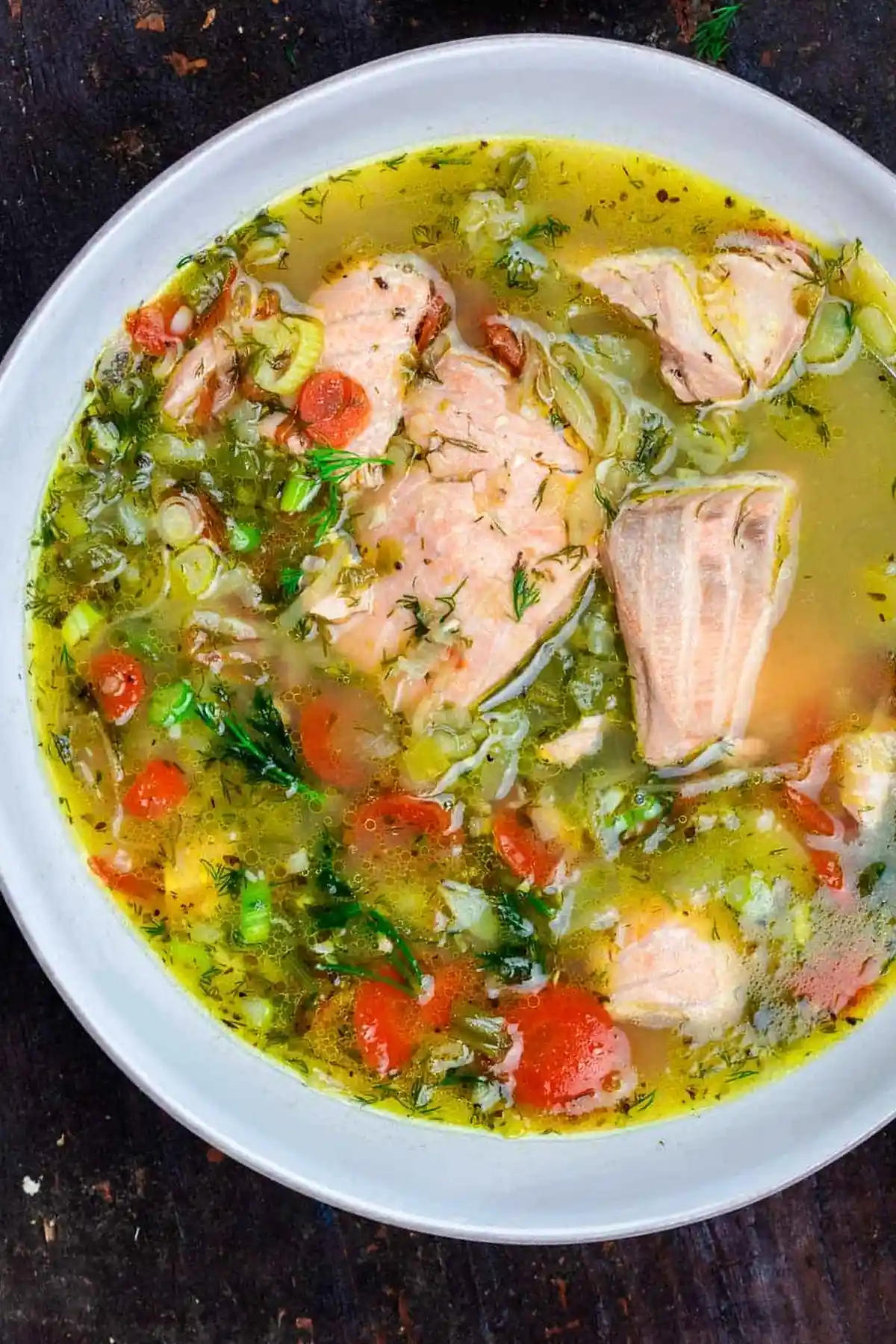
List of ingredients
- 2 tbsp extra virgin olive oil
- 4 green onions, chopped
- ½ green bell pepper, chopped
- 4 garlic cloves, minced
- 1 oz fresh dill, divided, chopped
- 5 cups low-sodium chicken broth
- 1 lb gold potatoes, thinly sliced into rounds
- 1 carrot, thinly sliced into rounds
- 1 tsp dry oregano
- ¾ tsp ground coriander
- ½ tsp ground cumin
- Kosher salt and black pepper to taste
- 1 lb salmon fillet, no skin, cut into large chunks
- Zest and juice of 1 lemon
step-by-step instructions
- Step: Heat 2 tbsp extra virgin olive oil in a large pot until shimmering but not smoking. Add green onions, bell pepper, and garlic and cook over medium-heat, stirring frequently until fragrant (about 3 minutes). Add ½ of the fresh dill, and stir for 30 seconds more.
- Step: Add broth, potatoes and carrots. Add spices and season with kosher salt and black pepper. Bring to a rolling boil then lower heat to medium and cook for 5 to 6 minutes or until the potatoes and carrots are tender.
- Step: Season salmon with kosher salt and gently add it to the pot of simmering soup. Lower heat and cook for 3 to 5 minutes or until salmon is cooked through and flakes easily.
- Step: Stir in lemon zest, lemon juice and remaining dill.
- Step: Transfer salmon soup to serving bowls and serve with crusty bread.
Improving the Broth Base
Selecting the Best Stock Variety
While low-sodium chicken broth provides a reliable and savory profile, you can swap it for a high-quality vegetable broth if you prefer a cleaner taste. Avoid using overly salty broths, as the reduction during the simmering process can concentrate the salinity and overpower the delicate flavor of the salmon.
Achieving Uniform Vegetable Texture
Using a mandolin slicer to prepare your potatoes and carrots is the most effective way to ensure they finish cooking at the same time. Even slices allow the broth to penetrate the vegetables evenly, preventing any pieces from remaining raw in the center while others turn to mush.
Refining the Salmon Poaching Process
Monitoring Internal Doneness
Salmon is a delicate protein that benefits from gentle heat. Pull the pot from the stove as soon as the fish turns opaque and flakes under light pressure from a fork to ensure it remains succulent. Keeping the fish chunks uniform in size helps ensure they all finish at the same time without needing to overcook the smaller pieces.
Avoiding Overcrowding the Pot
When adding the salmon, make sure it is submerged in a single layer or gently distributed so that each piece has room to circulate in the broth. This ensures that the heat is distributed evenly throughout the meat and prevents the fish from sticking to the bottom of the pot during the short poaching window.
Preparation and Ingredient Adjustments
Dried versus Fresh Herbs
If you find yourself without fresh dill, you can substitute dried dill, but use only one-third of the amount specified in the recipe. Dried herbs have a more concentrated flavor profile that can become intense, so start small and taste the broth before adding the full amount.
Creating a Heartier Soup Base
If you want to increase the body of the soup without heavy cream, you can mash a few of the cooked potato slices against the side of the pot before adding the salmon. The natural starch released from the potatoes will provide a slight silkiness to the broth while maintaining its light, Mediterranean character.
Frequently Asked Questions
Can I use frozen salmon for this recipe?
Yes, you can use frozen salmon, but ensure it is completely thawed in the refrigerator overnight before slicing it into chunks. Pat the salmon dry with paper towels to remove excess moisture before seasoning, which will help the fish maintain its integrity in the broth.
Why is the lemon juice added at the very end?
Adding the lemon juice and zest after taking the pot off the heat preserves the bright, volatile citrus oils that would otherwise dissipate if boiled. This finishing touch is crucial for cutting through the richness of the salmon and brightening the flavor of the broth.
Are there other vegetables I can include?
If you wish to add more variety, thinly sliced fennel bulb or leeks are excellent additions that complement the flavor profile of salmon. Add these at the same time as the onions and bell peppers to ensure they become tender enough to incorporate into the final soup.
Storage and Reheating Advice
Managing Leftover Portions
Leftover salmon soup should be cooled slightly and stored in an airtight glass container in the refrigerator for no longer than 48 hours. Because fish is highly perishable, it is best to enjoy the soup within two days to maintain the best quality and safety of the ingredients.
Reheating Methods for Best Texture
To reheat, transfer the soup to a saucepan and heat over low flame on the stovetop until it is just warmed through. Avoid boiling the soup during reheating, as this will cause the salmon to become dry and rubbery, and the potatoes may lose their structure.
Serving Suggestions
Pairing with Appropriate Sides
Since the soup is brothy and light, a piece of crusty sourdough or rustic bread is the ideal partner for soaking up the flavorful liquid. A simple green salad dressed with a light vinaigrette also pairs well, keeping the meal balanced and refreshing for a lunch or light dinner.
Garnish Options for Extra Color
If you want to add a final flourish, a small sprinkle of red chili flakes can introduce a subtle heat that contrasts nicely with the lemon zest. Additionally, a tiny drizzle of high-quality extra virgin olive oil right before serving adds a beautiful glossy sheen to the surface of each bowl.
Print
Easy Salmon Soup
- Total Time: PT22M
- Yield: 4 1x
- Diet: Pescatarian
Description
This easy and bright salmon soup uses simple ingredients and comes together in just over 20 minutes. Delicate, almost creamy chunks of salmon tucked in a flavor-packed broth with potatoes, carrots and fresh dill. A splash of lemon juice brings it together.
Ingredients
- 2 tbsp extra virgin olive oil
- 4 green onions, chopped
- ½ green bell pepper, chopped
- 4 garlic cloves, minced
- 1 oz fresh dill, divided, chopped
- 5 cups low-sodium chicken broth
- 1 lb gold potatoes, thinly sliced into rounds
- 1 carrot, thinly sliced into rounds
- 1 tsp dry oregano
- ¾ tsp ground coriander
- ½ tsp ground cumin
- Kosher salt and black pepper to taste
- 1 lb salmon fillet, no skin, cut into large chunks
- Zest and juice of 1 lemon
Instructions
- Step: Heat 2 tbsp extra virgin olive oil in a large pot until shimmering but not smoking. Add green onions, bell pepper, and garlic and cook over medium-heat, stirring frequently until fragrant (about 3 minutes). Add ½ of the fresh dill, and stir for 30 seconds more.
- Step: Add broth, potatoes and carrots. Add spices and season with kosher salt and black pepper. Bring to a rolling boil then lower heat to medium and cook for 5 to 6 minutes or until the potatoes and carrots are tender.
- Step: Season salmon with kosher salt and gently add it to the pot of simmering soup. Lower heat and cook for 3 to 5 minutes or until salmon is cooked through and flakes easily.
- Step: Stir in lemon zest, lemon juice and remaining dill.
- Step: Transfer salmon soup to serving bowls and serve with crusty bread.
Notes
Do not overcook the salmon; it is ready when the flesh turns opaque and flakes easily. Serve immediately as the residual heat will continue to cook the fish. Store leftovers in an airtight glass container in the refrigerator for up to 2 days.
- Prep Time: PT10M
- Cook Time: PT12M
- Category: Fish
- Method: Boiling
- Cuisine: Mediterranean
Nutrition
- Serving Size: 1 bowl
- Calories: 319.5 kcal
- Sugar: 2.7 g
- Sodium: 308.9 mg
- Fat: 9.4 g
- Saturated Fat: 1.7 g
- Unsaturated Fat: 6.7 g
- Trans Fat: 0 g
- Carbohydrates: 28.5 g
- Fiber: 4.1 g
- Protein: 31.8 g
- Cholesterol: 62.4 mg