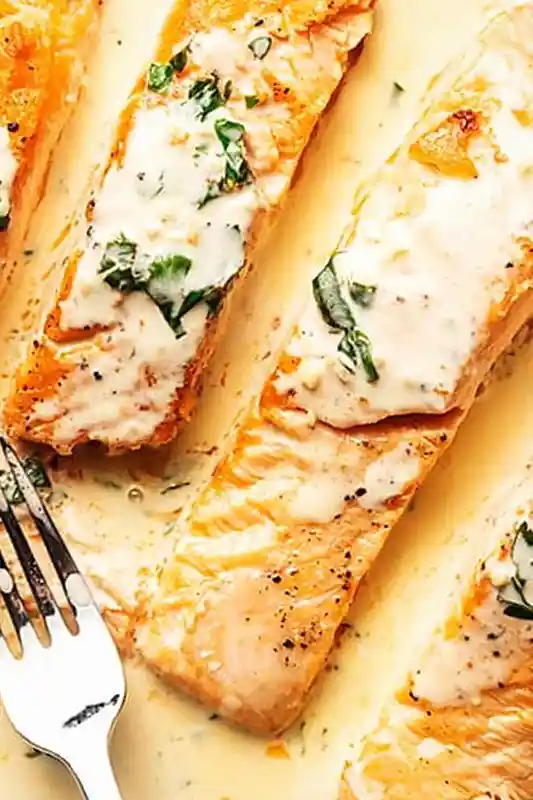
This keto salmon dish delivers restaurant-quality flavors by pairing pan-seared, golden-crusted fish with a decadent, silky lemon garlic cream sauce. It is a perfect low-carb dinner that comes together in roughly 25 minutes, making it ideal for busy weeknights when you want a meal that feels both sophisticated and comforting. The natural richness of the salmon complements the bright, acidic notes of the lemon, ensuring a balanced dining experience that is high in protein and satisfying.
List of ingredients
- 1 pound Salmon filets, cut into 4 portions
- 1/2 teaspoon kosher salt
- 1/4 teaspoon black pepper
- 2 Tablespoons avocado oil
- 1 1/4 Cup heavy cream
- 2 Tablespoons fresh lemon juice
- 3 cloves garlic, minced
- 2 Tablespoons freshly chopped parsley
step-by-step instructions
- Step: Pat the salmon filets dry with paper towels and season both sides with kosher salt and pepper.
- Step: Heat the avocado oil in a heavy bottom skillet over medium-high heat until shimmering.
- Step: Add in the salmon filets skin side up. Cook undisturbed until the salmon is browned and releases easily from the pan, about 4 to 5 minutes.
- Step: Flip to the other side and cook until the salmon is cooked through and the skin is crispy.
- Step: Remove the salmon from the pan and set aside.
- Step: Reduce the heat to medium and whisk together the heavy cream, garlic, and lemon juice. Simmer for a few minutes until slightly thickened.
- Step: Stir in the chopped parsley and season the sauce with salt and pepper to taste.
- Step: Spoon the sauce over the salmon and serve immediately.
Practical cooking strategies
Moisture Control for Superior Searing
Surface moisture acts as an insulator, which prevents the Maillard reaction necessary for a golden crust. By taking the extra minute to pat your salmon dry with paper towels, you ensure the oil makes immediate contact with the fish protein. This creates a superior, crisp texture that provides a wonderful contrast to the tender, flaky interior of the cooked filet.
Determining the Ideal Release Point
Many home cooks struggle with salmon sticking to the pan, but this is usually a sign that the sear is not complete. If the salmon resists when you attempt to slide a spatula under it, it simply needs another 30 to 60 seconds of cooking time. Once the crust develops properly, the fish will naturally lift away from the pan surface without tearing or leaving messy residue behind.
Selecting the Right Pan for Even Heat
A heavy-bottomed skillet, such as seasoned cast iron or thick stainless steel, is the most effective tool for this recipe. These materials hold and distribute heat evenly, preventing the hot spots that often lead to uneven cooking or burning. Consistent heat is vital for both developing the crust and gently reducing the cream sauce without scorching the dairy solids.
Managing Salmon Temperature
Salmon is highly susceptible to drying out if it passes the ideal internal temperature of 130F to 135F. Because the fish continues to carry-over cook once removed from the pan, pulling it at the lower end of this range results in a perfectly moist texture. A digital meat thermometer is the most reliable way to ensure your portions remain juicy and tender every single time.
Refining Your Culinary Approach
Managing Sauce Consistency
The heavy cream will thicken naturally as it reduces, but the process requires patience. Do not be tempted to turn the heat too high, as this can cause the dairy to curdle or the garlic to burn, leading to a bitter profile. A steady, gentle simmer is the secret to achieving a professional-grade, smooth, and glossy sauce that coats the back of a spoon.
Balancing Salt and Acid
Heavy cream is naturally neutral, meaning it requires the right amount of salt and acid to bring the flavors to life. After the sauce has thickened, perform a final taste test. If it feels too heavy, add a small splash more lemon juice; if the flavors feel muted, add a tiny pinch of extra salt to heighten the natural sweetness of the salmon.
Serving for Texture Maintenance
While spooning sauce over fish is classic, it does soften a crisp exterior. If you prioritize the contrast between a crispy skin and a rich sauce, prioritize serving the sauce in a small ramekin or alongside the fish on the plate. This allows diners to control the amount of cream they incorporate into each bite, keeping the skin-side texture intact throughout the meal.
Frequently Asked Questions
Why does white protein appear on the salmon during cooking?
That substance is called albumin, a protein that coagulates and pushes to the surface when the fish is heated. It is entirely edible and harmless, but it generally indicates that the heat was too high or the fish is becoming slightly overcooked. Reducing your heat slightly or pulling the fish off the heat a moment earlier can help minimize its appearance.
Can this recipe be prepared ahead of time?
While the salmon is best enjoyed immediately after searing, you can prepare the sauce slightly in advance and keep it warm. If you find the sauce has thickened too much while sitting, whisk in a tablespoon of warm water or additional cream to bring it back to a pourable consistency. The salmon itself is best cooked fresh to ensure the skin remains crisp and the meat stays tender.
What is the best way to reheat leftovers?
Reheating salmon requires a gentle hand to prevent the fats from separating or the protein from becoming rubbery. The most effective method is to use a low-heat skillet with a small splash of water or broth to create steam, covering the pan for 1 to 2 minutes. Avoid the microwave if possible, as the aggressive heating often results in uneven, dry edges that compromise the quality of the delicate fish.
Are there dairy-free alternatives to heavy cream?
You can substitute full-fat coconut cream for the heavy cream to achieve a dairy-free version of this sauce. While this will introduce a subtle coconut aroma, it maintains the necessary fat content to create a thick and luxurious consistency. It is an excellent variation if you have dietary restrictions or simply prefer a slightly different flavor profile that still works well with the bright lemon notes.
Print
Keto Salmon Recipe with Creamy Lemon Garlic Sauce
- Total Time: 25 minutes
- Yield: 4 servings 1x
- Diet: Keto
Description
This keto salmon recipe features perfectly seared salmon filets topped with a rich and creamy lemon garlic sauce. This easy low carb dinner is packed with protein, full of flavor, and ready in about 25 minutes using simple ingredients.
Ingredients
- 1 pound Salmon filets, cut into 4 portions
- 1/2 teaspoon kosher salt
- 1/4 teaspoon black pepper
- 2 Tablespoons avocado oil
- 1 1/4 Cup heavy cream
- 2 Tablespoons fresh lemon juice
- 3 cloves garlic, minced
- 2 Tablespoons freshly chopped parsley
Instructions
- Step: Pat the salmon filets dry with paper towels and season both sides with kosher salt and pepper.
- Step: Heat the avocado oil in a heavy bottom skillet over medium-high heat until shimmering.
- Step: Add in the salmon filets skin side up. Cook undisturbed until the salmon is browned and releases easily from the pan, about 4 to 5 minutes.
- Step: Flip to the other side and cook until the salmon is cooked through and the skin is crispy.
- Step: Remove the salmon from the pan and set aside.
- Step: Reduce the heat to medium and whisk together the heavy cream, garlic, and lemon juice. Simmer for a few minutes until slightly thickened.
- Step: Stir in the chopped parsley and season the sauce with salt and pepper to taste.
- Step: Spoon the sauce over the salmon and serve immediately.
Notes
Pat the salmon dry before cooking for the best sear. If the salmon sticks, it is not ready to flip yet. For the best texture, cook to an internal temperature of 130F to 135F. Serve the sauce on the side if you prefer to keep the salmon skin extra crispy.
- Prep Time: 5 minutes
- Cook Time: 20 minutes
- Category: Dinner
- Method: Pan Seared
- Cuisine: American
Nutrition
- Serving Size: 1 serving
- Calories: 521 kcal
- Sugar: 2 g
- Sodium: 350 mg
- Fat: 41 g
- Saturated Fat: 18 g
- Unsaturated Fat: 20 g
- Trans Fat: 0 g
- Carbohydrates: 6 g
- Fiber: 0 g
- Protein: 29 g
- Cholesterol: 115 mg