This Mediterranean-inspired salad combines flaky, seasoned salmon with light couscous and a tangy feta dressing. It is a nutrient-dense option that works exceptionally well for make-ahead weekday lunches.
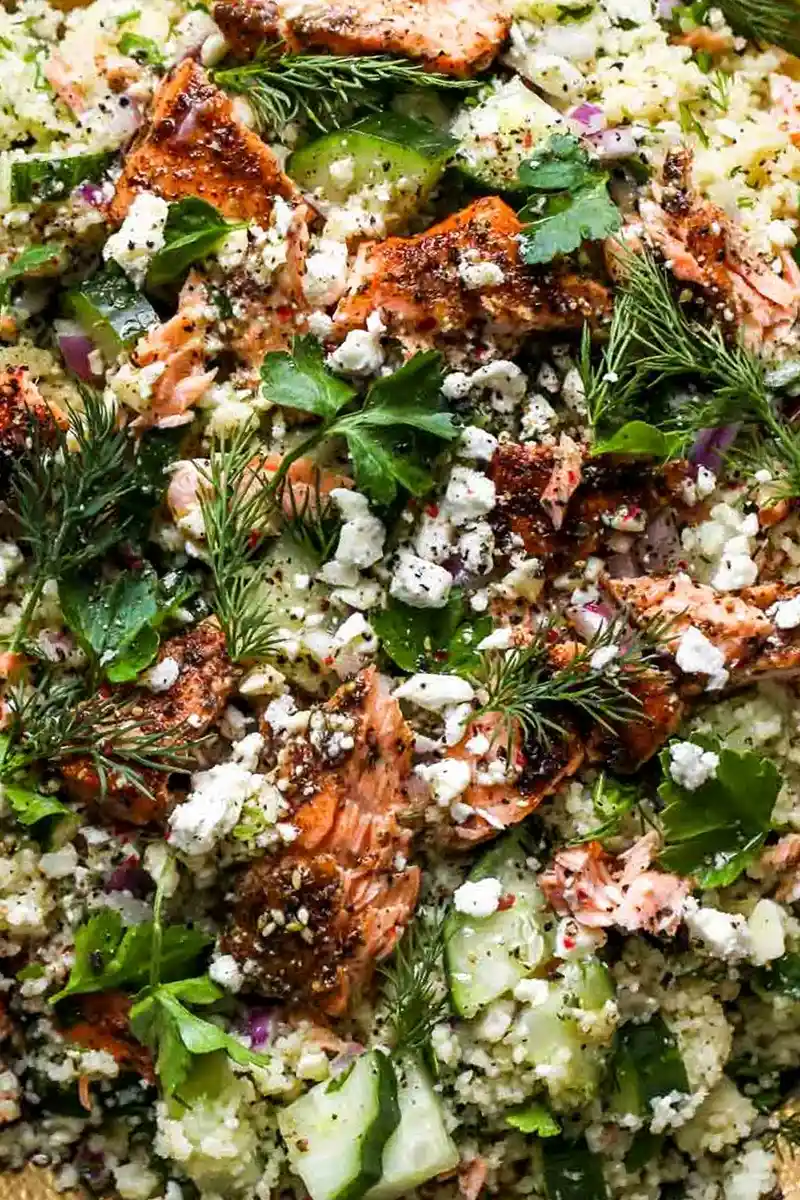
List of ingredients
- 1 cup uncooked couscous (substitute quinoa for a gluten-free version)
- 1 Tbsp. plus 2 tsp. extra-virgin olive oil, divided for cooking and seasoning
- 3/4 tsp. kosher salt, divided between the grain and fish
- 1 (12-oz.) fillet salmon, skin-on for better moisture retention
- 2 tsp. za’atar spice for a Middle Eastern flavor profile
- 1/2 English cucumber, sliced into coins and then quartered
- 3/4 cup fresh parsley, roughly chopped
- 1/3 cup fresh dill, finely chopped
- 1/3 cup minced red onion for a sharp contrast
- 1/3 cup extra-virgin olive oil for the dressing
- 2 Tbsp. fresh lemon juice for acidity
- 2 tsp. Dijon mustard to emulsify the dressing
- 2 tsp. honey or maple syrup for a touch of sweetness
- 1 garlic clove, minced
- 1/4 tsp. kosher salt and black pepper, for seasoning the dressing
- 1/3 cup crumbled feta cheese for a salty, creamy finish
step-by-step instructions
- Prepare Couscous: In a medium saucepan, bring 1 1/4 cups water, 1 Tbsp. olive oil, and 1/4 tsp. salt to a boil. Stir in the couscous, cover with a lid, and remove from heat. Let the couscous steam for 5 minutes, then use a fork to fluff the grains and break up any clumps. Transfer the couscous to a large bowl to cool slightly.
- Cook Salmon: Pat the salmon fillet dry with a paper towel to ensure a good sear. Rub the fish with 2 tsp. olive oil and season with za’atar spice and 1/2 tsp. salt. You can broil the salmon by placing it skin-side down on a foil-lined sheet 6 inches from the heat for 8 to 10 minutes. Alternatively, sauté it in a skillet over medium-high heat, skin-side down for 3 minutes, then flip and cook for another 3 to 4 minutes. Let the salmon rest for 5 minutes before flaking it into small pieces with a fork.
- Prepare Feta Dressing: In a medium bowl, combine the olive oil, lemon juice, Dijon mustard, honey, minced garlic, salt, and pepper. Whisk the ingredients until well combined and emulsified. Stir in the crumbled feta cheese until evenly distributed.
- Assemble Salad: Add the cucumber, parsley, dill, and red onion to the bowl with the cooled couscous and toss well. Gently fold in the flaked salmon and pour the feta dressing over the mixture. Stir gently to combine, then taste and adjust seasonings as needed. Garnish with extra feta or fresh herbs if desired.
Salmon Preparation Methods
Using the Broiler for Fast Cooking
Broiling is an efficient method for cooking salmon quickly while achieving a charred top. Ensure the oven rack is positioned about 6 inches from the heat source to avoid burning the exterior before the interior is done. This method is ideal when you need a fast turnaround for meal prep.
Sautéing for Crispy Salmon Skin
Sautéing in a skillet allows you to achieve a crispier texture on the skin side. Start with a medium-high heat and press the fillet down gently to ensure maximum contact with the pan. Turn off the heat shortly after flipping to prevent the fish from drying out.
Determining Salmon Doneness with a Thermometer
The most accurate way to ensure salmon is cooked is by using a digital meat thermometer. Aim for an internal temperature between 125°F and 130°F for a moist, flaky result. If you do not have a thermometer, the fish should separate easily along the white fat lines when pressed with a fork.
Grain and Protein Alternatives
Substituting Quinoa for a Gluten-Free Base
For those avoiding gluten, quinoa is an excellent substitute for couscous due to its similar texture and high protein content. Rinse the quinoa thoroughly under cold water before boiling to remove any natural bitterness. Use a 1:2 ratio of quinoa to water and simmer until the grains are translucent.
Using Grilled Chicken or Tuna for Variety
If you prefer a different protein, grilled chicken breast or canned tuna can be used in this recipe. For chicken, dice it into small cubes and season with za’atar before grilling. If using tuna, drain the liquid thoroughly to prevent the salad from becoming too watery.
Replacing Red Onion with Milder Shallots
If the raw bite of red onion is too strong, finely minced shallots provide a softer, sweeter flavor. Shallots blend into the salad more seamlessly and offer a sophisticated aromatic quality. Simply mince them finely and add them during the assembly step.
Customizing the Flavor Profile
Incorporating Fresh Cherry Tomatoes for Sweetness
Adding halved cherry tomatoes introduces a burst of sweetness and acidity that complements the salty feta. The red color also adds visual contrast to the green herbs and pale couscous. Stir them in during the final assembly to keep them from bursting.
Using Mint as an Alternative Herb
Fresh mint can be added alongside the parsley and dill to give the salad a more traditional Mediterranean feel. Mint adds a cooling effect that balances the warmth of the za’atar spice. Use about 2 tablespoons of chopped mint for a subtle flavor boost.
Adjusting the Za’atar Spice Level
Za’atar is a blend of sumac, thyme, and sesame seeds, providing a woodsy and tart flavor. If you cannot find za’atar, a mixture of dried oregano and a pinch of sumac works well. Increase the amount slightly if you prefer a more pronounced Middle Eastern taste.
Storage and Preservation Guide
Optimizing Airtight Storage for Freshness
Store the assembled salad in a BPA-free, airtight glass or plastic container to maintain the crispness of the vegetables. Keeping the container sealed prevents the couscous from absorbing odors from other items in the refrigerator. This ensures the flavors remain clean and bright.
Restoring Grain Moisture Before Serving
Grains like couscous can absorb the dressing over time, which may leave the salad feeling dry. Drizzle a small amount of extra-virgin olive oil over the salad just before serving to restore the moist texture. A squeeze of fresh lemon juice can also brighten the flavors after refrigeration.
Safe Refrigeration Timelines
This salad is best consumed within 3 days when kept in a refrigerator at or below 40°F. Beyond this window, the cucumbers may lose their crunch and the herbs may begin to wilt. Always check the salmon for freshness before consuming leftovers.
Serving and Plating Ideas
Adding Fresh Garnishes for Visual Appeal
To make the dish look professional, top the final plated salad with extra crumbles of feta cheese and a sprig of fresh dill. A sprinkle of toasted sesame seeds can also mirror the ingredients found in the za’atar spice. These small additions improve the presentation for guests.
Pairing with Warm Pita or Flatbread
Serving this salad with toasted pita bread or warm flatbread adds a satisfying textural contrast. The bread can be used to scoop up the flaked salmon and feta dressing. For extra flavor, brush the pita with olive oil and garlic before warming.
Serving as a Hearty Main Dish
While this works as a side, it is filling enough to be a main course due to the protein and grains. To increase the satiety, you can add extra salmon or toss in a handful of chickpeas. This makes it a complete, balanced meal in a single bowl.
Common Troubleshooting Solutions
Correcting Clumpy Couscous Textures
If the couscous clumps together, it is usually due to insufficient fluffing or too much water. Use a fork to gently separate the grains while they are still warm to ensure a light texture. If it remains clumpy, a tiny bit of olive oil can help separate the grains.
Preventing Overcooked Salmon Fillets
Overcooked salmon becomes dry and chalky, which can ruin the mouthfeel of the salad. Avoid cooking the fish on too high a heat for too long, and always allow it to rest before flaking. Resting allows the juices to redistribute throughout the fillet.
Balancing the Acidity of the Feta Dressing
If the dressing tastes too tart from the lemon juice, add a small amount of extra honey or maple syrup. If it feels too salty, increase the amount of olive oil to mellow out the feta cheese. Taste the dressing separately before adding it to the salad.
Frequently Asked Questions
Can I use frozen salmon fillets?
Yes, but ensure the salmon is completely thawed in the refrigerator overnight before cooking. Pat the fillet very dry with paper towels to prevent steaming in the pan, which would hinder the searing process.
How do I prevent the cucumber from releasing too much water?
To keep the salad from becoming watery, slice the cucumbers and let them sit on a paper towel for a few minutes before adding them. You can also seed the English cucumber by scraping out the center with a spoon.
Can I make the dressing separately?
Absolutely. The dressing can be made up to a week in advance and stored in a sealed jar in the fridge. Shake the jar vigorously before use, as the olive oil and lemon juice will naturally separate over time.
Is this salad suitable for freezing?
No, this salad is not suitable for freezing because the fresh cucumbers and herbs will lose their texture and flavor. The feta cheese also changes consistency when frozen and thawed. It is best enjoyed fresh or refrigerated.
Print
Salmon Couscous Salad with Feta Dressing
- Total Time: 35 minutes
- Yield: 5 servings 1x
- Diet: General
Description
Salmon Couscous Salad with cucumbers, herbs, and Feta Dressing. This Mediterranean-inspired salad is nutritious and filling – perfect for easy make-ahead lunches.
Ingredients
- 1 cup uncooked couscous
- 1 Tbsp. plus 2 tsp. extra-virgin olive oil, divided
- 3/4 tsp. kosher salt, divided
- 1 (12-oz.) fillet salmon, skin-on
- 2 tsp. za’atar spice
- 1/2 English cucumber, sliced into coins and then quartered
- 3/4 cup fresh parsley, roughly chopped
- 1/3 cup fresh dill, finely chopped
- 1/3 cup minced red onion
- 1/3 cup extra-virgin olive oil
- 2 Tbsp. fresh lemon juice
- 2 tsp. Dijon mustard
- 2 tsp. honey or maple syrup
- 1 garlic clove, minced
- 1/4 tsp. kosher salt
- 1/4 tsp. black pepper
- 1/3 cup crumbled feta cheese
Instructions
- Prepare Couscous: In a medium saucepan, bring 1 1/4 cups water, 1 Tbsp. olive oil, and 1/4 tsp. salt to a boil. Stir in the couscous, cover with a lid, and remove from heat. Let the couscous steam for 5 minutes. Use a fork to fluff the couscous and break up any clumps. Transfer to a large bowl to slightly cool.
- Cook Salmon: Pat salmon dry with a paper towel. Rub with 2 tsp. olive oil, and season with za’atar spice and 1/2 tsp. salt. Broil for 8 to 10 minutes or sauté skin-side down for 3 minutes, flip, and cook for another 3 to 4 minutes until fully cooked. Let rest for 5 minutes before flaking into small pieces.
- Prepare Feta Dressing: In a medium bowl, combine olive oil, lemon juice, Dijon mustard, honey, garlic, salt and pepper; whisk to combine. Stir in feta cheese.
- Assemble Salad: To the bowl with cooled couscous, add cucumber, parsley, dill, and red onion; toss well. Add flaked salmon and dressing; gently stir to combine. Garnish with extra crumbled feta and/or herbs, if desired.
Notes
Refrigerate salad in an airtight storage container for up to 3 days. Drizzle with extra olive oil before serving to help moisten the grains, if needed.
- Prep Time: 20 minutes
- Cook Time: 15 minutes
- Category: Entree/Salad
- Method: Sautéing/Broiling
- Cuisine: Mediterranean
Nutrition
- Serving Size: 1 cup
- Calories: 420 kcal
- Sugar: 4 g
- Sodium: 790 mg
- Fat: 26 g
- Saturated Fat: 3.5 g
- Unsaturated Fat: 22.5 g
- Trans Fat: 0 g
- Carbohydrates: 21 g
- Fiber: 3 g
- Protein: 23 g
- Cholesterol: 65 mg