This one-pan meal combines heart-healthy salmon fillets with fresh asparagus spears in a bright lemon garlic butter sauce. It is a highly efficient dinner option that minimizes cleanup while delivering a balanced mix of omega-3 proteins and fiber-rich vegetables.
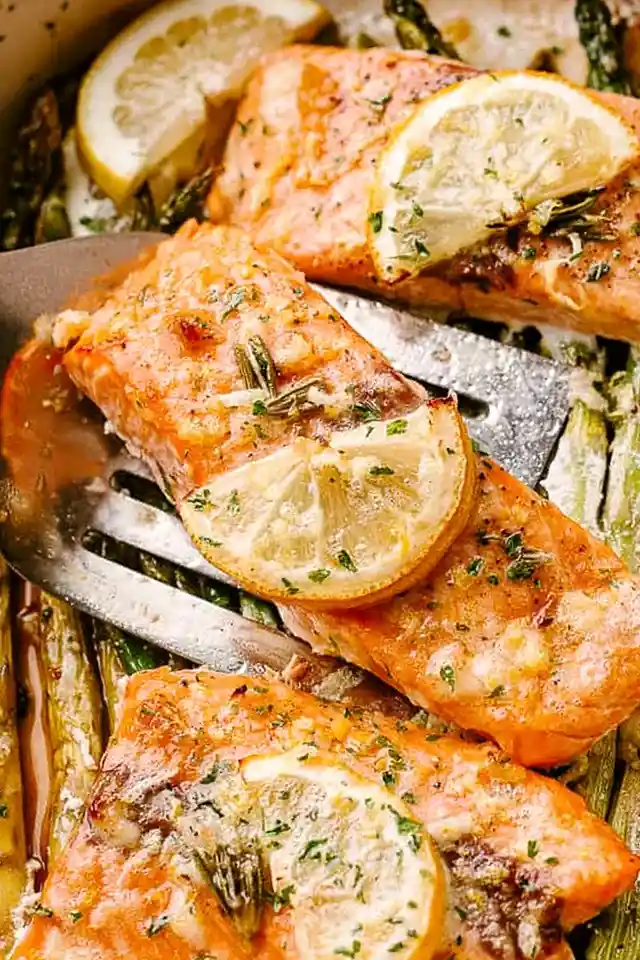
List of ingredients
- 1 pound fresh asparagus – ends trimmed for tenderness.
- cooking spray – used to prevent sticking.
- salt and freshly ground black pepper – to taste for basic seasoning.
- 4 salmon fillets – skin-on or skin-off, approximately 5 to 6-ounces each.
- 4 tablespoons butter – room temperature for easier mixing.
- 4 cloves garlic – minced finely for flavor distribution.
- 1 lemon – juiced, with the juice divided for the sauce and finishing.
- 1 tablespoon lemon zest – for concentrated citrus aroma.
- 1 tablespoon maple syrup – adds a hint of sweetness to balance the acidity.
- ½ tablespoon chopped fresh rosemary – or alternative fresh herbs like thyme.
- salt and freshly ground black pepper – to taste for the butter paste.
- lemon slices – cut into half moons for garnish and flavor.
- fresh rosemary leaves – optional for additional visual appeal.
- fresh chopped parsley – used for the final garnish.
step-by-step instructions
- Preheat and Prep: Preheat your oven to 400°F. Lightly butter a 9×13 inch baking dish to ensure the food does not stick.
- Prepare Asparagus: Arrange the trimmed asparagus in the baking dish. Lightly coat them with cooking spray, season with salt and pepper, and toss them together so they are evenly coated.
- Position Salmon: Arrange the four salmon fillets directly on top of the bed of asparagus and set them aside for seasoning.
- Create Flavor Paste: In a small bowl, combine the room temperature butter, minced garlic, half of the lemon juice, lemon zest, maple syrup, chopped rosemary, salt, and pepper. Mash the mixture with a fork until it forms a smooth, uniform paste.
- Season Fish: Rub the garlic butter paste generously over the top of each salmon fillet. Place lemon slices on top of each fillet and add a few fresh rosemary leaves if desired.
- Bake: Place the dish in the oven and bake for 17 to 20 minutes. The salmon should flake easily with a fork and the asparagus should be fork-tender.
- Optional Broiling: For a browned, crisp top, place the dish under the broiler for the final 3 to 4 minutes. Watch the fillets closely to prevent burning.
- Final Touch: Remove from the oven and squeeze the remaining lemon juice over the salmon. Garnish with fresh chopped parsley before serving.
Guidelines for Perfect Salmon Texture
Use a Digital Meat Thermometer
To avoid overcooking the fish, insert a meat thermometer into the thickest part of the fillet. Aim for an internal temperature of 145°F for medium doneness. This ensures the salmon remains moist and does not become dry or rubbery.
Recognize the Signs of Overcooking
Watch for white albumin, the protein that leaks out of salmon when it is cooked too long, appearing on the surface. If you see significant amounts of this white substance, the fish is likely overdone. Stop cooking as soon as the fish transitions from translucent to opaque.
Allow the Fillets to Rest
Let the salmon rest in the pan for 3 to 5 minutes after removing it from the oven. This allows the juices to redistribute throughout the fillet, resulting in a more tender and juicy piece of fish.
Asparagus Selection and Preparation
Trim the Woody Ends Correctly
The bottom ends of asparagus spears are tough and fibrous. To remove them, snap a spear where it naturally bends or slice off the bottom inch with a knife to ensure every bite is tender.
Select Thick-Cut Spears
Choose thicker asparagus spears to ensure they cook at the same rate as the salmon. Very thin spears may overcook and become mushy before the fish reaches the safe internal temperature.
Ensure Even Oil Distribution
Tossing the asparagus with cooking spray and seasoning before adding the fish is critical. This prevents the vegetables from steaming and instead allows them to roast and develop a slight char.
Customizing Flavors and Ingredients
Substitute Maple Syrup for Other Sweeteners
If you do not have maple syrup, honey or agave syrup are excellent alternatives. These options provide the same balance to the lemon and garlic without significantly altering the cooking process.
Experiment with Different Fresh Herbs
While rosemary provides a piney depth, fresh thyme or oregano are great substitutes. For a more citrus-forward profile, you can use chopped fresh dill or tarragon.
Using Garlic Powder in a Pinch
If fresh garlic is unavailable, you can use garlic powder. Use approximately 1/8 teaspoon of powder for every clove of fresh garlic called for in the recipe.
Alternative Vegetable Pairings
Integrating Broccoli Florets
Broccoli can replace asparagus in this one-pan method. Cut the broccoli into small, uniform florets and toss them in oil and salt just as you would with the asparagus.
Adding Sliced Carrots
Carrots add a nice sweetness and color to the dish. Slice them into thin rounds or matchsticks so they cook through in the 20-minute window provided for the salmon.
Using Fresh Green Beans
Trimmed green beans are another excellent substitute. Like asparagus, they roast well under the salmon and absorb the lemon butter sauce as it melts during baking.
Serving and Pairing Suggestions
Pairing with Whole Grains
Serve this meal with a side of quinoa or brown rice to make it more filling. The grains will soak up the excess lemon garlic butter from the bottom of the pan.
Complementing with a Fresh Salad
A crisp green salad with a light vinaigrette balances the richness of the butter sauce. Use a mix of arugula and spinach with a simple olive oil and cider vinegar dressing.
Using Couscous for Quick Prep
Pearl or Moroccan couscous is a fast side option that pairs well with Mediterranean flavors. Prepare it with vegetable broth instead of water for added depth.
Storage and Reheating Advice
Refrigerator Storage Limits
Store leftover salmon and asparagus in an airtight container in the refrigerator. They will remain safe and tasty for up to 3 days.
Freezing Leftover Salmon
You can freeze cooked salmon for up to one month. Wrap the fillets tightly in foil and place them in a freezer-safe bag to prevent freezer burn.
Reheating Without Drying Out
Avoid using the microwave, as it can make salmon rubbery. Instead, gently warm the leftovers in a low-temperature oven (around 275°F) or on a stovetop skillet with a splash of water or butter.
Troubleshooting Common Issues
Preventing Dry Salmon Fillets
If your salmon consistently comes out dry, check your oven calibration. Lower the temperature by 25°F and increase the cook time by a few minutes to provide a gentler heat.
Fixing Mushy Asparagus
Mushy vegetables usually occur from overcrowding the pan or using spears that are too thin. Ensure there is space between the asparagus pieces and use thicker stalks for better structure.
Managing Pan Overcrowding
If the pan is too full, the vegetables will steam rather than roast. Use a larger baking dish if you are increasing the number of fillets to ensure air can circulate around the food.
Frequently Asked Questions
Can I use frozen salmon fillets?
Yes, but you must thaw them completely in the refrigerator overnight before cooking. Pat the fillets dry with paper towels to ensure the butter paste adheres properly and the fish roasts instead of steams.
Should I keep the skin on the salmon?
Keeping the skin on helps protect the flesh from the direct heat of the pan, keeping it moister. You can easily slide the skin off with a spatula after cooking if you prefer not to eat it.
Can I use a sheet pan instead of a baking dish?
Yes, a rimmed baking sheet works well. However, be aware that the butter sauce may spread more on a flat sheet than in a dish, which might lead to less sauce coating the asparagus.
What if my salmon fillets are different thicknesses?
Arrange the thickest fillets in the center of the pan and the thinner ones toward the edges. The edges of the pan typically heat up faster, helping all pieces finish cooking at the same time.
} Print
Oven Baked Salmon and Asparagus with Lemon Garlic Butter
- Total Time: 30 minutes
- Yield: 4 servings 1x
- Diet: General
Description
Enjoy a nutritious and delicious baked salmon dinner paired with tender asparagus and drizzled with a flavorful lemon butter sauce.
Ingredients
- 1 pound fresh asparagus, ends trimmed
- cooking spray
- salt and freshly ground black pepper, to taste
- 4 salmon fillets, 5 to 6-ounces each
- 4 tablespoons butter, room temperature
- 4 cloves garlic, minced
- 1 lemon, juiced, juice divided
- 1 tablespoon lemon zest
- 1 tablespoon maple syrup
- ½ tablespoon chopped fresh rosemary
- salt and freshly ground black pepper, to taste
- lemon slices, cut into half moons
- fresh rosemary leaves, optional
- fresh chopped parsley, for garnish
Instructions
- Step: Preheat the oven to 400˚F.
- Step: Lightly butter a 9×13 baking dish.
- Step: Arrange the asparagus in the baking dish; lightly coat the asparagus with cooking spray, season with salt and pepper, and toss to combine.
- Step: Arrange the salmon fillets over the asparagus and set aside.
- Step: In a small bowl combine butter, garlic, half of the lemon juice, lemon zest, maple syrup, rosemary, salt, and pepper; mash with a fork to create a paste.
- Step: Rub the paste all over the fish fillets. Then, top each fillet with lemon slices and add a few fresh rosemary leaves, if using.
- Step: Bake for 17 to 20 minutes, or until the fish flakes easily and the asparagus is fork tender. For a light, crisp, and browned top, I suggest popping it under the broiler for the last 3 to 4 minutes. Watch it closely, and do not overcook it.
- Step: Remove from the oven. Squeeze lemon juice over the salmon, garnish with fresh parsley, and serve.
Notes
Choose fresh, firm, bright pink salmon for the best texture. Avoid overcooking; aim for an internal temperature of 145°F. Let the salmon rest for a few minutes after cooking to reabsorb juices. For consistent cooking, use thicker asparagus spears.
- Prep Time: 10 minutes
- Cook Time: 20 minutes
- Category: Dinner
- Method: Baking
- Cuisine: American
Nutrition
- Serving Size: 1 fillet with asparagus
- Calories: 344 kcal
- Sugar: 4 g
- Sodium: 163 mg
- Fat: 21 g
- Saturated Fat: 9 g
- Unsaturated Fat: 10 g
- Trans Fat: 0.5 g
- Carbohydrates: 10 g
- Fiber: 3 g
- Protein: 31 g
- Cholesterol: 108 mg