This elegant creamy smoked salmon pasta is a quick, high-impact meal perfect for special occasions or a fast dinner. The combination of rich cream and salty salmon creates a sophisticated flavor profile with minimal effort.
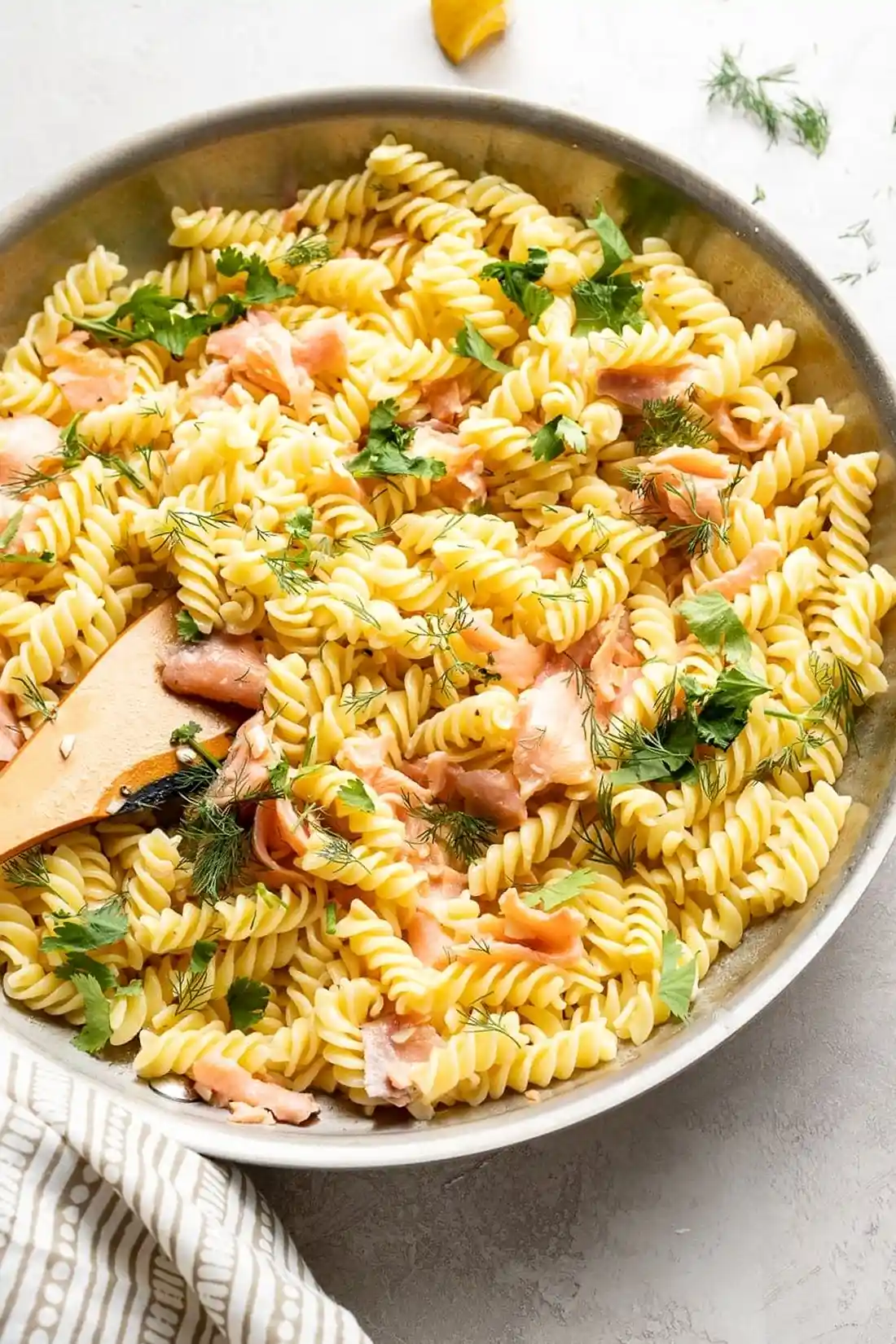
List of ingredients
- 8 ounces pasta – fusilli or farfalle are recommended for better sauce adhesion.
- 3 tablespoons butter – adds a rich, velvety base to the sauce.
- 1 tablespoon olive oil – prevents the butter from browning too quickly.
- 2 cloves garlic, minced – provides a fragrant and aromatic foundation.
- 1/2 cup chicken or vegetable broth – adds depth and savory notes to the liquid.
- 1/2 cup vegetable broth – used as a savory substitute for white wine.
- Juice from 1/2 a lemon – provides necessary acidity to balance the cream.
- 1/4 cup heavy cream – creates the thick, luscious consistency of the sauce.
- 6 ounces smoked salmon – torn or chopped into small, bite-sized pieces.
- Kosher salt and black pepper – added to taste for final seasoning.
- Fresh dill and fresh parsley – finely chopped for a fresh, colorful garnish.
step-by-step instructions
- Boil Pasta: Fill a large pot with water, add a generous pinch of salt, and bring to a boil. Cook the pasta until it is just al dente, following the package directions.
- Sauté Aromatics: While the pasta cooks, heat butter and olive oil in a large skillet over medium-high heat. Once the butter is melted, add the minced garlic and cook for 30 seconds until fragrant.
- Reduce Liquid: Pour the chicken or vegetable broth and lemon juice into the pan. Let the mixture simmer and cook until the liquid has reduced by about half, which typically takes 4 minutes.
- Incorporate Cream: Stir in the heavy cream and continue cooking for one more minute just to warm the sauce through.
- Add Salmon: Remove the skillet from the heat immediately. Stir in the smoked salmon pieces and season the mixture lightly with salt and pepper.
- Combine and Serve: Drain the pasta and add it directly to the skillet. Stir gently to coat the noodles in the sauce, sprinkle with chopped fresh dill and parsley, and serve immediately.
Sauce Optimization Techniques
Controlling the Reduction Process
Allowing the broth and lemon juice to reduce by half is essential for concentrating the flavors. This step ensures the sauce has a syrupy consistency that clings to the pasta rather than remaining watery.
Preventing Cream Separation
Heavy cream can separate or curdle if it is boiled too vigorously for too long. Adding it at the end and warming it through for only one minute maintains a smooth, emulsified texture.
Timing the Garlic Sauté
Garlic burns quickly over medium-high heat, which can introduce a bitter taste to the sauce. Sautéing for only 30 seconds ensures the garlic is fragrant without becoming overly browned.
Combining Butter and Oil
Using a mixture of butter and olive oil provides the best of both worlds. The butter contributes a rich flavor, while the oil raises the smoke point to prevent the butter from scorching.
Pasta Selection and Preparation
Choosing the Best Shape
Spiral pasta like fusilli or bowtie pasta like farfalle are ideal for this recipe. These shapes have nooks and crannies that trap the creamy sauce, ensuring every bite is flavorful.
Maintaining Al Dente Texture
Cooking the pasta just until it is al dente prevents it from becoming mushy when added to the skillet. Since the pasta continues to cook slightly in the warm sauce, undercooking it slightly is key.
Seasoning the Pasta Water
Adding a generous amount of salt to the boiling water is the only chance to season the pasta itself. This enhances the overall flavor profile of the dish from the inside out.
Managing Pasta Water
While the recipe calls for draining the pasta, keeping a small cup of pasta water can be useful. If the final sauce feels too thick, a tablespoon of this starchy water can loosen it perfectly.
Working with Smoked Salmon
Sizing the Salmon Pieces
Tearing or chopping the salmon into small, uniform pieces ensures an even distribution of fish in every forkful. This prevents large chunks from dominating the texture of the dish.
Handling Temperature
Adding the smoked salmon after removing the pan from the heat is crucial. Smoked salmon is already cured and cooked; overheating it can change its delicate texture and flavor.
Balancing the Saltiness
Smoked salmon varies in salt content depending on the brand. Taste the sauce after adding the fish before adding any additional kosher salt to avoid over-seasoning.
Selecting High Quality Fish
Using a high-quality, cold-smoked salmon provides a buttery texture that melts into the sauce. Ensure the salmon is fresh and stored at the correct temperature for the best taste.
Customizations and Ingredient Swaps
Adding Briny Capers
For an extra layer of flavor, stir in one to two tablespoons of drained capers. The saltiness and acidity of the capers provide a sharp contrast to the rich cream sauce.
Incorporating Fresh Spinach
Adding a handful of fresh baby spinach during the final stir-in provides a pop of color and added nutrition. The residual heat from the pasta will wilt the spinach perfectly without overcooking it.
Substituting Heavy Cream
If a lighter version is desired, half-and-half can be used instead of heavy cream. Note that the sauce will be slightly thinner and less rich than the original version.
Using Whole Wheat Pasta
Whole wheat or chickpea pasta can be substituted for traditional white pasta to increase fiber and protein. These options pair well with the savory notes of the salmon and garlic.
Alternative Fresh Herb Options
If dill is unavailable, fresh chives or tarragon can be used as a substitute. Chives offer a mild onion flavor, while tarragon provides a subtle anise note that complements fish.
Adjusting Heat with Pepper
Increasing the amount of cracked black pepper can add a subtle spicy kick to the dish. This helps cut through the richness of the butter and cream for a more balanced bite.
Serving and Pairing Suggestions
Recommended Vegetable Sides
Roasted asparagus or steamed broccolini are excellent sides for this pasta. Their earthy flavors and slight bitterness balance the decadence of the cream sauce.
Fresh Salad Pairings
A simple arugula or spinach salad with a light lemon vinaigrette is a great accompaniment. The acidity of the salad cleanses the palate between bites of the creamy pasta.
Optimal Plating Methods
Serve the pasta in warmed bowls to keep the sauce from thickening too quickly. Garnish with an extra sprig of fresh dill for a professional, restaurant-style presentation.
Pairing with Bread
A slice of toasted sourdough or a piece of crusty baguette is perfect for mopping up the remaining sauce. Lightly toast the bread with a bit of butter for extra flavor.
Storage and Reheating Guide
Proper Refrigeration
Store leftover pasta in an airtight container in the refrigerator for up to two to three days. Ensure the pasta is cooled slightly before sealing to prevent excess moisture buildup.
Best Reheating Methods
Reheat the pasta gently on the stovetop over low heat. Add a splash of water or a teaspoon of cream to loosen the sauce, as pasta tends to absorb liquid while sitting.
Avoiding the Freezer
It is not recommended to freeze this dish because the cream sauce can break and the salmon can become rubbery. For the best quality, consume the pasta within a few days of cooking.
Managing Sauce Consistency After Storage
Creamy sauces often thicken significantly when chilled. Stirring the pasta vigorously during the reheating process helps reintegrate the fats and liquids for a smooth texture.
Common Cooking Challenges
Fixing a Broken Sauce
If the sauce separates into oil and solids, whisk in a tablespoon of warm water or broth. Keep the heat low while stirring to bring the emulsion back together.
Correcting Over-Salted Sauce
If the salmon made the dish too salty, add a small squeeze of extra lemon juice or a tablespoon of heavy cream. These ingredients help neutralize and mask excess saltiness.
Adjusting Sauce Thickness
If the sauce is too thick after adding the pasta, stir in a small amount of reserved pasta water. This thins the sauce while maintaining the glossy appearance.
Preventing Garlic Bitterness
If the garlic begins to brown too quickly, immediately add the broth to the pan. The liquid will drop the temperature of the skillet and stop the garlic from burning.
Frequently Asked Questions
Can I use fresh salmon instead of smoked?
Yes, but fresh salmon must be cubed and sautéed in the skillet before adding the liquids. Smoked salmon is used here for its specific salty, cured flavor and tender texture.
Which pasta brand is best for this recipe?
Pasta made from durum wheat semolina is recommended for the best structure. Higher-quality pastas hold their shape better and maintain the al dente texture during tossing.
How long does the sauce take to reduce?
The liquid should reduce by about half in approximately four minutes over medium-high heat. This time may vary slightly depending on the diameter of your skillet.
Can I make this dish dairy-free?
You can substitute butter with vegan butter and heavy cream with full-fat coconut cream or a cashew-based cream. The flavor will change slightly but the creamy texture remains.
Is this recipe suitable for beginners?
Yes, this recipe is designed for beginner cooks as it uses simple techniques and requires very few pots. The total cook time is short, making it an accessible high-reward meal.
Print
Creamy Smoked Salmon Pasta
- Total Time: 20 minutes
- Yield: 4 servings 1x
- Diet: General
Description
If you’re looking to impress for date night or dinner guests, this creamy pasta with smoked salmon tastes special but is easy for even the beginner cook.
Ingredients
- 8 ounces pasta
- 3 tablespoons butter
- 1 tablespoon olive oil
- 2 cloves garlic, minced
- 1 cup vegetable broth
- juice from 1/2 a lemon
- 1/4 cup heavy cream
- 6 ounces smoked salmon, torn or chopped into small pieces
- kosher salt and black pepper to taste
- fresh dill and fresh parsley for serving
Instructions
- Step: Boil a large pot of water and add a generous pinch of salt. Cook pasta just to al dente, according to package directions.
- Step: While the pasta cooks, prepare the sauce. Add butter and oil to a large skillet set over medium-high heat.
- Step: When butter is melted, add garlic and cook for about 30 seconds, just until fragrant.
- Step: Add broth and lemon juice to the pan. Cook until the sauce is reduced by about half, about 4 minutes.
- Step: Stir in the cream and let the sauce cook for 1 minute more, just to warm it through. Remove pan from the heat, stir in the salmon pieces, and season lightly with salt and pepper.
- Step: Drain the pasta and add it to the skillet, stirring gently to coat with the sauce. For a pop of color and flavor, sprinkle with chopped fresh dill and parsley. Serve right away.
Notes
For an extra touch, try adding 1-2 tablespoons of capers, drained. They add a salty, briny flavor that really stands out and makes this dish even more special if serving to guests.
- Prep Time: 10 minutes
- Cook Time: 10 minutes
- Category: Main
- Method: Stovetop
- Cuisine: American
Nutrition
- Serving Size: 1 serving
- Calories: 449 kcal
- Sugar: 2 g
- Sodium: 428 mg
- Fat: 20 g
- Saturated Fat: 10 g
- Unsaturated Fat: 10 g
- Trans Fat: 0 g
- Carbohydrates: 44 g
- Fiber: 2 g
- Protein: 16 g
- Cholesterol: 53 mg