This Salmon Stir Fry is a nutritious, colorful dinner that takes less than 25 minutes to prepare. It features tender salmon and crisp vegetables tossed in a savory homemade glaze.
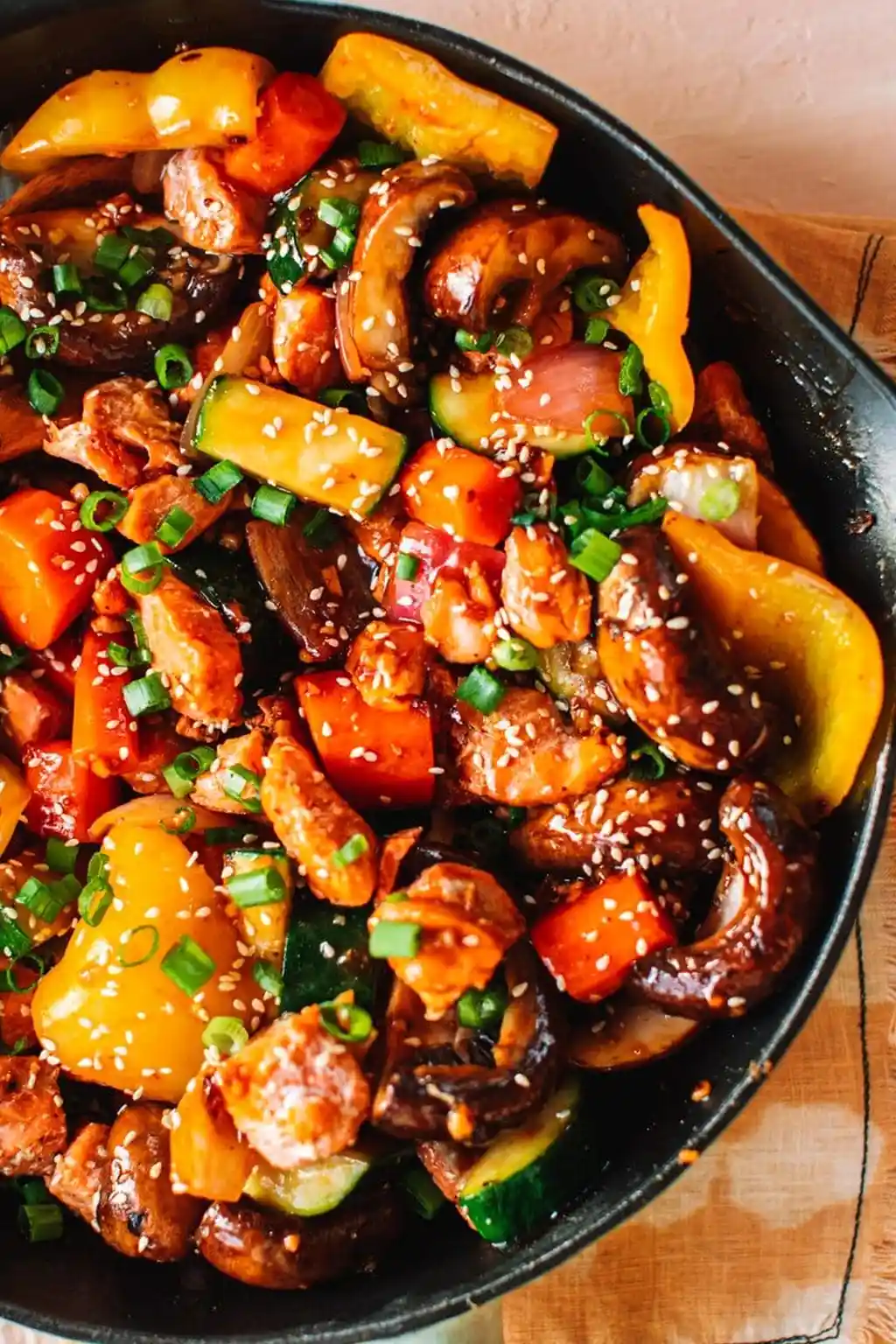
List of ingredients
- 1 lb salmon – skin removed and cut into 1-inch cubes
- Kosher salt – for seasoning
- Black pepper – for seasoning
- 1 small yellow onion – cut into 1-inch pieces
- 1 yellow bell pepper – cut into 1-inch squares
- 1 zucchini – cut into 1-inch half moons
- 8 mushrooms – stems removed and halved
- 3 carrots – peeled and cut into 2-inch pieces
- 2 tsp cornstarch – for sauce thickening
- 1/4 cup soy sauce – for the base flavor
- 2 tbsp honey – for sweetness
- 2-3 tsp sriracha – for a spicy kick
- 2 tsp sesame oil – for nutty aroma
- 5 garlic cloves – minced
- 2 tbsp olive oil – for sautéing
- 3 green onions – thinly sliced for garnish
- Sesame seeds – for garnish
step-by-step instructions
- Prepare salmon: Remove the skin on the salmon and cut it into 1-inch, bite-sized cubes. Sprinkle the salmon evenly with salt and pepper.
- Prepare vegetables: Chop onion, pepper, zucchini, mushrooms, and carrots and set aside.
- Make stir fry sauce: In a small bowl, whisk together corn starch, soy sauce, honey, sriracha, sesame oil, garlic cloves and 2 tbsp of water and set aside.
- Cook salmon: Heat a large wok or skillet over medium heat and add the olive oil. Add in salmon cubes and cook for 3-5 minutes, or until cooked to medium. Gently stir and shake the pan to move salmon to avoid breaking the fragile pieces. Allow the pan to sear the salmon for a strong, golden crust. Remove the salmon and place in a separate bowl, then tent with foil to keep warm.
- Sauté vegetables: Add the vegetables to the same wok or skillet and cook over medium heat for 5-7 minutes, until they are tender but still crisp.
- Add sauce: Add the soy sauce mixture, reduce heat to medium-low and cook for an additional 2-3 minutes, or until the sauce has thickened and turns glossy.
- Combine with salmon: Gently add the salmon back in and toss lightly to combine.
- Garnish and serve: Garnish with green onions and sesame seeds.
Optimal Serving Pairings
Steamed Jasmine Rice
Jasmine rice provides a fragrant and fluffy base that absorbs the teriyaki-style sauce. Its slightly floral scent complements the savory soy and honey glaze perfectly.
Vermicelli Rice Noodles
These thin noodles are a quick alternative that only require soaking in warm water. They provide a light texture that allows the bold flavors of the stir fry to remain the focus.
Cauliflower Fried Rice
For a low-carb or ketogenic option, use pulsed cauliflower sautéed with a bit of soy sauce. This adds extra volume and nutrients while keeping the calorie count low.
Brown Rice for Extra Fiber
Brown rice offers a nuttier flavor and a chewier texture than white rice. It is a great choice for increasing the fiber content and nutritional value of the meal.
Fresh Steamed Bok Choy
Adding a side of steamed bok choy increases the green vegetable count. The mild bitterness of the greens balances the sweetness of the honey in the sauce.
Customizing Your Ingredients
Substituting the Protein
You can replace the salmon with cubed chicken breast, shrimp, or firm tofu. Adjust the cooking time based on the protein; shrimp cooks faster, while chicken may require a few extra minutes to reach safety temperatures.
Swapping the Vegetables
If you do not have zucchini or mushrooms, try broccoli florets or snap peas. Red or orange bell peppers can be used instead of yellow for a different color profile.
Adjusting the Spice Level
For a milder version, reduce the sriracha to one teaspoon or omit it entirely. To increase the heat, add sliced fresh jalapeños or red chili flakes during the vegetable sauté phase.
Alternative Sweeteners
If you prefer not to use honey, maple syrup is a suitable substitute that provides a similar viscosity. For a sugar-free option, use a small amount of a brown-colored sweetener blend.
Low-Sodium Soy Options
Replace regular soy sauce with low-sodium soy sauce or tamari for those avoiding gluten. You can also dilute the soy sauce with a tablespoon of water to reduce the overall saltiness.
Using Different Cooking Oils
While olive oil works well, avocado oil is a great alternative due to its higher smoke point. Grapeseed oil is another neutral option that won’t alter the flavor of the dish.
Pro Techniques for Better Results
The Importance of Mise en Place
Chop all vegetables and whisk the sauce before you turn on the stove. Stir frying happens very quickly, and stopping to chop ingredients can lead to overcooked salmon or burnt garlic.
Searing the Salmon Carefully
Avoid stirring the salmon too frequently in the pan. Let it sit undisturbed for a few minutes to develop a golden-brown crust, then gently shake the pan to move the pieces.
Controlling Sauce Thickness
If the sauce is too thick, add a tablespoon of water or vegetable broth to thin it out. If it is too thin, let it simmer for an extra minute over medium-low heat to allow the cornstarch to activate.
Preventing Vegetable Overcooking
Add harder vegetables like carrots first, followed by softer ones like zucchini. This ensures all vegetables reach a tender-crisp state at the same time without turning mushy.
Managing Salt Levels
Since soy sauce is naturally salty, be cautious with the amount of kosher salt added to the raw salmon. Taste the final dish before adding any additional seasoning.
Maintaining Freshness and Quality
Refrigerator Storage Guidelines
Store leftovers in an airtight glass or plastic container in the refrigerator. This dish is best enjoyed within three days to maintain the texture of the vegetables.
The Best Reheating Method
Reheat the stir fry in a skillet over low heat instead of using a microwave. This prevents the salmon from becoming rubbery and keeps the sauce from separating.
Preventing Dryness During Reheating
Add a small splash of water or a teaspoon of soy sauce when reheating. This re-emulsifies the glaze and ensures the salmon stays moist.
Why You Should Avoid Freezing
Freezing this dish is not recommended because the cellular structure of the zucchini and mushrooms breaks down. Upon thawing, these vegetables will become watery and lose their texture.
Common Cooking Challenges
Handling Fragile Salmon Cubes
Salmon breaks apart easily when over-stirred. Use a wide spatula and move the fish gently, or shake the skillet to toss the pieces rather than using utensils.
Fixing a Clumpy Sauce
If the cornstarch clumps, whisk it thoroughly with the cold soy sauce before adding it to the pan. If clumps appear in the pan, you can strain the sauce through a fine-mesh sieve.
Avoiding Watery Vegetables
Ensure the pan is hot before adding the vegetables to encourage searing rather than steaming. Do not overcrowd the pan, as this releases too much moisture and prevents browning.
Preventing Burnt Garlic
Add the minced garlic into the sauce mixture rather than frying it alone in the oil. This protects the garlic from burning and distributes the flavor evenly throughout the dish.
Frequently Asked Questions
Can I use frozen salmon for this recipe?
Yes, but ensure the salmon is completely thawed and patted dry with paper towels. Excess moisture on frozen salmon will prevent it from searing and may cause it to steam in the pan.
Is there a substitute for cornstarch?
Arrowroot powder or tapioca starch can be used in a 1:1 ratio. These alternatives provide a similar thickening effect and a glossy finish to the sauce.
How do I know when the salmon is medium?
The salmon should be opaque on the outside and slightly translucent in the center. An instant-read thermometer should register about 130-135 degrees Fahrenheit.
Can I make this recipe vegan?
Yes, by replacing the salmon with extra-firm pressed tofu and using a vegan-friendly honey substitute like agave nectar or maple syrup.
What is the best pan for stir frying?
A carbon steel wok is ideal for heat distribution, but a large stainless steel or cast-iron skillet works well. The key is using a pan with high sides to make tossing easier.
Print
Quick and Healthy Salmon Stir Fry
- Total Time: 25 minutes
- Yield: 4 servings 1x
- Diet: General
Description
Salmon Stir Fry is a colorful and delicious weeknight dinner that’s totally customizable and ready in less than 25 minutes! This savory stir fry and salmon recipe gets a gentle toss with homemade teriyaki sauce that pairs perfectly with your favorite noodles or cauliflower fried rice.
Ingredients
- 1 lb salmon
- Kosher salt
- Black pepper
- 1 small yellow onion (cut into 1-inch pieces)
- 1 yellow bell pepper (cut into 1-inch squares)
- 1 zucchini (cut into 1 inch half moons)
- 8 mushrooms (stems removed and halved)
- 3 carrots (peeled and cut into 2-inch pieces)
- 2 tsp cornstarch
- ¼ cup soy sauce
- 2 tbsp honey
- 2–3 tsp sriracha
- 2 tsp sesame oil
- 5 garlic cloves (minced)
- 2 tbsp olive oil
- 3 green onions (thinly sliced, for garnish)
- Sesame seeds (for garnish)
Instructions
- Prepare salmon: Remove the skin on the salmon and cut it into 1-inch, bite-sized cubes. Sprinkle the salmon evenly with salt and pepper.
- Prepare vegetables: Chop onion, pepper, zucchini, mushrooms, and carrots and set aside.
- Make stir fry sauce: In a small bowl, whisk together corn starch, soy sauce, honey, sriracha, sesame oil, garlic cloves and 2 tbsp of water and set aside.
- Cook salmon: Heat a large wok or skillet over medium heat and add the olive oil. Add in salmon cubes and cook for 3-5 minutes, or until cooked to medium. Gently stir and shake the pan to move salmon. The salmon is fragile and can fall apart easily. Allow the pan to sear the salmon for a strong, golden crust. Remove the salmon and place in a separate bowl. Tent to keep warm.
- Sauté vegetables: Add the vegetables to the same wok or skillet and cook over medium heat for 5-7 minutes, until they are tender but still crisp.
- Add sauce: Add the soy sauce mixture, reduce heat to medium-low and cook for an additional 2-3 minutes, or until the sauce has thickened and turns glossy.
- Combine with salmon: Gently add the salmon back in and toss lightly to combine.
- Garnish and serve: Garnish with green onions and sesame seeds. Enjoy!
Notes
Storage: Keep in an airtight container in the fridge and enjoy within 3 days. I do not recommend freezing this dish. Reheating: Place the salmon and veggies in a skillet over low heat until warmed through. Reheating it low and slow prevents the fish from overcooking and drying out. Add a splash or two of water if the dish looks a little too dry.
- Prep Time: 10 minutes
- Cook Time: 15 minutes
- Category: Savory
- Method: Stir Fry
- Cuisine: Asian
Nutrition
- Serving Size: 1 serving
- Calories: 349 kcal
- Sugar: 14 g
- Sodium: 955 mg
- Fat: 17 g
- Saturated Fat: 2 g
- Unsaturated Fat: 13 g
- Trans Fat: 0 g
- Carbohydrates: 24 g
- Fiber: 3 g
- Protein: 27 g
- Cholesterol: 62 mg