These hot salmon melts combine canned and smoked salmon for a rich, layered flavor topped with bubbly melted cheese. This recipe provides a quick, protein-packed lunch that is far more satisfying than a standard sandwich.
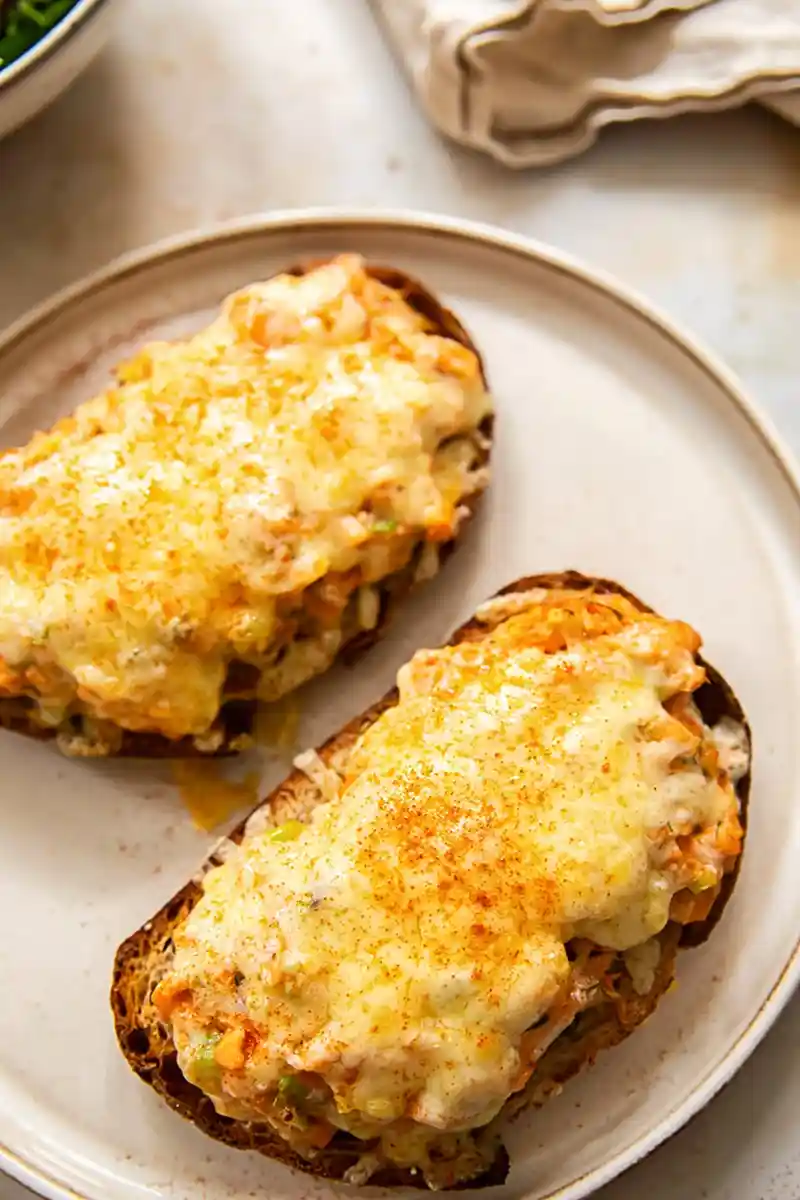
List of ingredients
- 212g (7½ oz) canned salmon – drained, with skin and bones removed.
- 100g (3½ oz) hot smoked salmon – flaked into small pieces.
- 2 green onions – thinly sliced.
- 1 small gherkin pickle or 1 tsp capers – finely diced for acidity.
- 25g (1/4 cup) celery – one small rib, diced small.
- 1 tsp fresh dill – finely chopped.
- 110g (1/2 cup) mayonnaise – low-fat may be used.
- 1/2 tsp mustard – adds a sharp tang.
- 1 tbsp lemon juice – helps balance the richness.
- 50g (1/2 cup) sharp cheddar cheese – grated for easy melting.
- 4 slices high-quality bread – choose a sturdy, crusty variety.
step-by-step instructions
- Prepare the filling: In a mixing bowl, combine the drained canned salmon, flaked smoked salmon, sliced green onions, diced pickle or capers, diced celery, fresh dill, mayonnaise, mustard, and lemon juice. Stir the mixture thoroughly, flaking any large salmon chunks so the pieces are evenly sized for consistent spreading.
- Assemble the sandwiches: Scoop a generous portion of the salmon mixture onto each of the four slices of bread. Spread the mixture evenly to the edges of the bread to ensure every bite has filling.
- Add the cheese: Sprinkle the grated sharp cheddar cheese over the top of the salmon mixture on each slice, covering the filling completely.
- Broil until melted: Place the prepared open-faced sandwiches on a baking sheet in a preheated oven with the broiler turned on. Cook for approximately three minutes, or until the cheese is fully melted and begins to bubble or brown slightly.
Optimal Bread Selection for Salmon Melts
Using Sourdough for Tangy Contrast
Sourdough is an ideal choice because its natural acidity cuts through the richness of the salmon and mayonnaise. The sturdy crust prevents the bread from becoming soggy under the weight of the moist filling. It toasts well under a broiler, providing a crisp edge.
Rye Bread for Earthy Depth
Rye bread offers a robust, earthy flavor that complements the smokiness of the hot smoked salmon. Its denser texture holds up well to the broiler’s high heat. Use a marbled rye for a visually appealing presentation.
Ciabatta for Maximum Structure
Ciabatta is highly recommended if you prefer a thicker, airier bread with a very crisp exterior. Its structure is strong enough to support a larger pile of salmon mixture without bending. This is the best option for those who want a heartier, meal-sized sandwich.
Whole Grain Bread for Nutritious Texture
Whole grain or multigrain breads add a nutty flavor and extra fiber to the dish. Ensure the slices are not too thin, as very thin whole grain bread can burn quickly under a broiler. Opt for a thick-cut sprouted grain loaf for the best results.
Cheese Alternatives for Different Flavor Profiles
Gruyère for a Nutty Aroma
Gruyère is a classic melting cheese that provides a sophisticated, nutty taste. It melts very smoothly and pairs exceptionally well with the lemon and dill in the salmon mixture. This substitution elevates the sandwich to a more gourmet style.
Mozzarella for Mild Creaminess
Low-moisture mozzarella is a great choice for those who prefer a milder flavor that doesn’t overpower the salmon. It provides a superior cheese pull and a very creamy texture. Pair it with an extra sprinkle of black pepper to add a bit of zing.
Pepper Jack for a Spicy Kick
If you enjoy a bit of heat, Pepper Jack cheese is a perfect substitute for cheddar. The jalapenos embedded in the cheese contrast well with the smokiness of the salmon. It melts quickly and adds a sharp, spicy finish to the melt.
Provolone for a Balanced Saltiness
Provolone offers a mild yet distinct saltiness that works well with canned salmon. It creates a dense, gooey layer that seals the filling in place. Use mild provolone to keep the focus on the salmon, or sharp provolone for more punch.
Salmon Selection and Preparation Tips
Canned vs. Fresh Salmon
Canned salmon is used here for convenience and a softer texture that blends well with mayonnaise. If using fresh salmon, cook it first by poaching or steaming, then flake it while warm. Ensure fresh salmon is cooked just until opaque to avoid a dry filling.
Hot Smoked vs. Cold Smoked Salmon
Hot smoked salmon is used in this recipe because it has a firm, cooked texture and a deep smoky flavor. Cold smoked salmon (the translucent type) is too salty and slippery for this specific melt. If you only have cold smoked, use it sparingly as a garnish on top of the cheese.
Removing Skin and Bones
While salmon bones are edible and high in calcium, some prefer them removed for a smoother texture. Carefully pick through the canned salmon with a fork to remove any large vertebrae or skin fragments. This ensures a consistent mouthfeel in the final sandwich.
Mixing and Texture Guidelines
Balancing the Mayonnaise Ratio
The mayonnaise acts as the binder for the salmon salad. If the mixture feels too dry, add mayonnaise one tablespoon at a time. If it is too runny, add a small amount of additional flaked salmon or a pinch of breadcrumbs to thicken it.
Uniformity in Dicing Vegetables
Dice the celery and pickles into very small, uniform cubes. This prevents large chunks of vegetables from falling out of the sandwich during the broiling process. Small pieces ensure that every bite has a balanced distribution of crunch and acidity.
Properly Folding in Fresh Herbs
Add the fresh dill and green onions at the very end of the mixing process. Fold them in gently to avoid bruising the herbs or over-mixing the salmon. This keeps the green colors vibrant and the herb flavors fresh.
Cooking Method Variations
Using an Air Fryer for Faster Results
You can easily prepare these sandwiches in an air fryer instead of an oven. Set the air fryer to 400°F (200°C) and cook for 3 to 4 minutes. Watch closely, as the circulating air can brown the cheese and bread edges much faster than a broiler.
Pan-Searing for a Grilled Style
For a toasted exterior on both sides, place the salmon mixture between two slices of bread like a traditional grilled cheese. Butter the outside of the bread and sear in a skillet over medium heat. Cook for 3-4 minutes per side until the cheese is melted and the bread is golden brown.
Conventional Baking for Batch Cooking
If making a large batch for a group, use a standard oven set to 375°F (190°C). Bake for 8-10 minutes until the cheese is melted. This method is slower but provides more even heat distribution across multiple baking sheets.
Serving and Pairing Suggestions
Pairing with Fresh Green Salads
Since the salmon melt is rich and creamy, it pairs best with a light, acidic salad. A simple arugula salad with lemon vinaigrette or a mixed greens salad with a light balsamic dressing works well. The acidity helps cleanse the palate between bites.
Complementing with Creamy Vegetable Soups
A cup of roasted butternut squash soup or a creamy mushroom soup provides a comforting contrast. The sweetness of a root vegetable soup balances the saltiness of the smoked salmon and cheddar. Serve the soup in a small bowl on the side.
Adding Pickled Garnishes
Serve the sandwiches with additional cornichons or pickled red onions on the side. These additions provide a sharp, vinegary contrast to the melted cheese. A side of capers can also enhance the briny notes of the salmon.
Storage and Meal Prep Guide
Storing the Salmon Salad Mixture
The salmon filling can be prepared in advance and stored in an airtight container in the refrigerator. It will stay fresh for 3 to 4 days. Keep the mixture chilled and only assemble the sandwiches right before you are ready to cook them.
Freezing Guidelines
Do not freeze the assembled sandwiches or the salmon salad containing mayonnaise. Mayonnaise breaks and separates when frozen, resulting in a greasy texture upon thawing. Freeze only the cooked salmon portions if necessary, then thaw and mix with fresh ingredients.
Reheating Leftover Melts
To reheat a previously cooked salmon melt, avoid the microwave as it makes the bread rubbery. Use a toaster oven or a conventional oven at 350°F (175°C) for 5 minutes. This restores the crispness of the bread and remelts the cheese.
Troubleshooting Common Issues
Preventing Soggy Bread
If you find the bread becomes too soft, lightly toast the slices in a toaster before adding the salmon mixture. This creates a moisture barrier that prevents the mayonnaise from soaking into the crumb. It also adds an extra layer of crunch.
Avoiding Burnt Cheese
Broilers vary in intensity and can burn cheese in seconds. Position your oven rack in the middle rather than the top to allow more space between the heat source and the cheese. Check the sandwiches every 60 seconds once the cheese begins to bubble.
Fixing a Dry Filling
If the salmon mixture feels too dense or dry, stir in a teaspoon of Greek yogurt or a splash of extra lemon juice. This adds moisture and a slight tang without making the filling overly heavy. Avoid adding too much liquid, or the mixture will slide off the bread.
Frequently Asked Questions
Can I use fresh salmon instead of canned?
Yes, you can use fresh salmon. Simply poach or bake the fillet until cooked through, let it cool slightly, and then flake it into the bowl. Ensure the fresh salmon is well-drained so the mixture doesn’t become watery.
How do I store the leftover salmon filling?
Place the leftover filling in a glass airtight container and store it in the coldest part of your refrigerator. It is safe to consume for up to four days. Stir the mixture briefly before using it for new sandwiches.
What is the best replacement for sharp cheddar?
Gruyère or Swiss cheese are the best replacements for a similar salty and nutty profile. If you prefer something milder, mozzarella or provolone are excellent options that melt well.
Can this recipe be made without mayonnaise?
You can substitute mayonnaise with Greek yogurt or a combination of mashed avocado and lemon juice. Greek yogurt provides a similar creaminess with a tangier taste, while avocado adds healthy fats and a rich texture.
Is it possible to make this recipe vegan?
To make this vegan, replace the salmon with mashed chickpeas or hearts of palm mixed with seaweed flakes for a fishy flavor. Use vegan mayonnaise and a plant-based melting cheese alternative.
Print
Savory Melted Salmon Sandwiches
- Total Time: 10 minutes
- Yield: 4 servings 1x
- Diet: General
Description
Hot salmon sandwich with oozing cheese on delicious crusty bread.
Ingredients
- 212g / 7½ oz canned salmon (drained, discard skin and bones)
- 100g / 3½ oz hot smoked salmon (flaked)
- 2 green onions (sliced)
- 1 small pickle (gherkin) or 1 tsp capers
- 25g / 1/4 cup celery (1 small rib) (diced)
- 1 tsp fresh dill
- 110g / 1/2 cup mayonnaise
- 1/2 tsp mustard
- 1 tbsp lemon juice
- 50g / 1/2 cup grated sharp cheddar
- 4 slices good quality bread
Instructions
- Step 1: Combine all ingredients other than cheese and bread in a bowl and mix, flaking the pieces of salmon so they are even sized.
- Step 2: Add the salmon mixture to slices of bread and cover with shredded cheese. Cook in a preheated oven with the broiler on for three minutes.
Notes
This salmon sandwich can also be cooked in an air fryer for 3 minutes.
- Prep Time: 7 minutes
- Cook Time: 3 minutes
- Category: lunch
- Method: Broiling
- Cuisine: American
Nutrition
- Serving Size: 1 sandwich
- Calories: 399 kcal
- Sugar: 5 g
- Sodium: 1237 mg
- Fat: 16 g
- Saturated Fat: 4 g
- Unsaturated Fat: 12 g
- Trans Fat: 0.03 g
- Carbohydrates: 37 g
- Fiber: 2 g
- Protein: 27 g
- Cholesterol: 67 mg