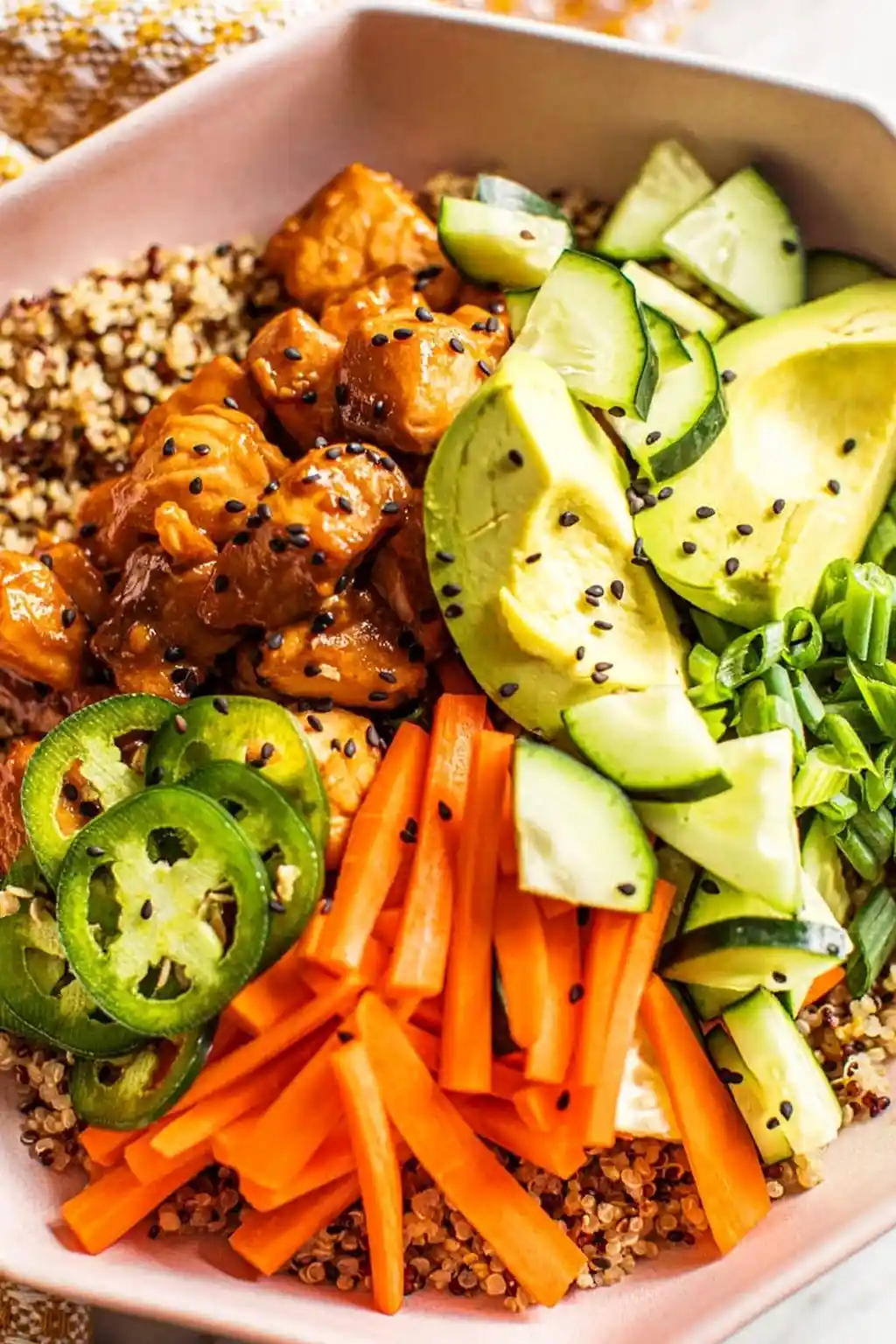
This nutrient-dense meal combines teriyaki-glazed salmon with fluffy quinoa and fresh vegetables. It provides a balanced mix of protein, healthy fats, and fiber for a quick lunch or dinner.
List of ingredients
- 1 cup dried quinoa – rinse before cooking for better taste.
- 1 lb salmon filet – skinless and cut into ½ inch cubes.
- ¼ cup soy sauce – provides the salty base for the marinade.
- 2 tbsp rice vinegar – adds a tangy balance to the sweetness.
- 2 tsp minced garlic – fresh garlic offers the best flavor.
- 1 tbsp honey – acts as a sweetener and helps the glaze thicken.
- 1 tsp cornstarch – used to thicken the sauce during cooking.
- 1 tbsp vegetable oil – for searing the salmon in the pan.
- 2-3 green onions – minced for a mild onion flavor.
- ½ cucumber – quartered and sliced for freshness.
- 2 carrots – julienned into thin strips.
- 1 avocado – thinly sliced for creamy healthy fats.
- 1 jalapeno – thinly sliced (optional) for added heat.
step-by-step instructions
- Cook quinoa: Prepare the quinoa according to package instructions. Fluffy with a fork and set aside.
- Make salmon marinade: While the quinoa is cooking, place salmon, soy sauce, rice vinegar, garlic, honey and cornstarch into a medium bowl. Mix gently until well combined.
- Cook salmon: Heat a non-stick skillet on medium-high heat with vegetable oil. Add the marinated salmon pieces and cook for 5-6 minutes, or until the salmon is just cooked through and the sauce has thickened. Gently move the pieces as the salmon pieces will be fragile.
- Arrange bowls: Divide quinoa and salmon pieces into two bowls. Top with green onions, cucumbers, carrots, ½ avocado and jalapeno slices, if desired. Enjoy!
Salmon Selection and Preparation
Choosing the Right Salmon Cut
For this recipe, a center-cut filet is ideal because it provides consistent thickness. This ensures that all the ½ inch cubes cook at the same rate. Avoid pieces with uneven thickness to prevent some cubes from overcooking while others remain raw.
Removing the Skin Effectively
If your filet comes with skin, use a sharp fillet knife to slide between the skin and the flesh. Start at the tail end and keep the knife flat against the skin. If you prefer, you can ask your fishmonger to remove the skin before purchase.
Precise Cubing Techniques
Cut the salmon into uniform ½ inch cubes to ensure a quick and even sear. Use a very sharp knife and a gentle slicing motion to avoid crushing the delicate flesh. Uniform sizes allow the marinade to penetrate evenly and the sauce to glaze each piece consistently.
Mastering the Quinoa Base
Rinsing the Quinoa Grains
Always rinse dried quinoa in a fine-mesh strainer under cold running water for about 30 seconds. This removes the saponin, a natural coating that can make quinoa taste bitter. Rinsing ensures a clean, nutty flavor in the final bowl.
Optimizing the Water Ratio
Follow the package directions, but generally, a 2:1 ratio of water to quinoa works best. Use a tight-fitting lid to trap the steam, which is essential for the grains to plump up. Once the water is absorbed, let the pot sit off the heat for 5 minutes before fluffing.
Fluffing for the Ideal Texture
Use a fork to gently lift and separate the quinoa grains rather than a spoon. This prevents the quinoa from becoming mashed or gummy. Fluffing allows steam to escape and creates a light, airy base for the salmon and vegetables.
Optimizing the Teriyaki Marinade
Balancing Sweetness and Salt
The combination of honey and soy sauce creates a classic teriyaki profile. If you prefer a less sweet glaze, reduce the honey by half a tablespoon. For a saltier finish, you can add an extra teaspoon of soy sauce, though the current ratio is balanced for most palates.
Selecting the Right Rice Vinegar
Plain rice vinegar provides a sharp tang that cuts through the richness of the salmon. Seasoned rice vinegar contains added sugar and salt, so if you use it, reduce the honey slightly to maintain the flavor balance. This acidity is key to balancing the fats in the avocado and salmon.
The Role of Cornstarch in Glazing
Cornstarch is critical for transforming the liquid marinade into a thick glaze. As the salmon cooks, the cornstarch gelatinizes, causing the sauce to cling to the fish. Without it, the sauce would remain watery and pool at the bottom of the bowl.
Vegetable Preparation and Enhancements
Julienning Carrots for Texture
Cut your carrots into thin, matchstick-sized strips known as julienne. This ensures that the carrots provide a consistent crunch without overpowering the other ingredients. You can use a mandoline or a julienne peeler to speed up this process.
Slicing Avocado for Presentation
Cut the avocado in half, remove the pit, and slice it into thin wedges. To prevent browning, lightly brush the slices with a small amount of lemon juice or rice vinegar. Place the slices on top of the bowl at the very end to keep them intact.
Managing Heat with Jalapenos
Remove the seeds and membranes from the jalapeno if you prefer a milder heat. Slice them into thin rounds to distribute the spice evenly throughout the bowl. For those who dislike heat, these can be replaced with thinly sliced red radishes for a similar crunch.
Incorporating Extra Greens
To increase the volume of the meal, serve the quinoa and salmon over a bed of baby spinach or chopped romaine. Steamed broccoli florets or sautéed asparagus also pair well with the teriyaki flavors. This adds more micronutrients and fiber to the dish.
Storage and Meal Prep Guidance
Keeping Quinoa Fresh
Store cooked quinoa in an airtight glass container in the refrigerator for up to 5 days. To prevent it from drying out, you can add a teaspoon of water before reheating. Keep the quinoa separate from the other ingredients until serving.
Salmon Storage Limits
Cooked salmon is best consumed within 3 days when stored in the fridge. Use a sealed container to prevent the fish from absorbing other odors in the refrigerator. Label the container with the date to ensure food safety.
Maintaining Vegetable Crispness
Store prepped cucumbers, carrots, and green onions in a large container with a damp paper towel on top. This helps maintain humidity and keeps the vegetables crisp for up to 5 days. Always store the sliced avocado separately or slice it fresh just before eating.
Reheating and Serving Tips
Microwaving Salmon and Quinoa
Place the quinoa and salmon in a microwave-safe dish and cover with a damp paper towel. Heat on medium power in 30-second intervals to avoid overcooking the salmon. Overheating salmon can make it rubbery and dry.
Stovetop Reheating Method
Add a splash of water or vegetable broth to a small skillet over low heat. Add the salmon and quinoa, covering the pan with a lid to steam the ingredients. This method preserves the moisture of the fish better than a microwave.
Avoiding Overcooked Salmon
Salmon continues to cook slightly after being removed from the heat. When reheating, stop just as the fish becomes warm to the touch. This prevents the protein fibers from tightening and becoming tough.
Troubleshooting Common Issues
Preventing Salmon from Breaking
Salmon is fragile, especially when cut into small cubes. Use a wide non-stick skillet and move the pieces gently with a silicone spatula. Avoid stirring too frequently; instead, let the salmon sear for a few minutes before turning.
Fixing Watery Quinoa
If your quinoa is too wet, return it to the pot over low heat for 2-3 minutes without a lid. This allows the excess moisture to evaporate. Ensure you are using the correct water-to-grain ratio to avoid this issue initially.
Correcting Sauce Consistency
If the teriyaki sauce is too thin after cooking, simmer it for an extra minute in the pan. If it becomes too thick or sticky, add a teaspoon of water or rice vinegar to loosen it. The goal is a glossy glaze that coats the salmon.
Frequently Asked Questions
How many calories are in a quinoa salmon bowl?
One serving of this salmon quinoa bowl contains approximately 886 to 956 calories, depending on the exact size of the avocado and salmon filet used.
What else can be added to quinoa bowls?
Quinoa is versatile and pairs well with edamame, shredded purple cabbage, toasted sesame seeds, or a drizzle of spicy mayo. You can also swap the salmon for tofu or shrimp.
What is the best way to cook salmon?
Salmon is best cooked over medium to medium-high heat on a stovetop to sear the outside while keeping the inside moist. Using a non-stick pan prevents the delicate cubes from sticking and breaking.
Print
Healthy Salmon Quinoa Bowl
- Total Time: 25 minutes
- Yield: 2 servings 1x
- Diet: Healthy
Description
This Salmon Quinoa Bowl is packed with superfoods and generously seasoned with a special teriyaki marinade. Packed with protein, healthy fats and fiber, serve it as a quick lunch or dinner any day of the week.
Ingredients
- 1 cup dried quinoa
- 1 lb salmon filet, skinless and cut into ½ inch cubes
- ¼ cup soy sauce
- 2 tbsp rice vinegar
- 2 tsp minced garlic
- 1 tbsp honey
- 1 tsp cornstarch
- 1 tbsp vegetable oil
- 2–3 green onions, minced
- ½ cucumber, quartered
- 2 carrots, julienned
- 1 avocado, thinly sliced
- 1 jalapeno, thinly sliced (optional)
Instructions
- Cook quinoa: Prepare the quinoa according to package instructions. Fluffy with a fork and set aside.
- Make salmon marinade: While the quinoa is cooking, place salmon, soy sauce, rice vinegar, garlic, honey and cornstarch into a medium bowl. Mix gently until well combined.
- Cook salmon: Heat a non-stick skillet on medium-high heat with vegetable oil. Add the marinated salmon pieces and cook for 5-6 minutes, or until the salmon is just cooked through and the sauce has thickened. Gently move the pieces as the salmon pieces will be fragile.
- Arrange bowls: Divide quinoa and salmon pieces into two bowls. Top with green onions, cucumbers, carrots, ½ avocado and jalapeno slices, if desired.
Notes
Store quinoa in the fridge in an airtight container for up to 5 days. Store salmon in the fridge in an airtight container for 3 days. Prep and cut vegetables and store in a large container in the fridge for up to 5 days.
- Prep Time: 10 minutes
- Cook Time: 15 minutes
- Category: Dinner, Lunch
- Method: Stovetop
- Cuisine: Asian
Nutrition
- Serving Size: 1 bowl
- Calories: 956 kcal
- Sugar: 14 g
- Sodium: 1778 mg
- Fat: 41 g
- Saturated Fat: 6 g
- Unsaturated Fat: 32 g
- Trans Fat: 0.04 g
- Carbohydrates: 84 g
- Fiber: 16 g
- Protein: 64 g
- Cholesterol: 125 mg