This Creamy Salmon Alfredo Pasta offers a sophisticated blend of flaky, herb-roasted fish and rich, velvety white sauce coating every piece of pasta. It is an elevated weeknight dinner that balances the luxurious texture of a homemade cream sauce with the clean, savory notes of wild-caught salmon. Perfect for family meals, this dish comes together efficiently for a restaurant-quality experience at home.
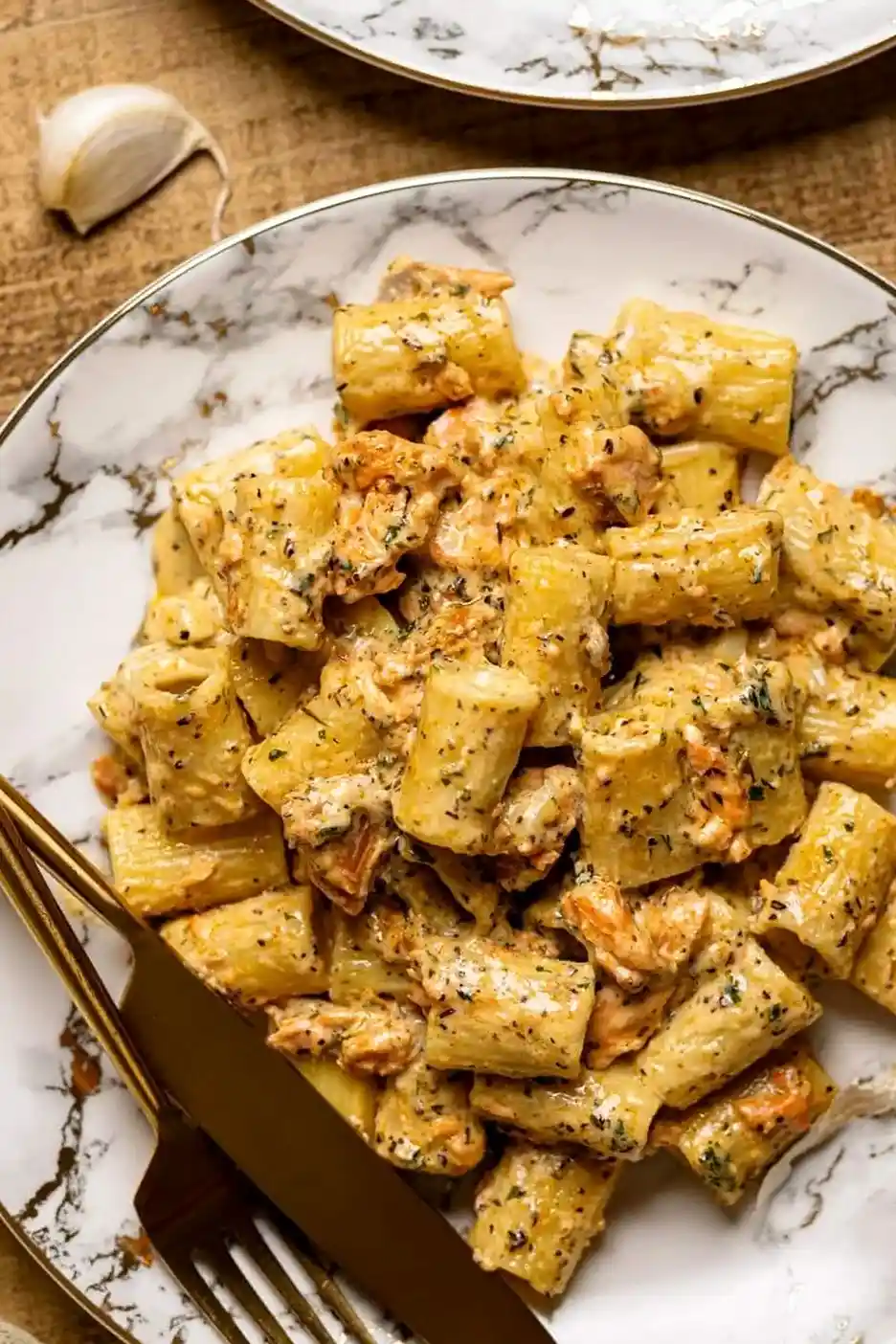
List of ingredients
- 1 (16 oz.) package organic rigatoni pasta
- 3 Tbsp extra virgin olive oil, divided
- 2 (4-6 ounces) wild-caught Sockeye salmon fillets, skin removed
- 1 tsp sea salt
- 1 tsp black pepper
- 1 tsp smoked paprika
- 1 tsp garlic powder
- 1 tsp dried parsley
- 3 garlic cloves, minced
- Handful of fresh thyme sprigs
- 1 batch homemade Alfredo sauce
step-by-step instructions
- Step: Preheat the oven to 400 degrees Fahrenheit and line a small baking sheet with parchment paper.
- Step: Season the salmon with 2 tablespoons of olive oil, salt, black pepper, garlic powder, parsley, minced garlic, and thyme sprigs.
- Step: Roast the salmon on the top rack for 15-20 minutes until fully cooked and flaky.
- Step: Shred the salmon into medium to large chunks using two forks, or keep as fillets.
- Step: Cook the pasta according to the package directions, typically 8-10 minutes, and drain.
- Step: Prepare the homemade Alfredo sauce and toss the cooked pasta in the sauce until well coated.
- Step: Gently fold the salmon into the pasta or place fillets on top of individual servings and serve immediately.
Refining the cooking process
Maintaining the ideal salmon texture
To ensure your salmon remains succulent rather than dry, monitor the internal temperature closely during the roasting process. The fish should reach an internal temperature of 145 degrees Fahrenheit, at which point it will naturally pull apart into perfect, tender flakes. Removing the fillets promptly from the heat prevents the proteins from tightening and becoming tough.
Achieving the perfect pasta consistency
Cooking your pasta until it is just al dente is vital when combining it with a heavy cream sauce. Since the pasta will continue to absorb liquid from the Alfredo sauce after being tossed, you want the noodles to retain a slight bite. If the pasta is overcooked, it will become mushy once mixed with the thick, warm sauce.
Integrating aromatics for maximum flavor
When seasoning the salmon, ensure the minced garlic is spread evenly across the surface of the fillets rather than clustered in one spot. The thyme sprigs should be placed directly in contact with the salmon meat to ensure the essential oils permeate the fish during the high-heat roasting phase. This creates a deeply flavored base that complements the richness of the dairy-based sauce.
Customizing your pasta dish
Exploring pasta alternatives
While rigatoni is an excellent choice for holding onto creamy sauces due to its ridges and hollow center, you can experiment with other shapes. Long noodles like pappardelle or fettuccine work beautifully, though they require a bit more attention when tossing to ensure even distribution. Avoid very small or thin pasta shapes, as they may become overwhelmed by the weight of the thick sauce and salmon chunks.
Selecting alternative fats
If you prefer a different flavor profile or find yourself out of olive oil, several other fats function well in this recipe. Coconut oil provides a very subtle sweetness that pairs surprisingly well with the salmon, while avocado oil remains neutral and handles high heat exceptionally well. Grapeseed oil is another excellent, mild option that will not alter the flavor profile of your herb-rubbed fish.
Enhancing the dish with greens
Adding leafy greens can elevate the nutritional profile and provide a vibrant contrast to the creamy sauce. Sautéed spinach, baby kale, or blanched asparagus can be tossed in at the very end of the assembly process. These additions introduce freshness and color, making the finished plate visually appealing and texturally diverse.
Managing and serving leftovers
Proper storage techniques
To store leftovers, transfer the pasta and salmon into an airtight container as soon as it has cooled to room temperature. Keeping the container tightly sealed prevents the sauce from developing a film and protects the salmon from absorbing odors in the refrigerator. Consume within 3-4 days for the best quality and flavor.
Gentle reheating strategies
Reheating creamy pasta requires low, steady heat to avoid breaking the sauce. If using a microwave, reheat in 30-second intervals and stir thoroughly between each burst to distribute heat evenly. On the stovetop, add a splash of vegetable broth or heavy cream to the skillet to loosen the sauce and restore its original silky consistency.
Preparing in advance
If you are planning to serve this dish for guests, you can roast the salmon ahead of time and keep it refrigerated. Prepare the Alfredo sauce and cook the pasta just before you are ready to serve. Mixing the hot, freshly cooked pasta with the warm sauce will yield the best results for your dinner party.
Addressing common kitchen questions
How can I make this dish gluten-free?
Simply substitute the standard wheat-based rigatoni with your favorite gluten-free variety, such as those made from brown rice or corn. Ensure that your homemade Alfredo sauce uses a gluten-free thickener, such as cornstarch or a gluten-free flour blend, if required by your specific sauce recipe.
Why is my sauce separating?
Separation often occurs if the sauce is boiled too vigorously or cooked over excessive heat after the cheese is added. Always keep the heat on low when incorporating the cheese and tossing the pasta to maintain a smooth, emulsified texture throughout the meal.
Can I replace the salmon with other proteins?
While this dish is designed for the delicate, buttery flavor of salmon, other proteins can work as a substitute if prepared with the same seasoning profile. White fish, such as cod or halibut, can be used if you prefer a milder flavor, or seared shrimp can be incorporated as a direct replacement for the salmon fillets.
How do I fix a sauce that is too thick?
If your Alfredo sauce becomes too thick after sitting, add a tablespoon of warm pasta water or vegetable broth at a time. Whisking this into the sauce will thin it to the desired consistency without compromising the richness of the dish.
Is it necessary to shred the salmon?
Shredding the salmon allows the fish to integrate more thoroughly with the pasta, ensuring every bite contains a mixture of fish and cream. However, serving the salmon as whole fillets on top of the pasta is a perfectly valid and elegant presentation style that works well for formal serving.
Print
Creamy Salmon Alfredo Pasta
- Total Time: PT40M
- Yield: 4 servings 1x
- Diet: Pescatarian
Description
This Creamy Salmon Alfredo Pasta is a beautiful rendition of a classic Alfredo pasta, featuring tender wild-caught salmon and perfectly cooked rigatoni in a rich, creamy sauce. Perfect for the entire family.
Ingredients
- 1 (16 oz.) package organic rigatoni pasta
- 3 Tbsp extra virgin olive oil, divided
- 2 (4-6 ounces) wild-caught Sockeye salmon fillets, skin removed
- 1 tsp sea salt
- 1 tsp black pepper
- 1 tsp smoked paprika
- 1 tsp garlic powder
- 1 tsp dried parsley
- 3 garlic cloves, minced
- Handful of fresh thyme sprigs
- 1 batch homemade Alfredo sauce
Instructions
- Step: Preheat the oven to 400 degrees Fahrenheit and line a small baking sheet with parchment paper.
- Step: Season the salmon with 2 tablespoons of olive oil, salt, black pepper, garlic powder, parsley, minced garlic, and thyme sprigs.
- Step: Roast the salmon on the top rack for 15-20 minutes until fully cooked and flaky.
- Step: Shred the salmon into medium to large chunks using two forks, or keep as fillets.
- Step: Cook the pasta according to the package directions, typically 8-10 minutes, and drain.
- Step: Prepare the homemade Alfredo sauce and toss the cooked pasta in the sauce until well coated.
- Step: Gently fold the salmon into the pasta or place fillets on top of individual servings and serve immediately.
Notes
You can substitute olive oil with coconut, avocado, or grapeseed oil. Feel free to use long pasta shapes like fettuccine or short shapes like penne. Add fresh greens such as spinach or kale for extra nutrition. For a gluten-free version, use your favorite gluten-free pasta.
- Prep Time: PT10M
- Cook Time: PT30M
- Category: Main Course
- Method: Baked and Boiled
- Cuisine: Italian-inspired
Nutrition
- Serving Size: 1 serving
- Calories: 631 kcal
- Sugar: 3 g
- Sodium: 1706 mg
- Fat: 62 g
- Saturated Fat: 32 g
- Unsaturated Fat: 29.7 g
- Trans Fat: 0.3 g
- Carbohydrates: 11 g
- Fiber: 1 g
- Protein: 11 g
- Cholesterol: 145 mg